
Angélique Kidjo Makes History as First African Musician to Receive Hollywood Walk of Fame Star
LOS ANGELES — The tears flowed freely on Tuesday as Angélique Kidjo pressed her hands to the star bearing her name on the Hollywood Walk of Fame, a moment four decades in the making.
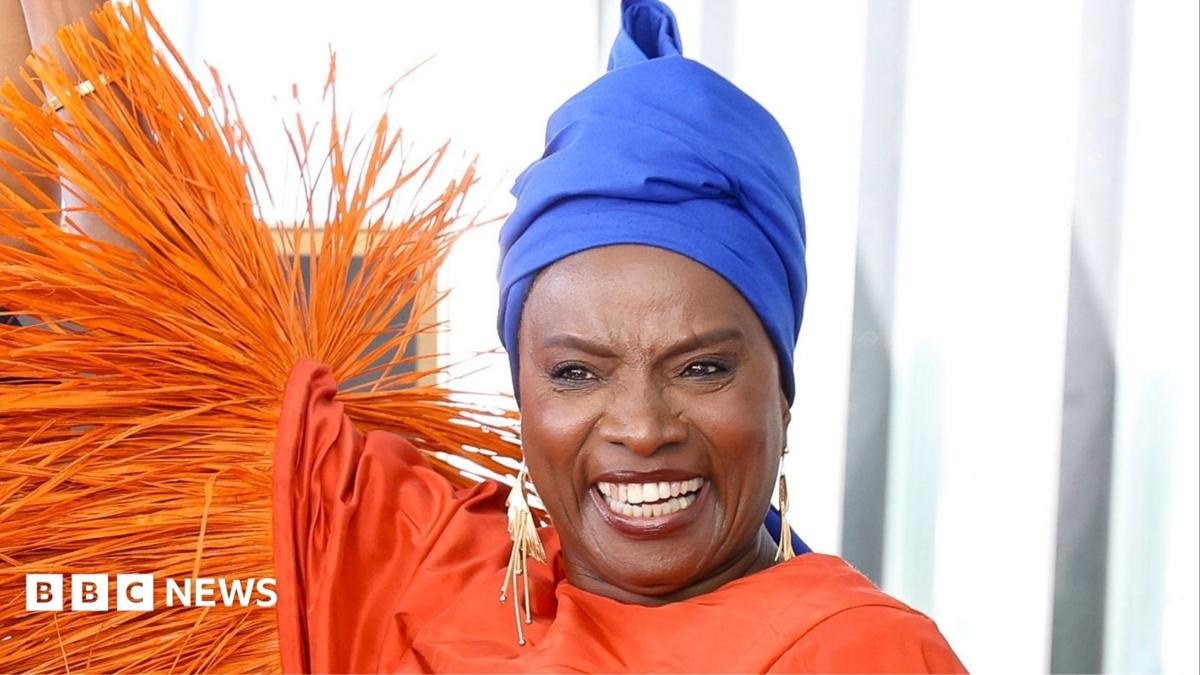
LOS ANGELES — The tears flowed freely on Tuesday as Angélique Kidjo pressed her hands to the star bearing her name on the Hollywood Walk of Fame, a moment four decades in the making. The 66-year-old Beninese icon wiped her eyes, thinking of her parents, who did not live to see the fruit of the seeds they planted.
"This star is for all the continent of Africa. Because if I was not African, would I be here?" Kidjo told the BBC shortly after the ceremony, her voice still thick with emotion. "At that moment, I'm like, dad, mum, I wish you were here with me to see [this]. I couldn't take the emotion. They were not here to taste the fruit of what they've created. How they have nurtured my curiosity, my love for music."
With that unveiling, Kidjo became the first African musician to receive a star on the legendary Hollywood Walk of Fame, joining more than 2,800 other honorees. The only other African on the walk is South African actress Charlize Theron, who is white. Kidjo's star, therefore, carries a weight that extends far beyond personal achievement — it is a monument to a continent's musical DNA.
By Amara Diop, Staff Writer
A Star That Belongs to an Entire Continent
The ceremony in Los Angeles was not merely a celebration of Kidjo's five Grammy Awards or her 18 studio albums. It was a recognition of the profound, often unacknowledged debt that global popular music owes to Africa. Kidjo, who has spent her career fusing the rhythms of her homeland with funk, jazz, R&B, and pop, used the platform to deliver a message that went straight to the heart of music history. "We Africans just don't know what we've given to the world," she said at the ceremony, reiterating a point she has made throughout her career. "Without the blues brought by the slaves in America, there's no R&B, there's no rock and roll, there's no soul music, there's no jazz. All of it comes from Africa." It is a statement that resonates deeply across a continent where the echoes of the transatlantic slave trade still shape cultural memory. Kidjo's assertion is not just historical fact; it is a call for recognition. For decades, African artists have watched their rhythms borrowed and adapted by the global industry, often without credit or compensation. Her star, she insists, is a corrective to that erasure. The gathering was a testament to her cross-cultural reach. Hollywood actors Willem Dafoe and Djimon Hounsou — the latter also from Benin — stood alongside Nigerian musician Adekunle Gold. The crowd sang and danced in tribute to a woman whose live performances are legendary. Dafoe, who starred in "Spider-Man," compared her to soul icon James Brown, calling her "without a doubt the hardest working woman in showbusiness."From Benin to Paris: A Journey Forged in Resistance
Kidjo's path to this historic moment began in Cotonou, Benin, where she was born into a family that nurtured her curiosity. Her mother ran a theatre troupe, and her father was a musician. But the political climate — a repressive communist government — forced a difficult choice. At age 23, she left for Paris, seeking the freedom to create music on her own terms. That decision, born of oppression, ultimately became her liberation. In Paris, she encountered Chris Blackwell, the legendary founder of Island Records, the man who produced Bob Marley and launched U2. Blackwell signed her in the 1990s and released her breakthrough album, "Logozo." Kidjo recalled the pivotal conversation she had with him at the time, a moment that defined her artistic integrity. "I said to him at that moment… 'Can I do the music I want to do and keep my cultural identity without anyone imposing any other music on my shoulder?'" she told the BBC. "He said… 'It's no brainer.'" That exchange was a turning point, not just for Kidjo, but for the perception of African music in the global mainstream. She proved that an artist could be authentically African and universally appealing, without compromising her roots for commercial success. Her subsequent collaborations — with Burna Boy, John Legend, Bono, and Alicia Keys — have cemented her status as a bridge between worlds.The Hard Work Behind the Glory
The star on the Walk of Fame is a recognition of a career that has seen Kidjo nominated for 17 Grammy Awards, winning five. Her latest album, "HOPE!!," released earlier this year, features production from Pharrell Williams and collaborations with Ayra Starr, Quavo, Nile Rodgers, and Diane Warren. She won the Polar Music Prize in 2023 and was named one of Time's 100 Most Influential People in 2021. But as Dafoe noted, the accolades are only part of the story. "The first time I saw Angélique perform live, I thought her music, her dancing, her commitment were incredible," he said at the ceremony. "She's not only an incredible performer... songwriter and musician, but also an incredibly kind and giving person and a real deal activist." Harvey Mason Jr., the CEO of the Recording Academy, which oversees the Grammy Awards, praised her unifying power. "She's connected cultures, she's crossed borders, she's reminded audiences everywhere that while we may come from different backgrounds, her music unites in a way that few other things can," he said.A Call to Build Music Economies at Home
Yet even as she basks in this historic achievement, Kidjo's focus remains firmly on the continent she left behind. In her interview with BBC Focus on Africa TV, she delivered a message that was both proud and challenging: Africa must do more to support its own artists. "Let's celebrate our artists in their own right on the continent. Let's give them visibility, strength, because music creates economy," she said. Her words land with particular weight in a region where the vast majority of musicians struggle to make a living. Despite the global popularity of Afrobeats and other African genres, most artists on the continent rarely receive the royalties they are owed. The infrastructure for music distribution, licensing, and live performance remains underdeveloped in many countries, forcing many to rely on international tours or sponsorships to survive. "We need to recognise our artists and create a system for them to make money on their continent and to participate also in creating jobs," Kidjo insisted. This is not abstract idealism. For every Burna Boy or Wizkid who achieves global superstardom, there are hundreds of talented musicians in Dakar, Lagos, Nairobi, and Cotonou who cannot afford to record an album or tour their own region. The economic potential is enormous — music and creative industries are among the fastest-growing sectors in Africa — but the systems to capture that value remain weak.Beyond the Music: A Legacy of Giving Back
Kidjo's commitment to the continent extends far beyond her music. She is a goodwill ambassador for UNICEF and Oxfam, and she co-founded the Batonga Foundation, which helps vulnerable young girls and women in Benin gain access to education. Her activism is not a side project; it is woven into her identity as an African woman who never forgot where she came from. During her BBC interview, her phone would not stop ringing with congratulations. "Yesterday I received the call of the president of Benin," she said. "Today I received the call of Chris Blackwell, the founder of Island Records, the producer of Bob Marley, the maker of U2 and so on and so forth." The juxtaposition of those calls — from the leader of her home country and the man who launched her international career — captures the duality of her life. She is at once a daughter of Benin and a citizen of the world, a woman who has spent four decades proving that African music is not a niche genre but the very foundation of modern popular music.A Message for the Next Generation
For young African artists watching this historic moment from their bedrooms in Accra, Abidjan, or Kinshasa, Kidjo's star is a powerful symbol of what is possible. But her message to them is not simply "dream big." It is a call to understand their own value, to demand fair treatment, and to build institutions that can sustain their careers at home. "We Africans just don't know what we've given to the world," she said. That ignorance, she argues, is a form of disempowerment. When African artists understand that their musical heritage is the root of global pop, they can negotiate from a position of strength. When they know their history, they can claim their future. The Hollywood Walk of Fame star is a permanent marker of that truth. It sits on a sidewalk in Los Angeles, a city thousands of miles from Cotonou, yet it carries the spirit of an entire continent. As Kidjo wiped away her tears on Tuesday, she was not just mourning her parents' absence. She was celebrating the journey of every African artist who has ever been told their music was "too local" or "too different" for the global stage. She proved them wrong. And now, her name is etched in the pavement of the world's most famous entertainment district, a testament to the power of staying true to one's roots while reaching for the stars. "This star is for all the continent of Africa," she said. And for millions of Africans watching from across the Atlantic, it is a reminder that their music, culture, and stories matter — to themselves and to the entire world.This article was produced with AI-assisted research and editorial support. Sources: BBC News, BBC Focus on Africa.
What's Your Reaction?
 Like
0
Like
0
 Dislike
0
Dislike
0
 Love
0
Love
0
 Funny
0
Funny
0
 Wow
0
Wow
0
 Sad
0
Sad
0
 Angry
0
Angry
0

Amara Diop
West Africa/Sahel Correspondent at Global1.News. Dakar-based journalist covering politics, security, climate, and development across Francophone and Anglophone West Africa. Tells the stories of a region undergoing profound transformation.













Comments (0)