
ROK-US Alliance Management Via Social Media
The management of the South Korea-United States alliance has traditionally been a matter of classified cables, ministerial meetings, and meticulously coordinated press releases. In August 2026, it became a matter of social media. A series of posts on U.S. President Donald Trump’s Truth Social account, published hours before the allies were set to kick off their major Ulchi Freedom Shield (UFS) exercise, triggered a cascade of diplomatic confusion, a last-minute downsizing of military drills, and
The management of the South Korea-United States alliance has traditionally been a matter of classified cables, ministerial meetings, and meticulously coordinated press releases. In August 2026, it became a matter of social media. A series of posts on U.S. President Donald Trump’s Truth Social account, published hours before the allies were set to kick off their major Ulchi Freedom Shield (UFS) exercise, triggered a cascade of diplomatic confusion, a last-minute downsizing of military drills, and a pointed rebuke from North Korea. The episode, which unfolded between August 16 and 21, has laid bare the fragility of alliance coordination when policy is dictated in real-time from a personal account, raising profound questions about deterrence, allied trust, and the future of the U.S. security commitment on the Korean Peninsula.
The Presidential Post That Changed the Exercise
The sequence of events began on Sunday, August 16, 2026, when President Trump took to Truth Social to announce his displeasure with the very exercises that were scheduled to begin the following morning. In a line-by-line statement that read more like a personal grievance than a policy directive, Trump cited his "very good relationship with Kim Jong Un" and declared he was "not happy" with the U.S. commitment to joint military exercises with South Korea. He characterized the drills as costly and as sending "a signal that is totally inappropriate and hostile" toward a North Korea he described as "unthreatening and respectful" during his presidency.
The post went further, revealing a transactional linkage that stunned Seoul. Trump noted that it was "too late to cancel" the exercises but stated he had "instructed Secretary of War, Pete Hegseth, to substantially reduce the Joint Military Exercises!" He then connected the decision to South Korea’s refusal to join U.S.-led operations against Iran, writing that he had recently asked the South Korean president if they would like to participate in the "Denuclearization of the Islamic Republic of Iran," and that Seoul had replied, "No thanks!" The post effectively framed a military readiness decision on the Korean Peninsula as leverage in a separate geopolitical theater.
Seoul’s Shock and the Mechanics of a Drawdown
Despite the presidential intervention, Ulchi Freedom Shield began as scheduled on Monday, August 17, with South Korea’s Ministry of Defence stating the exercises would "proceed as previously notified and scheduled." The original plan called for an 11-day event running through August 27, involving approximately 18,000 South Korean soldiers alongside U.S. forces. However, within 48 hours, the reality on the ground shifted dramatically.
On Tuesday and Wednesday, August 18-19, South Korea’s Joint Chiefs of Staff announced that, at the request of the U.S. side, UFS would be truncated from 11 days to five, concluding on August 21. Combined field maneuver training was scaled back, and per South Korean media, Defence Minister Ahn Gyu-back indicated the allies were moving to cancel the second phase of the drills, which had been expected to involve counterattack operations following an initial defensive phase. A U.S. Department of Defense official confirmed that the department had "substantially reduced" the exercise and associated live-training events, with some activities cancelled or switched to simulations to preserve "essential readiness."
The speed of the reversal left South Korean officials scrambling. On Wednesday, August 19, Foreign Minister Cho Hyun told a parliamentary hearing that neither South Korean nor U.S. officials had known in advance of Trump’s order. Cho assessed that the president’s message appeared aimed at pressuring Seoul to become involved in the war on Iran, as well as sending a signal to North Korea. The admission of surprise from a senior allied minister underscored the degree to which the alliance’s operational planning had been bypassed by a unilateral, public directive.
North Korea’s Dismissal and Provocative Response
If the intent of the downsizing was to curry favor with Pyongyang, the response was decidedly cold. On Wednesday, August 19, Kim Yo-jong, sister of North Korean leader Kim Jong Un, dismissed the reduced drills, stating the attempted overture "holds no interest for us." In mocking statements aimed at Seoul, she noted that a single order from President Trump was enough to scale back the drills, and she called President Lee Jae-myung’s words and actions hypocritical. The rhetoric suggested that North Korea viewed the episode not as a diplomatic victory, but as evidence of South Korea’s subservience to Washington.
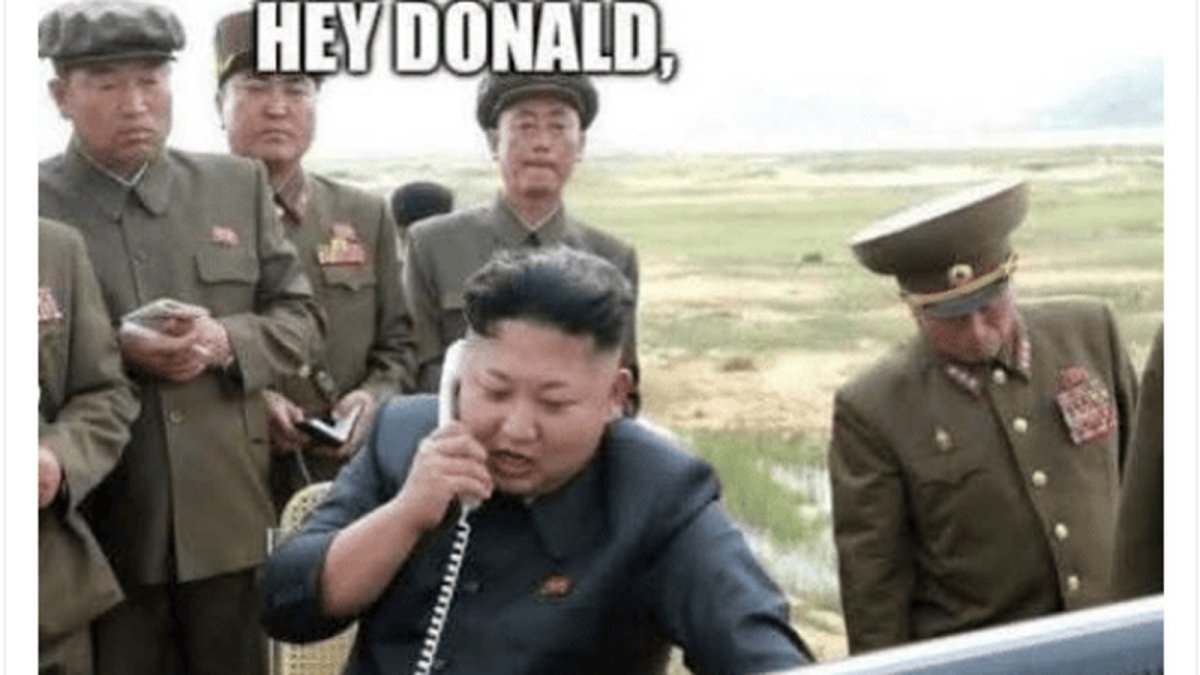
The North’s actions matched its words. On Thursday, August 20, as the reduced drills neared their end, North Korea launched ballistic missiles. This followed two earlier launches on August 6 and August 12, which landed in the Sea of Japan (East Sea) outside Japan’s exclusive economic zone. The timing of the August 20 launch, during the final hours of a scaled-back exercise, served as a pointed reminder that Pyongyang’s weapons programs continue unabated regardless of U.S. messaging. Meanwhile, Trump claimed on Monday that Kim had "responded" to his outreach, though he did not disclose the nature of the contact. The Wall Street Journal reported that Trump has pushed aides to arrange an in-person meeting with Kim as soon as this autumn, potentially during a November trip to Asia for the APEC summit in Shenzhen, China. Trump also posted an old photo of himself with Kim, captioning another image of the North Korean leader with the phrase, "Hey Donald, we cool ... right?"
Strategic Consequences for Deterrence and Alliance Coordination
The episode has triggered significant alarm among security experts in Seoul, who see the mid-exercise downsizing as a dangerous precedent. Leif-Eric Easley, professor of international studies at Ewha University in Seoul, warned that scaling back the joint drills "can damage alliance coordination, slow the process of South Korea taking on greater responsibility for its own defense, and weaken deterrence against possible conflicts in Asia." He added that "the cost savings from downsizing drills are marginal, while the diplomatic benefits for relations with North Korea are doubtful."
The concern is not merely theoretical. The number of combined field exercises involving battalion-size units or larger is expected to decline from 17 last year to 14 this year, according to South Korean media reports. This reduction comes at a time when the threat environment is arguably more complex than ever. Lt Gen Scott Winter of Australia, deputy commander of U.N. Command, had described this year’s UFS as "bigger and better than ever," accounting for North Korea’s increased use of technology, ballistic-missile development, and lessons learned by North Korean troops supporting Russia. North Korea has sent as many as 14,000 troops to support Russia’s war in Ukraine, according to reports citing Ukrainian intelligence, providing Pyongyang with invaluable modern combat experience.
Opposition lawmakers in Seoul have been blunt in their criticism. Na Kyung-won of the People Power Party accused Trump of "shaking" the nations’ combined defense posture by flaunting his relationship with Kim and citing the cost of the military exercises. She argued that Washington is bypassing Seoul and encouraging direct dealings with Pyongyang, a move that undermines South Korea’s agency in its own defense. Cheong Seong-chang, vice-president of the Seoul-based Sejong Institute, went further, suggesting that Trump could suspend the joint exercises altogether or reduce U.S. troop numbers without consulting Seoul if talks with Kim resume.
Historical Precedents and the Unprecedented Nature of This Move
To understand the gravity of this moment, it is essential to review the historical record. The U.S. maintains approximately 28,500 troops in South Korea, a legacy of the 1950-53 Korean War that ended in an armistice rather than a peace treaty. Previous cuts and cancellations to joint exercises—including in 1992, 1994, and after Trump’s first summit with Kim in 2018—were all decided BEFORE the drills began, not after they were already under way. The August 2026 decision to truncate an ongoing exercise is without precedent in the alliance’s history.
Trump met Kim three times during his first term (Singapore in 2018, Hanoi in 2019, and at the DMZ in 2019) but has not held talks during his second term. The current episode suggests a desire to recreate the theater of personal diplomacy, but the operational cost is being borne by the alliance’s military readiness. Japan’s Defence Minister Shinjiro Koizumi highlighted the regional stakes, stating, "As Japan faces the most severe and complicated security environment in the post-war era, the cooperation among Japan, the United States and South Korea is critical to the peace and stability of the region." North Korea’s Ministry of Foreign Affairs spokesperson, for its part, characterized the U.S.-Japan-South Korea military cooperation as turning into a "nuclear alliance," warning that Pyongyang will respond to a new level of threat with a new level of deterrent.
Domestic Political Ramifications in Seoul
The episode has also reverberated in South Korean domestic politics. President Lee Jae-myung’s administration has been caught between its stated desire for greater military independence and the reality of a security umbrella that can be recalibrated by a single social media post. South Korea’s presidential office issued a statement saying the drills did not reflect "any intention to attack North Korea or escalate tensions on the Korean peninsula," and expressed hope that the friendly relationship between U.S. and North Korean leaders would lead to meaningful dialogue. Yet President Lee has separately renewed calls for greater military independence, a position that gains traction with every display of Washington’s unilateralism.
The contradiction is stark: Seoul seeks more autonomy, yet the immediate crisis was triggered by a U.S. decision that treated South Korea as a junior partner to be overruled. The Foreign Minister’s admission that Seoul was not consulted in advance will likely fuel domestic debates about the wisdom of relying on an ally whose commander-in-chief manages alliance policy via public posts. For a nation that has built its post-war security strategy on the credibility of the U.S. commitment, the August 2026 episode represents a stress test of unprecedented proportions.
As the truncated Ulchi Freedom Shield concluded on August 21, the alliance finds itself in uncharted territory. The drills were smaller, shorter, and less capable than planned. The message to North Korea was muddled—simultaneously conciliatory from Washington and defiant from Seoul. And the precedent set—that exercises can be downsized mid-stream by presidential whim—will haunt future planning cycles. The coming months, including the potential Trump-Kim meeting in the autumn, will reveal whether this was an isolated incident of social media diplomacy or a fundamental shift in how the U.S. manages its most critical Asian alliance.
This article was produced with AI-assisted research and editorial support. Sources: The Diplomat (RSS), Stars and Stripes, Al Jazeera, The Guardian, Reuters, Yonhap.
By Prof. David Park, Staff Writer
What's Your Reaction?
 Like
0
Like
0
 Dislike
0
Dislike
0
 Love
0
Love
0
 Funny
0
Funny
0
 Wow
0
Wow
0
 Sad
0
Sad
0
 Angry
0
Angry
0

East Asia/Technology Correspondent at Global1.News. Seoul-based voice covering Korean politics, technology, business, and culture. Analyzes how technology and geopolitics intersect across East Asia.












Comments (0)