
Riyadh Wakes to Its First Air-Raid Alert, and a Fire at the Airport
Saudi Civil Defence sent air-raid alerts to residents of Riyadh, Jeddah and other cities overnight, the first such warning in the Saudi capital since the Houthis escalated their attacks in July, and a fire broke out at a fuel storage area beside King Khalid International Airport.
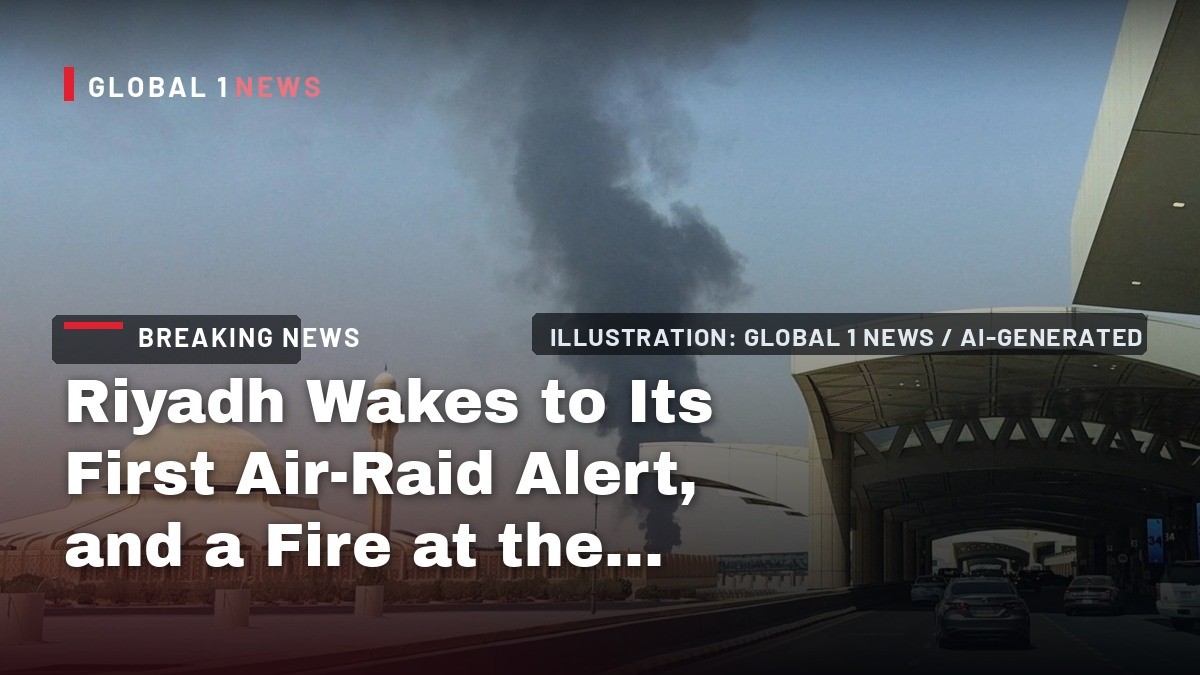
Alerts went out to phones across Riyadh overnight, and explosions followed. By Saturday morning a column of black smoke was rising from a fuel storage area beside the capital's international airport, and firefighters were still working on a burnt-out tank carrying the logo of Saudi Aramco. Riyadh has offered no explanation for any of it.
Riyadh Wakes to Its First Air-Raid Alert, and a Fire at the Airport
RIYADH, Saudi Arabia — Saudi Civil Defence sent telephone alerts to residents of Riyadh, Jeddah and other cities overnight Friday into Saturday, telling them the area was under a hostile aerial threat and urging them to stay indoors. It was the first alert of its kind in the Saudi capital since the Iran-backed Houthis escalated their attacks and declared a maritime embargo on the kingdom in July. Journalists from Reuters and AFP reported hearing explosions in the city. A fire broke out at a fuel storage area beside King Khalid International Airport. No cause has been officially established for the fire, and no party has been officially blamed by Riyadh for the explosions or the alert.
The Alert Riyadh Had Never Heard
The alert text, as reported by The Telegraph, read: "The area is under a hostile aerial threat." It went to residents of Riyadh, Jeddah and other cities including Yanbu, a major industrial port that is home to critical oil facilities. The alerts did not reach every Saudi city; the reporting names Riyadh, Jeddah and other cities including Yanbu. The BBC states it was the first time alerts have been issued in Riyadh since the Houthis increased their attacks and declared a maritime embargo on the Saudis in July. The Telegraph reports the Saudi civil defence issued an all-clear roughly half an hour after sending the alert, and that residents were urged to avoid gathering in crowds. The same outlet reports the alert reached residents shortly before 3 a.m. local time. The alert carried no attribution of responsibility, and there has been no official comment from Saudi authorities.
What Residents Saw, and What the Kingdom Will Not Say
Journalists from Reuters and AFP reported hearing explosions in the capital, and two explosions were heard in Riyadh's Olaya district, according to Reuters. Residents told AFP, speaking on condition of anonymity, that hours after the alert they had heard what sounded like another round of explosions echoing through parts of the capital. "In the direction of the airport we saw black smoke and fire," one resident told the agency. Those accounts are the fullest public description of the morning that exists. What Riyadh has not supplied is everything else: no statement on what triggered the alert, no official confirmation of what caused the fire beside the airport, no casualty figure for the incident, and no accusation against any party. The Saudi government media office did not immediately respond to a request for comment from Reuters, and Saudi Arabia has not officially commented on where the aerial threat came from or on the flames seen near the airport.
A Burning Aramco Tank at the Airport Gate
An AFP journalist reported that firefighters were trying to extinguish the flames of a burnt-out fuel tank belonging to the state oil and gas company Aramco, with the Aramco logo visible on the structure. The fire was beside King Khalid International Airport, where a large plume of black smoke rose from the fuel storage area. The disruption registered within hours. The aircraft tracking website FlightRadar24 reported major problems at King Khalid, including cancellations and delays, and listed the airport under its maximum disruption index of 5.0, meaning "major problems with long delays and several cancelled flights." Saudi Aramco did not immediately respond to a request for comment outside regular business hours. No official Saudi statement has yet addressed what happened at the storage area.
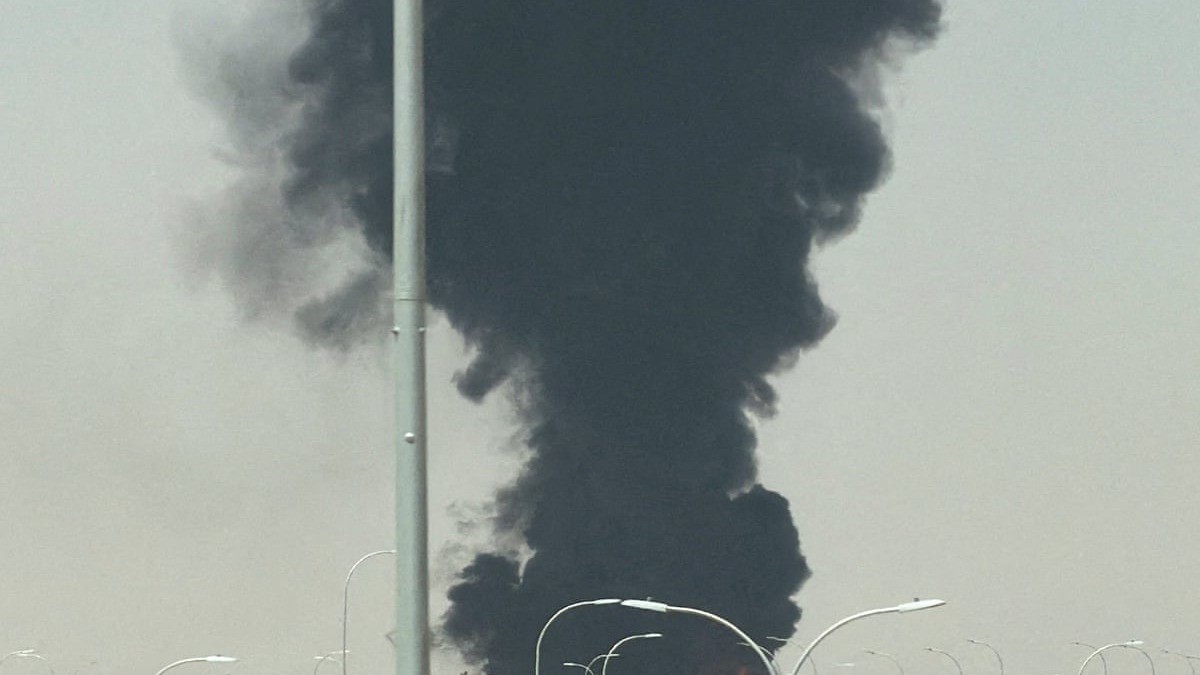
The Pipeline That Pays for the Kingdom
The alert and the airport fire landed on top of an energy crisis Riyadh is already managing. Houthi drones struck Saudi Arabia's East-West pipeline, damaging three pumping stations and disrupting oil loadings at the Red Sea port of Yanbu, according to Bloomberg. The pipeline runs about 1,200 km and had been carrying about 4 million to 5 million barrels of crude a day to Yanbu. Houthi ballistic missiles also reportedly targeted King Fahd Port in Yanbu. Saudi Arabia earlier informed European customers that some crude cargoes would be cancelled after the drone attacks forced the shutdown of the line. It will be mostly out of service for several weeks for repair, and Aramco is working to partially restart it within days and return it to full capacity within six weeks, Bloomberg reported, citing a person familiar with the matter. No fatalities have been reported from the pipeline strike.
Europe's October Problem
Saudi Aramco has told at least two European refining customers they will receive no crude oil next month following the attack on the kingdom's key pipeline to the Red Sea, Bloomberg News reported on Friday, citing people familiar with the matter. The Straits Times reports the decision applies to all European buyers. European refiners typically buy Saudi crude under term contracts that guarantee monthly supplies, and Aramco has informed customers that next month's deliveries will not proceed. Reuters could not verify the Bloomberg report. European OECD countries were importing about 577,000 barrels per day from Saudi Arabia as of June, according to International Energy Agency data cited by Bloomberg. Dated Brent, the benchmark for real-world barrels in Europe, topped US$130 this week at one point. The Straits Times reports the absence of Saudi flows in October will heighten the need for European buyers to secure replacements.
Who Feels It First
Poland's Orlen SA has been hunting for replacement shipments, helping push the prices of regional oil grades higher; traders said the refiner bought North Sea grades to replace disrupted Saudi imports. The logistics leave little room to manoeuvre. European refineries normally lift Saudi crude from Egypt's Mediterranean port of Sidi Kerir, which is linked to the Red Sea by a pipeline. Moving barrels to Europe from the Gulf instead means either sailing through the Red Sea, where the Houthis have been attacking Saudi ships, or sailing almost five weeks around Africa. Aramco has sold tens of millions of barrels to customers for collection just outside the Hormuz waterway this week, a route it had largely shunned during the conflict. The BBC reports that petrol and diesel prices have risen sharply in many countries in recent weeks. Saudi vessels have relied on that stretch of the Red Sea for oil exports since the US and Israel's war with Iran effectively closed the Strait of Hormuz.
How the Houthis Reached the Capital's Doorstep
The Houthis are locked in a civil war with Yemen's internationally recognised government, and their reach has widened sharply. The group recently seized the strategic port city of Mokha and Perim Island, a gateway to a key shipping route used by Saudi Arabia to export to Asia and Europe. The Houthis said the naval blockade was retaliation for a Saudi blockade of ports and airports in Houthi-controlled north-western Yemen. Earlier this week, Houthi military spokesman Yahya Saree said the group had launched drones and missiles at Saudi Arabia in retaliation for more than 450 Saudi air strikes on its territory over the past week. The same spokesman separately said the group had foiled unspecified "criminal attempts" in the Yemeni capital of Sana'a, blaming Saudi Arabia and vowing a response. Last week the Houthis attacked several Saudi oil facilities, causing fires that led to operations being temporarily halted.
The Crown Prince's Call, and Trump's Answer
Saudi Crown Prince Mohammed bin Salman, the country's de facto ruler, has personally asked US President Donald Trump to take military action against the Houthis, two sources familiar with the matter told CBS News, the BBC's US media partner. Trump has so far declined to involve the US military directly, offering instead to assist with intelligence and targeting support, the sources said. A senior Trump administration official told the BBC: "We are in continuous dialogue with Saudi Arabia and the Republic of Yemen government regarding regional stability." The reporting describes intelligence and targeting support as the extent of American assistance, and says the request has not been granted.
What the Security Council Said
The UN Security Council held an emergency meeting on Tuesday, at which both Yemen's government and Saudi Arabia called for more decisive action against the Houthis, who they accused of choking the Bab al-Mandab Strait as a way of applying economic pressure. On Friday the Council condemned the continued Houthi attacks against Saudi Arabia, saying they had affected civilian and energy infrastructure and injured civilians, including women and children. It also condemned the Houthis' military offensive in Yemen, where nearly 105,000 people have fled their homes, the International Organization for Migration said on Wednesday. The Council's 15 members called for "practical cooperation" to prevent the Houthis from acquiring arms, military training and financing, and stressed that all countries must enforce the UN arms embargo against the group. The statement did not attribute the fire beside the airport, or the explosions over the capital, to any party.
What Happens Next
The all-clear was issued on Saturday morning, and residents were urged to avoid gathering in crowds. King Khalid International Airport was still showing major disruption, with cancellations and long delays, and was listed at the maximum index on FlightRadar24. Aramco is working to partially restart the East-West pipeline within days and bring it back to full capacity within six weeks; the line will be mostly out of service for repair in the meantime. European refiners have been told next month's deliveries will not proceed. No cause has been officially established for the fire beside the airport, and no party has been officially blamed by Riyadh for the explosions or the alert.
By Jessica Ali, Staff Writer
This article was produced with AI-assisted research and editorial support. Sources: BBC, Reuters, AFP, The Guardian, The Telegraph, The Hindu, Bloomberg News, The Straits Times, Middle East Eye, FlightRadar24, the Saudi Civil Defence, the UN Security Council and CBS News.
What's Your Reaction?
 Like
0
Like
0
 Dislike
0
Dislike
0
 Love
0
Love
0
 Funny
0
Funny
0
 Wow
0
Wow
0
 Sad
0
Sad
0
 Angry
0
Angry
0

Editor-in-Chief at Global1.News. Atlanta-based journalist who cuts through the BS and tells it like it is. Lead anchor, host, and the voice you hear when the spin stops and the truth starts.













Comments (0)