
Quebec Election Campaign Officially Begins: Five-Party Race for the First Time Since 1976
In a recent CBC News report, the stage was set for what promises to be one of the most unpredictable provincial elections in Quebec in nearly half a century. With the official campaign period now underway, voters are facing a fractured political landscape, a looming sovereignty question, and the economic pressures of a Canada-U.S. trade war, all converging on a single ballot box this October.
In a recent CBC News report, the stage was set for what promises to be one of the most unpredictable provincial elections in Quebec in nearly half a century. With the official campaign period now underway, voters are facing a fractured political landscape, a looming sovereignty question, and the economic pressures of a Canada-U.S. trade war, all converging on a single ballot box this October.
Quebec's 2026 Election Campaign Officially Begins: A Five-Party Race for the First Time Since 1976
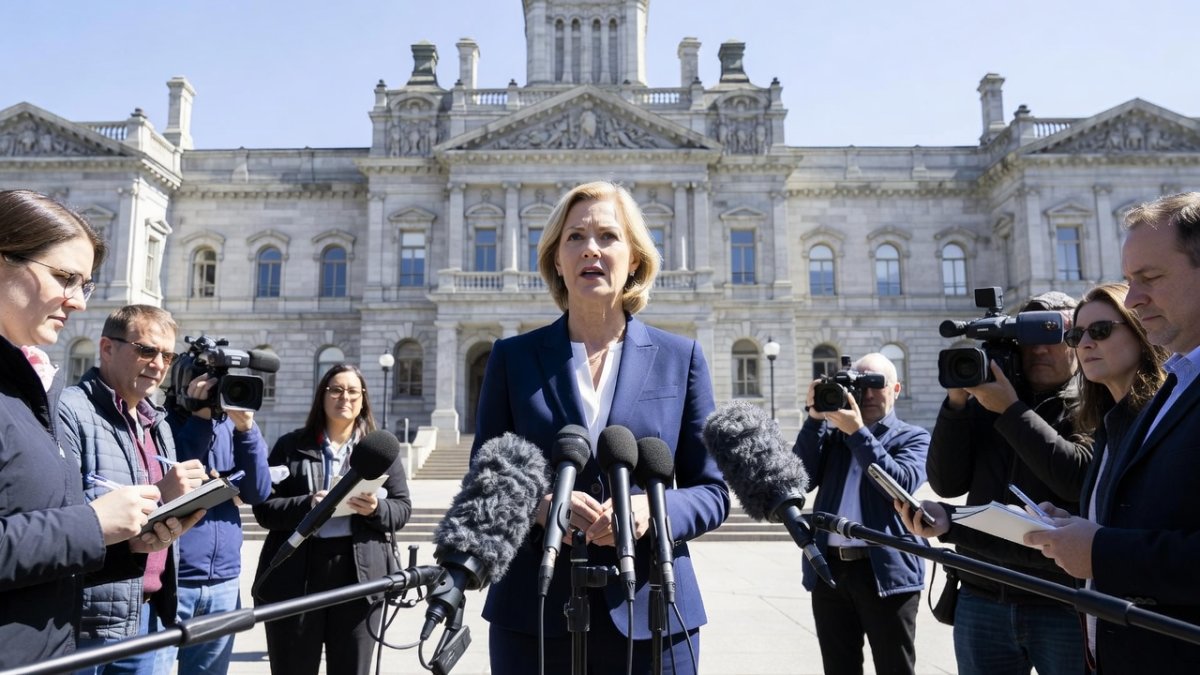
Quebec City – This week — Premier Christine Fréchette formally launched the 2026 Quebec provincial election campaign on Thursday morning, meeting with Lieutenant-Governor Manon Jeannotte after a 10 a.m. cabinet meeting to request the dissolution of the National Assembly. The symbolic gesture sets the stage for a 39-day campaign that will culminate in a provincial vote on Oct. 5, 2026, with 127 ridings now in play — up from 125 following a Supreme Court decision that redrew the electoral map.
The End of the Legault Era and a New Leader's Gamble
This election marks the first since 2018 that will not feature François Legault at the helm of the Coalition Avenir Québec. Legault, who resigned in January 2026 amid unfavourable polling after leading the CAQ to back-to-back majorities in 2018 and 2022, remains the MNA for L'Assomption but has ceded the political stage to his successor. Fréchette won the CAQ leadership race in April 2026 with more than 57 per cent of the vote, decisively defeating Bernard Drainville, and was sworn in as premier shortly thereafter.
Fréchette, who has represented the riding of Sanguinet since 2022, is making a strategic move this campaign by running in her hometown of Trois-Rivières. The decision reflects a desire to anchor her leadership in familiar territory as she seeks to defend the CAQ's parliamentary dominance against a resurgent opposition. The party enters the campaign with 79 seats in the National Assembly, a formidable advantage, but one that masks significant internal turbulence — at least 30 CAQ MNAs have announced they will not seek re-election, a wave of retirements that signals both fatigue and strategic repositioning.
A Five-Party Race Reshapes the Electoral Map
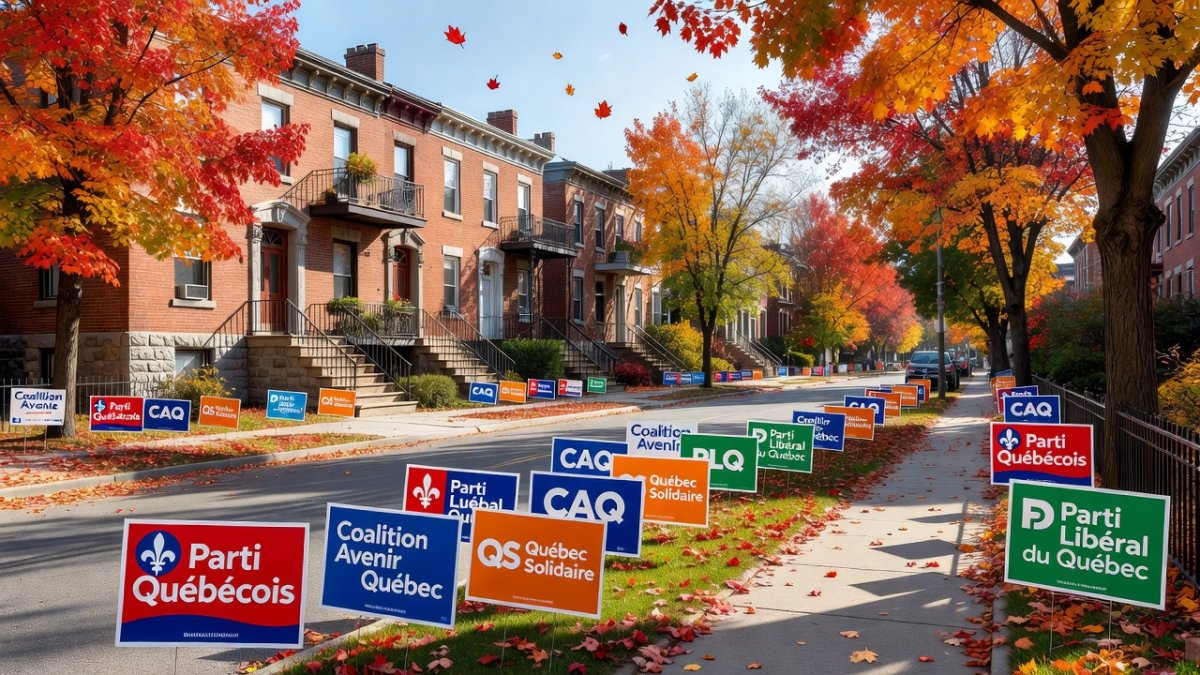
The 2026 campaign is unprecedented in its fragmentation. Five party leaders will contest the premiership, a scenario not witnessed in Quebec since 1976, according to Philippe Fournier, founder of poll aggregators 338Canada and QC125. Fournier compares the current dynamic to a hockey team that opened with a 4-0 lead but now finds itself ahead by only a single goal in the third period — the Parti Québécois has led opinion polls since 2023, but its advantage has narrowed considerably from landslide territory.
The five leaders represent distinct visions for Quebec's future. Fréchette leads the CAQ with a focus on economic stewardship and continuity. Charles Milliard, who became Liberal leader in February after an alleged vote-buying scandal brought down former leader Pablo Rodriguez, is attempting to rebuild a party that has suffered crushing defeats in 2018 and 2022. Milliard has no seat in the National Assembly and is running in Orford in the Eastern Townships, a riding that will test his ability to connect with voters beyond Montreal's anglophone and allophone communities.
Ruba Ghazal, the Québec Solidaire parliamentary leader since March 2025, is running in Montreal's Mercier riding for a third consecutive election — her first campaign as a premiership candidate. Ghazal faces the challenge of revitalizing a party that has been at the bottom of the polls, struggling to regain the momentum that once positioned QS as a credible alternative to the PQ on the left. Paul St-Pierre Plamondon, the Parti Québécois leader, is running again in Camille-Laurin in eastern Montreal, carrying the weight of a party that has led in public opinion for years but has yet to convert that support into a commanding electoral position. Éric Duhaime, leader of the Conservative Party of Quebec, is running in Bellechasse in the Chaudière-Appalaches region, seeking his party's first elected seat in the legislature.
The Sovereignty Question Looms Large
At the heart of this campaign is the perennial question of Quebec's place within Canada. St-Pierre Plamondon has promised to hold a referendum on independence in the first term of a PQ government, even though polls consistently show little appetite among Quebecers for another sovereignty vote. The PQ's position reflects a long-term strategy of incremental gains — the party won only three of 125 seats in 2022 but has since captured four consecutive byelections in ridings the CAQ previously held, including Chicoutimi in recent weeks.
The sovereignty debate intersects with the ongoing Canada-U.S. trade war, which has dominated federal-provincial relations in recent months. Canada-U.S. Trade Minister Dominic LeBlanc has confirmed that the United States has agreed that Canada's protections of French language and culture will not be subject to future trade actions, a significant assurance for Quebec's cultural industries. The trade dispute has forced premiers to coordinate their responses, with Alberta Premier Danielle Smith rejecting energy export tariffs while urging a diplomatic approach — a position that has created friction with other provinces, including Quebec, which has advocated for a more robust retaliatory strategy.
Voter Uncertainty and the Spectre of Minority Government
The electorate enters this campaign deeply uncertain. An Aug. 11 Léger poll conducted for the Journal de Montréal and TVA found that 48 per cent of voters have made up their minds, while 49 per cent say they could still change their minds. This volatility, combined with the five-party dynamic, has raised the possibility of a minority government — a scenario Quebec has not experienced since 2012, when Pauline Marois led a Parti Québécois minority.
Université du Québec à Montréal professor Danielle Pilette argues that this campaign will be particularly consequential because voters appear disappointed with the leaders and the positions on offer. "The campaign will be very important," Pilette said, noting that the traditional loyalties that have structured Quebec politics for decades appear to be eroding. The seat standings on the eve of dissolution — CAQ 79, Liberals 18, QS 11, PQ 7, Conservatives 1, and nine independents — suggest that the CAQ's majority is vulnerable, but the path to an alternative majority is far from clear.
Key Issues: Economy, Health Care, and the Cost of Living
Beyond the sovereignty question, the campaign will be fought on the terrain of everyday concerns. The economy, health care, and the cost of living are expected to dominate debates, particularly as the Canada-U.S. trade war continues to cast a shadow over Quebec's manufacturing and resource sectors. Pre-campaign advertising analysis by public relations consultant Victor Henriquez indicates that the CAQ is focused on economic messaging, while the PQ aims to win back voters from the governing party by emphasizing the need for change.
The Liberals, under Milliard, are attempting a comeback that requires expanding support among francophones and in the regions — traditional areas of weakness for a party often perceived as representing Montreal's anglophone minority. Milliard's challenge is compounded by the circumstances of his ascension; the alleged vote-buying scandal that brought down Rodriguez has left the party with a credibility deficit that will require significant effort to overcome. QS, meanwhile, needs to regain momentum among younger voters and urban progressives who may be tempted to support the PQ as a more viable vehicle for left-wing change.
What Happens Next
The 39-day campaign will unfold against the backdrop of ongoing federal-provincial negotiations on trade, with premiers scheduled to meet on the dispute in the coming weeks. The outcome of those discussions could influence voter perceptions of which party is best equipped to defend Quebec's interests in a volatile North American economic environment. For Fréchette, the campaign represents a test of whether the CAQ can survive the departure of its founder and maintain its dominance. For St-Pierre Plamondon, it is an opportunity to convert years of polling leads into actual seats. For Milliard, Ghazal, and Duhaime, it is a chance to redefine their parties' relevance in a rapidly shifting political landscape.
The stakes could not be higher. A PQ victory would set the stage for a referendum on independence, a prospect that would fundamentally reshape Canada's constitutional order. A CAQ victory would affirm the party's resilience and Fréchette's leadership. A minority government — whether led by the PQ or the CAQ — would usher in an era of coalition politics and legislative bargaining that Quebec has rarely experienced. And a strong showing by the Conservatives or QS would signal a realignment of the province's political cleavages.
As Quebecers prepare to cast their ballots on Oct. 5, they face a choice that will define the province's trajectory for years to come. The campaign that begins this week is not merely a contest between parties and personalities; it is a referendum on Quebec's future — its relationship with Canada, its economic resilience, and its cultural identity. The outcome will be felt not only in the National Assembly but in every corner of the province, from the factory floors of Trois-Rivières to the cultural institutions of Montreal to the resource communities of the regions. For Canadian readers watching from outside Quebec, the stakes are equally profound: the result of this election will shape the federation's constitutional future and the balance of power in Ottawa for a generation.
By Alex Thompson, Staff Writer
This article was produced with AI-assisted research and editorial support. Reporting is based on sources cited in the article.
What's Your Reaction?
 Like
0
Like
0
 Dislike
0
Dislike
0
 Love
0
Love
0
 Funny
0
Funny
0
 Wow
0
Wow
0
 Sad
0
Sad
0
 Angry
0
Angry
0
Canada Correspondent at Global1.News. Based in Toronto, covering Canadian politics, energy, trade, and US-Canada relations. Provides the Canadian perspective on North American and global affairs.













Comments (0)