
US-Saudi Nuclear Deal Lands in Congress, Setting Off Alarm Bells in Jerusalem
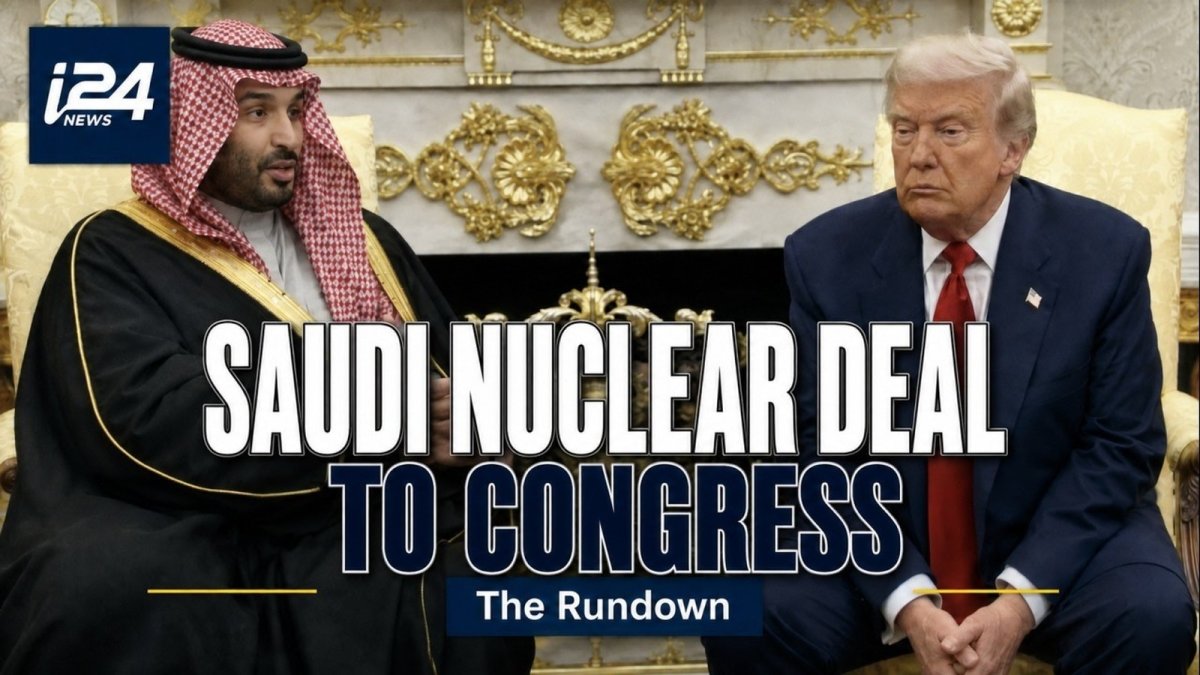
In a recent i24NEWS English report, the contours of a seismic shift in Middle East nuclear diplomacy came into sharp focus: the Trump administration formally submitted the U.S.-Saudi civil nuclear cooperation agreement to Congress on Monday of this week, Aug 24, 2026, triggering a 90-day review window that has Israeli officials, opposition leaders, and regional analysts bracing for a new strategic reality. The so-called "123 agreement," named for Section 123 of the U.S.
In a recent i24NEWS English report, the contours of a seismic shift in Middle East nuclear diplomacy came into sharp focus: the Trump administration formally submitted the U.S.-Saudi civil nuclear cooperation agreement to Congress on Monday of this week, Aug 24, 2026, triggering a 90-day review window that has Israeli officials, opposition leaders, and regional analysts bracing for a new strategic reality. The so-called "123 agreement," named for Section 123 of the U.S. Atomic Energy Act of 1954, lays the legal groundwork for a multibillion-dollar civilian nuclear partnership between Washington and Riyadh — but its terms, and the conditions attached, have ignited a firestorm in Israeli politics and security circles.
US-Saudi Nuclear Deal Lands in Congress, Setting Off Alarm Bells in Jerusalem
Jerusalem, Israel — The deal, announced by President Donald Trump on July 22 and signed the following day by U.S. Energy Secretary Chris Wright and Saudi Energy Minister Prince Abdulaziz bin Salman, represents the culmination of years of stalled negotiations. It would permit American industrial giants — including Westinghouse with its AP1000 reactor design, Bechtel, BWXT, and Centrus — to help the Kingdom of Saudi Arabia build out a civilian atomic program from scratch. Westinghouse CEO Dan Sumner called it a "landmark step." But for Israel, the question is not whether Saudi Arabia gets nuclear power; it is whether the deal's terms inadvertently green-light a regional enrichment race that could ultimately threaten the Jewish state's qualitative military edge.
The 'Gold Standard' That Wasn't
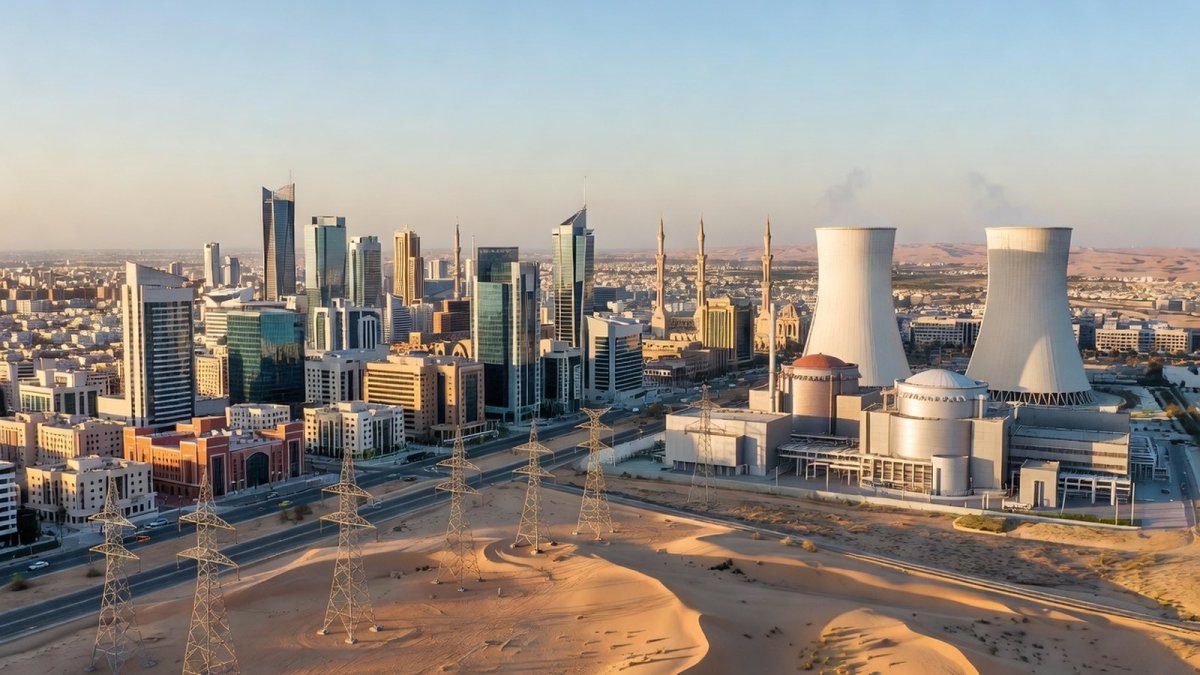
The most explosive element of the agreement is what it leaves out. The 2009 U.S.-UAE 123 agreement, long considered the "gold standard" for nonproliferation, explicitly barred uranium enrichment and spent-fuel reprocessing. The UAE accepted those restrictions and now operates the Barakah nuclear plant, becoming the first Arab nation with a civilian nuclear program. The U.S.-Saudi text, according to multiple reports from the New York Times and Reuters, does not include those bans. That omission potentially allows Saudi enrichment on its own soil — a capability that has been the red line for nonproliferation hawks for decades.
President Trump insisted on Truth Social in July that "there will be no enrichment of material," but the actual text reportedly omits the gold-standard prohibition. CBS reported that the deal could create the potential for enrichment on Saudi territory, controlled by a contracted corporation and only after a lengthy study. The ambiguity is not accidental; it reflects a deliberate diplomatic choice to secure Saudi cooperation on a broader strategic front. But for Israeli defense planners, the distinction between "potential" and "prohibition" is the difference between a manageable threat and an existential one.
The agreement also does not require Saudi Arabia to adopt the IAEA Additional Protocol, the enhanced inspection regime that allows for more intrusive monitoring of nuclear activities. Instead, a bilateral safeguards agreement involving the IAEA would cover the most proliferation-sensitive areas of cooperation — enrichment, conversion, fuel fabrication, and reprocessing. Saudi Arabia joined the Non-Proliferation Treaty (NPT) in 1988 and has had a comprehensive safeguards agreement with the IAEA, updated in 2024, but it has never signed the Additional Protocol. Critics argue this creates a verification gap precisely where the risk is highest.
Bennett's Blast: 'Over Israel's Head'
Israeli reaction has been swift and sharply critical, led by former Prime Minister Naftali Bennett, who is currently challenging Prime Minister Benjamin Netanyahu in the October 27, 2026 Knesset election. Bennett did not mince words, calling the deal "coming together with Saudi Arabia, over Israel's head" and labeling it "a serious strategic failure that endangers our security." His comments reflect a broader consensus across the Israeli political spectrum — from right to left — that the Netanyahu government has been outmaneuvered on a file of supreme national importance.
Israeli press reviews have slammed the deal as a Netanyahu failure, with critics across the political aisle warning of a regional arms race and accusing the prime minister of weakness in the face of American pressure. One Israeli analyst, Golan, warned that Israel may face "a dangerous reality" of an unsupervised Saudi nuclear program and said Netanyahu "has weakened Israel militarily and politically." The New York Times reported that an Israeli minister sought to downplay the deal, but the damage to Netanyahu's political standing appears already done, with the election now just over two months away.
The timing is particularly fraught. The deal lands in Congress amid the ongoing U.S.-Israeli war with Iran that began on February 28, 2026, after U.S.-Israeli airstrikes killed Iranian officials including Supreme Leader Ali Khamenei. Critics point to a glaring double standard: Washington is bombing Iran to force it to renounce nuclear ambitions while simultaneously enabling Saudi enrichment. Iran has long insisted on its NPT right to a civilian program, and the U.S.-Saudi deal hands Tehran a propaganda victory, allowing it to argue that the United States applies one rule for its allies and another for its adversaries.
The Abraham Accords Condition: A Lever or a Mirage?
President Trump attached a condition to the deal that is meant to address Israeli concerns: the agreement is "totally subject" to Saudi Arabia joining the Abraham Accords and normalizing relations with Israel. The White House confirmed the condition. But Riyadh has not committed to it, and the sequencing remains unclear. Will the nuclear deal be implemented before normalization, or is it contingent upon it? The ambiguity is a source of deep anxiety in Jerusalem, where officials fear that the nuclear cooperation could proceed without a corresponding diplomatic breakthrough.
For Netanyahu, who has made the Abraham Accords the centerpiece of his foreign policy legacy, the condition is both an opportunity and a trap. If Saudi Arabia ultimately joins the accords, Netanyahu can claim a historic achievement. If it does not, and the nuclear deal proceeds anyway, he will be accused of having traded Israel's security for a promise that was never kept. Bennett and his allies are already framing the deal as evidence that Netanyahu's approach — relying on personal relationships with Trump rather than institutional guarantees — has failed.
The Saudi perspective adds another layer of complexity. The kingdom wants nuclear power for its Vision 2030 diversification agenda, electricity generation, and the surging energy demands of AI data centers. Riyadh has long insisted on enrichment rights on par with Iran; in 2023, Crown Prince Mohammed bin Salman said explicitly that if Iran enriches, Saudi Arabia must too. The framework for this deal was announced in November 2025 during MBS's visit to Washington, and earlier efforts — under Obama in 2012 and during the first Trump term in 2017-2019 — stalled over the same safeguards and enrichment disputes.
Congressional Scrutiny and the 90-Day Clock
Under the Atomic Energy Act, Congress now has 90 days of continuous session to review the agreement — a 30-day committee review followed by 60 days for the full Congress. Lawmakers can pass a joint resolution of disapproval, which would kill the deal. Congressional critics, including Democrats concerned about the Middle East impact, are expected to scrutinize the safeguards, enrichment provisions, and regional proliferation risks with a fine-tooth comb.
Secretary of State Marco Rubio, while in the Senate, co-authored a bill with Senator Ed Markey that would have required the Additional Protocol and a renunciation of enrichment and reprocessing for any new 123 agreement. That bill did not pass, but its spirit lives on in a section of the 2020 National Defense Authorization Act (NDAA), which requires the Additional Protocol for new 123 agreements unless the president submits a waiver report to Congress. The administration submitted such a report in November 2025, clearing the procedural path for the current deal.
The question now is whether the administration can hold its coalition together. Republicans generally support the deal as a strategic counter to Chinese and Russian influence in the Gulf. Democrats are more skeptical, with many echoing the concerns of nonproliferation advocates who see the deal as a dangerous erosion of the gold standard. The 90-day clock will test whether the administration's arguments — that the deal includes sufficient safeguards and that the Abraham Accords condition provides a check on Saudi behavior — can withstand political scrutiny.
Regional Ripple Effects: The UAE, Iran, and the Nuclear Tipping Point
The deal's implications extend far beyond the U.S.-Saudi bilateral relationship. The UAE, which accepted the gold-standard restrictions in 2009, may now question why it should remain bound by limits that Saudi Arabia has avoided. The Barakah plant has been a point of pride for Abu Dhabi, but the asymmetry in treatment could fuel resentment and demands for renegotiation. If the UAE seeks to revisit its commitments, the entire nonproliferation architecture of the Gulf could unravel.
Iran, meanwhile, is watching closely. The war that began in February has already reshaped the region, but the U.S.-Saudi deal threatens to undermine the very rationale for that conflict. If Washington is willing to tolerate Saudi enrichment, Tehran will argue that its own nuclear program — which it has always insisted is peaceful — deserves the same tolerance. The double standard is not lost on regional observers, and it could complicate the U.S.-Israeli war effort by giving Iran a diplomatic opening to rally international support.
For Israel, the nightmare scenario is a cascade: Saudi enrichment leads to Turkish and Egyptian interest in enrichment, which leads to a regional free-for-all where the only constraint is the threat of force. Israeli analysts have long warned that the Middle East is a "nuclear tipping point" waiting to happen, and this deal may be the push that sets it in motion. The IDF and the defense establishment will now have to plan for a future in which Israel is no longer the sole nuclear power in the region — a future that, until this week, seemed distant.
What This Means for the Israeli Election
The political fallout in Israel is immediate and consequential. With the Knesset election scheduled for October 27, 2026, the nuclear deal has become a central campaign issue. Bennett is using it to paint Netanyahu as a leader who has lost his nerve and his influence in Washington. The accusation is potent: that Netanyahu, who once stood up to President Barack Obama over the Iran nuclear deal, has now acquiesced to a Saudi nuclear program that could pose an even greater long-term threat.
Netanyahu's defenders argue that the deal is a necessary price for the Abraham Accords and that the condition attached by Trump provides a guarantee that Saudi Arabia will not get enrichment without normalization. But the critics are not buying it. The Israeli press has been relentless, and the sense of betrayal is palpable. For a prime minister who has built his career on security credentials, being accused of endangering Israel's safety is the most damaging charge imaginable.
The election will now be, in part, a referendum on Netanyahu's handling of the Saudi file. Bennett is positioning himself as the candidate who will restore Israel's deterrent posture and stand up to Washington when necessary. The outcome is far from certain, but the nuclear deal has given the opposition a powerful weapon. In the coming weeks, as Congress reviews the agreement and the details become clearer, the debate in Israel will only intensify.
The Bottom Line: A Strategic Gamble with Unclear Payoff
The U.S.-Saudi nuclear deal is a strategic gamble of the highest order. For Washington, it is an attempt to lock Saudi Arabia into the American orbit, counter Chinese and Russian influence, and deliver on Trump's promise of a historic normalization between Israel and the Gulf. For Riyadh, it is a path to nuclear power and enrichment rights that would put it on par with Iran. For Israel, it is a potential threat to its qualitative military edge and a test of its ability to shape American policy.
The coming 90 days will be critical. Congress has the power to disapprove the deal, and the political dynamics are fluid. But even if the deal survives congressional review, the deeper questions will remain: Will Saudi Arabia actually join the Abraham Accords? Will it exercise its enrichment rights? And will Israel be able to live with a nuclear-capable Saudi Arabia next door? The answers will determine the future of the Middle East for decades to come.
For now, Israeli officials are left to navigate a landscape that has shifted beneath their feet. The war with Iran continues, the election looms, and the nuclear deal hangs over both. In Jerusalem, the mood is one of cautious alarm — a recognition that the rules of the game have changed, and that Israel's leaders, whoever they may be after October 27, will have to adapt to a new and more dangerous reality.
By Hannah Berg, Staff Writer
This article was produced with AI-assisted research and editorial support. Reporting is based on sources cited in the article.
What's Your Reaction?
 Like
0
Like
0
 Dislike
0
Dislike
0
 Love
0
Love
0
 Funny
0
Funny
0
 Wow
0
Wow
0
 Sad
0
Sad
0
 Angry
0
Angry
0

Israel Correspondent at Global1.News. Based in Tel Aviv, covering Israeli politics, security, technology, and society. Provides balanced, deeply-sourced reporting on one of the most closely-watched regions in the world.










Comments (0)