
Putin threatens to 'retaliate' in kind if EU seizes shadow fleet vessels
Putin’s Piracy Warning Raises the Stakes in the Shadow Fleet Standoff Vladimir Putin has issued a stark warning to European capitals, threatening to "retaliate in kind" against Western commercial shipping should the European Union proceed with plans to seize Russian vessels.
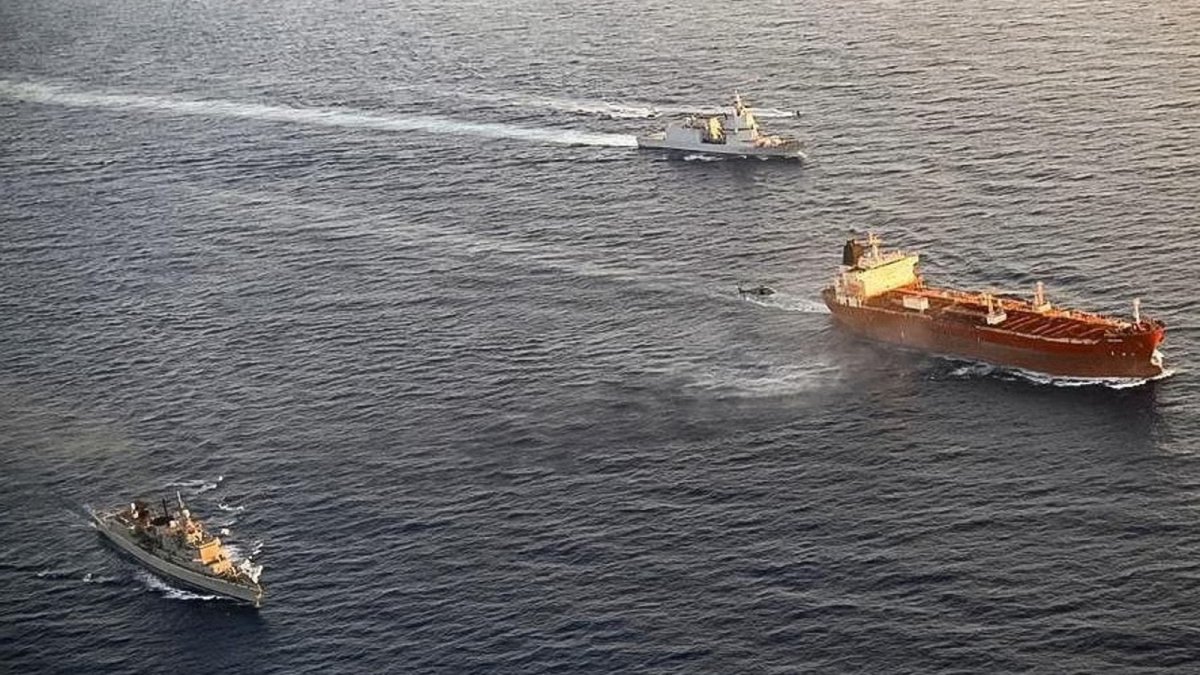
Putin’s Piracy Warning Raises the Stakes in the Shadow Fleet Standoff
Vladimir Putin has issued a stark warning to European capitals, threatening to "retaliate in kind" against Western commercial shipping should the European Union proceed with plans to seize Russian vessels. The Russian President’s remarks, delivered while overseeing naval exercises on Sakhalin Island, mark a significant escalation in the maritime confrontation that has been simmering since the imposition of Western sanctions on Russian energy exports.
Speaking to commanders of Russia’s Pacific Fleet, Putin framed any potential seizure of Russian cargo ships as "nothing less than piracy and robbery," insisting that Moscow would be forced to respond asymmetrically. "We shall be forced to respond in kind," he said. "And not necessarily in those waters where raids on our ships and vessels are planned, but wherever we ourselves deem it necessary and appropriate." The threat extends the theatre of potential conflict far beyond the Baltic and Black Seas, where European maritime patrols have been most active, into the vast expanse of the Asia-Pacific region.
The EU’s 21st Sanctions Package and the New Maritime Doctrine
The Russian leader’s bellicose language is a direct response to the European Union’s 21st sanctions package, passed in July, which authorised member states to sell Russian oil and petroleum products seized from shadow fleet tankers. The legislation also permits the sale of grain confiscated from these vessels, a move designed to choke off the revenue streams that fund the Kremlin’s war machine. This is not merely a bureaucratic tightening of restrictions; it represents a fundamental shift toward active maritime interdiction, transforming European navies and coastguards from monitoring entities into enforcement bodies with the legal authority to detain and confiscate assets.
According to reports from Reuters, nine such tankers have been detained in Europe since the start of 2026, four of them in French waters. The most notable incident occurred in March, when a suspected Russian shadow fleet tanker was intercepted by the French Navy near the port of Marseille-Fos. These detentions, once rare and diplomatically fraught, are now becoming a routine feature of the European security landscape. The EU’s broadening of sanctions to encompass hundreds of vessels, alongside the criminal prosecution of individual crews, signals a determination to dismantle the logistical architecture that allows Russia to circumvent the Oil Price Cap.
Whitehall’s Stance: The UK’s Pivot to Maritime Interdiction
For the United Kingdom, the crisis represents a defining moment in its post-Brexit foreign policy posture. On 16 June, the UK announced a new package of sanctions under its Russian sanctions regime, targeting the shadow fleet, financial networks, and military procurement channels. In total, 70 individuals and entities were designated, including 27 specified ships. This was not merely a symbolic gesture; it signalled a shift toward active maritime interdiction and tighter enforcement at sea, aligning British policy closely with the EU’s more aggressive stance.
The House of Commons Library has documented the evolution of this threat, noting that following Russia’s full-scale invasion of Ukraine in 2022, the UK and its G7 allies imposed unprecedented sanctions on the Russian energy sector, including the Oil Price Cap. To evade these restrictions, Russia has increasingly relied upon a shadow fleet consisting of hundreds of ageing tankers operating with opaque ownership structures. These vessels, often uninsured and poorly maintained, pose a significant environmental and maritime safety risk, particularly in the congested shipping lanes of the English Channel and the North Sea.
The question now facing Whitehall is whether the UK will follow the EU’s lead in authorising the outright seizure and sale of Russian cargo — a step that would require robust legal frameworks and careful handling of the law of the sea. The Royal Navy has not publicly detailed specific interdiction protocols, but the political pressure on ministers to match Brussels’ resolve is mounting.
Liina’s Counter-Accusations: The Mirror Image Argument
In a striking piece of rhetorical jujitsu, Viktor Liina, commander of Russia’s Pacific Fleet, sought to turn the West’s own language against it. Liina told Putin that "hostile countries like Britain and France" also transported goods on vessels flying flags of convenience, which, if the EU and Britain’s own criteria were applied, could equally be described as a shadow fleet. "Western states are actively using vessels flying the flags of third countries to transport cargo in their own interests. In essence, this constitutes their shadow fleet," Liina asserted.
This is a deliberate attempt to muddy the waters of international maritime law. While Western companies do use flags of convenience for commercial efficiency, the distinction lies in intent: the Russian shadow fleet is designed to obscure ownership, evade sanctions and avoid insurance and safety regulations, whereas Western shipping, even when registered in Panama or Liberia, operates within the bounds of the law with transparent ownership and legitimate insurance. Liina's conflation is a propaganda exercise, but one that could resonate in the Global South, where the West’s sanctions regime is often viewed with suspicion.
Liina further claimed that his fleet had conducted a detailed analysis of maritime traffic in the Asia-Pacific region, mapping the routes, cargo, and ownership of Western vessels. "We have the capabilities to inspect and detain vessels belonging to unfriendly states and their shadow fleet; inter-agency coordination is in place, and we are ready to tackle these tasks," he told Putin. This is a direct threat to British and French commercial interests operating in the Indo-Pacific, a region the UK has identified as a strategic priority in its post-Brexit "tilt" toward the Indo-Pacific.
The Legal and Geopolitical Quagmire
The legal stakes of this confrontation are profound. Putin’s characterisation of EU seizures as "piracy" is a deliberate invocation of a crime that carries universal jurisdiction, allowing any state to prosecute offenders regardless of where the act occurred. By framing Western actions as piracy, Moscow is laying the groundwork for a legal counter-offensive, potentially in the International Tribunal for the Law of the Sea, while simultaneously legitimising its own retaliatory seizures under the guise of self-defence.
Ukraine has sought to pre-empt this legal ambiguity by arguing to the International Maritime Organization that shadow fleet vessels should be considered part of the infrastructure helping Moscow finance the war, and therefore legitimate military targets. This argument, while compelling to Kyiv’s allies, sets a dangerous precedent. If commercial vessels can be deemed military targets based on their cargo or ownership, the principle of freedom of navigation—the bedrock of global trade—is severely undermined.
For the global shipping industry, the implications are chilling. The prospect of Russian warships "inspecting and detaining" Western-flagged vessels in the Pacific or the Indian Ocean introduces a new level of risk to maritime commerce. Insurance premiums for vessels transiting high-risk areas are already soaring, and the threat of arbitrary detention could reroute significant volumes of trade away from the Suez Canal and the Malacca Strait. The British shipping industry, which remains a global leader in maritime services, is watching these developments with growing alarm.
Escalation Risks and the Arctic Dimension
Putin’s remarks also touched on Nato’s "threatening behaviour" in the Asia-Pacific region and the Arctic, accusing the alliance of creating tension and deploying new weapons systems. "We can see that, unfortunately, the potential for conflict is growing here; Nato is making inroads here; new military-political blocs are being formed; and new weapons systems are being deployed here, or are planned for deployment, which also pose a threat to our country," he said.
This is a familiar Kremlin refrain, but it carries added weight given Nato's expanding presence in the High North. The Arctic, once a region of scientific cooperation, has become a theatre of great power competition, with the UK, the US and Russia all investing in ice-capable vessels and military infrastructure. The shadow fleet crisis provides Moscow with a convenient pretext to justify further militarisation of the region, while threatening Western commercial interests in the Barents Sea and beyond.
Nikolay Patrushev, the Russian presidential aide, has previously raised the possibility of seizing vessels belonging to countries that detain Russian tankers. "We, too, may become interested in what they are carrying and where they are going," he said. This is not idle chatter; it is a calculated warning that Moscow views the detention of its vessels as an act of economic warfare that demands a symmetrical response.
A Precarious Balance
The coming months will test the resolve of European and British policymakers. The EU’s 21st sanctions package has drawn a red line, but Putin’s response suggests he is willing to cross it. The risk of a naval incident—whether in the Baltic, the Mediterranean, or the South China Sea—is now higher than at any point since the end of the Cold War.
For the UK, the challenge is to balance its commitment to Ukraine with the need to protect British shipping and avoid a direct military confrontation with Russia. The Royal Navy’s capabilities are stretched, and the prospect of escorting commercial vessels through contested waters is a daunting operational challenge. Yet the alternative—allowing Russia to dictate the terms of maritime trade—is equally unpalatable.
As the situation develops, one thing is clear: the shadow fleet is no longer a niche concern for sanctions lawyers and maritime insurers. It has become a central front in the broader geopolitical struggle between Russia and the West, with the world’s oceans serving as the battleground. The British government, and its European allies, must navigate this crisis with a combination of resolve and restraint, lest a confrontation at sea spiral into a wider conflict.
By Erica Thornton, Staff Writer
This article was produced with AI-assisted research and editorial support. Sources: The Independent, Reuters, Novaya Gazeta Europe, House of Commons Library.
What's Your Reaction?
 Like
0
Like
0
 Dislike
0
Dislike
0
 Love
0
Love
0
 Funny
0
Funny
0
 Wow
0
Wow
0
 Sad
0
Sad
0
 Angry
0
Angry
0

US Politics and Policy Correspondent at Global1.News. Based in Washington DC, covering American politics, policy, elections, and the courts. Knows how the system works and tells you what it actually means.












Comments (0)