
Argentina Signs Hidrovia Concession Amid Environmental Storm
The Deal That Just Got Signed Argentina's Ministry of Economy confirmed today the signing of the new concession contract for the Trunk Waterway, known as the Hidrovia, with the Belgian-origin consortium Jan de Nul - Servimagnus. The new operating company, Via Navegable Argentina S.A., officially ends decades of state management and ushers in a private investment era for one of the most commercially vital river systems on the planet.
The Deal That Just Got Signed
Argentina's Ministry of Economy confirmed today the signing of the new concession contract for the Trunk Waterway, known as the Hidrovia, with the Belgian-origin consortium Jan de Nul - Servimagnus. The new operating company, Via Navegable Argentina S.A., officially ends decades of state management and ushers in a private investment era for one of the most commercially vital river systems on the planet. The automatic activation of the contract brings an immediate 13.5% reduction in toll values, a move designed to lower export costs for the country's powerful agricultural sector.
Buenos Aires, Argentina - August 16, 2026 - The signing, which had been anticipated for months, includes a comprehensive plan for channel deepening works and the integration of advanced navigation technology. The transition is described as orderly, with a formal asset transfer from the state to the private consortium now underway. This is not merely a bureaucratic handover; it represents a fundamental shift in how Argentina manages its principal export artery, moving from a model of public oversight to one driven by corporate investment and long-term profit horizons stretching to 2055.
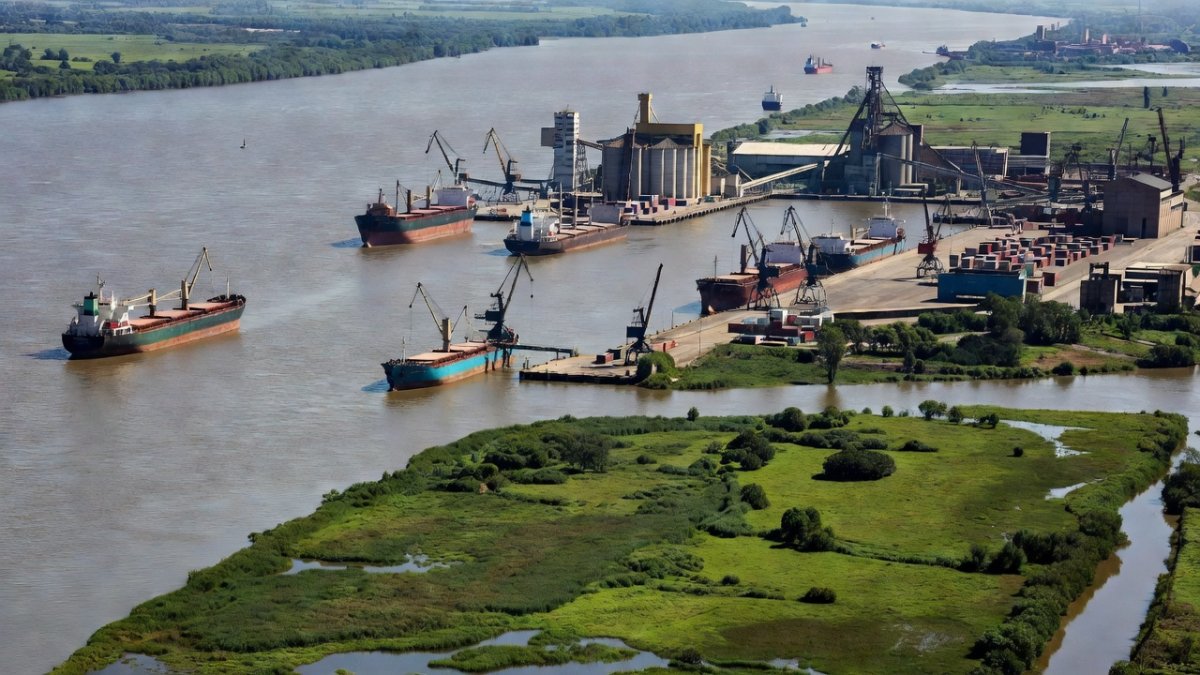
The economic stakes are staggering. Projected annual revenues for the concession are estimated at up to US$410 million, a dramatic leap from the historical average of around US$200 million. The contract itself is valued at approximately US$15 billion over its 25-year operational framework. For a government facing persistent fiscal challenges, the promise of increased efficiency and reduced logistical costs is politically potent. Yet, as the ink dries on this contract, a coalition of environmentalists, scientists, and river communities is raising alarms that the price of this progress could be the irreversible destruction of one of the world's most unique ecosystems.
A River That Feeds Argentina
To understand the ferocity of the opposition, one must first grasp the sheer scale of what is at stake. The Hidrovia Parana-Paraguay is not a simple canal; it is a vast, living corridor stretching approximately 3,400 to 3,500 kilometers, connecting the heart of South America to the Atlantic Ocean. It links five nations—Argentina, Brazil, Paraguay, Uruguay, and Bolivia—starting from Puerto Caceres in Brazil and flowing down to Nueva Palmira in Uruguay and the Rio de la Plata. This is the circulatory system of the region's economy, moving roughly 80% of Argentina's foreign trade, predominantly grains, soybean oil, and soybean meal.
The current depth of the waterway sits at 34 to 36 feet, sufficient for many vessels but limiting for the massive oceangoing bulk carriers that dominate global grain trade. The new project aims to deepen the channel to between 39 and 44 feet, a modification that would allow larger ships to reach the agro-export ports of Gran Rosario and operate at approximately 90% capacity. For the multinational grain giants—Cargill, Bunge, Dreyfus, Cofco, and Molino Agro, all nucleated within the Rosario Stock Exchange—this translates into significant economies of scale. Steel firms like Acindar and the Techint group also stand to benefit from reduced input costs, creating a powerful industrial lobby in favor of the deepening.
However, the physical intervention required is monumental. Deepening the channel to 44 feet would necessitate the removal of roughly 150 million cubic meters of sediment from the riverbed. This is not a localized dredging operation; it is a massive geological alteration of a living river system. The scale of this excavation, set against the backdrop of a region already stressed by climate variability and agricultural expansion, forms the core of the environmental conflict. The river is being asked to serve as a highway, and its defenders argue it cannot do so without sacrificing its identity as a living ecosystem.
A History of Corruption and Collapsed Tenders
The road to today's signing has been paved with scandal, legal battles, and repeated institutional failures. The first concession for the Hidrovia was awarded on February 21, 1995, to a partnership between Jan De Nul, responsible for dredging, and Emepa, led by Gabriel Romero, which handled buoyage. Together, they formed Hidrovia Sociedad Anonima and began collecting tolls. This initial arrangement set a precedent for private control, but it was the 2010 renewal that sowed the seeds of today's controversy. Decree 113/2010, signed by then-President Cristina Kirchner, extended the contract to April 30, 2021, without holding a new public tender, a decision that bypassed competitive bidding and raised immediate red flags.
The corruption allegations came to a head in 2018 when Gabriel Romero admitted in court to paying US$600,000 in bribes to secure that extension. Jan De Nul denied any involvement in the bribery scheme, and the partnership was subsequently dissolved, leaving a cloud of suspicion over the entire operation. Under President Alberto Fernandez, a failed tender attempt led to the nationalization of dredging and buoyage services via Decree 427/2021. The state entity AGP (Administracion General de Puertos) took over toll collection but, in a paradoxical move, continued contracting the same companies to perform the work. This period also saw the accumulation of a US$80 million debt owed to Jan De Nul, a financial wound that festered for years.
The political landscape shifted dramatically with the arrival of President Javier Milei. His government dissolved the AGP via the Boletin Oficial on January 3, 2025, clearing the institutional decks for a fresh start. In February 2025, a new 30-year tender was launched, but the process collapsed when only Belgian dredging giant DEME submitted a bid. Inaki Arreseygor, director of Argentina's National Agency for Ports and Navigation, accused the process of being an 'orchestrated scheme' to sabotage the tender, prompting a government investigation into the lone bidder. Now, in August 2026, the concession has finally been signed with Jan de Nul - Servimagnus, a consortium that has weathered decades of controversy to emerge as the ultimate winner.
The Ecological Price of a 44-Foot Channel
Environmental scientists and social organizations are warning that the dredging project, as currently designed, could constitute an act of 'ecocide.' The central demand from opposition groups is the completion of a comprehensive environmental impact study, which they argue has been illegally bypassed. In July 2025, the Sala B of the Federal Chamber ruled on the missing environmental assessments, yet the government has pressed forward with the concession regardless. The scientific community's alarm was amplified on May 19, 2026, when iProfesional reported that researchers were deeply concerned about the environmental risks posed to wetlands and biodiversity along the entire corridor.
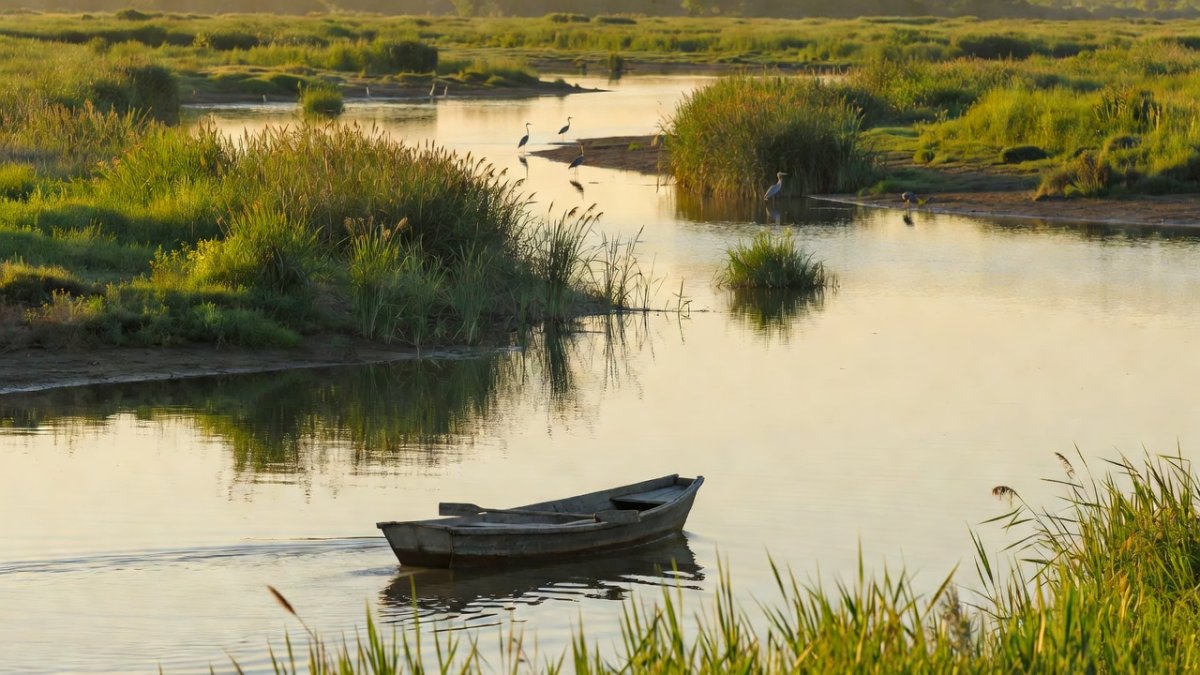
The core ecological issue is hydrology. The Parana's alluvial valley is not a passive container for water; it is an active floodplain that depends on periodic flooding to maintain its health. Deepening the main channel to 44 feet would effectively lower the river's water level during dry periods, draining water from the adjacent wetlands. This process, known as hydrological drawdown, threatens the most extensive wetland system on the planet, a mosaic that stretches from the Rio de la Plata all the way to the Pantanal of Mato Grosso in Brazil. These wetlands act as natural water purifiers, carbon sinks, and critical habitats for countless species of fish, birds, and mammals.
The removal of 150 million cubic meters of sediment also carries its own risks. Dredging resuspends contaminated sediments, potentially releasing heavy metals and agricultural chemicals that have settled on the riverbed over decades. This can poison the water column, affecting fish populations and the human communities that depend on them for food and livelihood. Furthermore, the deepening will alter flow velocities, potentially causing erosion in some areas and accelerated sedimentation in others, creating a maintenance treadmill that locks the region into perpetual, escalating intervention. The river is being treated as a static infrastructure asset, but it is a dynamic, living system that will respond to this assault in unpredictable and potentially catastrophic ways.
Voices From the River
Opposition to the concession has crystallized into a powerful social movement. The campaign 'Salvemos el Parana y sus humedales' (Save the Parana and its wetlands) organized an extraordinary 800+ kilometer river journey by kayak and rowing boat from Puerto Las Palmas in Chaco to Rosario, running from March 7 to March 21, 2026. The journey concluded on the eve of World Water Day, serving as a dramatic visual protest against the privatization and deepening of the river. Leading the charge is Luis 'Cosita' Romero, a fisherman and environmental activist whose words cut through the technical jargon: 'The Parana is not a waterway, it is our river.'
Romero articulates the movement's core grievance with stark clarity. He argues that the plan to dredge the river to 44 feet is proceeding without a prior environmental impact study, effectively seeking to 'turn it into a highway for giant ships at the cost of drying our wetlands.' His warning is specific: deepening the channel will drain water from the alluvial valley, directly threatening the wetland system that sustains his community and countless others. He also criticizes the involvement of the US Army Corps of Engineers and the broader trend of foreign privatization of a national resource, framing the issue as a matter of sovereignty as much as ecology.
Marta Arriola, another prominent environmentalist, strikes a note of cautious resilience: 'It is a critical moment, but we are men and women of hope.' Architect Pablo Payro, representing the Foro por la Recuperacion del Parana, offers a fundamental design critique: 'Ships must adapt to rivers, not the other way around. Nowhere in the world is an oceangoing vessel allowed 500 km inside a continent.' These voices represent a diverse coalition of fishermen, island dwellers, coastal town residents, academics, and activists who see the river not as a commercial asset but as a communal heritage. Their resistance is not merely NIMBYism; it is a fundamental challenge to the model of export-driven development that prioritizes corporate profit over ecological and community health.
What This Means for Latin America
The signing of this concession is being watched closely across Latin America, as it represents a bellwether for the region's approach to transboundary river management. The Parana-Paraguay basin is shared by five sovereign nations, and Argentina's unilateral decision to deepen the channel has implications for its neighbors. Brazil, Paraguay, Uruguay, and Bolivia all rely on the waterway for their own exports, but they also share the ecological consequences of any alteration. This creates a diplomatic tension between short-term commercial gains and long-term environmental stewardship, a tension that is playing out in river basins across the continent.
Parallels are immediately drawn to the ongoing debates over the Amazon waterway, where proposals to dredge and industrialize the river system face similar opposition from indigenous communities and environmentalists. Likewise, the Magdalena River in Colombia has seen contentious dredging projects aimed at improving navigation, often at the expense of wetland health and local fisheries. The pattern is consistent: governments and multinational corporations push for infrastructure to extract commodities more efficiently, while local communities and scientists warn of irreversible ecological damage. The Hidrovia concession is now the most prominent example of this conflict, setting a precedent that could influence policy decisions from the Andes to the Atlantic.
The exclusion of Chinese state-controlled firms from the tender, via Article 16 of the rules established in November 2024, adds another geopolitical layer. This article bars companies controlled by foreign states, effectively eliminating entities like Shanghai Dredging Co., a subsidiary of China Communications Construction Company. The decision reflects a broader regional trend of hedging against Chinese influence in critical infrastructure, while simultaneously favoring Western European firms like Jan De Nul and DEME. This geopolitical maneuvering, however, does little to address the core environmental concerns, and it raises questions about whether the river's future is being decided by corporate interests rather than the public good.
The Bottom Line
Today's signing is a triumph for the forces of export-driven capitalism, but it is a gamble with the region's ecological future. The immediate 13.5% reduction in tolls will provide a short-term boost to Argentina's agricultural competitiveness, and the promise of a 44-foot channel will undoubtedly attract larger vessels and greater investment. However, the long-term costs—potentially irreversible damage to the world's most extensive wetland system, the displacement of river communities, and the degradation of water quality—are not reflected in the contract's balance sheet. The projected US$410 million in annual revenues pales in comparison to the value of the ecosystem services that are being put at risk.
The history of this waterway is a cautionary tale of corruption, failed oversight, and the persistent power of entrenched interests. From the 1995 concession to the 2010 decree, the 2018 bribery admissions, and the collapsed 2025 tender, the process has been consistently marred by a lack of transparency and a disregard for environmental law. The fact that the concession is now being signed without a completed environmental impact study, despite court rulings demanding one, suggests that the institutional failures that allowed past abuses are still very much present. The government's decision to prioritize speed over scrutiny is a dangerous precedent.
For the fishermen, island dwellers, and environmental activists who paddled 800 kilometers to make their voices heard, the fight is far from over. They have lost this battle, but the war for the river's soul continues. The 'Salvemos el Parana' movement has succeeded in putting the issue on the national and international agenda, and their resistance will likely shift to legal challenges and sustained public pressure. The river, as Luis Romero reminds us, is not a waterway; it is a living entity that sustains millions. The question now is whether Argentina, and Latin America as a whole, will learn from this decision or repeat the mistakes of the past. The bottom line is that a river cannot be privatized without consequences, and those consequences will be borne by the people and ecosystems that depend on it for generations to come.
By Elena Vasquez, Staff Writer
This article was produced with AI-assisted research and editorial support. Reporting is based on sources cited in the article.
What's Your Reaction?
 Like
0
Like
0
 Dislike
0
Dislike
0
 Love
0
Love
0
 Funny
0
Funny
0
 Wow
0
Wow
0
 Sad
0
Sad
0
 Angry
0
Angry
0

Latin America Correspondent at Global1.News. Based in Mexico City, covering politics, economics, energy, and culture across the region. Brings an on-the-ground perspective to stories spanning from the Rio Grande to Patagonia.













Comments (0)