
Israel could cost Trump the election
In the volatile nexus of U.S. domestic politics and Middle‑East geopolitics, the 2026 election season has become a litmus test for the durability of the American‑Israeli partnership.
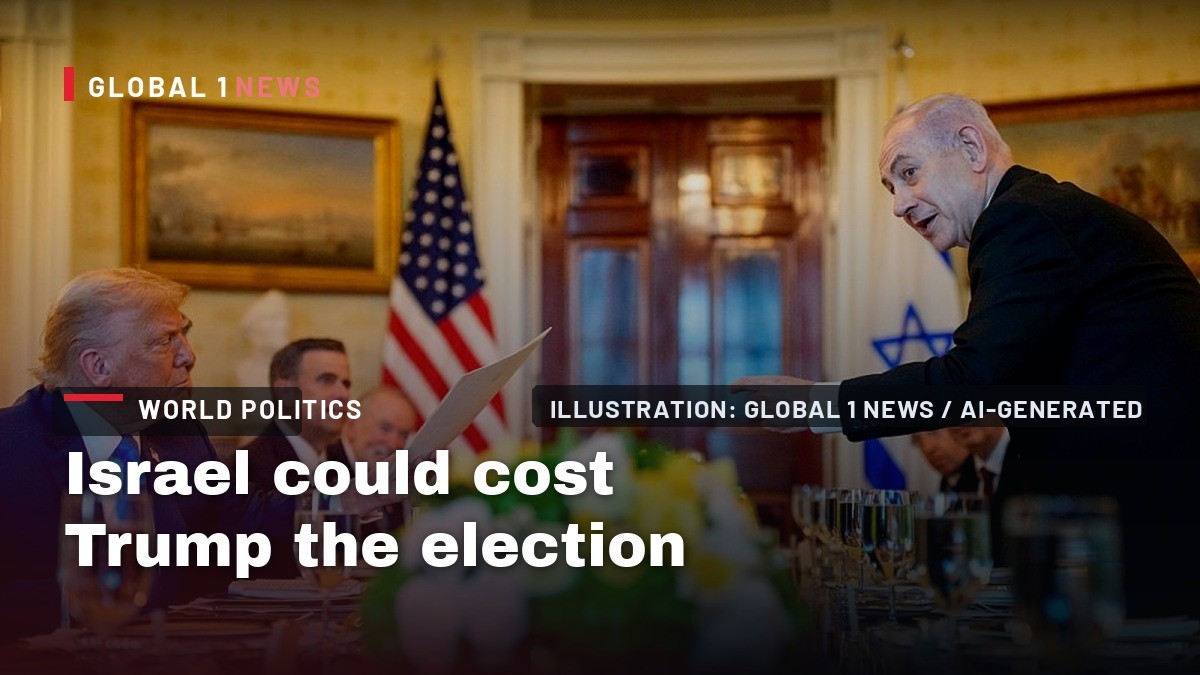
In the volatile nexus of U.S. domestic politics and Middle‑East geopolitics, the 2026 election season has become a litmus test for the durability of the American‑Israeli partnership. The latest commentary from a Turkish outlet, Daily Sabah, underscores how Prime Minister Benjamin Netanyahu’s confrontational stance toward Iran has reverberated far beyond the region, inflating global commodity prices and, in turn, reshaping voter sentiment in the United States. As Lebanon watches the unfolding drama, it is essential to parse the strands linking Israel’s war‑like posture, rising energy costs, and the precarious standing of President Donald Trump as he seeks re‑election.
Netanyahu’s Iran strategy and its global price shock
The article points to a direct causal chain: Netanyahu’s decision to wage a war against Iran set off a cascade that lifted oil, food and fertilizer prices worldwide. While exact figures are not supplied, the narrative emphasizes that the surge has been “still not healed today,” suggesting a lingering inflationary pressure that continues to bite consumers far beyond the Middle East.
For American voters, fuel costs have traditionally been a decisive factor in electoral calculations. The piece notes that gasoline, once priced at $2.80 per gallon, now hovers between $4.30 and $4.50. This jump, described as “a level to which the American public is not accustomed,” is presented as a direct outgrowth of Israel’s confrontation with Tehran, thereby linking foreign policy decisions to domestic economic anxiety.
Public opinion on the Iran war versus the Gulf War
The author draws a stark contrast between the public backing enjoyed by the 1990‑91 Gulf War and the tepid support for the current Iran conflict. When the United States declared war on Iraq, “63 % of the public stood behind Bush,” whereas today “Trump cannot seem to push public support for the Iran war beyond 30 to 35 %.” This juxtaposition serves to highlight the erosion of a “war‑on‑terror” consensus that once underpinned American foreign‑policy legitimacy.
According to the article, polling across “almost all polling firms” shows Trump’s approval rating “dropped to around 30 %.” While the precise methodology is not detailed, the figure is positioned as a historic low, suggesting that the combination of high fuel prices, food inflation and a perceived “costly fuel” burden is eroding the president’s political capital.
The “Gaza effect” on elite campuses and political discourse
Beyond the economic realm, the source highlights a cultural backlash dubbed the “Gaza effect.” It claims that universities which have hosted protests against Israel have faced “drastic reaction,” including police violence, arrests of academics, and withdrawal of federal funding. Institutions named—MIT and Harvard—are said to have experienced “direct government pressure” on their leadership.
This narrative implies that the Israel‑Palestine conflict is seeping into the fabric of American higher‑education politics, potentially shaping the next generation of policymakers. The article suggests that anti‑Israel sentiment is gaining traction, especially in “New York above all,” where “anti‑Israel candidates are emerging.” The emergence of socialist candidates, traditionally marginal, is attributed to their anti‑Israel stance, indicating a shift in the political calculus of certain voter blocs.
Vice‑presidential rhetoric and the perception of U.S.–Israel alignment
The piece cites Vice President J.D. Vance’s admonition to Israeli leaders that “you can’t just kill your way out of solving every single national security problem,” while simultaneously noting his acknowledgment that “Trump is the only head of state in the entire world who is sympathetic to the nation of Israel.” This duality reflects a tension within the U.S. administration: a public rebuke of Israeli tactics paired with a strategic alignment that has historically placed Israel’s interests ahead of America’s.
By framing the U.S.–Israel relationship as “almost a single state,” the article underscores a longstanding perception that Washington’s foreign‑policy calculus is heavily weighted toward Israeli security concerns, a perception that may be eroding under the weight of domestic economic pressures.
Electoral implications of the Israel‑Iran nexus
According to the Daily Sabah analysis, the confluence of rising commodity prices, waning war support, and campus‑driven anti‑Israel sentiment could translate into a “shortfall in votes” for Trump in both chambers of Congress. The article warns that this may consign the president to a “lame‑duck position,” a scenario it deems unprecedented in American history.
It also speculates that the Senate and the House could block any post‑election “major attack on Iran” that Trump may contemplate, suggesting a potential legislative check on executive military ambition. This prospect adds another layer of uncertainty to the president’s strategic calculus as he navigates the twin pressures of foreign policy and electoral survival.
Netanyahu’s domestic fallout and global Zionist fatigue
The source argues that Netanyahu’s hardline approach has not only strained U.S. ties but also alienated “global Zionism.” It claims that the Israeli leader has “prepared the ground for the appearance of a world in which the Israeli public is violent and lawless,” and that he has “destroyed the Western paradigm.” While the language is hyperbolic, the underlying point is that Israel’s internal security posture and its external aggression are feeding back into a broader diplomatic malaise.
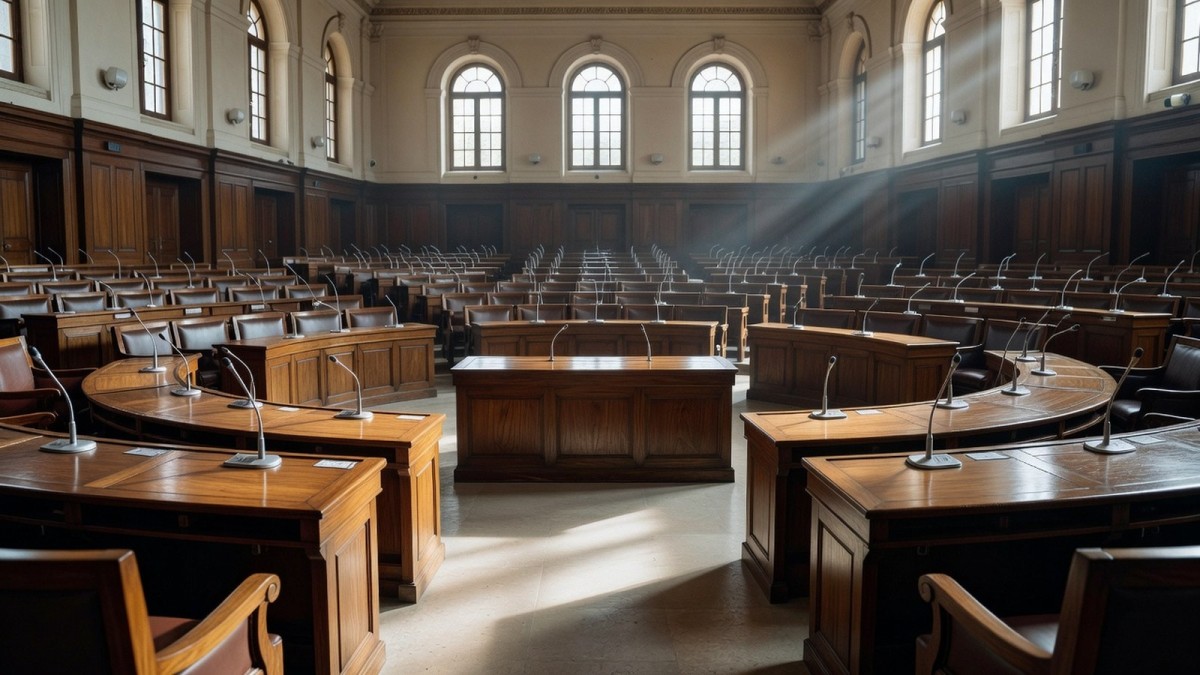
At the United Nations, the article notes that the “moments of the hall emptying while he was still speaking” were broadcast, symbolizing a waning aura of deference for Netanyahu on the world stage. This visual cue, coupled with the domestic unrest, suggests a potential recalibration of Israel’s diplomatic capital, a factor that could reverberate through its alliance with Washington.
Strategic outlook: can Trump weather the Israel‑Iran storm?
In sum, the Daily Sabah piece paints a picture of a president caught between an escalating Iran confrontation, soaring domestic costs, and a fracturing pro‑Israel consensus. The author concludes that “Trump may lose the election because of Netanyahu, because of Israel,” emphasizing that the president’s inability to “pursue a sound policy” on the matter has left him “unable to manage the heavy burden.”
From a Lebanese perspective, the analysis reinforces a broader regional observation: the intertwining of great‑power rivalry, energy security, and the Sunni‑Shia competition is now being filtered through domestic electoral politics in Washington. As the 2026 election approaches, the outcomes in both the United States and Israel will likely shape the strategic calculus of the entire Middle East, influencing everything from oil markets to the balance of power between Tehran and Jerusalem.
This article was produced with AI-assisted research and editorial support. Reporting is based on the source material cited below. Sources: Daily Sabah Middle East; dailysabah.com; Global1.News (18 October 2026).
By Malik Hassan, Staff Writer
What's Your Reaction?
 Like
0
Like
0
 Dislike
0
Dislike
0
 Love
0
Love
0
 Funny
0
Funny
0
 Wow
0
Wow
0
 Sad
0
Sad
0
 Angry
0
Angry
0

Middle East Correspondent at Global1.News. Based in Beirut, covering politics, conflict, energy, and society across the Middle East. Brings context and depth to a region often reduced to headlines.










Comments (0)