
PLA Urged to Rebuild AI Training Around 'Educating for War'
Researchers at China's elite NUDT are urging graduate AI courses rebuilt around uncrewed combat scenarios to train PLA officers for intelligent warfare, as Beijing pushes an intelligent military system by 2027 and Tokyo accelerates its own AI and unmanned defence build-up.

NUDT Researchers Want AI Taught Through Combat, Not Code
Researchers at China's National University of Defence Technology (NUDT), the PLA's flagship military science institution, have proposed redesigning a graduate artificial intelligence course around a single guiding idea: "educating for war." In a proposal published in the July issue of the journal Defence Industry Conversion in China, academics from the university's College of Intelligence Science and Technology argued that AI training for future officers must be built on combat scenarios rather than abstract computer science, embedding uncrewed warfare as the thread that connects every concept taught.
The South China Morning Post reported the proposal on September 6. It arrives as Beijing accelerates a broader push to field an "intelligent military system," with President Xi Jinping telling senior party officials in late July that the PLA must enhance its application of unmanned intelligent technologies ahead of the army's 2027 centenary goals.
A Course Built Around the Uncrewed Battlefield
The course at the centre of the proposal, "Principles and Practice of Artificial Intelligence," was introduced by NUDT in the autumn semester of 2022 for graduate students in non-AI science and engineering fields. It was designed to level differences in students' technical backgrounds and help future officers combine machine learning with their own disciplines.
In its current form, the researchers said, the course's case studies lack sufficient "military flavour." Their redesign would structure the entire syllabus around a common uncrewed-warfare scenario, using military operations as a connecting thread. Course topics would be mapped onto the different stages of the military decision-making and targeting process, from observing and assessing a situation to making decisions and taking action, and from finding, locating and tracking a target to engaging it and assessing the results.
War Gaming, Swarm Tactics and a Virtual Combat Sandbox
The pedagogical choices are strikingly operational. A unit on reinforcement learning, in which an AI system improves through trial and error, would be taught through combat decision-making and war gaming. A unit on uncertainty reasoning, in which a system makes decisions from incomplete or unreliable information, would be illustrated through fault diagnosis in uncrewed systems and border intrusion warnings.
One proposed exercise asks students to train several simulated drones to work together to surround a high-value target, teaching how AI agents coordinate, communicate and make decisions as a group. The team has also built an online simulation platform where students can design maps and scenarios, configure forces and missions, and train AI agents through mock combat, including contests in which agents trained by different student teams compete against one another. The curriculum, they wrote, should let students "internalise theoretical methods as 'intelligent thinking' for solving specific problems in military scenarios."
The researchers said practical exercises should combine classroom theory with hands-on work rather than simply asking students to run existing code. They proposed clearly defined problems, data sets, algorithms and step-by-step tasks, along with open questions that push students toward more advanced applications of the techniques they have just learned.
Why Beijing Is Investing in Intelligent-Warfare Talent
The proposal reflects a broader doctrinal shift inside the PLA. In a Politburo group study session on July 30, Xi called for efforts to fulfil the PLA's 2027 centenary goals and make "decisive progress" in modernising national defence, urging stronger application of unmanned intelligent technologies and the gradual construction of an intelligent military system. United States government analyses describe Xi's two interim objectives as accelerating both "informatization" and "intelligentization" by 2027, with modernization to be basically complete by 2035 and a "world-class" force by 2049.
NUDT sits at the centre of that effort. Headquartered in Changsha, Hunan province, the university is directly overseen by the Central Military Commission, the military's highest command body, and trains many of the PLA's technical officers. It has also long been a target of Western export controls: the US Commerce Department added NUDT to its restricted trade list in 2015 over allegations that American technology was used in Chinese supercomputers linked to nuclear explosive activities.
Human Command Stays at the Centre, on Paper at Least
Notably, the authors draw explicit boundaries around what AI should be allowed to do. Every exercise, they write, must reinforce a core principle: AI serves strictly as a decision-support tool, while final command authority remains entirely human. They propose classroom debates on the "ethical and legal boundaries of autonomous weapons systems" to build a sense of responsibility, and they highlight AI's known weaknesses, including data bias, environmental sensitivity and vulnerability to adversarial attacks.
The framing aligns with Beijing's public position in international forums, where it has stressed human control over weapons systems even as it invests heavily in uncrewed platforms and military AI. For regional observers, the question is whether the classroom red line survives contact with operational pressure, particularly in a Taiwan contingency or a high-intensity stand-off in the East China Sea.
Tokyo Is Racing Down a Parallel Track
Japan is moving in the same direction, though from a very different doctrinal starting point. On September 2, Prime Minister Sanae Takaichi told senior Self-Defense Forces officers that Tokyo must speed up the introduction of AI and unmanned defence assets ahead of a planned year-end revision of Japan's three key national security documents. "It goes without saying that we should introduce even more speedily" technologies that develop far faster than traditional equipment, she said, according to Kyodo News.
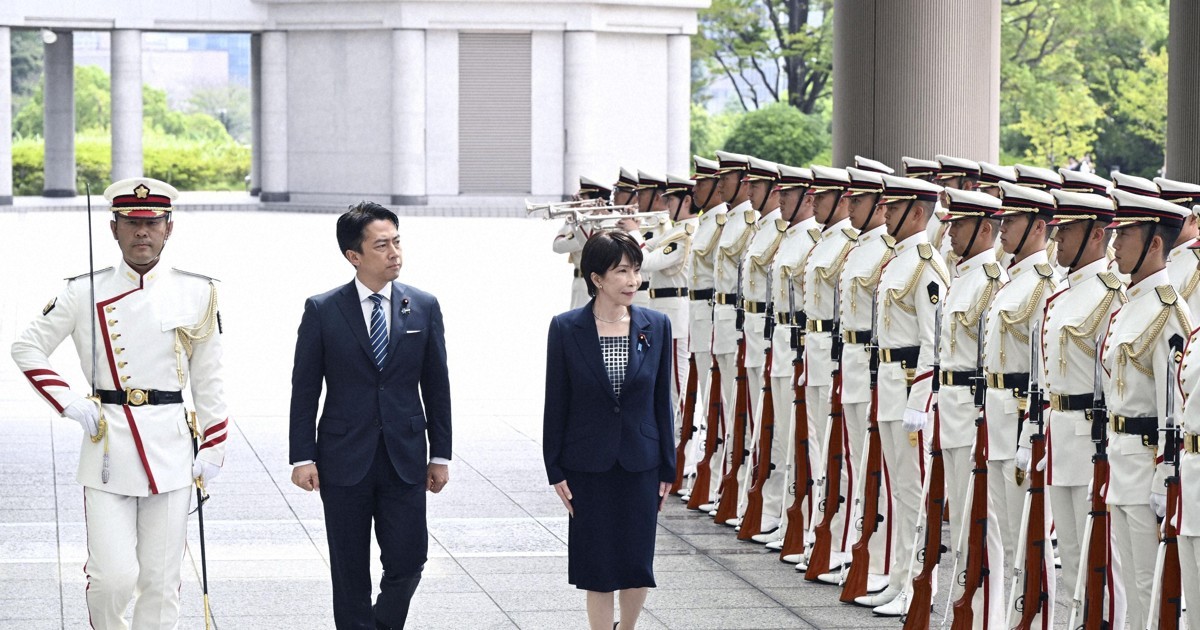
The push has a concrete budget behind it. Japan's record defence budget request for the coming fiscal year totals about 8 trillion yen (US$55 billion) and includes funding for drones, AI and missiles, according to the Associated Press. The Defence Ministry's 2026 white paper, meanwhile, detailed a coastal-defence initiative called SHIELD that would network uncrewed aerial, surface and underwater vehicles with AI-assisted sensor processing, with full deployment planned by fiscal 2027. Japanese officials have stressed that humans would remain central to any AI-assisted command decisions, a constraint rooted in the country's constitutionally framed, defence-oriented posture.
The two militaries now face each other across the East China Sea with a shared assumption: that the next conflict will be fought at machine speed. China is educating its officers to build and direct intelligent systems; Japan is acquiring the same tools to defend its coastline against them. Takaichi's government has watched closely as the PLA fields uncrewed reconnaissance aircraft in the East China Sea and stands up new drone units.
What to Watch For
Several markers will show how this competition evolves over the next year. First, whether NUDT's redesigned course reaches the classroom in the coming autumn semester, and whether the simulation platform's student-vs-student AI contests migrate from pedagogy to operational experimentation. Second, Japan's year-end revision of its National Security Strategy, National Defence Program Guidelines and Mid-Term Defence Program, which will set funding levels for AI and uncrewed systems through the early 2030s. Third, the pace of diplomatic movement on lethal autonomous weapons at the United Nations, where both Beijing and Tokyo have staked out positions that emphasise human control while building systems that strain against it.
For now, the most revealing development is symbolic but significant: China's most elite military university now treats AI fluency as a warfighting skill to be drilled like marksmanship, and Japan's government is answering in kind. The classroom is where the next generation of the region's military competition is being decided, long before any hardware ever reaches the battlefield.
By Kenji Tanaka, Staff Writer
This article was produced with AI-assisted research and editorial support. Sources: South China Morning Post, China Daily, Kyodo News, Associated Press.
What's Your Reaction?
 Like
0
Like
0
 Dislike
0
Dislike
0
 Love
0
Love
0
 Funny
0
Funny
0
 Wow
0
Wow
0
 Sad
0
Sad
0
 Angry
0
Angry
0

Japan Correspondent at Global1.News. Tokyo-based voice covering Japanese politics, technology, economy, and culture. Tracks the intersection of tradition and innovation in one of the world's most dynamic societies.















Comments (0)