
Patmos plans 50MW data center outside Birmingham, Alabama
Patmos’ decision to turn a former Walmart in Fairfield, Alabama into a 20‑megawatt high‑density tech campus is the kind of move that makes independent hosting providers sit up and take note.
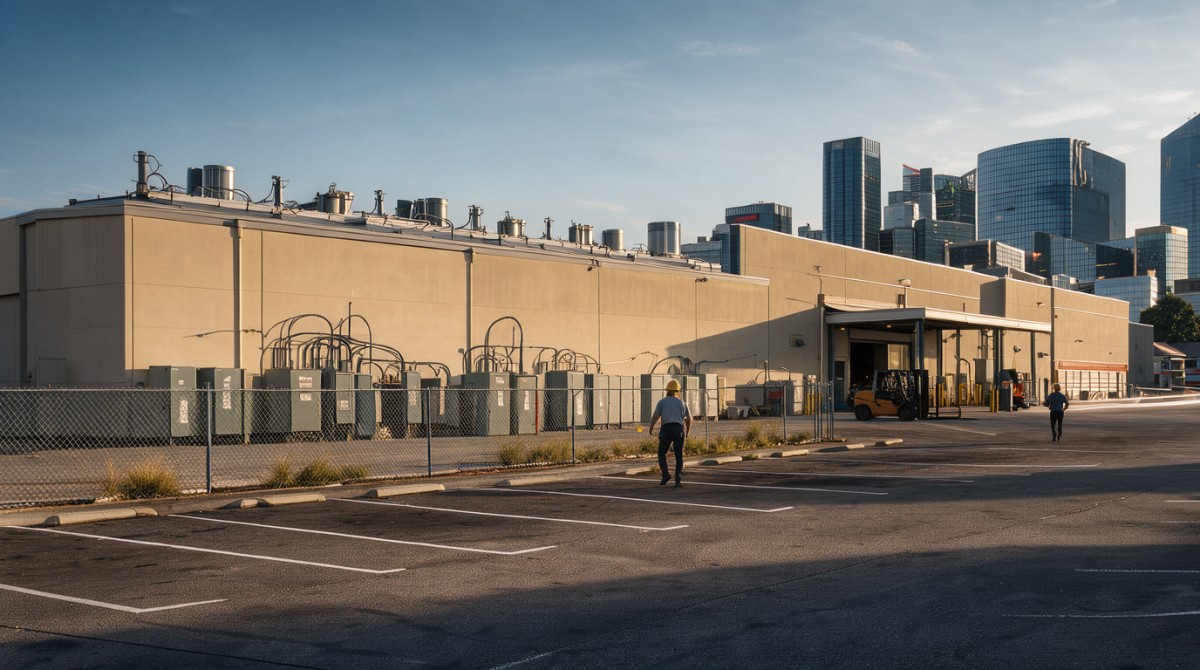
Patmos’ decision to turn a former Walmart in Fairfield, Alabama into a 20‑megawatt high‑density tech campus is the kind of move that makes independent hosting providers sit up and take note. It isn’t just another “new data center” announcement; it’s a playbook for how a mid‑size operator can sidestep the land‑grab tactics of hyperscalers, avoid the endless cycle of greenfield builds, and still lay down a serious amount of power without trampling on local farmland. As someone who has spent a decade wiring up racks in cramped basements and retrofitting old warehouses, I can tell you that Patmos is doing something that makes sense on the ground, even if the press release sounds like a feel‑good community story.
Why the old Walmart matters more than the megawatts
The site at 7201 Aaron Aronov Drive sits on just under 16 acres and was built in 2006 as a standard big‑box store. Patmos is not the first to see potential in the vacant building – it changed hands a few times, from Canadian investor Hammic Fairfield in 2019 to Safe Space Cos. in 2022, before the latest purchase. The price tags mentioned – a $1.2 million deal, a $1.95 million flip, and a rumored $32 million sale – illustrate how the market values the land more than the structure. Patmos’ plan to retrofit instead of demolish is a direct counter to the “build a fresh slab” mindset that dominates the hyperscaler playbook.
From a risk perspective, reusing an existing footprint cuts the capital‑intensive phases of permitting, site grading, and utility trenching. Those are the stages where a mis‑step can bleed a provider dry. By agreeing to pay the full cost of electricity service to Alabama Power, Patmos also sidesteps the “shared‑cost” models that often leave smaller players footing the bill for oversized transformer upgrades they never use. The trade‑off is a modest initial capacity – 20 MW – but the ability to scale up to 50 MW later gives Patmos room to grow without over‑committing upfront.
High‑density focus: a double‑edged sword
Patmos touts the campus as “designed to host high‑density workloads.” In practice, that means packing more compute per square foot, which drives up power density and cooling requirements. For an operator with a handful of sites – Kansas City, Dallas, Phoenix, and now Fairfield – the challenge is to keep the OPEX curve flat while delivering the performance that customers demand. High‑density designs are notorious for blowing up cooling budgets if not engineered correctly. The fact that Patmos is retrofitting a former retail building, which was never meant for raised floor or chilled water loops, raises eyebrows.
My own experience shows that retrofits can work, but only when you bring in a disciplined engineering team that treats the building envelope as a constraint, not a convenience. The upside is you avoid the “farm‑field” footprint that hyperscalers love, which can be a nightmare for local power grids. The downside is you inherit structural limitations that can force you into expensive custom HVAC solutions. Patmos’ decision to lock in a direct service agreement with Alabama Power suggests they’ve done the math and are comfortable with the utility’s capacity to handle a 20 MW load now, with headroom for future expansion.
Community narrative vs. hard‑core economics
John Johnson, Patmos’ CEO, frames the project as a “job‑dense tech ecosystem” that will “create new opportunities for communities.” That line reads like a press release, but there’s a grain of truth. The mayor of Fairfield, Herman Carnes Jr., echoed the sentiment, noting the city’s desire to see new life on the former Walmart site. From a founder’s perspective, community goodwill can smooth permitting and provide a local talent pipeline, but it doesn’t replace a solid business case.
The real economics hinge on the cost of power, the price of the real estate, and the ability to attract customers who need uncensored, “uncancellable” hosting. Patmos positions itself as a refuge for “digital exiles,” a niche that can command premium rates if the provider can prove resilience and independence from Big Tech censorship. That niche is small but growing, especially among clients who have been burned by sudden policy changes at the big clouds. If Patmos can lock in a stable power price with Alabama Power and keep the real‑estate cost low – the $1.95 million purchase suggests a bargain compared to the rumored $32 million market value – the margin story could be attractive.
Competition in the Birmingham corridor
The article lists existing operators in the broader Birmingham area: DC Blox, Nebius, US Data Centers, and QTS. None of them have a footprint at the former Walmart, which gives Patmos a first‑mover advantage in that specific parcel. However, the presence of multiple colocation players means the market is already being sliced. Those incumbents have the benefit of established carrier hotels and local fiber peering, which Patmos will need to match or out‑engineer.
What’s notable is that Patmos already runs a site in Kansas City out of a former newspaper printing press – another example of repurposing industrial space. That experience should translate into a smoother rollout in Fairfield, assuming the local carrier ecosystem can support the high‑density workloads. For independent providers watching the move, the lesson is clear: you can carve out a niche by grabbing underutilized industrial assets before the big guys move in, but you must bring a full stack of connectivity, power, and cooling to make it viable.
The risk of “best practices” that crumble in production
Industry whitepapers love to preach “build to Tier 4” or “use modular containers for scalability.” In the field, those best practices often break under real load. Patmos’ approach of retrofitting a concrete slab and paying for full utility service sidesteps the modular hype. It also avoids the “shared‑infrastructure” pitfalls where a single point of failure can take down multiple tenants.
From a risk‑management lens, the biggest unknown is how the building’s legacy systems will handle the thermal load of high‑density racks. If the cooling plant is under‑designed, you’ll see hot spots, throttled servers, and a spike in OPEX as you scramble for emergency chillers. That’s a scenario many founders have lived through when they tried to force a “best practice” into a mis‑matched facility. Patmos’ public statements don’t detail the cooling strategy, so the onus is on them to prove the design holds up when the first blade servers start humming in May 2027.
Actionable takeaways for independent providers
First, look for underutilized commercial real estate – former retail, industrial, or civic buildings – where the land cost is low but the structure offers a solid shell. The price points mentioned for the Fairfield site (under $2 million) show that you can acquire a sizable footprint without blowing your cap‑ex budget.
Second, lock in a direct power agreement that puts the cost of electricity squarely on your shoulders. Patmos’ deal with Alabama Power eliminates the risk of hidden utility fees that can erode margins. Third, design cooling around the building’s envelope rather than trying to shoe‑horn a modular container solution into a space it wasn’t built for.
Finally, craft a niche narrative that resonates with a specific customer segment – in Patmos’ case, “uncancellable hosting” for digital exiles. That narrative can help you command premium rates and justify the upfront investment in a non‑standard site. Independent operators who can blend community goodwill with hard‑nosed economics will be the ones who survive the next wave of hyperscaler expansion.
Looking ahead: what May 2027 will tell us
Patmos aims to have the Fairfield campus up and running by May 2027. That timeline is aggressive for a retrofit, especially when you factor in the need to install high‑density power feeds, cooling infrastructure, and the network fabric to support a “technology campus.” If they pull it off, it will be a proof point that a mid‑size provider can scale to 20 MW – and eventually 50 MW – without a greenfield build.
For the rest of us in the hosting trenches, the real story will be the post‑launch performance: will the power costs stay predictable? Will the cooling system hold up under sustained load? And most importantly, will the “digital exile” market materialize enough to keep the racks full? Those answers will shape whether the Fairfield experiment becomes a template for the next wave of independent data centers or a cautionary tale of over‑ambitious retrofits.
— Allan Ali, Founder
This article was produced with AI-assisted research and editorial support. Reporting is based on the source material cited below. Sources: Data Center Dynamics; datacenterdynamics.com; Global1.News (18 November 2026).
By Allan Ali, Global1.News
What's Your Reaction?
 Like
0
 Dislike
0
 Love
0
 Funny
0
 Wow
0
 Sad
0
 Angry
0

Publisher of Global1.News. Automation architect, systems builder, and the guy making sure the truth gets published.














Comments (0)