
Department of Finance Urges Closure of Non-Performing State-Run Firms
The Philippine Department of Finance says about 10 percent of over 100 state-run firms should be closed as subsidies hit P98 billion in five months. GOCC dividends reached P501.431 billion under Marcos, a 31 percent jump, with a record P147.15 billion remitted. RA 7656 and RA 10149 guide the review.
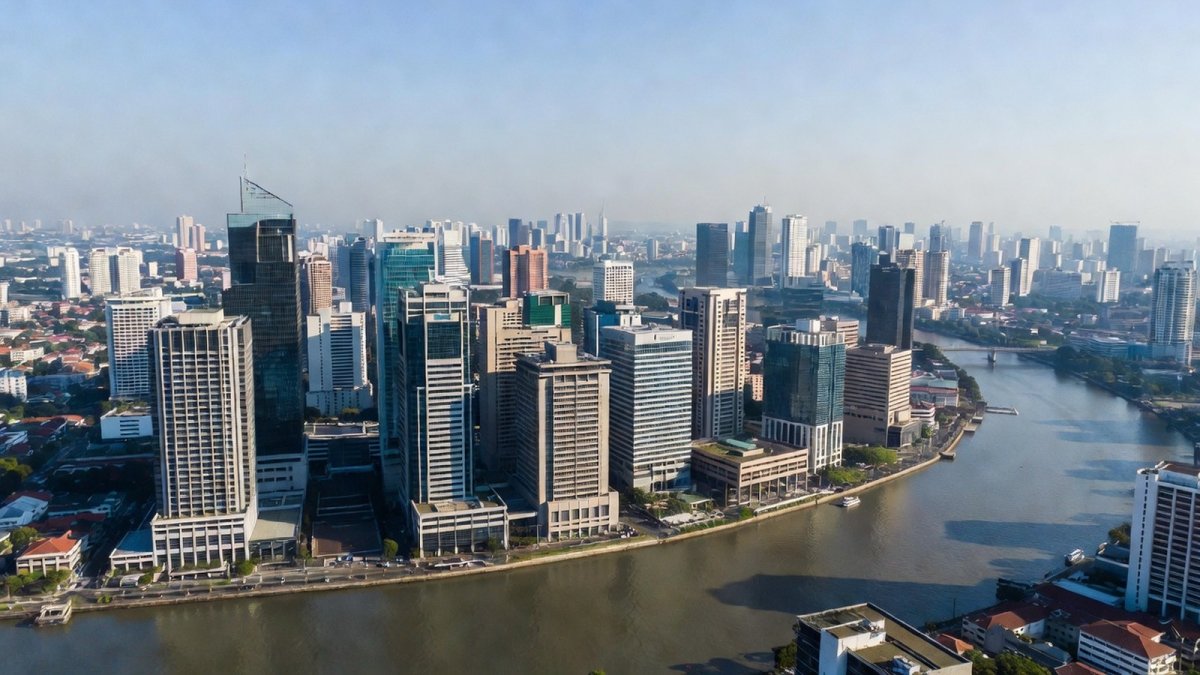
The Philippine Department of Finance has called for the shutdown of government-owned and -controlled corporations that fail to deliver value while draining public resources, with their functions shifted to other agencies to free funds for priority services.
What the Department of Finance Proposed
Finance Secretary Frederick Go stated that roughly 10 percent of the more than 100 GOCCs should be closed. He noted that government procedures make the process slow and described the review as a cyclical process. The goal is to redirect resources toward programs that better serve the public.
The Governance Commission for GOCCs, the oversight body created under Republic Act 10149, keeps watch over how these corporations are run — flagging which entities no longer justify continued operation and classifying some as inactive or non-operational. That institutional check is part of why the finance department says the review moves slowly but steadily.
GOCCs span financial services, infrastructure, utilities, agriculture, and social services across the country. Closing those that drain resources allows their roles to move to agencies already equipped to handle them without added layers of cost.
Scale of Support to State Firms
Budgetary support to state-run firms reached P98 billion in the first five months of 2026. This level of assistance has prompted the Department of Finance to examine which corporations continue to justify taxpayer backing and which ones no longer do.
National government subsidies to GOCCs peaked at P229 billion in 2020 and have since eased to about P184.8 billion by 2021-2022 as the government pressed firms to rely less on the national budget. Ordinary families in provinces and cities feel the weight when subsidies flow to underperforming entities instead of reaching classrooms, health centers, or farm-to-market roads.
Republic Act 10931, the Universal Access to Quality Tertiary Education Act, led to the reclassification of the Development Academy of the Philippines from a GOCC to a state higher education institution budgeted alongside state universities and colleges. Such shifts show how functions can transfer without losing essential services.
Taxpayers from sari-sari store owners in remote barangays to farmers waiting for irrigation support see the direct effect when funds stay tied to entities that no longer perform. The easing of subsidies frees space for programs that reach households more immediately.
Record Dividend Collections
The Marcos administration has collected P501 billion in dividends from GOCCs over four years. This amount is 31 percent higher than the P382 billion collected during former president Rodrigo Duterte's full term. It also exceeds collections under Gloria Arroyo at P84 billion and Noynoy Aquino at P165 billion.
The Department of Finance projects cumulative GOCC dividend collections under the Marcos administration will reach P501.431 billion by the end of 2026, an average of P125.358 billion per year. Last month, 50 state firms were recognized on GOCCs' Day for their record remittances, led by the Bangko Sentral ng Pilipinas and the Land Bank of the Philippines.
The record P147.15 billion remittance is a 29 percent increase from the previous year. P140 billion had already been remitted, with the balance expected by year-end. Top contributors included the Philippine Ports Authority at P5.3 billion, the Power Sector Assets and Liabilities Management Corp. at P4 billion, the Bases Conversion and Development Authority at P2.6 billion, and Clark Development Corp. at P2.6 billion.
The Bangko Sentral ng Pilipinas, Land Bank of the Philippines, and Philippine Deposit Insurance Corporation stood among the leading remitters. These collections strengthen non-tax revenues that support national priorities without raising new taxes on families.
A Closer Look at the Numbers
Fifteen GOCCs remitted at least P1 billion each in 2026, and officials anticipate the number rising to 20 next year. This growth reflects stronger performance among more corporations and adds to the fiscal space available for community needs.
GOCCs' Day held on July 8, 2026, recognized 50 state firms for record remittances under the leadership of President Ferdinand R. Marcos Jr. and Finance Secretary Frederick Go. The event highlighted how consistent dividend flows from performing entities offset pressures from subsidies elsewhere.
These figures show a clear shift toward greater self-reliance among GOCCs. The average annual collection of P125.358 billion demonstrates steady progress that benefits taxpayers who fund the national budget each year.
Legal Framework Governing GOCCs
Republic Act 7656, known as the Dividend Law, requires GOCCs to remit at least 50 percent of net earnings from the preceding year. The Department of Finance has urged firms to increase this rate to 75 percent to strengthen non-tax revenues.
Republic Act 10149 created the Governance Commission for GOCCs, which recommends closure of dormant or non-performing corporations and oversees their performance and rationalization. The commission exercises oversight over GOCC compensation, performance, and rationalization to keep operations aligned with public interest.
The term GOCC refers to the Filipino concept of a korporasyong may-ari at kontrolado ng pamahalaan, a state-owned enterprise that conducts both commercial and non-commercial activity. Clear legal rules help separate those that deliver value from those that continue to draw subsidies without results.
Impact on Filipino Families and Communities
Taxpayers across the country, from sari-sari store owners in barangays to jeepney drivers in Metro Manila, contribute to the national budget that supports these corporations. When non-performing GOCCs continue to receive subsidies, less remains for services that directly touch daily life such as affordable medicines, irrigation for farmers, or support for overseas Filipino workers' families.
Closing inefficient entities could allow those funds to reach local government units and community programs that families rely on during fiestas or times of need. LGUs and barangay-level projects often feel the pinch first when national resources stay locked in underperforming corporations.
For overseas Filipino workers and their families, the stakes are personal. Remittance channels, state-backed insurance, and development programs that run through GOCCs touch households in nearly every province. The point of the exercise, officials stress, is not to erase services but to make sure the agency left standing can actually deliver them — so a farmer still gets irrigation support and a student still gets scholarship help, without the duplicated overhead of a corporation that no longer performs.
Workers and students in provinces see the difference when dividends flow back into priority services instead of propping up entities that no longer serve their original purpose. The human cost appears in delayed farm support or limited health programs that touch households directly.
Next Steps in Review Process
The Department of Finance expects the review of GOCCs to continue in cycles, with the functions of any closed corporations absorbed by existing agencies. Because many GOCCs were created through special laws, shutting one down is rarely a single executive act — it can require coordination with Congress and the Governance Commission's rationalization process, which is why the secretary described the pace as slow but deliberate.
This measured approach aims to maintain fiscal space while protecting essential public services that matter most to communities nationwide. The process respects existing procedures while steadily moving resources toward programs that reach families more effectively.
By focusing on performance, the government can reduce the burden on ordinary taxpayers and direct savings to classrooms, health centers, and roads that serve daily life across the archipelago.
For now, the message from the Department of Finance is consistent: every peso given to a state firm must be able to answer for itself. In a country where every budget line touches a family, a barangay, or a farm, the push to close the laggards is ultimately a push to make sure public money lands where it was promised — and that the services Filipinos depend on keep running, under an agency that can actually deliver them.
By Bella Reyes, Staff Writer
This article was produced with AI-assisted research and editorial support. Reporting is based on sources cited in the article.
What's Your Reaction?
 Like
0
Like
0
 Dislike
0
Dislike
0
 Love
0
Love
0
 Funny
0
Funny
0
 Wow
0
Wow
0
 Sad
0
Sad
0
 Angry
0
Angry
0

Philippines/Southeast Asia Correspondent at Global1.News. Manila-based journalist covering Philippine politics, environment, maritime security, and social issues. Passionate about marine conservation and the communities protecting the Philippines' natural heritage.












Comments (0)