
Why Korean Students Are Afraid to Graduate: Deferrals Surge as Youth Job Market Shrinks
South Korea's youth employment crisis has produced a measurable surge in graduation deferrals, with the Ministry of Education recording 20,769 university students who deferred graduation in 2024, a 15.8 percent increase from the previous year. Data from Rep.
South Korea's youth employment crisis has produced a measurable surge in graduation deferrals, with the Ministry of Education recording 20,769 university students who deferred graduation in 2024, a 15.8 percent increase from the previous year. Data from Rep. Jin Sun-mi of the Democratic Party show that more than 9,000 students at nine major regional universities and six leading private universities in Seoul had already deferred as of September, nearly 50 percent above the 6,138 recorded in 2022. These figures reflect a deliberate strategy among students to remain enrolled while the national youth employment rate for ages 15-29 fell to 43.9 percent in June 2026, marking the 26th consecutive monthly decline.
Why Korean Students Are Afraid to Graduate: Deferrals Surge as Youth Job Market Shrinks
Seoul, South Korea – August 9, 2026 — The phenomenon of students extending their university enrollment rather than entering the labor market has become a structural feature of South Korea's higher education system. Interviews conducted for the KOREA NOW video published August 8, 2026, reveal that many students view immediate graduation as a risk in an environment where entry-level hiring has contracted sharply.
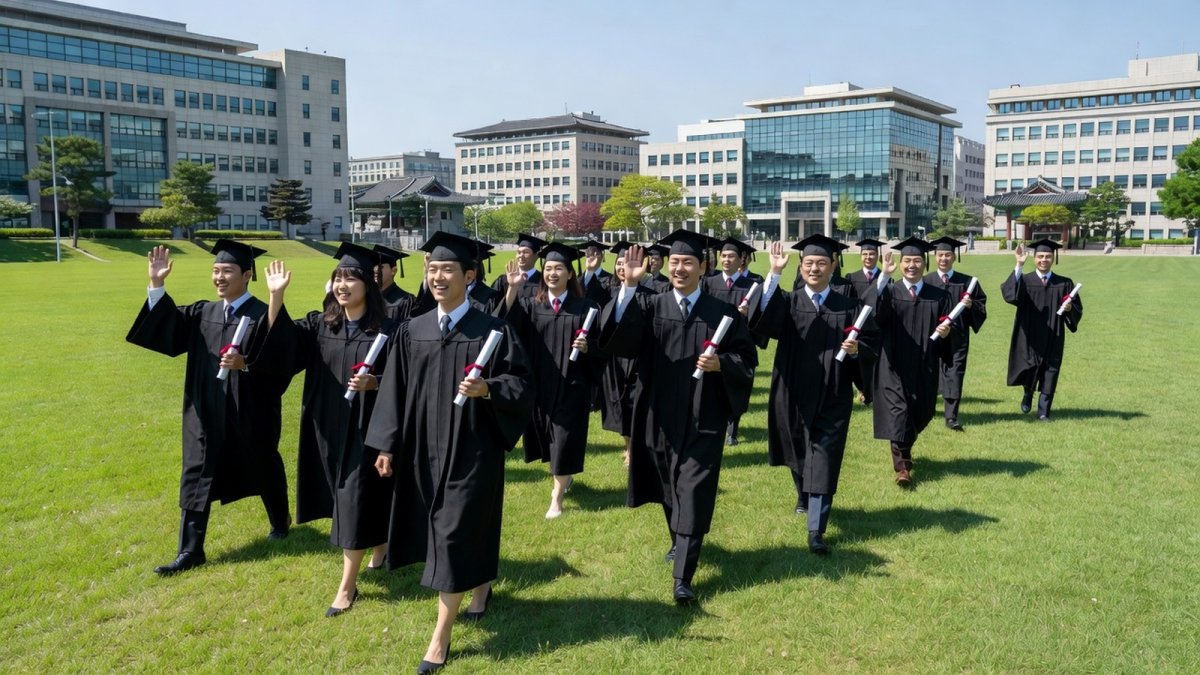
The Deferral Phenomenon: The "Voluntary Fifth Year"
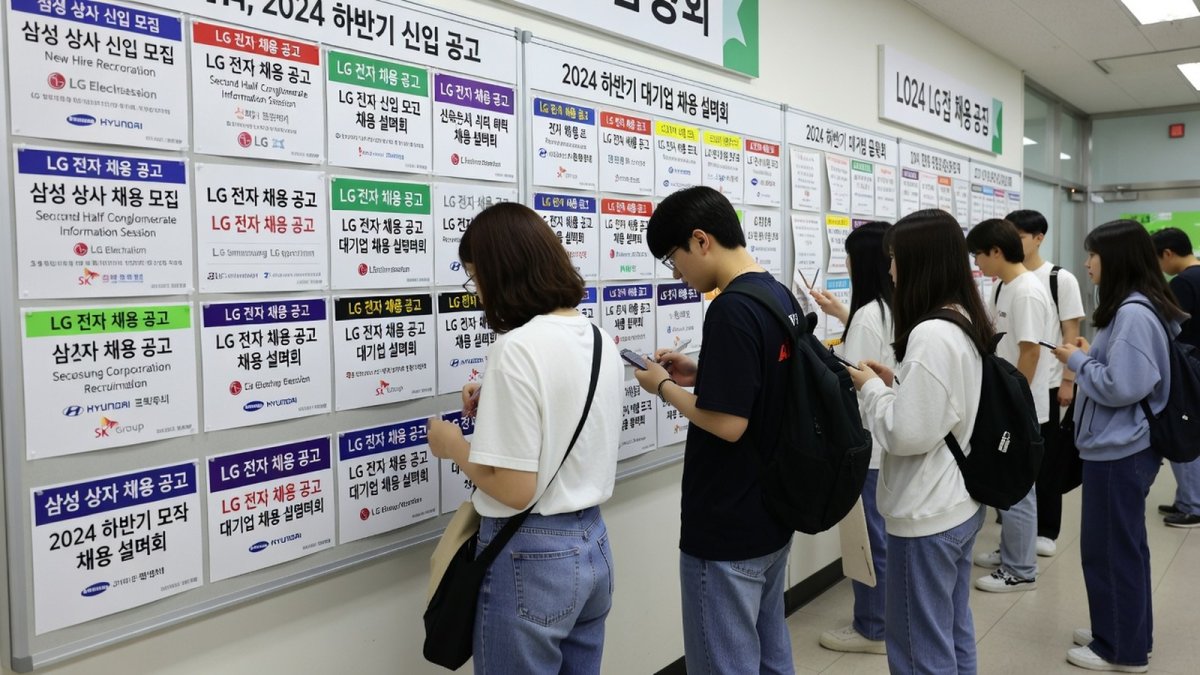
Students who have completed degree requirements increasingly remain enrolled for an additional semester or year, paying tuition fees between 100,000 and 200,000 won. This practice allows them to maintain student status and adjust graduation timing to recruitment cycles. A recruiter at an electronics company noted that many notices specify eligibility only for those freshly graduated or expected to graduate, giving enrolled students an advantage in application timing.
The Labor Market Data Behind Student Decisions
Statistics Korea June 2026 Employment Trends, released July 15, 2026, documented a 1.7 percentage point year-on-year drop in the youth employment rate to 43.9 percent, with the number of employed youth falling 197,000 to 3.428 million. The youth unemployment rate rose 0.9 percentage point to 7.0 percent. The job-offer ratio fell to 0.42 in October, the lowest October figure since 1998. Bin Hyun-jun, director general of social statistics at Statistics Korea, stated that large-scale open recruitment has disappeared and hiring now centers on experienced workers.
The latest labor market indicators reveal entrenched structural weaknesses rather than temporary cyclical fluctuations. The number of discouraged job seekers reached 356,000, an increase of 16,000 from the previous period, signaling that growing numbers of young Koreans have stopped searching for work altogether. Manufacturing employment contracted by 97,000 positions for the 24th consecutive month, while construction shed 67,000 jobs over 26 straight months and agriculture, forestry, and fisheries lost 95,000 positions. These sustained declines across core sectors point to fundamental shifts in Korea’s industrial structure that are unlikely to reverse quickly.
Bin Hyun-jun noted that exports remain strong yet are heavily concentrated in semiconductors, producing a lower employment-inducing effect than other manufacturing branches. This concentration limits job creation even during periods of export growth. Compounding the picture, the 2025 annual data show employed youth falling by 178,000 to 3.578 million, marking the third consecutive annual decline and the largest drop since 2020. Such figures underscore a prolonged mismatch between educational output and available positions that shapes student decisions to defer graduation.
Leaves of Absence as a Strategic Response
The Korea Educational Statistics Service recorded that the share of university students taking leaves of absence rose from 10.6 percent in 1980 to 24.6 percent in 2024. A Korea Educational Development Institute 2023 report found the leave rate in 2022 was 2.2 times higher among men and 12.9 times higher among women compared with 1980. Student accounts illustrate the pattern: Lee Seung-hyun, 24, took a leave for a five-month internship; Lee Sung-min, 23, completed a semester-long internship that did not convert to full-time employment; Bang Hee-won, 24, combined military service with a yearlong leave.
Students increasingly treat leaves of absence as deliberate career-building intervals rather than mere pauses. Han Jeong-eun, 23, used a yearlong leave to prepare for a professional licensing examination while completing an internship. Kim Bo-min, 25, an economics major now employed at a shipbuilding company, took leave in 2021 to work at the Busan International Film Festival, gaining practical experience unavailable through coursework alone. These choices reflect calculated efforts to strengthen résumés amid weak youth hiring.
Seo Soo-jin, who graduated in 1995, recalls that leaves were once reserved mainly for military service, medical reasons, or retaking the college entrance exam, allowing summers for skill development or leisure. Contemporary students face different pressures. International students on D-2 visas must generally depart Korea within 15 days of beginning leave unless they secure another visa status, while Korean nationals returning from U.S. universities risk visa complications after absences exceeding five months. The Office for Government Policy Coordination 2024 Survey found that 54.4 percent of people aged 19-34 live with parents, rendering extended enrollment financially viable and encouraging strategic deferral.
Regional Dimensions of the Crisis
Deferrals have risen sharply outside Seoul. At Pusan National University, 589 students deferred in 2025, a 36 percent increase and the highest in four years. Across Busan's major universities, more than 1,800 students deferred, reaching 13 percent of would-be graduates at some campuses. Gangwon province recorded 647 deferrals in 2025, a 51 percent rise over three years. Jinhaksa data show applications to Seoul universities for the 2026 cycle fell to 18.8 percent, down five points from 2024, while regional university applications increased.
Regional universities have become strategic alternatives as students avoid Seoul’s intense competition. Woo Yeon-cheol of Jinhaksa observed that many applicants now select regional institutions deliberately to improve admission odds. This shift coincides with preferences for lower living costs and special admission tracks reserved for local students, altering enrollment patterns across provinces.
Professor Kim Jae-hoon warns that such delays harm local economies and drag down the country’s long-term growth potential by reducing the flow of young talent into regional labor markets. The deferral trend therefore amplifies existing economic disparities between the capital region and the provinces. Students weigh immediate educational costs against uncertain employment prospects, often concluding that regional options combined with later graduation timing offer better risk-adjusted outcomes than rushing into Seoul-centric competition.
Government Policy Response
The government has set a 3 percent economic growth target for 2026 and plans to announce additional youth employment measures in the third quarter. It aims to train more than 200,000 specialists in advanced industries including AI and semiconductors by 2030 and to create more than 200,000 jobs for young people, with at least 100,000 each in the private and public sectors. These targets address the broader context of demographic decline and the education system's heavy emphasis on college credentials.
Expert Perspectives on Long-Term Implications
Professor Kim Jae-hoon of sociology at Kangwon National University observed that delays in young people entering society harm local economies and reduce the country's long-term growth potential. The Korea Enterprises Federation survey from September found that 28.1 percent of newly hired college graduates already possessed work experience, with experienced workers expected to comprise 26.9 percent of planned college-graduate hiring at major companies in the second half of 2025.
Looking Ahead: Structural Change and Demographic Pressures
The combination of chaebol hiring practices favoring experienced workers, persistent manufacturing employment declines, and the world's lowest fertility rate has produced a delayed transition into the workforce that now spans multiple cohorts. With 481,000 college graduates unemployed in the second quarter of 2026, the highest Q2 figure since 2021, the pattern of extended enrollment and strategic leaves of absence is likely to persist. South Korea's education policy and labor market institutions face the task of aligning credential timelines with an economy that increasingly rewards prior experience over fresh graduation status.
The deferral phenomenon connects directly to South Korea's demographic decline and its world-lowest fertility rate. A credential-heavy education system encourages prolonged enrollment while the Korea Research Institute for Vocational Education and Training documents a delayed transition into employment: the employment rate for ages 20-24 fell from 45 percent in 2009 to 31 percent in 2024, even as rates for late-20s and early-30s cohorts rose. This pattern indicates that young people are extending education to compensate for weak entry-level opportunities.
The government's third-quarter youth employment measures and its long-range advanced-industry training goals represent the current policy horizon, yet they do not address the underlying credential inflation. Interviews featured in the KOREA NOW video portray deferral as a normalized, almost expected life stage. The cumulative effect threatens Korea's long-term growth potential and social cohesion by postponing household formation, reducing lifetime earnings trajectories, and straining pension systems already pressured by rapid population aging.
By Prof. David Park, Staff Writer
This article was produced with AI-assisted research and editorial support. Reporting is based on sources cited in the article.
What's Your Reaction?
 Like
0
Like
0
 Dislike
0
Dislike
0
 Love
0
Love
0
 Funny
0
Funny
0
 Wow
0
Wow
0
 Sad
0
Sad
0
 Angry
0
Angry
0
East Asia/Technology Correspondent at Global1.News. Seoul-based voice covering Korean politics, technology, business, and culture. Analyzes how technology and geopolitics intersect across East Asia.











Comments (0)