
Peruvian Farmer's Landmark Climate Verdict Against RWE Rewrites Global Liability Rules
In the shadow of the snow-capped peaks of the Cordillera Blanca, a Peruvian farmer and mountain guide named Saúl Luciano Lliuya looked up at the glacial lake looming over his hometown of Huaraz and decided to take on one of the most powerful corporations on Earth.
In the shadow of the snow-capped peaks of the Cordillera Blanca, a Peruvian farmer and mountain guide named Saúl Luciano Lliuya looked up at the glacial lake looming over his hometown of Huaraz and decided to take on one of the most powerful corporations on Earth. On May 28, 2025, a German appellate court in Hamm delivered a verdict that did not grant him the specific financial compensation he sought, yet it fundamentally rewrote the legal landscape for climate accountability. For the first time in history, a higher court in Europe has ruled that a private company can be held liable for the transboundary consequences of its greenhouse gas emissions, a principle that is already sending shockwaves through legal systems across Latin America and the world.
Peruvian Farmer's Landmark Climate Verdict Against RWE Rewrites Global Liability Rules
Huaraz, Peru – August 23, 2026 — The fight over a glacial lake in the Peruvian Andes has become the most important climate lawsuit on Earth, and its ripple effects are only beginning to reach Latin America's courts, legislatures, and communities. What follows is the full story of how a farmer took on a German energy giant — and what the precedent means for the region.
The Landmark Verdict That Rewrote Climate Liability
The decision by the Higher Regional Court in Hamm, Germany, was a study in legal nuance with monumental implications. While the court dismissed Saúl Luciano Lliuya's specific claim for a proportional share of flood protection costs for Huaraz, it simultaneously established a binding precedent under German civil law: large emitters can be held responsible for climate damages. The court reasoned that RWE AG, Germany's largest electricity producer and one of Europe's biggest CO2 emitters, could not hide behind the argument that its emissions were too small to matter individually. Instead, the judges applied the polluter-pays principle and neighbor law, recognizing that when thousands of emitters contribute to a shared harm, each bears a proportional responsibility.
This legal reasoning is what makes the verdict so revolutionary. The court did not say RWE caused the melting of Andean glaciers alone, but it did say that RWE's historical emissions, calculated at roughly 0.38% to 0.47% of global industrial-era emissions, constitute a legally relevant contribution to the specific risk facing Lliuya's property. The dismissal of the specific claim was based on a technical finding: the court determined that the immediate flood risk to Lliuya's house was not high enough to warrant the requested protective measures. Yet the underlying principle—that a company can be sued for its share of climate harm—survived intact, creating a legal foundation that plaintiffs across the globe can now build upon.
Lawyer Roda Verheyen, who represented Lliuya, captured the moment's significance with precision: "For the first time in history, a higher court in Europe has ruled that large emitters can be held responsible for the consequences of their greenhouse gas emissions." The ruling effectively transforms climate science into a justiciable legal claim, bridging the gap between atmospheric physics and courtroom procedure. For Latin America, a region already bearing the brunt of climate impacts while contributing minimally to historical emissions, this verdict offers a powerful new tool in the fight for climate justice.
Palcacocha: The Lake That Grew 34-Fold
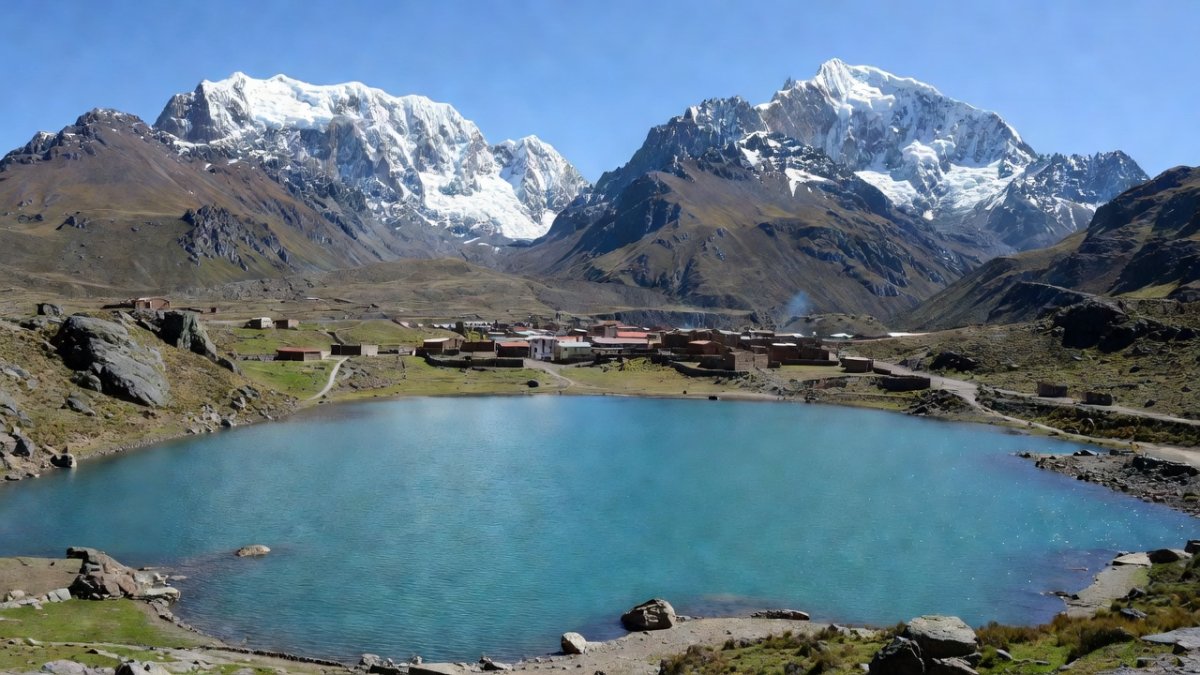
To understand the stakes of this case, one must look at Lake Palcacocha, a glacial lake perched at approximately 4,500 meters above sea level in the Peruvian Andes. The data is staggering: between 1990 and 2010, a Swiss-US study documented that the lake's water volume grew an astonishing 34-fold. This exponential growth is a direct consequence of accelerated glacial melt in the Cordillera Blanca, a mountain range that has lost about 30% of its ice cover since the year 2000. The Andes glaciers are now at their lowest level in 11,700 years, a geological-scale transformation occurring within a single human lifetime.
The lake sits directly above Huaraz, a city of more than 50,000 inhabitants in its core and approximately 120,000 in the greater metropolitan area. This means over a hundred thousand people live in the potential path of a glacial lake outburst flood, a catastrophic event where a natural dam of moraine or ice fails, releasing millions of cubic meters of water in a sudden, destructive surge. The volume of water in Palcacocha has grown so dramatically that engineers have had to install emergency drainage siphons and warning systems, but these are temporary measures that cannot fully eliminate the risk.
For Lliuya, who worked as a mountain guide in the region, the connection between global emissions and local danger was not abstract. He witnessed the retreat of glaciers firsthand, saw the lake swelling year after year, and understood that the fossil fuel economy of Europe was directly contributing to the existential threat facing his community. The 34-fold growth of Palcacocha is not just a scientific statistic; it is a lived reality for the people of Huaraz, who must constantly monitor a lake that could, without warning, unleash devastation upon their homes, schools, and livelihoods.
1941: The Disaster That Still Haunts Huaraz
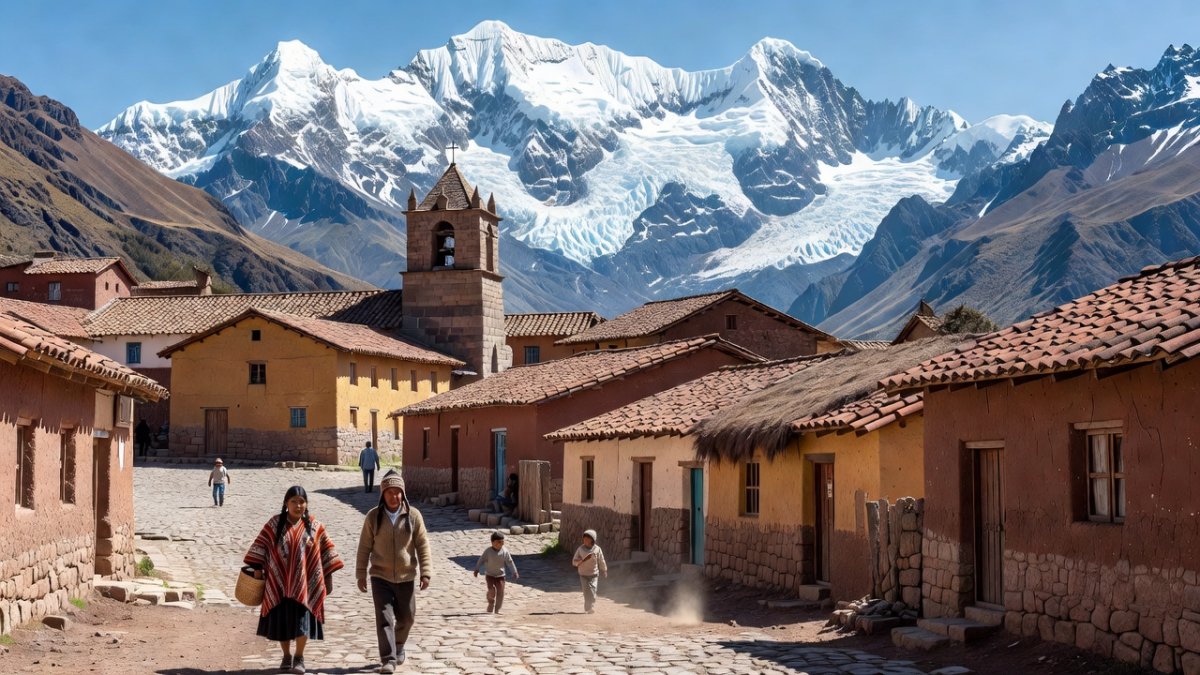
The fear that grips Huaraz is not hypothetical; it is rooted in a specific, traumatic historical event. In 1941, an avalanche triggered an outburst flood from Lake Palcacocha that killed around 1,800 people and destroyed a third of the city. The disaster remains one of the deadliest glacial lake outburst floods in recorded history, and its memory is seared into the collective consciousness of the region. Survivors' descendants still tell stories of the wall of water and mud that swept through the city in the middle of the night, carrying boulders the size of houses and leaving nothing but devastation in its wake.
The 1941 catastrophe led to the first major engineering interventions in the Cordillera Blanca, including the construction of drainage tunnels and the lowering of the lake's water level. But these measures were designed for a stable climate. Today, with the lake having grown 34-fold since 1990, the risk profile is entirely different. The moraine dam that holds back Palcacocha is under increasing pressure from the sheer volume of water, and the glacier that once buttressed the dam has retreated, leaving it more vulnerable to failure. Scientists warn that a combination of an earthquake, a large icefall, or even a period of intense melt could trigger a new outburst flood.
For Lliuya, the 1941 disaster is not ancient history; it is a warning of what could happen again, potentially with even greater consequences given the city's population growth. The fact that Huaraz has expanded significantly since 1941 means that a similar event today could affect tens of thousands of people. This is why Lliuya's lawsuit was never merely about his own property, but about forcing the entities most responsible for climate change to acknowledge their role in creating this ongoing threat. The 1941 flood transformed Huaraz's relationship with the mountain, and now, more than eight decades later, it has transformed the global legal landscape.
How a Peruvian Farmer Sued a German Giant
The legal journey of Saúl Luciano Lliuya began in November 2015, when he filed a lawsuit against RWE AG in the regional court of Essen, Germany. The choice of jurisdiction was strategic: RWE is headquartered in Germany, and German civil law provides avenues for claims based on interference with property rights. Lliuya's argument was elegantly simple: RWE, as one of the world's largest historical emitters, bears a proportional responsibility for the melting of Andean glaciers, and therefore should pay a proportional share of the costs needed to protect Huaraz from flooding. That share, based on RWE's contribution to global industrial-era emissions, was calculated at approximately 0.38% to 0.47%.
The initial response was discouraging. In 2015, the Essen regional court rejected the lawsuit, finding that the causal chain between RWE's emissions and the specific threat to Lliuya's property was too tenuous to establish liability. But Lliuya and his legal team, led by Roda Verheyen, appealed the decision. In 2017, the Higher Regional Court in Hamm granted the appeal, a decision that stunned the legal world and opened the door for a full evidentiary hearing. The court agreed that the case raised fundamental questions about climate liability that deserved rigorous examination, and it ordered an on-site inspection in Peru to assess the actual risk to Lliuya's property.
That inspection took place in 2023, with judges, experts, and lawyers traveling to Huaraz to see Lake Palcacocha and the city below it. The visit was unprecedented in the history of climate litigation, demonstrating that the court was taking the scientific evidence seriously. Hearings were held from March 17 to 19, 2025, where both sides presented their arguments, and the verdict was delivered on May 28, 2025. RWE's defense throughout was that it had complied with all legal limits, had been subject to the EU Emissions Trading System since 2005, and was not active in Peru. But the court's ruling cut through these arguments, establishing that compliance with regulations does not absolve a company from liability for the harms its emissions cause.
Why the Dismissal Still Counts as a Victory for Climate Justice
At first glance, the dismissal of Lliuya's specific claim might appear to be a defeat. He did not receive the money to build flood defenses for Huaraz, and RWE walked away without paying a cent. But the legal reasoning behind the dismissal is what makes this ruling a watershed moment. The court found that the flood risk to Lliuya's particular property was not high enough to justify the requested protective measures, a technical assessment of probabilities rather than a rejection of the underlying liability principle. In other words, the court accepted that RWE could be liable for climate damages in principle, but concluded that the specific facts of Lliuya's case did not meet the threshold for immediate danger.
This distinction is crucial for future litigation. The precedent set by the Hamm court is that greenhouse gas emissions can constitute a legally actionable interference with property rights, and that emitters can be held responsible for their proportional share of climate harms. This is a dramatic departure from previous rulings, which typically dismissed climate lawsuits on the grounds that the causal chain was too complex or that the harm was too diffuse. By recognizing that proportional liability is a viable legal theory, the court has opened the floodgates for similar cases not only in Germany but in any jurisdiction with comparable civil law frameworks.
ClientEarth's Adam Weiss captured the explosive potential of the ruling, stating that it "could light the fuse on litigation that holds the most untouchable-seeming businesses to account for their climate destruction." Germanwatch's Christoph Bals went further, calling it a "historic landmark judgement" that could be invoked in countries with similar legal frameworks, including the UK, Netherlands, USA, and Japan. For Lliuya himself, the outcome was deeply personal. "This case was never just about me," he said. "It was about all the people who, like us in Huaraz, are already living with the consequences of a crisis we did not create. This ruling opens the door for others to demand justice."
What This Means for Latin America
For Latin America, the RWE ruling arrives at a moment of unprecedented legal and political momentum. In 2025, the International Court of Justice issued an advisory opinion affirming that states have a legal obligation to protect citizens from climate harm. That same year, the Inter-American Court of Human Rights, responding to a request from Chile and Colombia that drew over 600 participants, recognized the climate emergency as a human rights issue, establishing that states in the region have enforceable duties to mitigate emissions and adapt to impacts. The RWE verdict adds a crucial third pillar: the possibility of holding private corporations directly accountable for their contributions to climate harm.
Chile's environmental law NGO FIMA is already analyzing the RWE precedent for Latin American application, with plans to use it in litigation against both domestic and multinational companies operating in the region. The legal architecture is favorable: many Latin American countries have civil codes that recognize neighbor law and polluter-pays principles, and their constitutions increasingly include explicit environmental rights. The combination of the ICJ opinion, the Inter-American Court's ruling, and the German precedent creates a powerful trifecta that plaintiffs can invoke in national courts from Mexico to Argentina.
The stakes for the region could not be higher. The Andes glaciers are at their lowest level in 11,700 years, and the Cordillera Blanca has lost about 30% of its ice since 2000. This is not just an aesthetic loss; it threatens water supplies for millions of people, increases the risk of glacial lake outburst floods, and undermines agricultural productivity. Latin America contributes only a small fraction of global emissions, yet it is among the most vulnerable regions to climate impacts. The RWE ruling offers a pathway for these countries and their citizens to demand that those who profited from fossil fuels bear a fair share of the costs of adaptation and resilience.
The Bottom Line — Justice That Scales
The Lliuya v RWE case is a testament to the power of individual courage combined with rigorous legal strategy. A mountain guide from Huaraz took on a corporate giant and, while he did not win the specific financial remedy he sought, he secured a principle that will outlast any single verdict. The Hamm court's recognition that large emitters can be held liable for climate damages under civil law is a breakthrough that scales across borders, legal systems, and contexts. It transforms climate science from a matter of academic debate into a basis for legal accountability, and it gives communities in Latin America and beyond a concrete tool to demand justice.
The timing is critical. With the ICJ advisory opinion and the Inter-American Court's ruling already establishing state obligations, and now the RWE precedent establishing corporate liability, the legal framework for climate justice is becoming coherent and enforceable. The next wave of litigation will likely target not only energy companies but also banks, insurers, and other financial actors that have facilitated fossil fuel expansion. The 0.38% to 0.47% share attributed to RWE may seem small, but it establishes a methodology for calculating proportional responsibility that can be applied to any emitter, anywhere in the world.
For the people of Huaraz, the fight is not over. The lake still looms above them, and the threat of a catastrophic flood remains real. But they are no longer alone in their struggle. The RWE ruling has given them, and millions of others across Latin America, a legal language to articulate their demands and a judicial precedent to back them up. As Lliuya said, this case was never just about him. It was about justice that scales, from a single farmer on a mountain slope to the highest courts of Europe, and now to the rest of the world. The door has been opened, and the people of Latin America are ready to walk through it.
By Elena Vasquez, Staff Writer
This article was produced with AI-assisted research and editorial support. Reporting is based on sources cited in the article.
What's Your Reaction?
 Like
0
Like
0
 Dislike
0
Dislike
0
 Love
0
Love
0
 Funny
0
Funny
0
 Wow
0
Wow
0
 Sad
0
Sad
0
 Angry
0
Angry
0

Latin America Correspondent at Global1.News. Based in Mexico City, covering politics, economics, energy, and culture across the region. Brings an on-the-ground perspective to stories spanning from the Rio Grande to Patagonia.













Comments (0)