
Pacific Nations Walk a Tightrope Between Western Security and Chinese Trade
Vanuatu and Fiji signed new defence pacts with Australia while keeping Beijing close on trade. Inside the South Pacific's delicate balancing act and why it matters.
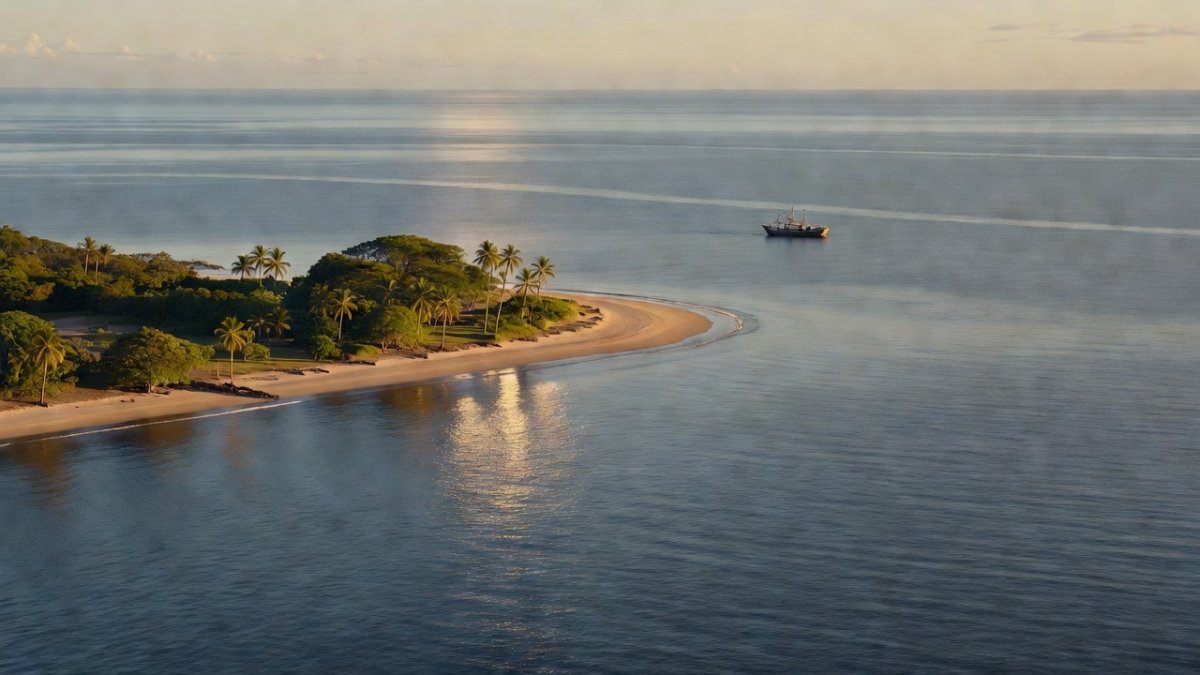
Hedging at the Heart of the South Pacific
On paper, Western countries are rushing to sign defence pacts across the South Pacific. On the water, the island nations are playing a different game. Instead of picking a side, local leaders are leveraging the tug of war between China and the West, winning security guarantees from Canberra and Washington while Beijing builds infrastructure and deepens its economic footprint.
The balancing act was on full display this summer. In June, Vanuatu signed the Nakamal Agreement, a security and economic cooperation treaty with Australia. A week later in early July, Fiji signed its first mutual defence treaty with Canberra, the Ocean of Peace Alliance, which is open for other Pacific nations to join. Beijing issued similar responses to both, saying cooperation "should not target any third party" or be used to "engage in geopolitical games".
Australia's 'Permanent Contest' for Influence
The manoeuvres represent Australia's latest push in what Foreign Minister Penny Wong has described as a "permanent contest" for influence in a region long neglected as a geopolitical backwater. They also shed light on Canberra's ambition of becoming the Pacific's preferred security partner while shutting out China's influence, said Connor Graham, a research fellow at the Sydney-based Lowy Institute.
For Pacific leaders, the pacts are a calculated hedge. Balancing major powers is a core survival strategy, said Graeme Smith, deputy director of the Coral Bell School of Asia-Pacific Affairs at the Australian National University. "Nearly all Pacific countries' major trading partner is China, but also the Pacific Ocean is filled with US military facilities and you do not have the capacity to shut them out," Smith said. "You have no choice but to balance and make the best of it."
Washington's permanent military footprint in the South Pacific dates to the end of the 19th century, when the United States annexed American Samoa and built its first naval base south of the equator. During World War II, Allied forces operated airbases and naval airfields across Papua New Guinea, Fiji and the Solomon Islands. After the war, Washington shifted its focus north to Guam and Hawaii, leaving Australia and New Zealand to carry Western interests in the South Pacific.
Signals to Beijing, Signs to Canberra
Such balancing acts are evident across the region. Last month, Papua New Guinea ordered the closure of Taiwan's representative office in Port Moresby just days after its first defence alliance treaty with Australia came into effect. Announced on July 15 and framed around Port Moresby's One-China policy, the move was a signal to Beijing that it remained welcome to "come in and have a presence", Graham noted.
In May, Vanuatu balanced its new security alliance with Australia by simultaneously entering into talks with Beijing on a strategic cooperation pact. Canberra and Port Vila agreed to water down key clauses apparently aimed at limiting Chinese investment in Vanuatu's ports, airports and telecommunications, replacing what was functionally a veto with a weaker provision for consultation.
Last year, months after granting Australia veto power over several kinds of pacts with third parties in exchange for A$140 million (US$98 million) in aid, Nauru hedged its bets by signing a A$1 billion investment proposal with a Chinese state-linked company without consulting Canberra. Graham said that not becoming "a theatre for great-power competition" had been a priority for local leaders, even as Australia remained the preferred security partner.
The Missile Test That Changed the Mood
The delicacy of the region's balancing act was most clearly evident last month, when a People's Liberation Army submarine test-launched a long-range ballistic missile with a dummy warhead, believed to have landed near the exclusive economic zones of Tuvalu and Kiribati, over 1,000 km northeast of the Solomon Islands. Part of the designated zone fell within Japan's exclusive economic zone south of Cape Shionomisaki in Wakayama Prefecture; Beijing notified Tokyo of the launch only at 11:30 a.m. on July 6.
Canberra immediately accused Beijing of "destabilising" the region, and Washington criticised China for providing only a few hours' notice. Speaking alongside Australian Prime Minister Anthony Albanese a day after the test, Solomon Islands Prime Minister Matthew Wale confirmed his government had lodged an official diplomatic protest. "China is a good friend of Solomon Islands, but this is not something a friend does. This is not good in our region," Wale said.
Xu Shaomin, deputy director of the Centre for Oceanian Studies at Sun Yat-sen University in Guangzhou, called Honiara's rhetoric "nuanced" and "measured" - a reflection of the tightrope the nation must walk. The Solomon Islands is widely viewed as China's closest partner in the region, having signed a security pact with Beijing in 2022 less than three years after cutting diplomatic ties with Taiwan. Months later, it turned a US Coast Guard vessel away from its ports. But the Wale administration, in office since May, has re-engaged with Washington, signing a pact on July 28 that allows the US Coast Guard to patrol Solomon Islands waters with local police aboard.
'Small and Beautiful': China's New Pacific Playbook
Beijing appears to have absorbed the region's mood. After Pacific leaders shelved a sweeping regional trade and security deal proposed by China in 2022, Beijing began delivering "small and beautiful" projects, following President Xi Jinping's pledges at a Belt and Road Initiative forum in 2023. The phrase - a buzzword in Chinese foreign diplomacy - refers to low-budget, small-scale projects focused on public welfare and community needs.
China funded and constructed major infrastructure after Honiara's 2019 diplomatic switch, including US$119 million for a national sports stadium complex and aquatic centre to host the 2023 Pacific Games, while Australia contributed about US$11.4 million through a Pacific Games Partnership. Now Beijing is also donating solar street lights across Nauru and Kiribati, sending medical teams to remote villages, and introducing soilless cultivation factories in Nauru so residents who once relied on expensive imports can access locally grown vegetables. In May, Cook Islands Prime Minister Mark Brown joined Chinese officials in Wuzhou to launch the MV Tuitui Moana, a 43-metre multipurpose vessel built in Guangxi to improve inter-island transport.
In November, Beijing signed a framework agreement with five Pacific nations - Micronesia, Kiribati, Nauru, Vanuatu and Fiji - to upgrade their economic partnership and "boost trade, attract investment, and accelerate industrialisation through flexible trade negotiations", according to China's Ministry of Commerce.
Xu said delivering tangible local improvements helps secure the public support needed for sustained engagement. "These projects are insulated from unpredictable political shifts, such as a government changing hands," he said, adding that maintenance costs for large-scale projects had been high for local governments, and small projects were less likely to trigger caution from Australia and New Zealand. "In this sense, looking at the situation in reverse, China's future relations and aid programmes with Pacific island nations are likely to have to pivot entirely towards 'small and beautiful' initiatives," Xu said.
The Money Question and a Fragile Domestic Base
China's strategic shifts have not gone unanswered. Australia reinforced its Pacific ties and ramped up funding after Beijing's reported attempt to establish a permanent military base in Vanuatu in 2018 and its 2022 security agreement with the Solomon Islands. For the first time since 2021, Canberra overtook Beijing as the dominant lender and infrastructure investor across the Pacific in 2024, providing about 37 per cent of all development spending in the region, while China accounted for 6 per cent, according to Lowy Institute estimates published on July 28.
Yet the region's governments are managing domestic frustrations, with the public seeing international manoeuvring as a distraction from health, education and the rising cost of living, according to Smith. Despite strong post-pandemic rebounds as tourism resumed, the World Bank projected in May that growth across 11 Pacific nations would slow to 2.8 per cent in 2026. Youth unemployment is high and rising, skilled workers such as teachers and medical professionals are emigrating, and rising sea levels threaten to submerge swathes of territory. In December, the first climate migrants arrived in Australia from Tuvalu, where more than one-third of its 11,000 people have applied for a climate visa; NASA scientists have projected that half of Funafuti, the main atoll, may be submerged by 2050.
What to Watch For
For Tokyo, the South Pacific's tightrope has direct echoes. China's July SLBM test placed a designated zone inside Japan's exclusive economic zone, and the notification came hours after the launch - a reminder that Beijing's strategic signalling in the Pacific reaches into Japan's maritime backyard. As Australia deepens its treaty web, Japan's own Pacific engagement, through the Pacific Islands Leaders Meeting process and development cooperation, will face sharper competition from a Beijing that is learning to spend small, visible and politically durable.
The balancing game is unlikely to end. The island nations have discovered that leverage is their most valuable export, and both Beijing and Canberra are paying premium prices. The question for 2027 is whether the "small and beautiful" pivot survives a change of government in any of the region's fragile democracies - and whether the West's new security architecture can outlast the quiet appeal of Chinese-built infrastructure.
By Kenji Tanaka, Staff Writer
This article was produced with AI-assisted research and editorial support. Sources: South China Morning Post, Radio Free Asia, Australian Department of Foreign Affairs and Trade, Lowy Institute, World Bank.
What's Your Reaction?
 Like
0
Like
0
 Dislike
0
Dislike
0
 Love
0
Love
0
 Funny
0
Funny
0
 Wow
0
Wow
0
 Sad
0
Sad
0
 Angry
0
Angry
0

Japan Correspondent at Global1.News. Tokyo-based voice covering Japanese politics, technology, economy, and culture. Tracks the intersection of tradition and innovation in one of the world's most dynamic societies.










Comments (0)