
Pellegrini's 'Safe Island' Diplomacy: Slovakia Courts Chinese Capital as EU-China Tensions Simmer
Slovak President Peter Pellegrini's July state visit to Beijing reinforced Bratislava's role as a 'safe island' for Chinese investment in the EU. With Gotion High-Tech and Geely/Volvo expanding in Slovakia, the visit endorsed Beijing's AI governance vision and tested Europe's de-risking line.
Pellegrini's 'Safe Island' Diplomacy: Slovakia Courts Chinese Capital as EU-China Tensions Simmer
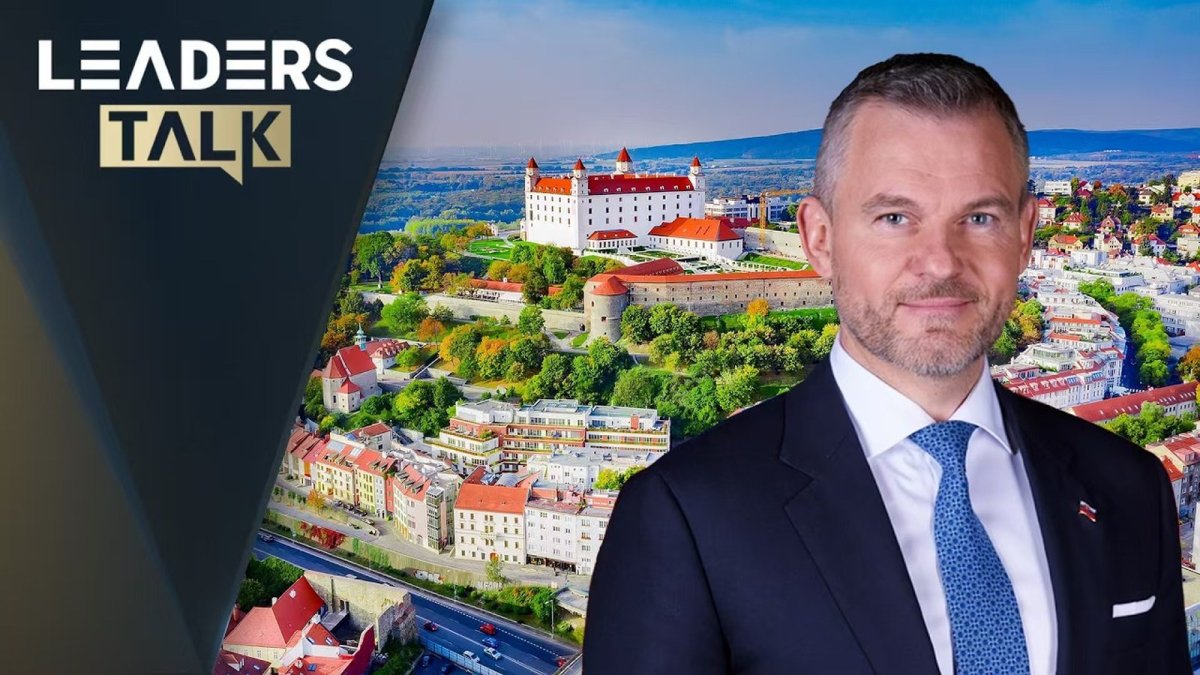
Beijing, China — August 3, 2026 — Slovak President Peter Pellegrini’s three-day state visit to Beijing last week has reinforced Bratislava’s position as one of the European Union’s more visible advocates for deeper engagement with China, a stance the Slovak leader defended at length in an exclusive interview with CGTN. The visit’s outcomes — new investment commitments, an education pipeline, and an explicit endorsement of Beijing’s vision for global AI governance — carry implications that reach well beyond the bilateral relationship.
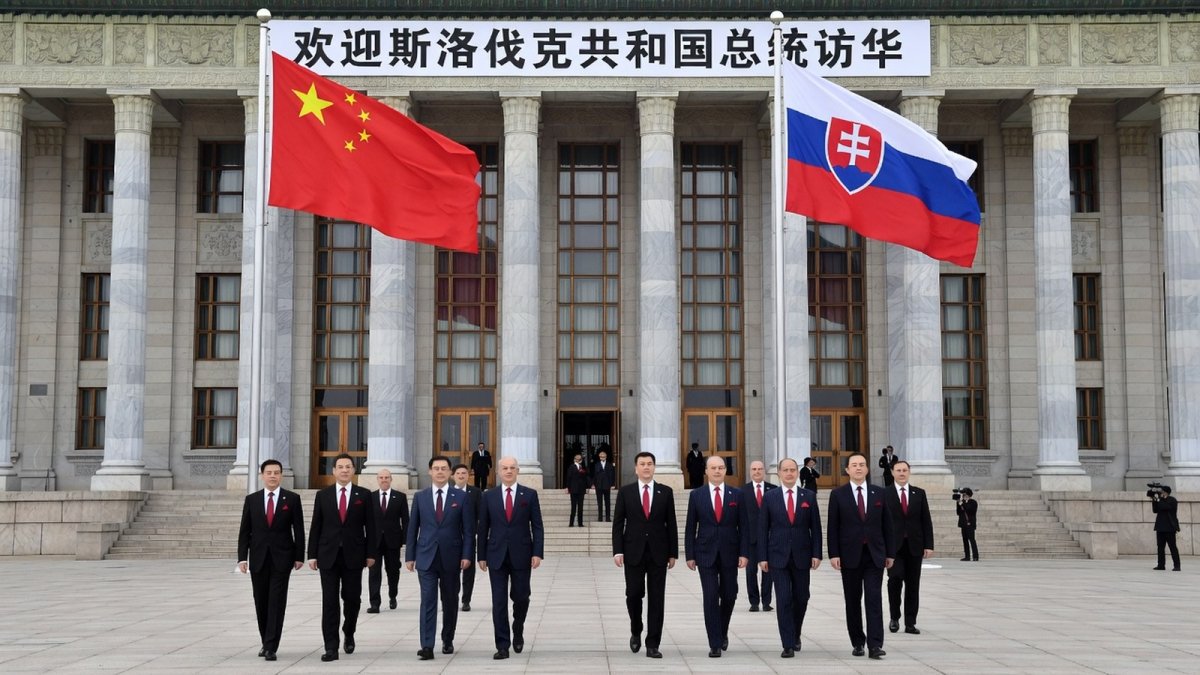
State Visit and High-Level Talks in Beijing
Slovak President Peter Pellegrini conducted his first state visit to China from July 27 to 29, 2026, at the invitation of President Xi Jinping. The visit marked only the second state visit in Slovakia's history and featured a formal welcome ceremony at the Great Hall of the People, including a 21-gun salute and a review of the PLA honor guard. Chinese Foreign Ministry spokesperson Lin Jian had announced the trip on July 24, and Wang Yi attended the key events.
During the morning talks on July 28, Xi highlighted that Slovakia was among the first countries to establish diplomatic relations with the People's Republic of China and that bilateral ties were elevated to a strategic partnership in 2024. Xi outlined four priority areas for cooperation: consolidating strategic mutual trust with mutual support on core interests; deepening mutually beneficial cooperation through the Belt and Road Initiative and China-CEEC mechanisms; strengthening people-to-people exchanges in culture, education, and tourism; and upholding multilateralism alongside reform of global governance.
Economic Foundations and Investment Pipeline
China has become Slovakia's largest trading partner outside the EU, with bilateral trade reaching $8.63 billion in 2025. The trade structure remains roughly half automotive, though digital products and clean energy show growth potential. Chinese battery maker Gotion High-Tech has already invested more than 1.2 billion euros to a plant in Slovakia, and Pellegrini confirmed during his CGTN interview that Gotion High-Tech along with Geely/Volvo will establish large-scale operations there, with additional projects in the pipeline.
Pellegrini pledged that the Slovak government would create constructive conditions to attract further Chinese investment. Slovak wine and crystal continue to find steady demand in China, while Chinese smart vehicles and electronics flow in the opposite direction, illustrating the complementary nature of the economic relationship.
The commitments from Gotion High-Tech and Geely/Volvo align with a broader pattern of Chinese manufacturing relocating into Central and Eastern Europe to serve Western European auto markets more efficiently. Proximity reduces logistics costs and helps satisfy EU local-content requirements for vehicles and components, allowing Chinese firms to integrate into regional supply chains while mitigating tariff exposure.
Nevertheless, these projects face limits from potential political turnover in Bratislava, intensified EU regulatory scrutiny on subsidies and security, and concerns over excessive dependence on a single external partner. Realization will hinge on whether the intergovernmental mechanisms can deliver predictable conditions amid shifting European industrial policy.
AI Innovation and Global Governance Agenda
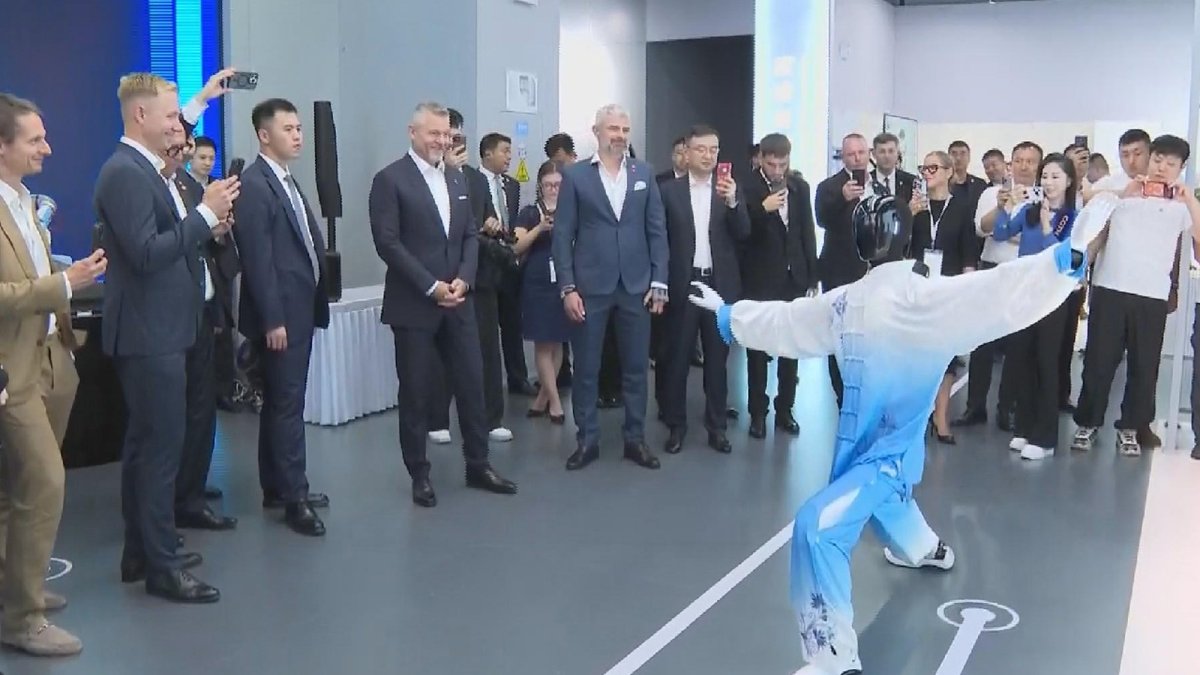
At the Robot Mall in Beijing's E-Town, Pellegrini observed a humanoid robot performing tai chi and expressed interest in combining Chinese technology with Slovak implementation programs. He endorsed the visions presented by Xi at the 2026 World Artificial Intelligence Conference and signaled readiness to collaborate on global AI governance that benefits all of humanity.
In the CGTN interview, Pellegrini stressed that global AI governance is essential to prevent new technologies from widening inequality. He highlighted upcoming education exchanges, including a visit by Slovakia's education minister and university representatives, to build joint programs and student exchanges that prepare the next generation for technological change.
The 2026 World Artificial Intelligence Conference highlighted competing governance models, with the United States emphasizing security-driven export controls, the EU advancing risk-based regulation, and China promoting inclusive development alongside multilateral coordination. A European head of state's explicit endorsement of China's vision carries diplomatic weight, suggesting that governance debates are no longer confined to transatlantic frameworks.
Yet this endorsement occurs against persistent Western concerns over technology transfer and dual-use applications. The resulting tension may constrain the depth of AI cooperation, as Slovakia balances its interest in Chinese robotics and digital tools with alliance expectations that limit exposure in sensitive domains.
EU-China Relations and Constructive Role
Against the backdrop of EU-China friction over trade and industrial policy, Xi noted that China-Europe relations face both opportunities and challenges, with the key lying in equal consultation and seeking common ground. He expressed hope that Slovakia would play a constructive role in encouraging the EU to focus on consensus and manage disagreements through dialogue.
Pellegrini reaffirmed Slovakia's adherence to the one-China principle and stated that, as an EU member, Slovakia is prepared to promote EU-China cooperation while handling differences through consultation. He described dialogue and cooperation as the only way to bridge gaps, positioning Slovakia as a pragmatic bridge amid broader tensions.
The EU's ongoing de-risking debate and friction over electric vehicle tariffs provide the immediate backdrop for Slovakia's outreach. While several Central European governments have adopted hawkish positions aligned with Brussels' more assertive trade posture, Bratislava has consistently favored pragmatic engagement. This divergence underscores the challenge of maintaining a unified EU line, as smaller member states pursue bilateral economic opportunities that may dilute collective leverage in negotiations with Beijing.
Slovakia's stance could complicate Brussels' efforts to coordinate supply-chain diversification and technology safeguards across the bloc. Second-order effects include potential fragmentation in the EU's trade posture toward China, where pragmatic voices encourage selective openness in clean energy and digital sectors even as regulatory scrutiny intensifies on investment screening and content rules.
Strategic Calculus for Both Sides
Analyst Jin Ling of the China Institute of International Studies noted that cooperation between China and Slovakia demonstrates a successful transition from traditional industrial partnerships to high-tech and green innovation, with room to diversify beyond the automotive sector. Wang Le of East China Normal University described Slovakia as a pragmatic voice within the EU that can serve as a natural bridge for broader China-EU engagement.
Cui Hongjian of Beijing Foreign Studies University highlighted the political consensus as a defining strength of the relationship and pointed to China's approach to AI development and security as offering a practical roadmap for global governance. Jian Junbo of Fudan University observed that Pellegrini's state visit, following earlier trips by Prime Minister Robert Fico, reflects continuity in Slovakia's China policy and carries symbolic weight in elevating the strategic partnership.
Beijing's calculus centers on securing a reliable interlocutor inside the EU that can host segments of its EV and battery supply chain while amplifying calls for dialogue over confrontation. Bratislava, in turn, seeks capital inflows, technology transfers, and sustained growth without compromising its NATO and EU commitments. Despite its modest size, Slovakia holds leverage through its willingness to position itself as a stable destination amid regional volatility, offering China a foothold that larger, more cautious capitals have withheld.
This approach signals to other EU governments that selective cooperation remains viable even under heightened trade tensions. For Global South observers, it reinforces China's image as a partner capable of delivering industrial investment on terms that prioritize mutual economic benefit over ideological alignment.
Outlook for Follow-Through and Momentum
Observers will watch the upcoming education exchanges and the concrete investment pipeline for signs of sustained implementation. The intergovernmental cooperation committee and new projects in clean energy, robotics, and artificial intelligence are expected to test the ability to convert high-level consensus into tangible outcomes.
Broader China-EU momentum will also depend on whether Slovakia's constructive stance helps maintain channels for dialogue amid ongoing trade frictions. Success in these areas could reinforce the strategic partnership and demonstrate how smaller EU members can facilitate pragmatic cooperation even as larger tensions persist.
By Prof. Marcus Chen, Staff Writer
This article was produced with AI-assisted research and editorial support. Reporting is based on sources cited in the article.
What's Your Reaction?
 Like
0
Like
0
 Dislike
0
Dislike
0
 Love
0
Love
0
 Funny
0
Funny
0
 Wow
0
Wow
0
 Sad
0
Sad
0
 Angry
0
Angry
0

World Politics Analyst at Global1.News. Based in Beijing, covering US-China relations, global trade, and geopolitical strategy. Brings deep analytical perspective to the power dynamics shaping international affairs.












Comments (0)