
3 Palestinians killed, 7 injured in Israeli attacks across Gaza despite ceasefire
GAZA CITY — Three Palestinians were killed and seven others injured on Saturday in a series of Israeli attacks across the Gaza Strip, marking the latest violation of a ceasefire that has been under sustained strain for nearly a year, according to medical sources on the ground.
GAZA CITY — Three Palestinians were killed and seven others injured on Saturday in a series of Israeli attacks across the Gaza Strip, marking the latest violation of a ceasefire that has been under sustained strain for nearly a year, according to medical sources on the ground.
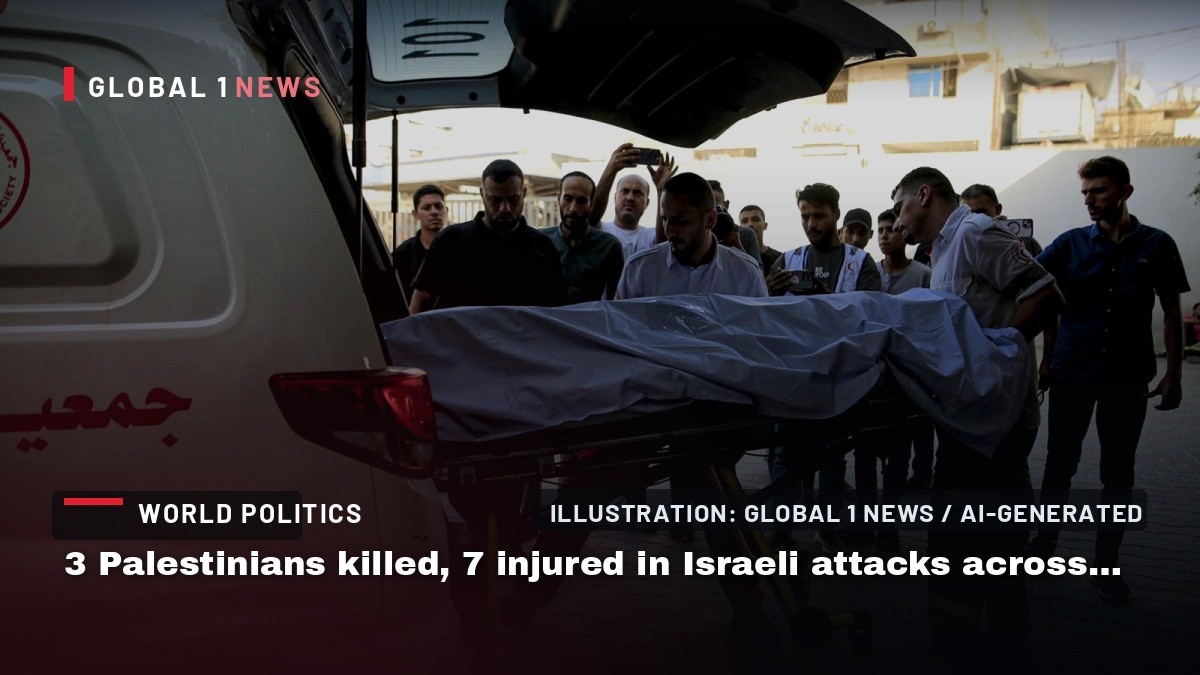
The deadliest incident occurred in the Tel al-Hawa neighborhood, southwest of Gaza City, where an Israeli airstrike targeted an electric bicycle belonging to a private delivery company. Two Palestinians were killed and two others wounded in the strike. The body of Raed Alian, one of the victims, was brought to al-Shifa Hospital for a funeral procession, where grieving family members gathered amid the rubble-strewn streets that have become a grim fixture of daily life in the enclave.
In a separate attack, Israeli forces opened fire on farmers working their land east of Deir al-Balah in central Gaza. Eyewitnesses reported that an Israeli quadcopter drone fired directly on one farmer, killing him instantly and seriously wounding another. The farmland, once a source of sustenance and livelihood, has become yet another frontline in a conflict that shows no sign of abating despite the truce agreement.
The attacks also struck at the heart of Gaza's already fragile healthcare infrastructure. An Israeli airstrike targeted a medicine warehouse at Al-Aqsa Martyrs Hospital in the central Gaza Strip, injuring three Palestinians who were inside the hospital seeking medical services at the time of the strike. The hospital, which has repeatedly come under fire throughout the conflict, now faces the additional burden of a depleted medicine supply at a moment when demand is surging.
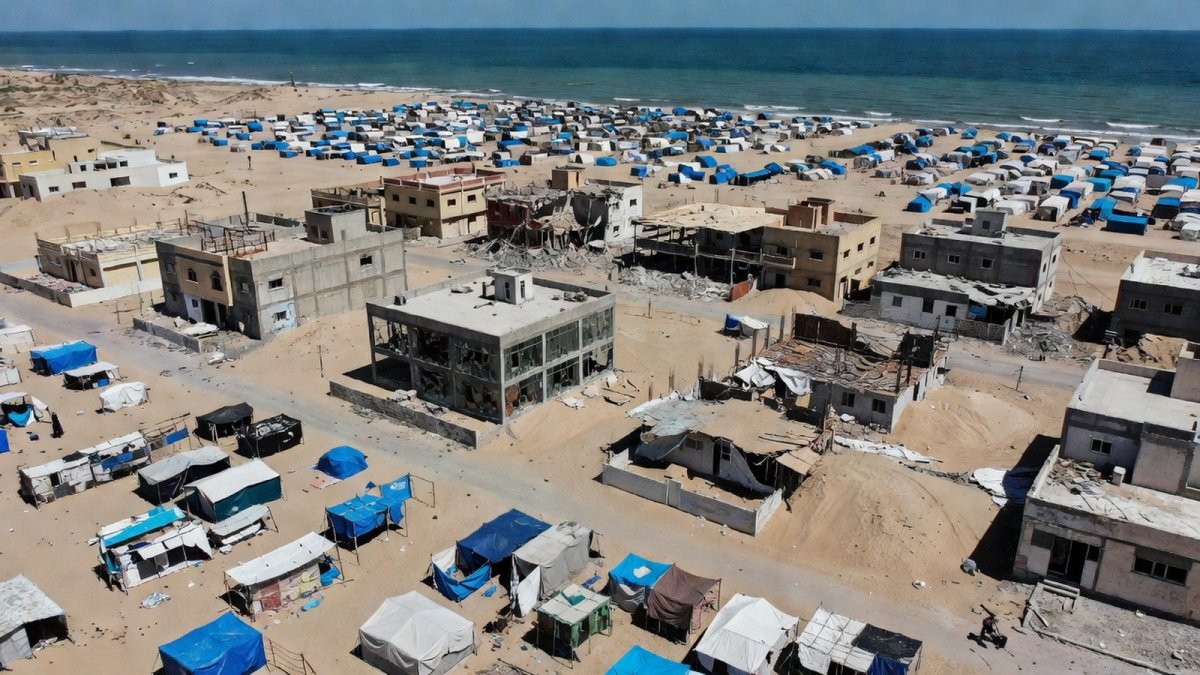
In Khan Younis, in the southern Gaza Strip, one Palestinian was injured in an Israeli drone strike targeting a person inside a camp for displaced people in the Al-Ard al-Tayyiba area of Al-Mawasi. The camp, which shelters families who have been uprooted multiple times over the course of the war, has become a symbol of the relentless displacement that defines the Palestinian experience in Gaza.
A Ceasefire Under Siege
The ceasefire agreement, which took effect on October 10, 2025, was brokered by the United States, Egypt, and Qatar under the framework of the "Comprehensive End of Gaza War" agreement. It was hailed at the time as a diplomatic breakthrough that would bring an end to the bloodshed and open a path toward reconstruction and political resolution. Yet, nearly a year later, the truce exists in name more than in practice.
According to the Gaza Government Media Office, Israeli forces have committed 4,379 documented ceasefire violations in Gaza, marking 315 days since the truce took effect. These violations range from airstrikes and drone attacks to incursions and the targeting of civilians engaged in daily activities such as farming, fishing, and delivering goods. The sheer frequency of these incidents has led many Palestinians to question whether the ceasefire was ever intended to hold.
The cumulative toll is staggering. According to Gaza's Health Ministry, 1,313 Palestinians have been killed and 4,361 injured in Israeli violations since the ceasefire took effect. These figures represent not just statistics but a community in mourning — families shattered, children orphaned, and a society struggling to maintain any semblance of normalcy under conditions of constant threat.
The Human Cost of Attrition
The attack on the electric bicycle in Tel al-Hawa is emblematic of the broader pattern of violence that has characterized the post-ceasefire period. Delivery workers, who have become a lifeline for a population cut off from traditional supply chains, now risk their lives simply to bring food, medicine, and other essentials to residents. The targeting of such workers suggests a deliberate strategy of economic strangulation that compounds the physical violence of the strikes themselves.
Raed Alian, whose body was brought to al-Shifa Hospital, was one such worker. His death, along with that of his colleague, has sent shockwaves through the local community, where delivery services have become a vital source of income and a means of survival. The funeral procession at al-Shifa Hospital was attended by dozens of mourners, many of whom expressed a mixture of grief and defiance in the face of what they described as a campaign of attrition against the civilian population.
The targeting of farmers east of Deir al-Balah follows a similar logic. Agriculture has long been a cornerstone of Gaza's economy, but the war has devastated farmland, destroyed irrigation systems, and made access to fields a deadly proposition. The killing of a farmer by a quadcopter drone while he worked his land is a stark reminder that even the most basic acts of subsistence are now fraught with mortal danger.
Hospitals Under Fire
The strike on the medicine warehouse at Al-Aqsa Martyrs Hospital raises grave concerns about the state of healthcare in Gaza. The hospital, which has been overwhelmed by casualties throughout the conflict, now faces a critical shortage of medical supplies at a time when the need for treatment is escalating. The three Palestinians injured in the strike were inside the hospital to receive medical services, underscoring the fact that no place in Gaza is safe — not even facilities that are supposed to be protected under international humanitarian law.
The World Health Organization has repeatedly warned about the dire state of Gaza's healthcare system. The WHO chief has noted that thousands more Gaza patients await medical evacuation, a process that has been slow and fraught with bureaucratic obstacles. The destruction of medical infrastructure, including warehouses, ambulances, and hospitals, has pushed the healthcare system to the brink of collapse, leaving patients with few options for treatment and care.
The attack on the medicine warehouse also highlights a broader pattern of targeting that has characterized the conflict. Hospitals, schools, and other civilian infrastructure have been repeatedly struck, leading to widespread condemnation from human rights organizations and the international community. Yet, despite these condemnations, the attacks continue, and the toll on civilians continues to mount.
Displacement and Dispossession
The strike in Al-Mawasi, which injured a displaced person in a camp, is a reminder of the ongoing displacement crisis that has defined the Palestinian experience in Gaza. The camp, located in the Al-Ard al-Tayyiba area, is home to families who have been forced to flee their homes multiple times over the course of the war. Many have lost everything — their homes, their belongings, their livelihoods — and now live in makeshift shelters with little access to clean water, sanitation, or healthcare.
Rights groups have documented up to 3,000 people forcibly disappeared in Gaza during the Israeli war, a figure that speaks to the scale of the human tragedy unfolding in the enclave. Families continue to search for loved ones who have vanished, often with no information about their fate. The psychological toll of this uncertainty is immense, compounding the physical hardships of displacement and deprivation.
The international community has repeatedly called for an end to the violence and for adherence to the ceasefire agreement, but these calls have largely gone unheeded. The United Nations and various human rights organizations have documented the violations and called for accountability, but the mechanisms for enforcement remain weak, and the political will to hold perpetrators to account appears to be lacking.
A Community in Mourning
For the people of Gaza, the attacks on Saturday are not isolated incidents but part of a broader pattern of violence that has persisted despite the ceasefire. The deaths of Raed Alian and the other victims are a reminder that the truce has not brought the peace that was promised. Instead, it has brought a slow, grinding attrition that continues to claim lives and destroy livelihoods.
The broader toll of the war is almost incomprehensible. According to Gaza's Health Ministry, Israel's war on Gaza since October 2023 has killed at least 73,449 Palestinians and injured 174,472 others. These figures, which include thousands of women and children, represent a catastrophic loss of life that has reshaped the demographic and social fabric of the enclave.
As the international community marks the approaching anniversary of the ceasefire agreement, the reality on the ground in Gaza tells a different story. The ceasefire has not brought an end to the violence, nor has it brought the reconstruction and relief that were promised. Instead, it has brought a fragile, tenuous existence in which every day is a struggle for survival.
The people of Gaza continue to endure, but their endurance is not infinite. The attacks on Saturday are a stark reminder that the ceasefire is not holding, and that the international community's failure to enforce it has real, deadly consequences. The question now is whether the world will act to stop the violence, or whether it will allow the attrition to continue until there is nothing left to save.
By Fatima Al-Rashid, Staff Writer
This article was produced with AI-assisted research and editorial support. Sources: Middle East Monitor, Anadolu Agency, Gaza Health Ministry.
What's Your Reaction?
 Like
0
Like
0
 Dislike
0
Dislike
0
 Love
0
Love
0
 Funny
0
Funny
0
 Wow
0
Wow
0
 Sad
0
Sad
0
 Angry
0
Angry
0

Gulf/MENA Correspondent at Global1.News. Based in Doha, covering Gulf politics, energy markets, diplomacy, and development across the Middle East and North Africa. Tracks the economic transformation of the Gulf states.














Comments (0)