
Masked Israeli Settlers Attack NBC News Crew and Wound Palestinian Woman in West Bank
In a report published Saturday, Middle East Eye documented a brazen daylight assault in which masked Israeli settlers attacked an NBC News crew and a 51-year-old Palestinian woman in the village of Jalud, near Nablus in the occupied West Bank.
In a report published Saturday, Middle East Eye documented a brazen daylight assault in which masked Israeli settlers attacked an NBC News crew and a 51-year-old Palestinian woman in the village of Jalud, near Nablus in the occupied West Bank. The attack, which left four journalists injured and the woman hospitalized, marks an alarming escalation in the wave of settler violence that has gripped the northern West Bank in recent weeks. It also raises urgent questions about the safety of international media covering the occupied territories and the limits of Israeli authorities' willingness — or ability — to protect both Palestinians and the journalists documenting their plight.
Masked Israeli Settlers Attack NBC News Crew and Wound Palestinian Woman in West Bank
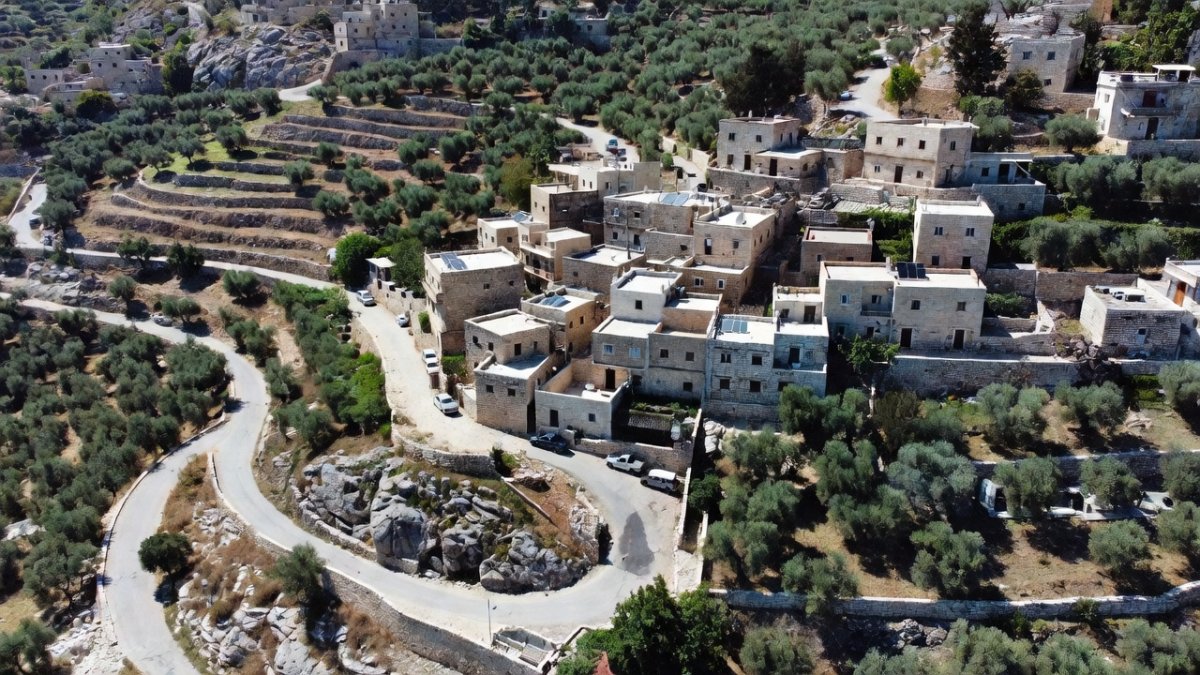
Jalud, occupied West Bank – August 30, 2026 — The assault unfolded Saturday afternoon in the hilltop village of Jalud, a community that has become a flashpoint in the escalating settler campaign across the northern West Bank. An NBC News team, including international correspondent Matt Bradley, producer Lawahez Jabari, and camera operator Khaldoon Eid, was interviewing Aida Ahmed Abdullah, 51, who had been driven from her home by settlers days earlier. What began as a routine journalistic assignment quickly turned into a scene of violence that the crew said they never anticipated.
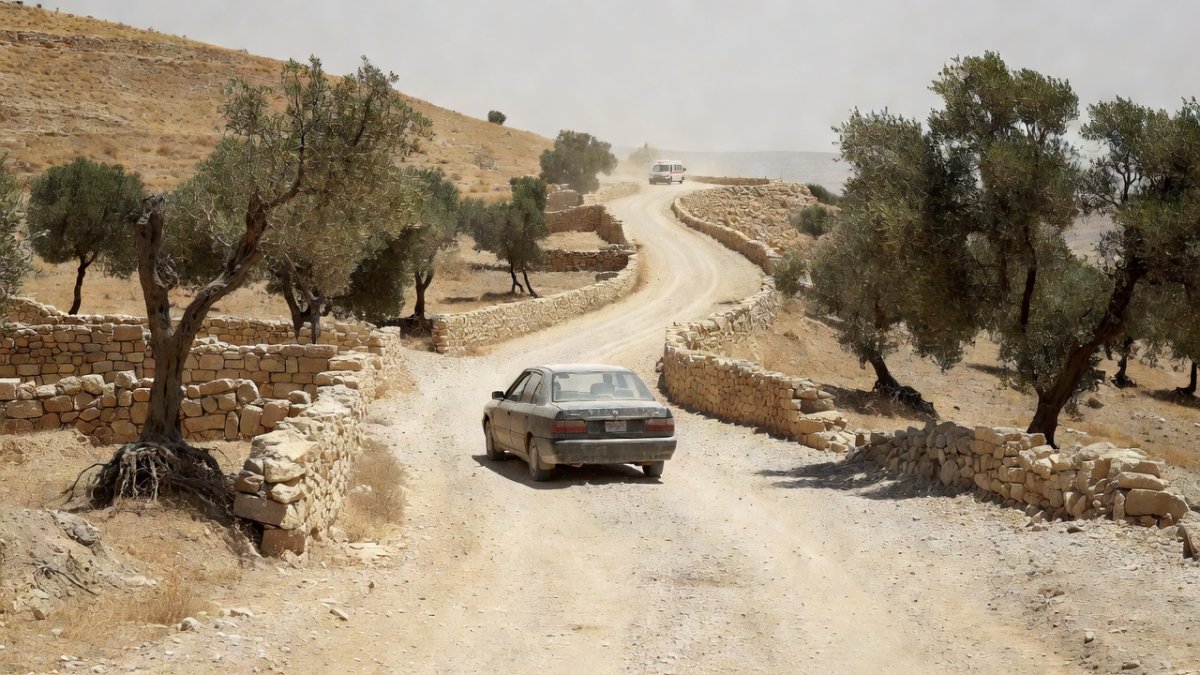
According to the crew's account, a gray car bearing Israeli license plates reversed up the hill toward them. A masked man in a blue tracksuit, wielding a stick, leaned out of the rear passenger window. At least four masked men in dark clothing then jumped out of the vehicle, surrounded the group, and began beating Abdullah and the journalists with sticks while hurling rocks. Within moments, the assailants jumped back into the car and fled, leaving behind a scene of chaos, damaged camera equipment, and a wounded woman in need of urgent medical care.
The Attack: A Journalist's Account of Unprovoked Violence
Matt Bradley, who was struck twice in the arm and later treated at a nearby clinic, described the suddenness of the assault. "They jumped out, beat us, then jumped back in the car," he said, his voice carrying the shock of someone who has covered conflict zones across the Middle East but found himself unexpectedly targeted in a Palestinian village. The correspondent's injuries, while not life-threatening, underscore the brazenness of the attack — the assailants made no distinction between a Palestinian woman and an international news crew.
Producer Lawahez Jabari, said the crew saw more than just sticks. "Suddenly a car came to us. The settlers had sticks, I saw a gun, but they didn't use the gun," she recounted. The presence of a firearm, even if unused, adds a chilling dimension to the attack and suggests the assailants were prepared for a more lethal confrontation had the situation escalated further.
Camera operator Khaldoon Eid, who lives in the West Bank, expressed bewilderment at the targeting of the crew. "We didn't expect that — that they would come to attack. We were in the middle of a Palestinian area next to Palestinian houses," he said. Eid's words highlight a grim reality: even in areas considered firmly under Palestinian control, the presence of armed settler militias has made nowhere safe. Four NBC staffers — the correspondent, cameraman, producer, and their driver — were injured in the assault, and both camera equipment and one of the crew's vehicles sustained damage.
Aida Ahmed Abdullah, the woman at the center of the interview, was taken by Red Crescent medics to a nearby hospital. According to her husband, Mahmoud Toubasi, her condition had improved by Saturday evening, though she remained hospitalized overnight. Her injuries were not life-threatening, but the psychological toll of being attacked in her own village, after already being displaced from her home, is immeasurable. Abdullah had been speaking to the NBC crew about her experience of being driven out by settlers — a story that is becoming tragically common in the villages surrounding Nablus.
Official Response: Netanyahu Condemns 'Handful of Rioters'
The attack drew a swift response from Israeli Prime Minister Benjamin Netanyahu, who sought to distance the government from the perpetrators while acknowledging the severity of the incident. In a statement, Netanyahu condemned the violence committed "by a handful of rioters," describing their actions as "criminal acts of violence committed in the villages of Qusra and Jalud by a handful of rioters who violate the law, cause enormous injustice to the law-abiding settler public, hinder the IDF in fulfilling its missions and harm Israel's standing in the world."
His spokesman, Doron Spielman, elaborated in a post on X, stating that the actions "violate the law; they endanger both Jews and Arabs, and they interfere with the Israel Defense Forces as they carry out vital security missions, and of course they harm Israel's international legitimacy." Spielman said Netanyahu had requested security forces "apprehend the perpetrators and to bring them to justice," adding that Israel "will not tolerate vigilantism of any kind by anyone."
The Israeli security forces' official account of the day's events painted a more complex picture. In a statement, they said they received reports that "violent clashes had occurred, including stone-hurling toward Palestinians and additional civilians." They also acknowledged that "dozens of rioters who had barricaded themselves inside a Palestinian home while Palestinian residents were inside" had been removed by forces, and that vehicles had been confiscated. The statement concluded that "IDF soldiers and Israel Border Police forces continue to operate in the areas of Qusra and Jalud to prevent further disturbances and restore order in the area."
Yet for residents of Jalud and the neighboring village of Qusra, the promise of restored order rings hollow. Saturday's attack on the NBC crew was not an isolated incident but part of a sustained campaign of intimidation that has intensified dramatically over the past month. In a separate incident on the same day, dozens of masked settlers sprayed pepper spray at Palestinian workers and hurled rocks at a building in Qusra. Israeli forces also pushed and threatened journalists during a settler incursion into Hebron's Old City, suggesting a coordinated pattern of hostility toward both Palestinians and the media covering their plight.
Wider Context: A Summer of Escalating Settler Violence
The attack on the NBC crew comes against a backdrop of sharply rising settler violence that has drawn international condemnation and increasingly urgent diplomatic pressure. Earlier this month, settlers began blocking supplies from entering Palestinian homes on the outskirts of Jalud, effectively trapping residents inside their own houses. The siege drew unusually sharp criticism from the United States, with the American ambassador going so far as to call the settler blockade of an American Palestinian family's home in Qusra "terror." The use of that word by a senior US diplomat reflects the growing alarm within the US administration — and the international community more broadly — at the scale and ferocity of the settler campaign.
The statistics paint a grim picture. According to the UN Office for the Coordination of Humanitarian Affairs (OCHA), Israeli forces or settlers killed 76 Palestinians in the West Bank in the year to 24 July. Over the same period, three Israelis were killed. The New York Times reports that attacks by Israeli settlers against Palestinians have risen sharply since the war in Gaza began three years ago, with the northern West Bank emerging as a particular hotspot. Villages like Jalud and Qusra, situated in close proximity to ideologically driven settler outposts, have borne the brunt of this violence.
The pattern is well-documented: settlers, often masked and armed, descend on Palestinian communities to destroy property, torch vehicles, uproot olive trees, and physically assault residents. In many cases, Israeli security forces either stand by or arrive late, and arrests of settlers are rare. When they do occur, they are often met with political backlash from far-right members of Netanyahu's governing coalition, who view the settlers as vanguards of Jewish sovereignty in the occupied territories. This political calculus has created an environment of near-impunity that emboldens the most extreme elements of the settler movement.
Press Freedom Under Threat: What the Attack Signals
The targeting of an international news crew marks a significant escalation in the threats facing journalists in the occupied West Bank. While Palestinian journalists have long faced harassment, detention, and injury at the hands of Israeli forces, attacks on foreign correspondents have historically been less frequent — in part because of the diplomatic fallout they generate. Saturday's assault suggests that this calculation is changing, and that the most radical settlers no longer distinguish between Palestinian residents and the international media documenting their suffering.
Press-freedom groups have long documented a steady deterioration in the working environment for journalists in the West Bank since the outbreak of the Gaza war. Reporters covering settler violence face particular risks, as they are often the only witnesses to attacks that Israeli authorities are reluctant to investigate. The assault on the NBC crew sends a chilling message: that even the presence of international cameras and recognizable news organizations offers no protection against settler violence.
For Palestinian journalists, the implications are even more dire. If international crews can be attacked with impunity, the safety of local reporters — who lack the protection of foreign passports and the diplomatic weight of major news organizations — is even more precarious. The attack also raises questions about the willingness of Israeli authorities to investigate and prosecute settler violence against the media. Despite Netanyahu's condemnation and his request that perpetrators be brought to justice, past experience suggests that such promises rarely translate into meaningful accountability.
Analysis and Implications: A Turning Point for the West Bank?
The attack on the NBC crew may prove to be a watershed moment in the international community's understanding of the situation in the West Bank. For years, settler violence has been treated as a peripheral issue, overshadowed by the catastrophic war in Gaza and the broader Israeli-Palestinian conflict. But the targeting of international journalists — and the US ambassador's use of the word "terror" to describe settler actions — signals a shift in perception. The West Bank is no longer a quiet front in the conflict; it is an active zone of violence where the fabric of Palestinian life is being systematically dismantled.
The timing is significant. Three years into the Gaza war, international attention has begun to drift, and the Palestinian Authority's authority in the West Bank has eroded to the point of near-collapse. Settler violence has filled the vacuum, with armed militias operating with a level of organization and impunity that would have been unthinkable a decade ago. The villages of Jalud and Qusra have become test cases for a strategy of forced displacement — a slow-motion ethnic cleansing that proceeds village by village, family by family, under the cover of military occupation.
For Aida Ahmed Abdullah, the woman at the center of Saturday's attack, the immediate future is uncertain. She remains hospitalized, her home still inaccessible, her village still under threat. For the NBC crew, the physical wounds will heal, but the psychological impact of being attacked while doing their jobs will linger. And for the residents of Jalud and Qusra, the attack on the journalists is just another chapter in a summer of terror — one that has seen their neighbors injured, their homes besieged, and their futures placed in doubt.
The international community's response will be telling. If the attack on the NBC crew prompts meaningful diplomatic pressure on Israel to rein in settler violence — including sanctions on extremist settlers and accountability for security forces that fail to intervene — then some good may come from this ugly incident. But if, as has so often been the case, the condemnation fades and the violence continues, then the message to both settlers and Palestinians will be clear: the occupation will continue to be enforced by any means necessary, and the world will look away.
For now, the people of Jalud wait. They wait for the security forces to leave, for the settlers to return, and for the international community to decide whether their lives — and the lives of the journalists who document them — are worth protecting. The attack on the NBC crew has brought the world's attention to their village, but attention alone will not stop the next car from reversing up the hill, its masked passengers armed with sticks and, perhaps, guns. Only accountability can do that — and accountability remains, as ever, in desperately short supply.
By Fatima Al-Rashid, Staff Writer
This article was produced with AI-assisted research and editorial support. Sources: Middle East Eye, NBC News, The Guardian, The New York Times.
What's Your Reaction?
 Like
0
Like
0
 Dislike
0
Dislike
0
 Love
0
Love
0
 Funny
0
Funny
0
 Wow
0
Wow
0
 Sad
0
Sad
0
 Angry
0
Angry
0
Gulf/MENA Correspondent at Global1.News. Based in Doha, covering Gulf politics, energy markets, diplomacy, and development across the Middle East and North Africa. Tracks the economic transformation of the Gulf states.











Comments (0)