
Ombudsman Probes Legarda, Leviste, Cusi Over Failed P10 Billion Solar Franchise
Ombudsman Probes Legarda, Leviste, and Cusi Over Failed P10 Billion Solar Franchise Manila, Philippines — The Office of the Ombudsman has ordered a preliminary investigation against Sen. Loren Legarda, Batangas 1st District Rep. Leandro Leviste, and former Energy Secretary Alfonso Cusi for alleged plunder and multiple violations of the Anti-Graft and Corrupt Practices Act.
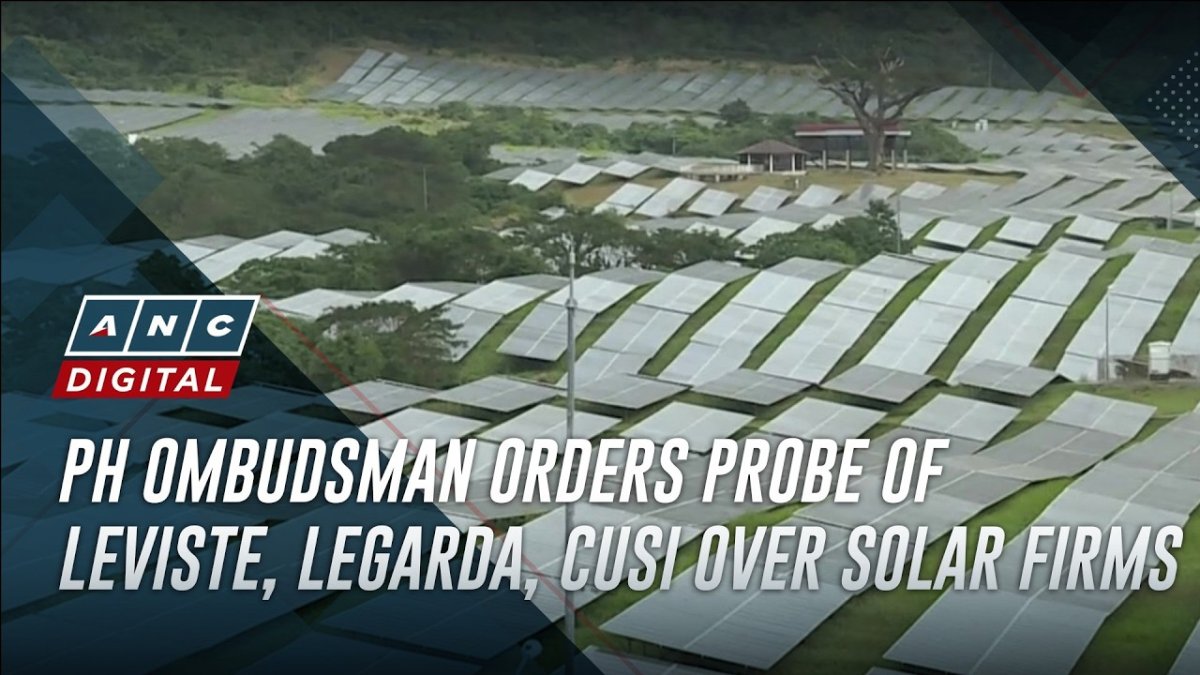
In a recent ANC 24/7 report, Ombudsman Jesus Crispin "Boying" Remulla announced the start of a preliminary investigation into Sen. Loren Legarda, her son Batangas 1st District Rep. Leandro Leviste, and former Energy Secretary Alfonso Cusi over complaints of plunder and graft tied to P10 billion solar projects that never delivered power. The probe centers on Solar Para sa Bayan Corp., which received an exclusive 25-year franchise under Republic Act 11357 in 2019 but left remote communities in places like Cavite and Batangas without the promised electricity. For ordinary Filipino families struggling with some of Asia's highest power rates, this case raises direct questions about why their electric bills keep climbing while promised renewable energy stays missing.
Ombudsman Probes Legarda, Leviste, and Cusi Over Failed P10 Billion Solar Franchise
Manila, Philippines — The Office of the Ombudsman has ordered a preliminary investigation against Sen. Loren Legarda, Batangas 1st District Rep. Leandro Leviste, and former Energy Secretary Alfonso Cusi for alleged plunder and multiple violations of the Anti-Graft and Corrupt Practices Act. The complaints stem from renewable energy projects valued at more than P10.44 billion that failed to produce solar power despite a congressional franchise granted to Leviste's firm. Ombudsman Remulla signed the charge sheet on Friday, July 31, 2026, after fact-finding that began in January following initial instructions issued the previous November.
The Ombudsman’s Preliminary Investigation Begins
Ombudsman Jesus Crispin "Boying" Remulla confirmed at a press conference that the Office has formally started its probe into the three public officials. The complaints include non-bailable plunder and violations of Republic Act 3019, specifically Sections 3(e), 3(h) on conflict of interest, and 3(i). Remulla described the case as very novel because it involves exclusive rights to solar energy that allegedly prevented other investors from entering the market. The investigation runs alongside the Ombudsman's ongoing work on the flood control scam and other high-priority matters. Fact-finding teams examined service contracts that were transferred to affiliated corporations described as existing only on paper with no operations started. This step marks the formal beginning of a process that could lead to charges before the Sandiganbayan if probable cause is found.
Remulla explained that the Office carefully studied the matter because of its significant effect on the country's power supply and the detriment it caused to consumers. Fact-finding began in January after instructions were issued in November last year, even as teams handled the separate P14.4 billion ghost projects complaint linked to the flood control scam. The Ombudsman noted that the case required detailed review of how an exclusive franchise under Republic Act 11357 could block other renewable energy efforts in unserved barangays across Cavite, Batangas, and other provinces.
Allegations of Ghost Electricity and Unfulfilled Contracts
Remulla stated that Solar Para sa Bayan Corp. secured the franchise to build, operate, and maintain distributed energy resources and microgrids in unserved and underserved areas across the Philippines. Instead of delivering power, the company allegedly sold assets and rights for profit while leaving contracts unfulfilled. The Ombudsman called the situation "ghost electricity," noting that the firm promised to produce solar power but generated none. Terminated contracts left more than P10.44 billion in unpaid financial obligations to the government. Remulla emphasized that all indicators showed no intention to fulfill the agreements from the start. He added that the failure worsened the national energy crisis and contributed directly to higher electricity prices paid by households from Manila to Quezon City and beyond.
"We have been probing ghost projects. Here, there is ghost electricity, they promised to produce electricity but they did not do it. They just sold the company for a profit and they did not deliver," Remulla said. He added that "Leviste should have produced solar energy when he got the franchise, but no, there was no electricity. It did not turn into electricity, we just got electrocuted." While the contracts are valued at P10 billion, Remulla estimates the actual economic damage from stunted energy projections and derailed investments runs into the hundreds of billions of pesos. The 25-year franchise under Republic Act 11357 authorized construction of microgrids in remote and economically unviable areas, yet no power reached the grid.
Exclusive Franchise Blocked Other Solar Projects
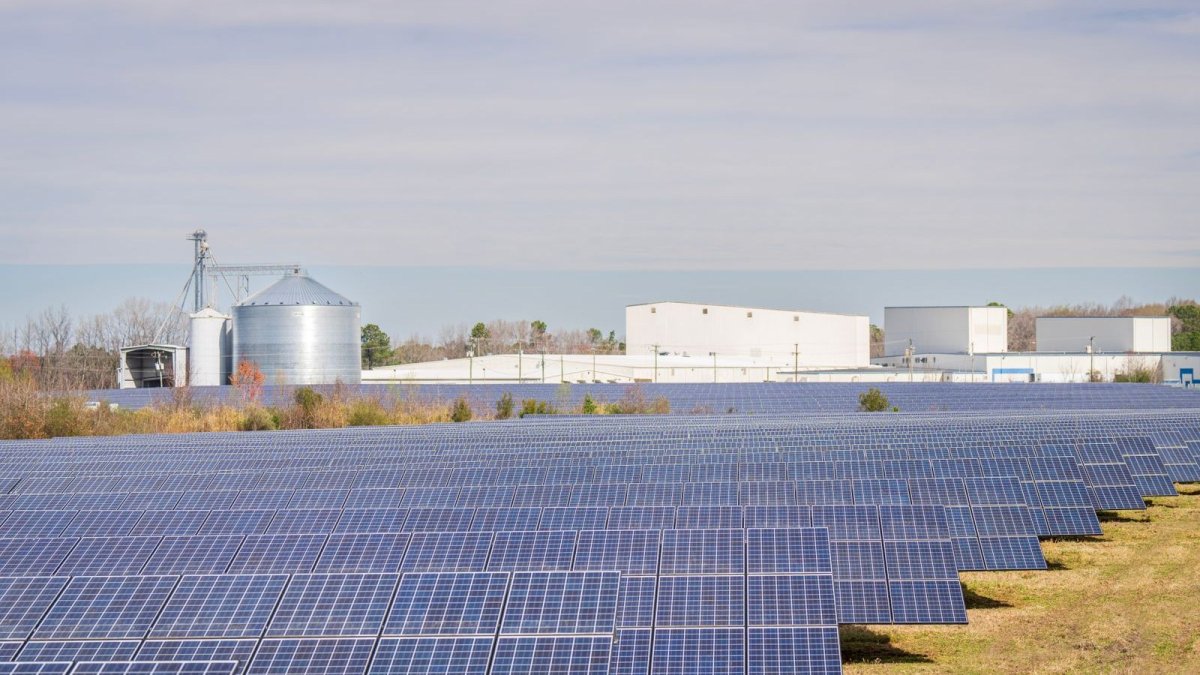
The 25-year legislative franchise under Republic Act 11357 gave Solar Para sa Bayan Corp. exclusive rights that Remulla said went against the principle that the sun belongs to everyone. A 40- to 80-hectare solar field in Cavite was denied a feed-in tariff by the Department of Energy because it had to pass through Leviste's franchise area. Remulla questioned how any Filipino or investor could use solar energy without seeking approval from the franchise holder. The exclusivity clause prevented other projects from moving forward in remote barangays that needed reliable power. This setup, according to the Ombudsman, excluded legitimate investors and left communities dependent on expensive conventional sources. The Department of Energy had already filed separate complaints with the Department of Justice in May 2026 against Leviste and five other Solar Para sa Bayan officials for alleged violations of the franchise and the Public Service Act.
"It goes against the law of God because the sun is for everyone. It seemed that they own the sun or the power of the sun to the detriment and exclusion of other Filipinos and other investors," Remulla stated. He continued, "Think about it: for you to use the sun's energy, you have to seek their approval?" In May 2026, the Department of Energy under Secretary Raphael Lotilla filed an eight-page complaint with the Department of Justice against Leviste and five other officials. Manny V. Pangilinan's MGEN Corp. clarified that Solar Para sa Bayan Corp. is distinct from SP New Energy Corp., which MGEN acquired from Leviste, underscoring that the franchise holder never built the promised infrastructure.
Impact on Filipino Families and Rising Electricity Costs
High electricity bills remain a daily burden for workers, small business owners, and farmers in provinces such as Batangas and Cavite. Remulla linked the stalled solar projects to the broader problem of soaring power rates, noting that the country continues to face one of the highest electricity costs in Asia. When promised renewable energy never reached the grid, consumers paid the price through continued reliance on more expensive sources. The economic damage extends beyond the P10 billion contract value, with Remulla estimating losses from derailed investments and stunted energy projections in the hundreds of billions of pesos. Families in unserved areas who expected microgrids and distributed solar systems instead faced the same unreliable supply that has long affected rural communities. The case highlights how decisions made in Congress years ago continue to shape monthly electric bills paid by ordinary citizens today.
In barangays across Cavite and Batangas, small sari-sari store owners and rice farmers report that unreliable supply forces them to run diesel generators during outages, adding hundreds of pesos to already strained household budgets. Students in remote areas study by candlelight or battery lamps when microgrids fail to materialize, while tricycle drivers in Batangas province pay more at charging stations because solar alternatives never arrived. The exclusivity blocked community-scale projects that could have lowered costs for families paying among Asia's highest rates, leaving consumers to shoulder the burden of conventional power plants.
Legarda’s Defense and Questions of Legislative Influence
Sen. Loren Legarda issued a statement on Friday denying any wrongdoing and stating that no public funds were involved in the projects. She said she has upheld her integrity throughout her public service since 1998 and described the accusations as false and baseless. Legarda urged the public to remain discerning about the timing of the allegations. Remulla had pointed to her role as chairperson of the Senate Finance Committee when the franchise was granted in 2019 to her then-21-year-old son. The Ombudsman noted that such an exclusive franchise would have been difficult to obtain without that legislative position. Leviste's camp has not yet issued a public response. The case also involves former Energy Secretary Alfonso Cusi, whose tenure overlapped with the period when the franchise was active and contracts were being executed.
"We have not received any communication from the Office of the Ombudsman regarding the reported preliminary investigation, but I can categorically state that the reported accusations are utterly false and baseless. No public funds were involved. We are prepared to bring out the truth," Legarda stated. She added, "All my public life since 1998, I have always upheld my integrity, which I value dearly. This baseless allegation is a smear on my person that is totally undeserved." Legarda further said, "We urge the public to be discerning, especially in light of the timing and nature of these allegations. We remain confident that once the facts are laid bare, we will be vindicated and our names cleared." Remulla noted that the franchise could not have been granted to a 21-year-old without the influence of his mother as Senate Finance Committee chair.
What to Watch For
The preliminary investigation will determine whether the Ombudsman files formal charges before the Sandiganbayan. Observers will watch how the Office balances this probe with its other active cases, including the flood control scam. Updates from the Department of Justice on its earlier complaints against Solar Para sa Bayan officials may also surface in the coming weeks. Filipino consumers and energy advocates will follow whether the findings lead to policy changes that open solar development to more players instead of exclusive franchises. The outcome could influence future legislative grants of energy rights and shape public trust in how Congress oversees critical infrastructure projects. As the investigation moves forward, the focus remains on delivering affordable and reliable power to households across the country.
By Bella Reyes, Staff Writer
This article was produced with AI-assisted research and editorial support. Reporting is based on sources cited in the article.
What's Your Reaction?
 Like
0
Like
0
 Dislike
0
Dislike
0
 Love
0
Love
0
 Funny
0
Funny
0
 Wow
0
Wow
0
 Sad
0
Sad
0
 Angry
0
Angry
0

Philippines/Southeast Asia Correspondent at Global1.News. Manila-based journalist covering Philippine politics, environment, maritime security, and social issues. Passionate about marine conservation and the communities protecting the Philippines' natural heritage.












Comments (0)