
Oct. 7 Reshaped US Jewish Media as Trust in Mainstream Outlets Eroded
In a recent i24NEWS report on the "American View" program, Ami Eden, president of the American Jewish Press Association (AJPA) and CEO of 70 Faces Media, described a fundamental rupture in the relationship between American Jews and their media following the October 7 massacre.
In a recent i24NEWS report on the "American View" program, Ami Eden, president of the American Jewish Press Association (AJPA) and CEO of 70 Faces Media, described a fundamental rupture in the relationship between American Jews and their media following the October 7 massacre. The attack, which killed roughly 1,200 people in southern Israel and triggered the ongoing war in Gaza, did not merely spike demand for news—it fused news consumption with Jewish identity itself. For Israeli readers watching from Tel Aviv, Jerusalem, and Haifa, this shift carries profound implications for how the largest Jewish community outside Israel understands, supports, and sometimes challenges the Jewish state.
American Jewish Media Undergoes 'Prolonged Renaissance' as October 7 Reshapes News Consumption and Communal Trust
Jerusalem, Israel – This week — The October 7 massacre has fundamentally transformed the relationship between American Jews and the media they consume, driving an unprecedented hunger for hard news while simultaneously widening distrust of mainstream American outlets, according to Ami Eden, a leading voice in North American Jewish journalism. Speaking with i24NEWS from his base in New York, Eden argued that Jewish media organizations are navigating a landscape where the news itself has become inseparable from Jewish identity, forcing outlets to devote more resources to hard news and commentary while managing deep communal divisions over Israel, politics, and the war. The result, he said, is a "prolonged renaissance" in national Jewish journalism even as local Jewish newspapers face a far more precarious existence.

A Community Transformed by October 7
Eden, who leads 70 Faces Media—one of the largest Jewish digital media organizations in North America, operating brands like JTA and My Jewish Learning—told i24NEWS that Jewish outlets had already been evolving in the years before October 7, increasingly seeking to help audiences connect with their Jewish identity. But the Hamas attack on Israeli communities near the Gaza border changed everything. "It's not only that people became hungrier for news," Eden said. "The reason they became hungrier is because what was happening in the news was impacting their Jewish identity."
That shift is visible in the editorial priorities of major Jewish outlets. Organizations like the Forward, JTA, and the Jewish Telegraphic Agency's partner publications have pivoted from primarily cultural and religious content toward sustained coverage of the war, hostage negotiations, and the surge in antisemitism across American campuses and cities. For Israeli readers, this represents a significant departure from the pre-October 7 era, when American Jewish media often served as a bridge to Jewish life rather than a daily news source about Israel's security challenges.
The transformation is not merely editorial. Eden noted that Jewish media organizations are now devoting significant attention and resources to hard news and commentary while navigating deep disagreements within American Jewish communities over Israel's military operations in Gaza, the conduct of Prime Minister Benjamin Netanyahu's government, and the political fault lines that have emerged among American Jews. These divisions, he suggested, are not a sign of weakness but rather a reflection of a community grappling with unprecedented questions about its relationship to Israel.
From Identity to Hard News
Before October 7, Eden explained, Jewish media had been on a trajectory toward identity-focused content—helping readers celebrate holidays, explore Jewish texts, and connect with cultural heritage. The attack upended that trajectory overnight. "What changed is that the news became the identity," he said. American Jews who had never before followed Israeli security affairs with intensity suddenly found themselves refreshing news sites multiple times daily, seeking information about hostages, IDF operations, and the safety of family and friends in Israel.
This hunger for hard news has not subsided in the months since. Eden described a sustained demand for reporting on Israel, antisemitism, and Jewish communal life that shows no signs of abating. For Israeli officials and diplomats in Washington, this shift matters: American Jewish media now functions as a critical channel for shaping how the largest diaspora community perceives Israeli policy, security threats, and the broader regional dynamics involving Iran, Hezbollah, and Hamas.
The challenge for Jewish outlets, Eden acknowledged, is balancing hard news coverage with the communal role they have traditionally played. Readers still want cultural content, holiday guides, and features on Jewish life, but they now demand those alongside rigorous reporting on the war and its consequences. This dual mandate has forced editors to expand coverage while maintaining the trust of audiences with sharply divergent views on Israel's government and military strategy.
Distrust in Mainstream Media
Perhaps the most significant shift Eden identified is the spread of skepticism toward mainstream American media across a much broader political spectrum. Before October 7, distrust of outlets like The New York Times, CNN, and the Associated Press was primarily associated with more right-wing segments of the Jewish community. Since the attack, that skepticism has expanded dramatically, fueled by coverage of the war that many American Jews perceive as biased against Israel or insufficiently attentive to Hamas's atrocities.
Eden was careful to note that readers have not necessarily turned away from traditional journalism itself. "They still want real journalism about the Jewish community, about Israel," he said. But they increasingly want it from outlets that share certain "baseline assumptions" and whose motives they trust, even when the coverage is critical. This dynamic has created an opening for Jewish media to serve as a trusted alternative to mainstream outlets, providing rigorous reporting that operates from within the community's shared framework rather than from outside it.
For Israeli readers, this trend carries significant diplomatic implications. American Jewish trust in mainstream media has historically shaped how Israel-related stories are received and amplified in the United States. A community that no longer trusts the major networks and newspapers may be less effective as a lobbying force for Israel in American public discourse, even as it becomes more reliant on Jewish-specific outlets for its understanding of the conflict.

A 'Prolonged Renaissance' in Jewish Journalism
Despite the challenges, Eden described the national American Jewish media landscape as being in a "prolonged renaissance." He pointed to the growth or revival of outlets across the political spectrum—from left-leaning publications like the Forward to conservative voices like Jewish News Syndicate and The Algemeiner—as well as the emergence of podcasts, newsletters, and independent creators who have built substantial audiences since October 7. This proliferation of voices, Eden suggested, reflects both the heightened demand for news and the fragmentation of the American Jewish community itself.
The renaissance is not limited to established organizations. Independent journalists and content creators have carved out significant niches, offering commentary and reporting that often bypasses traditional editorial structures. For Israeli observers, this represents a double-edged sword: on one hand, it ensures a diversity of perspectives on Israel and the war; on the other, it complicates efforts to understand or engage with a single, unified American Jewish voice.
Eden's own organization, 70 Faces Media, has been at the forefront of this evolution, expanding its digital footprint and audience reach in the years since October 7. The AJPA, which represents Jewish press across North America, has similarly worked to support member outlets navigating the new landscape, providing resources and training for journalists covering one of the most consequential periods in modern Jewish history.
The Struggle of Local Jewish Newspapers
The picture is considerably more difficult for local Jewish newspapers, which face collapsing advertising models and shrinking audiences—challenges confronting local media across the United States. Eden acknowledged that these outlets, which have historically served as the connective tissue of Jewish communities in cities like Cleveland, Detroit, and Baltimore, are struggling to survive in an environment where digital national outlets dominate and local advertising revenue has evaporated.
This local struggle has implications for Israeli-diaspora relations. Local Jewish newspapers have traditionally been the venues where American Jews first encountered Israel-related content, from community event listings to synagogue announcements to coverage of Israeli holidays and memorials. Their decline risks weakening the grassroots connection between American Jewish communities and Israel, particularly in mid-sized cities where national outlets have less reach.
Eden did not offer easy solutions, but he emphasized that the survival of local Jewish media is essential for maintaining the fabric of American Jewish life. He pointed to innovative models, including nonprofit ownership and community-supported journalism, as potential paths forward, while acknowledging that the economic headwinds remain severe.
Digital Connective Tissue for a Fragmented Community
Looking ahead, Eden argued that Jewish media has an increasingly important role in an American Jewish community that is itself becoming more fragmented. Media organizations, he said, can serve as the community's "digital connective tissue," helping disparate groups understand one another while continuing to report on the divisions between them. This framing positions Jewish journalism not merely as a source of information but as a mechanism for communal cohesion in a moment of profound disagreement.
For Israeli readers, this vision of Jewish media as connective tissue is particularly resonant. The American Jewish community's fragmentation over Israel—between supporters and critics of the government, between religious and secular, between generations—mirrors divisions within Israeli society itself. Jewish media, Eden suggested, can play a role in bridging these gaps, not by papering over differences but by providing a shared space where they can be engaged honestly and productively.
The AJPA's work, and Eden's leadership at 70 Faces Media, will be critical in shaping whether this vision is realized. As the war in Gaza continues and American Jewish communities grapple with rising antisemitism, campus protests, and political polarization, the demand for trusted Jewish journalism shows no signs of diminishing. The question is whether the media ecosystem can sustain the renaissance Eden describes while also addressing the economic challenges facing local outlets.
For Israel, the stakes are clear: a well-informed, engaged American Jewish community remains one of the Jewish state's most important assets in the United States. The evolution of Jewish media—from identity-focused content to hard news, from local newspapers to digital platforms—will shape how that community understands Israel, engages with its challenges, and advocates on its behalf. As Eden's remarks to i24NEWS make clear, the transformation is far from complete, but its direction is unmistakable.
By Hannah Berg, Staff Writer
This article was produced with AI-assisted research and editorial support. Reporting is based on sources cited in the article.
What's Your Reaction?
 Like
0
Like
0
 Dislike
0
Dislike
0
 Love
0
Love
0
 Funny
0
Funny
0
 Wow
0
Wow
0
 Sad
0
Sad
0
 Angry
0
Angry
0
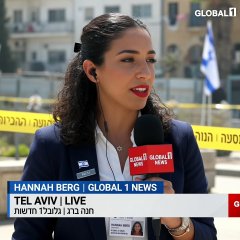
Israel Correspondent at Global1.News. Based in Tel Aviv, covering Israeli politics, security, technology, and society. Provides balanced, deeply-sourced reporting on one of the most closely-watched regions in the world.












Comments (0)