
Canada, U.S. Race to Finalise Trade Deal Before Deadline
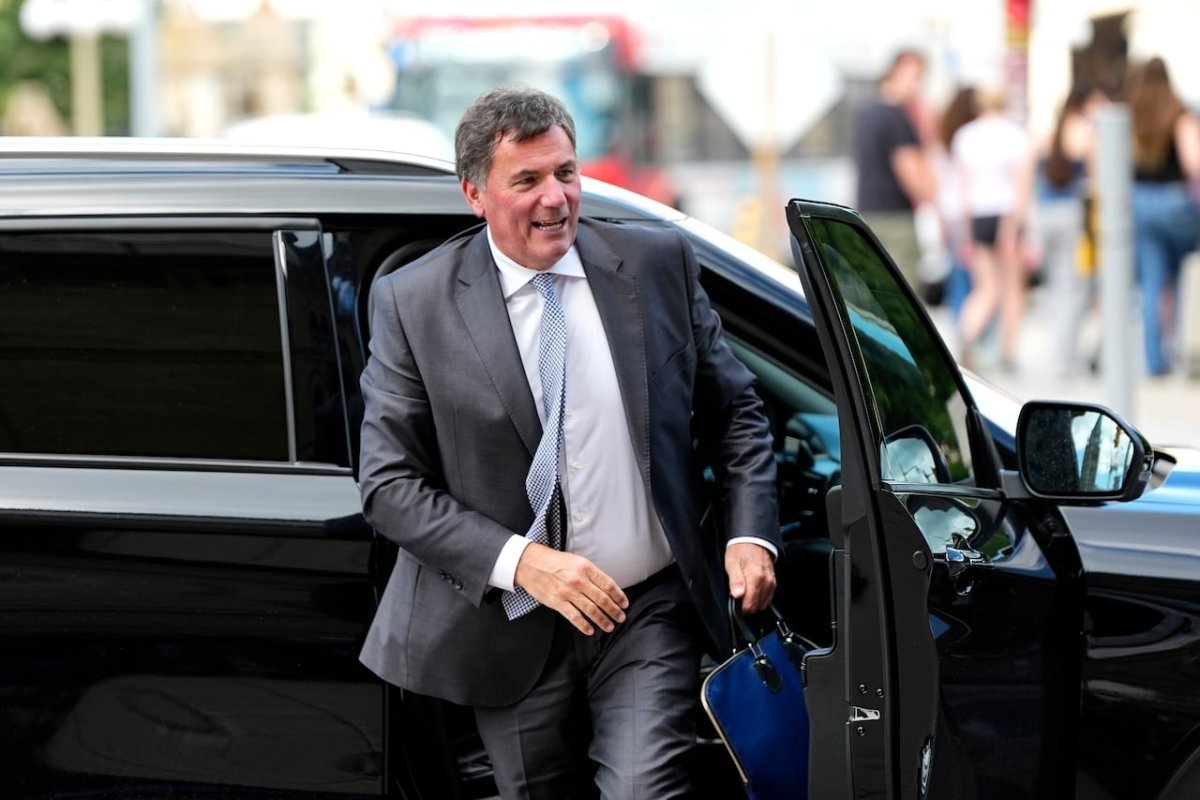
In a recent CBC News report, negotiators on both sides of the Canada-U.S. border are racing against a Saturday morning deadline to finalise a trade deal that would avert President Donald Trump's 50 per cent Section 338 tariffs on roughly $20 billion worth of Canadian goods. With the clock ticking down to 12:01 a.m. ET on Saturday, Canada's Trade Minister Dominic LeBlanc and chief negotiator Janice Charette met with U.S.
In a recent CBC News report, negotiators on both sides of the Canada-U.S. border are racing against a Saturday morning deadline to finalise a trade deal that would avert President Donald Trump's 50 per cent Section 338 tariffs on roughly $20 billion worth of Canadian goods. With the clock ticking down to 12:01 a.m. ET on Saturday, Canada's Trade Minister Dominic LeBlanc and chief negotiator Janice Charette met with U.S. Trade Representative Jamieson Greer in Washington on Friday morning, describing the talks as "very close" but offering few specifics. For Canadian workers in the hockey stick, wine, steel, and automotive sectors, the outcome of these final hours will determine whether a punishing trade war escalates or begins to unwind.
Canada, U.S. Officials Race to Finalise Trade Deal Ahead of Saturday Tariff Deadline
Ottawa – Friday — Canada-U.S. Trade Minister Dominic LeBlanc and chief Canadian trade negotiator Janice Charette met with U.S. Trade Representative Jamieson Greer at 10:30 a.m. ET Friday at Greer's office in Washington, as both countries worked to finalise a deal that would prevent President Donald Trump's 50 per cent Section 338 tariffs from taking effect at 12:01 a.m. ET on Saturday. The tariffs, which would apply to roughly $20 billion worth of Canadian imports including hockey sticks, wine, and other goods, were initially set to kick in Wednesday before Trump announced an eleventh-hour three-day postponement on Truth Social, stating the delay was "subject to the finalization of documents."
The Story — A Marathon of Negotiations
Thursday's session marked what is believed to be LeBlanc's longest meeting to date with American officials — a nearly three-hour session with Greer that was initially expected to last about 30 minutes. LeBlanc returned to Washington Thursday after meeting Prime Minister Mark Carney in Ottawa the previous day, signalling the intensity of the final push. Speaking to reporters after Friday's meeting, LeBlanc was characteristically tight-lipped on specifics but confirmed Charette was still engaged in talks. "We're very close," he said. "We continue to make progress, and we're going to stay here and do the work that's necessary until we get to that point. Canadians expect us to get a deal that's in the economic interest of Canada and Canadian workers."
According to sources with knowledge of the negotiations who were not authorised to speak publicly, the emerging framework includes significant concessions from the American side. U.S. tariffs on Canadian steel and aluminum are reportedly being lowered from 50 per cent to 25 per cent, with a quota system attached. Trump's headline tariff on Canadian-built cars and trucks is also said to be cut from 25 per cent to 15 per cent, with the effective rate potentially dropping to about 7.5 per cent if applied only to non-U.S. content. Discussions on derivatives and exemptions are ongoing, sources said, but the broad contours of a deal appear to be taking shape.

The Canadian Context — Provincial Concessions and Team Canada
In exchange for these tariff reductions, the Americans expect Canada to end the boycott of U.S. alcohol in most provincially owned liquor stores and lift provincial restrictions on American firms competing for government procurement. Both measures were launched after Trump initiated a trade war last year with steep tariffs on Canadian industrial products, prompting Canada to respond with countermeasures including provincial liquor boycotts and procurement restrictions. Prime Minister Mark Carney asked premiers to restore U.S. booze to shelves during a Wednesday evening meeting, and his office issued a statement confirming the U.S. had agreed to postpone implementation until the end of day Aug. 21, with Canada focused on "building a stronger, more independent, more competitive economy."
The premiers' reactions have been mixed but largely cooperative. Manitoba Premier Wab Kinew, who has been among the most vocal critics of Trump's approach, said, "You can't make a good deal with a bad person," adding, "I think Donald Trump is weak. America is weaker around the world today than it was a year ago, and he's about to get slaughtered in the midterms. So, I think we should fight." Despite his combative rhetoric, Kinew said he is still willing to comply with Carney's request on liquor, describing the Prime Minister's ask as "I wouldn't say he was begging us, but what's the step before begging?" He also thanked Carney directly: "He's the one who got on the phone with Donald Trump. Somebody has to do it. Thank you, Mark Carney for doing it."
Impact on Canadians — Provinces Weigh the Costs
Nova Scotia Premier Tim Houston disputed Kinew's characterisation of Carney's approach, saying he's "content" with what the Prime Minister presented. "That's not even close," Houston said of the "begging" description. "I would certainly not describe him as begging but I would describe him as being committed to getting the best possible deal for our country and being honest about some of the parts that may be involved." Ontario Premier Doug Ford, who has called for a more adversarial approach, has not said anything publicly about the prospective deal, while Quebec Premier Christine Fréchette had a long conversation with Carney Thursday morning and said she has "many questions" about the impact on Quebec, a leading centre for aluminum production. "It is possible that we put back the alcohol on the shelves of the SAQ but we need to have the analysis first," Fréchette said.
British Columbia Premier David Eby struck a more conciliatory tone, saying a negotiated deal won't deliver everything but he "stands with Team Canada." Eby noted "substantial progress across strategic sectors" and acknowledged that things "will not go back to the way things were before." Prince Edward Island, meanwhile, is ready to lift its ban on American booze, according to a separate CBC video report. The provincial divisions highlight the complexity of Canada's federal system, where trade policy is negotiated federally but implemented provincially — a reality that has made the liquor boycott and procurement restrictions powerful but unwieldy tools in the trade war.
Reactions and Analysis — The Stakes for Canadian Industry
Trump has suggested the deal could revive Keystone XL, the planned oil pipeline from Alberta to Nebraska that was scrapped in 2021 by then-President Joe Biden, a proposal that would have significant implications for Canada's energy sector and federal-provincial relations. However, Trump's existing tariffs on Canadian steel, aluminum, and lumber remain a central sticking point, according to the New York Times, citing people familiar with the talks. Businesses have warned the duties could cripple sales, and the threat alone has already taken a toll on Canadian manufacturers and exporters who have been forced to absorb costs, delay investments, and reconsider their supply chains.
The political calculus in Ottawa is equally fraught. Carney's government has staked its credibility on securing a deal that protects Canadian workers while maintaining the country's sovereignty and independence. The Prime Minister's willingness to ask premiers to lift the liquor boycotts — a measure that has been popular with Canadians frustrated by Trump's tariffs — represents a significant political risk. If the deal falls through, Carney could face criticism for having conceded leverage without securing a final agreement. If it succeeds, he will have navigated one of the most complex trade negotiations in Canadian history, balancing provincial interests, economic realities, and the unpredictable behaviour of the American president.
What Happens Next
As of Friday afternoon, negotiators remained in Washington, with Charette still engaged in talks and LeBlanc indicating they would "stay here and do the work that's necessary until we get to that point." The 12:01 a.m. ET Saturday deadline looms, and while Trump has shown a willingness to postpone tariffs at the last minute — as he did on Wednesday — there is no guarantee of another extension. The deal's final shape will depend on resolving the remaining issues around derivatives, exemptions, and the precise mechanics of the quota system for steel and aluminum.
For Canadian consumers and businesses, the immediate impact will be felt in the prices of goods ranging from hockey sticks to wine, as well as in the broader confidence of investors and employers who have been watching the trade war with growing alarm. The longer-term implications are equally significant: a deal that lowers tariffs on steel, aluminum, and automobiles would provide relief to some of Canada's most important manufacturing sectors, while the revival of Keystone XL would reshape the energy landscape and reignite debates about pipelines, Indigenous rights, and climate policy. The provincial liquor boycotts and procurement restrictions, if lifted, would signal a return to normal trade relations — but as Premier Eby noted, things "will not go back to the way things were before."
The coming hours will determine whether Canada and the United States can move beyond the trade war that has defined their relationship for the past year. LeBlanc's measured optimism, the premiers' grudging cooperation, and Trump's unpredictable behaviour all point to a deal that is close but not yet done. For Canadians watching from living rooms in Winnipeg, Halifax, Quebec City, and Vancouver, the outcome will shape not just the price of a bottle of wine or a new car, but the very nature of the country's most important economic relationship. As the deadline approaches, one thing is clear: the work of building a stronger, more independent, and more competitive Canadian economy does not end with a signed agreement — it begins anew.
By Alex Thompson, Staff Writer
This article was produced with AI-assisted research and editorial support. Reporting is based on sources cited in the article.
What's Your Reaction?
 Like
0
Like
0
 Dislike
0
Dislike
0
 Love
0
Love
0
 Funny
0
Funny
0
 Wow
0
Wow
0
 Sad
0
Sad
0
 Angry
0
Angry
0

Canada Correspondent at Global1.News. Based in Toronto, covering Canadian politics, energy, trade, and US-Canada relations. Provides the Canadian perspective on North American and global affairs.













Comments (0)