
No action taken against Iranian man who tried to enter nuclear base
Background to the Faslane incident On 19 March 2026, police at HM Naval Base Clyde, near Helensburgh in Argyll and Bute, detained a 34‑year‑old Iranian man alongside a 31‑year‑old Romanian woman.
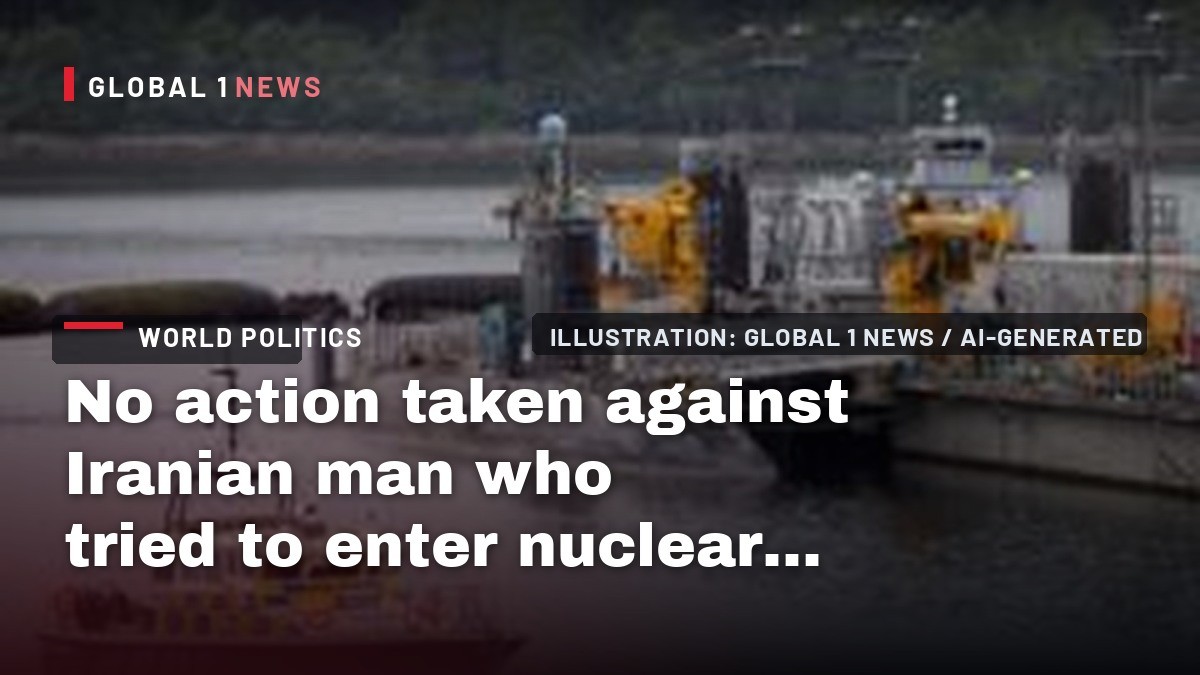
The Crown Office’s decision not to pursue charges against a 34‑year‑old Iranian man, arrested in March for attempting to breach the Faslane nuclear submarine base, has raised unsettling questions about national security, diplomatic sensitivities and the evidential thresholds applied by Scotland’s prosecutors.
Background to the Faslane incident
On 19 March 2026, police at HM Naval Base Clyde, near Helensburgh in Argyll and Bute, detained a 34‑year‑old Iranian man alongside a 31‑year‑old Romanian woman. Both were apprehended after an alleged attempt to gain unauthorised access to the Faslane complex, the United Kingdom’s principal nuclear submarine hub. Faslane, situated on the Gare Loch roughly 25 miles north‑west of Glasgow, houses the Royal Navy’s nuclear‑powered fleet, including the four Vanguard‑class ballistic missile submarines that carry the nation’s Trident nuclear deterrent.
The timing of the arrests was notable. They occurred a few weeks after the United States and Israel launched a series of strikes against Iranian targets at the end of February 2026, a development that heightened tensions across Europe and the Middle East. While the source material does not link the two events directly, the proximity in time has inevitably fed speculation about possible motives or external influences behind the attempted breach.
The Crown Office’s rationale
Following the arrests, the Crown Office issued a statement indicating that the Procurator Fiscal had received a report concerning the Iranian man’s alleged actions on 19 March. After “careful consideration of the facts and circumstances of the case, including the available admissible evidence,” the Fiscal concluded that “there should be no proceedings taken at this time.” The statement also reserved the right to act should further evidence emerge, suggesting that the decision was not an outright dismissal of the incident but a provisional assessment based on the material currently before the court.
Crucially, the Iranian man had been formally charged but was subsequently released pending further inquiries without ever appearing in court. This procedural nuance underscores the Crown Office’s reliance on evidential thresholds: without sufficient admissible proof, the fiscal opted for non‑prosecution, a stance mirrored in the earlier decision regarding the Romanian woman, who was also told no proceedings would be brought.
Legal standards and prosecutorial discretion
Scotland’s legal system grants the Procurator Fiscal considerable discretion in deciding whether to prosecute. The decision hinges on two principal tests: the evidential test (whether there is sufficient evidence to provide a realistic prospect of conviction) and the public interest test (whether prosecution serves the public good). In this case, the Crown Office’s language points to a shortfall on the evidential front – “available admissible evidence” was deemed insufficient to meet the threshold for a realistic prospect of conviction.
By reserving the right to proceed should new evidence surface, the fiscal leaves the door open for future action. This conditional approach is not uncommon in cases involving national security, where intelligence assessments may be classified or incomplete at the time of initial investigation. Nevertheless, the absence of a detailed public explanation fuels speculation about the balance between security imperatives and the transparency expected of the justice system.
Security implications for Faslane
Faslane’s status as the home of the United Kingdom’s nuclear deterrent makes any unauthorised approach a matter of grave concern. The base’s security protocols are among the most stringent in the country, involving layered physical barriers, armed patrols and sophisticated surveillance. An attempted breach, even if thwarted, highlights potential vulnerabilities that could be exploited by hostile actors.
The incident also arrives against a backdrop of heightened geopolitical tension. The February 2026 attacks on Iranian facilities by the United States and Israel signalled a volatile regional environment, while the presence of an Iranian national among the suspects inevitably raises questions about possible foreign intelligence involvement. Although the source material does not confirm any state‑sponsored motive, the mere fact of an Iranian citizen’s alleged attempt to access a nuclear site is enough to prompt a reassessment of threat assessments by UK security agencies.
Diplomatic sensitivities and the Iranian factor
The involvement of an Iranian national adds a diplomatic dimension to the episode. Relations between the United Kingdom and Iran have been strained in recent years, particularly over concerns about Iran’s nuclear programme and its regional activities. An alleged attempt by an Iranian citizen to infiltrate a nuclear base could be interpreted as a provocative act, potentially prompting diplomatic protests or reciprocal measures.
However, the Crown Office’s decision to refrain from prosecution may also reflect a desire to avoid inflaming an already delicate bilateral relationship. By not pursuing a high‑profile case, the authorities may be seeking to manage the incident quietly, limiting its exposure in the public sphere and thereby reducing the risk of diplomatic escalation.
Public reaction and media scrutiny
The BBC’s coverage of the decision has sparked public debate about the adequacy of the response to what many perceive as a serious security breach. Critics argue that the Crown Office’s reliance on “admissible evidence” should not outweigh the potential threat posed by an individual who attempted to access a strategic nuclear facility. Others contend that without concrete proof of malicious intent, a prosecution could be seen as punitive rather than just.
Media outlets, including Global1.News, have highlighted the broader context of the February attacks and the heightened alert status of UK security services. The narrative that emerges is one of a nation grappling with the twin pressures of protecting its most sensitive assets while upholding the rule of law and evidential standards. The lack of a transparent, detailed explanation from the Crown Office fuels calls for greater accountability and clearer communication from both the justice system and the Ministry of Defence.
What lies ahead: potential future actions
While the immediate decision is to halt proceedings, the Crown Office’s statement leaves open the possibility of future legal action should new evidence emerge. This could involve intelligence disclosures, forensic analysis of surveillance footage, or testimony from security personnel that was not initially available. In such a scenario, the fiscal could revisit the evidential test and potentially bring charges at a later date.
For the Iranian man and the Romanian woman, the current outcome means they remain free pending any further developments. Their cases serve as a reminder that the legal process, particularly in matters intersecting with national security, can be protracted and opaque. As the situation evolves, monitoring any subsequent statements from the Crown Office, the Ministry of Defence and intelligence agencies will be essential to gauge whether the incident remains an isolated breach or part of a broader pattern of security challenges targeting the United Kingdom’s nuclear infrastructure.
This article was produced with AI-assisted research and editorial support. Reporting is based on the source material cited below. Sources: BBC News UK; bbc.co.uk; Global1.News (26 September 2026).
By Erica Thornton, Staff Writer
What's Your Reaction?
 Like
0
Like
0
 Dislike
0
Dislike
0
 Love
0
Love
0
 Funny
0
Funny
0
 Wow
0
Wow
0
 Sad
0
Sad
0
 Angry
0
Angry
0

US Politics and Policy Correspondent at Global1.News. Based in Washington DC, covering American politics, policy, elections, and the courts. Knows how the system works and tells you what it actually means.















Comments (0)