
Netanyahu Says October 7 Was Meant to Lead to War With Iran
In a recent Middle East Eye report, Israeli Prime Minister Benjamin Netanyahu's remarks to the Israeli channel i24 have reignited a fierce debate about the true intentions behind the Gaza war and the wider regional conflagration that has followed.
In a recent Middle East Eye report, Israeli Prime Minister Benjamin Netanyahu's remarks to the Israeli channel i24 have reignited a fierce debate about the true intentions behind the Gaza war and the wider regional conflagration that has followed. Speaking this week, Netanyahu claimed that from the very first days of the October 7, 2023 assault, his objective was not merely to respond to Hamas but to fundamentally redraw the map of the Middle East by confronting Iran directly.
Netanyahu Says October 7 Was Meant to Lead to War With Iran
Jerusalem/Doha/Ramallah, Occupied Palestinian Territories - September 6, 2026 - In an interview aired this week on i24, Israeli Prime Minister Benjamin Netanyahu made a startling admission that critics say lays bare the strategic calculus behind the devastating war in Gaza. "Who could have imagined on October 7 that we would change the face of the Middle East? I could," Netanyahu told the Israeli network, adding that his "goal was that eventually we will confront Iran." The remarks, reported by Middle East Eye, offer the clearest public articulation yet of a war aim that extends far beyond the stated objective of dismantling Hamas, suggesting that the October 7 attacks were viewed by the Israeli leadership as a catalyst for a much broader military campaign against Tehran and its regional proxies.
The Admission: An Octopus and Its Arms
Netanyahu's interview, conducted with i24's English-language desk, painted a picture of a leader who saw an opportunity in the chaos of October 7. He described Iran as the "head of the octopus" and framed Israel's subsequent operations in Gaza, Lebanon, and Syria as necessary steps to sever Tehran's regional "arms." According to the Prime Minister, his thinking crystallized as early as October 8, 2023, when he believed Israel would "change the face of the Middle East." He elaborated that his intention from the outset was to eventually wage war with Iran, a conflict that has since materialized in dramatic fashion.
The comments stand in stark contrast to the image Netanyahu projected in the immediate aftermath of the Hamas-led attack, which killed roughly 1,200 people in Israel and saw over 250 taken hostage. In earlier accounts, Netanyahu described reacting defensively, telling interviewers he "immediately understood this was war," asking whether the border with Gaza had been sealed, and expressing fear of mass hostage-taking. Days after the attack, he told Israeli local council heads, "we are going to change the Middle East," a phrase that now appears less like a rhetorical flourish and more like a statement of intent.
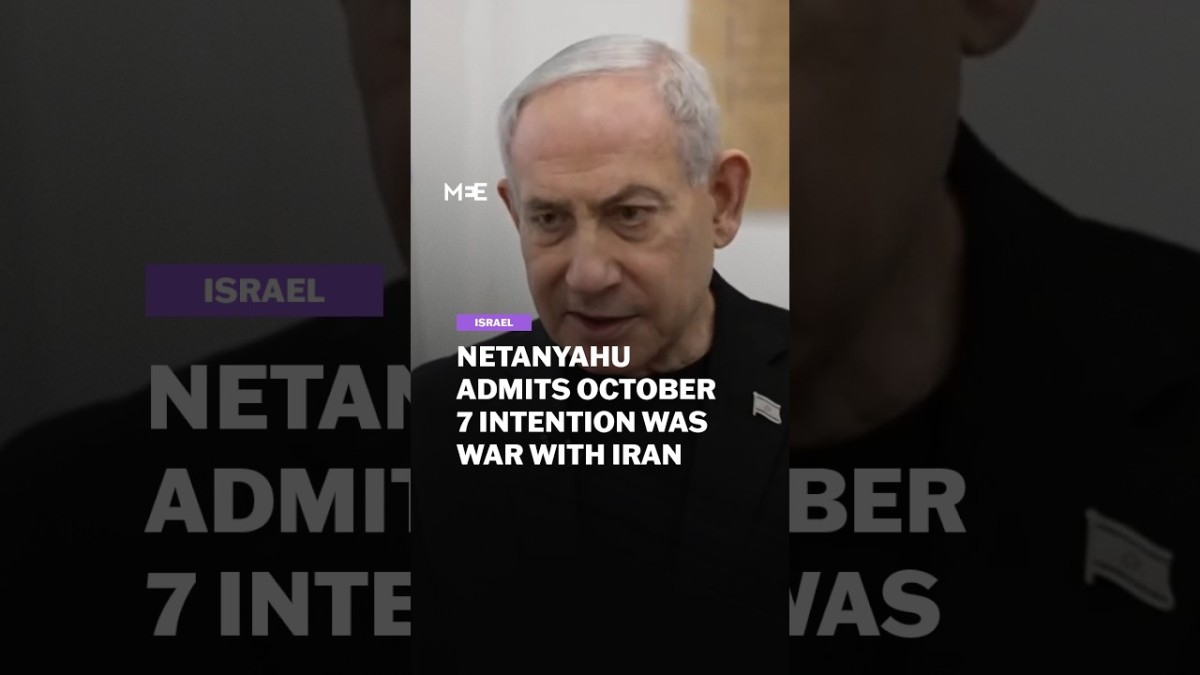
In the i24 interview, Netanyahu also issued a veiled threat toward Tehran, stating, "If Iran attacks us, it will suffer a blow that I do not want to go into the details of." The warning comes amid a volatile security environment where Israel and Iran have already exchanged direct strikes, drawing the United States into the fray. For observers of Israeli politics, the admission is less a revelation than a confirmation of what many analysts have long suspected: that the war in Gaza was never solely about Hamas, but about reshaping the regional order in Israel's favor.
Allegations of Foreknowledge and the Hannibal Directive
Middle East Eye reports that Netanyahu's remarks add to claims by critics that Israel and its intelligence services knew of Hamas's attack plan months before October 7, 2023, and chose to let it play out. These allegations, which have circulated in Israeli and international media, suggest that the government may have allowed the attack to occur to provide a casus belli for a wider war. Netanyahu's office has denied such allegations in the past, dismissing them as baseless conspiracy theories. However, the Prime Minister's latest comments, in which he boasts of foreseeing the regional transformation on October 8, have given new ammunition to those who argue the attack was not merely a catastrophic intelligence failure but a calculated opportunity.
Critics have also pointed to the Israeli military's use of the Hannibal Directive on October 7 as evidence of a willingness to sacrifice Israeli civilians to achieve broader strategic goals. The directive, which reportedly authorized forces to prevent the capture of soldiers even at the risk of killing them, was allegedly invoked at several sites during the Hamas assault. Critics allege that its use was intended to increase the death toll to garner wider international support for a massive military response. These remain allegations by critics, not established fact, and the Israeli military has denied any systematic application of the directive. Nevertheless, the combination of foreknowledge claims and the Hannibal Directive allegations paints a troubling picture of a leadership willing to absorb catastrophic losses to pursue a larger geopolitical agenda.
The Israeli public, however, has largely rallied behind the war effort, with opinion polls cited by Israeli media showing broad support for the conflict with Iran. The political opposition has been muted, wary of appearing weak in the face of existential threats. Yet the questions raised by Netanyahu's admission are unlikely to disappear, particularly as the human cost of the war continues to mount on all sides.
From October 7 to Regional War: Lebanon, Iran, and the United States
Nearly three years on, the conflict has expanded far beyond the borders of Gaza. In September 2024, Israel assassinated Hezbollah leader Hassan Nasrallah in a massive strike on Beirut, a move that escalated tensions with Lebanon and Iran. The subsequent year saw a direct Israel-Iran war in 2025-2026, a confrontation that drew in the United States, which deployed additional naval assets to the region and conducted strikes against Iranian targets. The war has exacted a heavy toll across the region, with Iran launching missile barrages on Israeli cities and Israel responding with strikes on Iranian nuclear and military facilities.
Israel maintains military operations and security zones across parts of Gaza, where a fragile ceasefire has been marked by recurring violations. In recent weeks, Israeli strikes have killed Palestinians in Gaza, according to reports from the ground, undermining hopes for a durable peace. The expansion of the conflict has also drawn in Syria, where Israel has conducted repeated strikes against Iranian-linked targets, further destabilizing a country already shattered by over a decade of civil war. Netanyahu's vision of a "changed Middle East" has, in many ways, come to pass - but not in the way he might have hoped. The region is more volatile, more militarized, and more divided than at any point in recent memory.
For the United States, the war has proven a diplomatic and military quagmire. The Biden administration, and now its successor, has struggled to balance support for Israel with the need to avoid a wider conflagration. Reports indicate that Washington has been engaged in quiet talks with Tehran, seeking to de-escalate tensions and prevent a full-scale regional war. Netanyahu, however, has been sidelined from those discussions, a snub that reflects the strained relationship between the Israeli leader and the White House. In his i24 interview, Netanyahu acknowledged the tension, telling Israelis that they may have to go it alone in confronting Iran, a message that has resonated with a public that increasingly views the United States as an unreliable ally.
Palestinian Reality: Occupation, Displacement, and a Devastated Gaza
For Palestinians, Netanyahu's "reshaped Middle East" has meant something entirely different: deepening occupation, settlement expansion in the West Bank, ongoing displacement, and a devastating war in Gaza whose heaviest toll has fallen on civilians. The ceasefire, fragile from its inception, has been marked by repeated Israeli incursions and airstrikes. In early September 2026, hospitals in northern Gaza suspended operations as Israeli forces advanced, with Kamal Adwan Hospital among those forced to shut its doors. Medical staff, already overwhelmed by years of war, have been left to grapple with an impossible choice: abandon their patients or risk becoming targets themselves.
The human cost of the war has been staggering, though figures were not immediately available for this report. International humanitarian organizations have repeatedly called for ceasefires and humanitarian corridors, but their appeals have largely gone unheeded. The blockade on Gaza has created a man-made famine, with aid shipments frequently delayed or blocked by Israeli authorities. Children, who make up a significant portion of Gaza's population, have borne the brunt of the suffering, with thousands killed or injured in the conflict. The psychological toll is incalculable, with an entire generation growing up knowing nothing but war, displacement, and loss.

In the West Bank, the situation has deteriorated in parallel. Israeli settlement expansion has continued unabated, with outposts established on land that Palestinians consider part of their future state. Violence by Israeli settlers against Palestinian communities has increased, often with the tacit support of the military. The Palestinian Authority, already weakened by years of division and corruption, has been rendered largely powerless, unable to protect its citizens or advance the cause of statehood. For many Palestinians, the "peace process" is a distant memory, replaced by a grim reality of occupation, dispossession, and despair.
Politics and Diplomacy: Sidelined Netanyahu and the October Elections
As the war grinds on, Israeli politics have entered a volatile phase. Elections are scheduled for October 2026, and Netanyahu, despite his bellicose rhetoric, faces an uncertain political future. Opinion polls cited by Israeli media show broad public support for the war with Iran, but they also reveal deep fatigue with the Prime Minister's leadership. The October 7 failures, which Netanyahu has never fully addressed, continue to haunt his premiership. His decision to sideline the United States in favor of a more aggressive posture toward Iran has also created friction with Washington, which has traditionally served as Israel's primary diplomatic backer.
The United States and Iran have been in talks, according to reports, with both sides exploring the possibility of a negotiated settlement to the conflict. Netanyahu, excluded from these discussions, has sought to undermine them, warning that any deal with Tehran would be a "surrender" and that Israel would act unilaterally to protect its security. His comments in the i24 interview appear designed to bolster his domestic standing ahead of the elections, casting himself as the only leader capable of standing up to Iran and its proxies. Whether this strategy will resonate with voters remains to be seen, but the Prime Minister's political survival is far from assured.
For the region, the stakes could not be higher. A negotiated settlement between the United States and Iran could pave the way for a broader de-escalation, potentially leading to a ceasefire in Gaza and a reduction in hostilities across the region. Conversely, a breakdown in talks could plunge the Middle East into an even more destructive conflict, with catastrophic consequences for civilians on all sides. Netanyahu's admission that he sought war with Iran from the outset has complicated these efforts, raising questions about whether the Israeli leader is genuinely interested in peace or merely in perpetuating conflict to maintain his grip on power.
Analysis: A Reckoning for Netanyahu and the Region
Netanyahu's i24 interview represents a significant moment in the history of the conflict, not because it reveals anything fundamentally new, but because it lays bare the strategic thinking that has driven Israeli policy since October 7. The Prime Minister's admission that he envisioned a war with Iran from the outset will be seized upon by critics who have long argued that the Gaza war was a pretext for a larger regional confrontation. It also raises profound questions about the proportionality and legality of Israel's actions, particularly given the devastating toll on Palestinian civilians.
For Palestinians, the implications are clear: they have been pawns in a larger geopolitical game, their suffering instrumentalized by leaders who view them as collateral damage in a struggle for regional dominance. The "changed Middle East" that Netanyahu boasts of is one in which Palestinian rights are further eroded, their land further colonized, and their future further foreclosed. The international community, which has largely failed to hold Israel accountable for its actions, bears a share of the responsibility for this outcome.
As the October elections approach, Israelis will be forced to confront the choices their leaders have made. Netanyahu's vision of a militarized, self-reliant Israel, willing to act unilaterally against its enemies, has brought the country into direct conflict with Iran and its proxies, but it has not brought security or peace. The hostages taken on October 7 remain a painful wound, their fate uncertain. The soldiers killed in Gaza, Lebanon, and Iran have left families shattered. And the promise of a "new Middle East" rings hollow for those who have lost everything in its pursuit.
For the people on the ground - Palestinians in Gaza and the West Bank, Israelis huddled in bomb shelters, Lebanese and Syrians caught in the crossfire - the war is not an abstract geopolitical contest but a lived reality of fear, loss, and uncertainty. Netanyahu's admission may be a political bombshell, but for those who have endured nearly three years of conflict, it is merely confirmation of what they have always known: that their lives are expendable in the service of leaders' ambitions. The question now is whether the region can find a path out of this cycle of violence, or whether Netanyahu's "changed Middle East" will become a permanent state of war.
This article was produced with AI-assisted research and editorial support. Sources: Middle East Eye, i24NEWS, Reuters, Ynetnews, +972 Magazine.
By Fatima Al-Rashid, Staff Writer
What's Your Reaction?
 Like
0
Like
0
 Dislike
0
Dislike
0
 Love
0
Love
0
 Funny
0
Funny
0
 Wow
0
Wow
0
 Sad
0
Sad
0
 Angry
0
Angry
0
Gulf/MENA Correspondent at Global1.News. Based in Doha, covering Gulf politics, energy markets, diplomacy, and development across the Middle East and North Africa. Tracks the economic transformation of the Gulf states.












Comments (0)