
Nepal's DNA Race to Name the Dead: What Latin America Already Knows
In the suffocating heat of a Kathmandu September, a mother presses a toothbrush into a plastic bag, hoping the saliva on its bristles will be the key to finding her son. Across the city, in laboratories humming with machines, scientists are racing against decay, bureaucracy, and the sheer scale of a catastrophe that has turned the Himalayan rivers into mass graves.
In the suffocating heat of a Kathmandu September, a mother presses a toothbrush into a plastic bag, hoping the saliva on its bristles will be the key to finding her son. Across the city, in laboratories humming with machines, scientists are racing against decay, bureaucracy, and the sheer scale of a catastrophe that has turned the Himalayan rivers into mass graves. This is the story of how forensic science—the same discipline that reunited Argentine grandmothers with their stolen grandchildren—is now the last hope for thousands of Nepali families, and a stark warning for a Latin America that knows this tragedy all too well.
NEPAL'S DNA RACE TO NAME THE DEAD: WHAT LATIN AMERICA ALREADY KNOWS
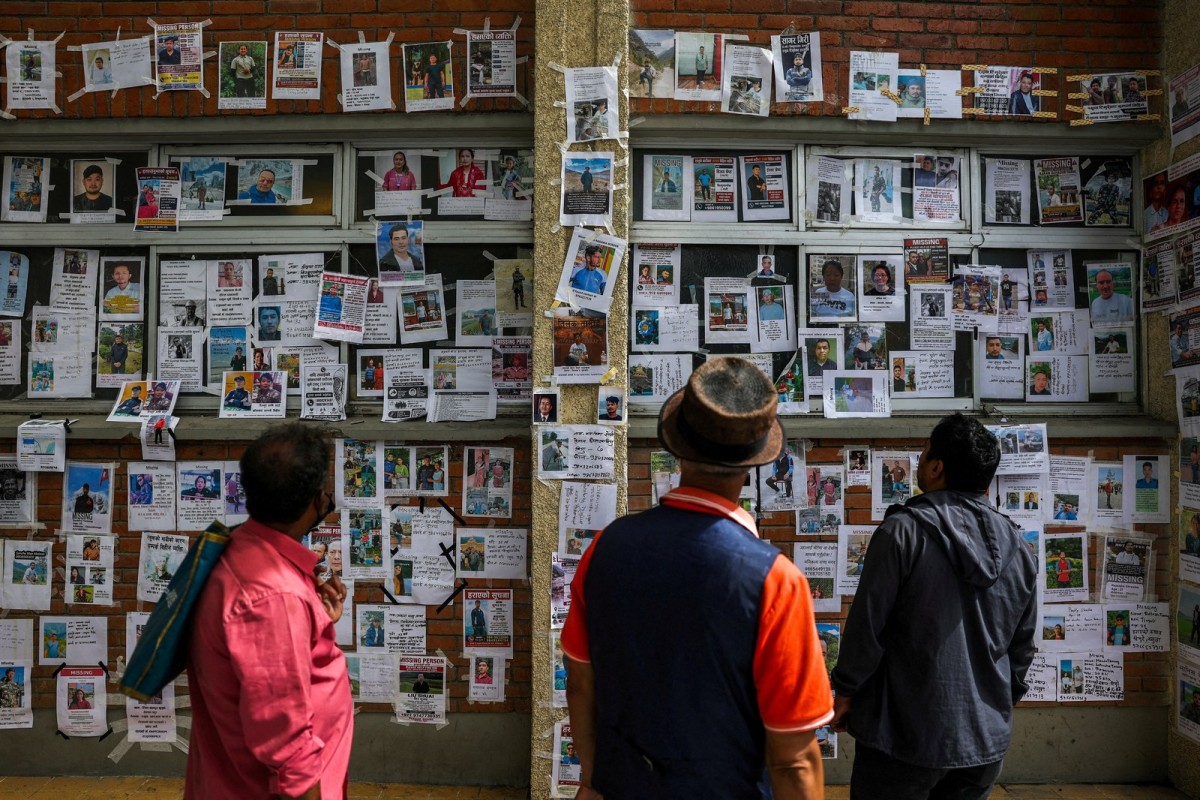
Kathmandu, Nepal - September 3, 2026 - The numbers are staggering, almost too vast for the human mind to process. As of September 3, Nepal's National Disaster Risk Reduction and Management Authority (NDRRMA) reports that 1,252 bodies have been recovered from the mud, debris, and swollen rivers that tore through the Himalayan foothills in late August. More than 1,270 people are confirmed dead, and 4,216 remain missing. But the most agonizing statistic is this: of the more than 1,000 bodies recovered, only about 60 have been formally handed over to their families. Nearly 700 lie in temporary graves, waiting for science to give them a name.
Morgues Full, Bodies Buried, and a Country Waiting for Names
The scale of the disaster has overwhelmed Nepal's infrastructure in ways that are both logistical and deeply human. The country's deep-freezer capacity for bodies is a mere 300 to 350, a number that was exceeded within the first 48 hours of the catastrophe. As of September 2, the government reported that 4,606 people were unaccounted for, a figure that includes 583 foreigners—trekkers, engineers, and laborers—and hundreds of hydropower workers who were stationed along the Bhotekoshi and Trishuli river corridors when the flash floods hit. These workers, many of them young men from rural villages, were sleeping in camps beside the rivers when a wall of water, triggered by a glacial lake outburst upstream in Tibet, came crashing down. The morgues in Kathmandu, Bharatpur, and Pokhara are full. In response, authorities have resorted to a grim but necessary protocol: temporary burial. Bodies are being interred in marked plots, their DNA samples carefully catalogued, with the promise that they will be exhumed once a match is found. For the families still searching, every day without a name is a day of suspended grief.
Why Rivers Turn Bodies Into the Hardest Evidence
Forensic experts face a nightmare scenario in Nepal, one where the very elements that caused the disaster have conspired to erase the identities of its victims. Water and debris are merciless to human remains. Faces are destroyed beyond recognition within hours; fingerprints, the most basic of identifiers, are sloughed off by the abrasive action of sand and stone. Bodies have traveled hundreds of kilometres from the high mountain districts of Rasuwa and Nuwakot, tumbling down gorges and washing out onto the flat plains of Chitwan, where they were found bloated and disfigured. Of the first 1,068 bodies recovered, approximately 400 were partial remains—a torso, a limb, a skull—making visual identification impossible. The district tallies paint a picture of the disaster's reach: Chitwan, the lowland district where the rivers slow and deposit their grim cargo, has recorded 321 bodies; Nawalparasi East, 216; Nawalparasi West, 170. The origin districts, Nuwakot and Rasuwa, where the flood first struck, have recovered 142 and 41 respectively, while Gorkha (65), Dhading (57), and Tanahun (38) round out the grim accounting. For these remains, the face is no longer a window to identity; it is a mask of trauma that only science can peel away.
How DNA Gives the Dead Their Names Back
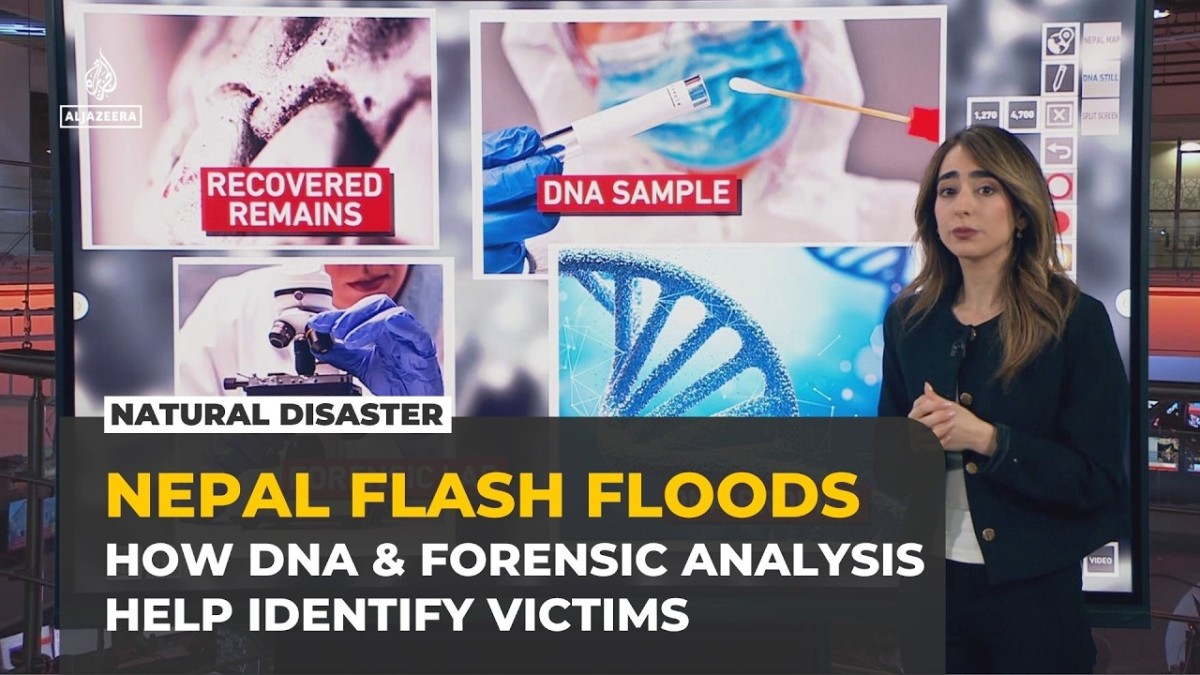
When the body cannot speak, its cells must. DNA identification, known in the forensic world as kinship analysis, works by comparing the genetic profile of an unidentified body with that of its living relatives. The process begins with reference samples: a swab of saliva from a mother, a drop of blood from a sibling, or a strand of hair from a child. These samples are analyzed using Short Tandem Repeat (STR) profiling, a technique that examines specific, highly variable regions of the genome to create a unique genetic fingerprint. For the deceased, post-mortem samples are taken from blood, muscle, teeth, or bone marrow. In cases where bodies have been submerged for days or weeks, soft tissue decomposes rapidly, but teeth and bone are remarkably resilient. They are the last bastions of genetic information, protecting DNA within their hard mineral structures long after everything else has turned to sludge. Forensic experts like Suraj Sharma at Bharatpur Hospital, one of the main triage centers for recovered bodies, have been meticulously retaining teeth and bone samples from headless or severely decomposed bodies, knowing these are the only hope for future identification. While DNA is the ultimate arbiter, it is not the first line of defense. Fingerprints, dental records, scars, tattoos, and even jewellery remain the fast, first-line tools for identification. INTERPOL's Disaster Victim Identification (DVI) standard guides this process, systematically comparing post-mortem data (what is found on the body) with ante-mortem data (what is known about the missing person). But when those fail, as they so often do in a flood of this magnitude, the DNA laboratory becomes the court of last resort.
A Protocol Born of Overflow: Document, Sample, Bury, Exhume
Nepal has been forced to improvise a protocol that is as much about preserving dignity as it is about managing a crisis. The temporary-burial procedure is grimly methodical: at the point of recovery, each body is photographed in detail, with any distinguishing features—tattoos, scars, unique jewellery—meticulously noted. The body is then placed in a tagged body bag, and a DNA sample is collected, usually from bone or a tooth. Finally, the body is buried in a marked grave, with a pot or marker placed above it so that it can be located and exhumed once a DNA match is confirmed. This system, while necessary, is a race against time and memory. On September 3, Nepal Police launched a formal DNA testing drive, asking relatives of the missing to come forward and donate reference samples. More than 100 relatives gathered at a Kathmandu hospital on the first day alone, with 37 providing samples. Families living abroad have been asked to send their DNA profiles to Nepali embassies. The international community has rallied: India has deployed a 19-member forensic team working at the Nepal Police Central Forensic Science Laboratory and the National Forensic Science Laboratory in Khumaltar. Prime Minister Balendra Shah has publicly stated that unidentified bodies are being managed by law and scientific procedure, with DNA and evidence preserved. But for the families, the wait is a purgatory of uncertainty, a limbo where hope and despair are indistinguishable.
Latin America Wrote the DNA Identification Playbook
This is not a new science, and for Latin America, it is a deeply familiar one. The world's first large-scale use of DNA to identify the dead was not in a natural disaster, but in the wake of political terror. In Argentina, the Abuelas de Plaza de Mayo, a group of grandmothers searching for their grandchildren stolen during the military dictatorship (1976-1983), turned to genetics when no other avenue remained. They enlisted the help of geneticist Mary-Claire King, who pioneered the use of mitochondrial DNA for kinship testing. Mitochondrial DNA, passed down exclusively from mother to child, allowed the grandmothers to prove their biological link to children who had been adopted by the families of their torturers. This groundbreaking work led to the creation of Argentina's National Genetic Data Bank, which has since helped more than 130 people recover their true identities. The Argentine Forensic Anthropology Team (EAAF), founded in 1984, took this a step further, turning forensic exhumation and identification into a professional discipline that the world now copies. In Brazil, the lessons were learned in a different kind of tragedy. The Brumadinho dam disaster of January 2019, when Vale's tailings dam burst in Minas Gerais, killed 270 people and produced Brazil's largest victim-identification task force. Within the first year, 259 of the 270 victims were identified, using fingerprints as the first line of defense, and then DNA, which was responsible for 91.6 percent of the re-identifications of fragmented remains. These are not abstract achievements; they are the hard-won fruits of decades of struggle, and they are now being deployed on the other side of the world.
Why This Is a Warning for Latin America's Own Disaster Zones
For Latin America, Nepal is not a distant tragedy; it is a mirror reflecting our own vulnerabilities. The region is among the most disaster-prone on Earth, a geological and meteorological crossroads where the Andes meet the Pacific Ring of Fire and the Atlantic hurricane belt. Peru's 1970 Yungay avalanche buried nearly 20,000 people under a wall of ice and rock, a catastrophe that occurred before DNA identification existed, leaving thousands of families with no answers. More recently, the 2011 Rio de Janeiro mountain-region mudslides, which killed over 900 people, exposed the limits of our forensic capacity: only about 5 percent of victims were identified by DNA because the system was simply overwhelmed. The 2022 Petrópolis mudslides in Brazil repeated the pattern, with bodies recovered from the mud so dismembered and decomposed that visual identification was a cruel impossibility. Mudslides and dam failures, the twin scourges of our region, do not leave clean corpses; they crush, tear, and decompose bodies in ways that demand sophisticated forensic response. The lesson from Nepal is stark: identification capacity must be built BEFORE the disaster strikes. This means investing in laboratory networks, creating national reference DNA databases, training forensic anthropologists and odontologists, and, crucially, enacting laws that protect a family's fundamental right to know what happened to their loved ones. In the absence of this preparation, we are condemning our own people to the same agonizing limbo that Nepal is experiencing today.
The Bottom Line - Every Name Is a Life
Behind every data point, every DNA profile, every tagged body bag, there is a human story. Nineteen-year-old Prakrit Gurung received the news she had both dreaded and prayed for: her father's body had been identified, matched from a photograph taken at a hospital. Her mother, however, remains missing, swallowed by the same river that took her husband. For Lhakpa Gha, a 53-year-old resident of Timure village, the loss is almost incomprehensible. "We've lost everyone," she says, her voice a hollow echo of a life that was. Seven members of her family are gone. The science of naming the dead is not an abstract exercise in laboratory precision; it is the science of letting the living grieve. It is the difference between a closed casket and an open wound, between a funeral and a lifetime of unanswered questions. For Latin America, Nepal is both a mirror and a lesson. We have the knowledge, the tools, and the painful experience to build a better system. The question is whether we have the will to do it before the next disaster strikes. Because it will strike. And when it does, we will need every name, every DNA profile, and every ounce of scientific rigor to ensure that no one is left behind in the anonymity of a mass grave.
By Elena Vasquez, Staff Writer
This article was produced with AI-assisted research and editorial support. Reporting is based on sources cited in the article.
What's Your Reaction?
 Like
0
Like
0
 Dislike
0
Dislike
0
 Love
0
Love
0
 Funny
0
Funny
0
 Wow
0
Wow
0
 Sad
0
Sad
0
 Angry
0
Angry
0

Latin America Correspondent at Global1.News. Based in Mexico City, covering politics, economics, energy, and culture across the region. Brings an on-the-ground perspective to stories spanning from the Rio Grande to Patagonia.











Comments (0)