
NEET 2026 Leaks and CBSE Errors Force Structural Overhaul of India's Exam Bodies
India's NEET-UG 2026 paper leak forced a re-exam for 2.27 million aspirants and ignited the Cockroach Janta Party movement, ending with Education Minister Dharmendra Pradhan's resignation and the passage of the Public Examinations Amendment Bill 2026. Young Indians are demanding transparency, accountability and dialogue.
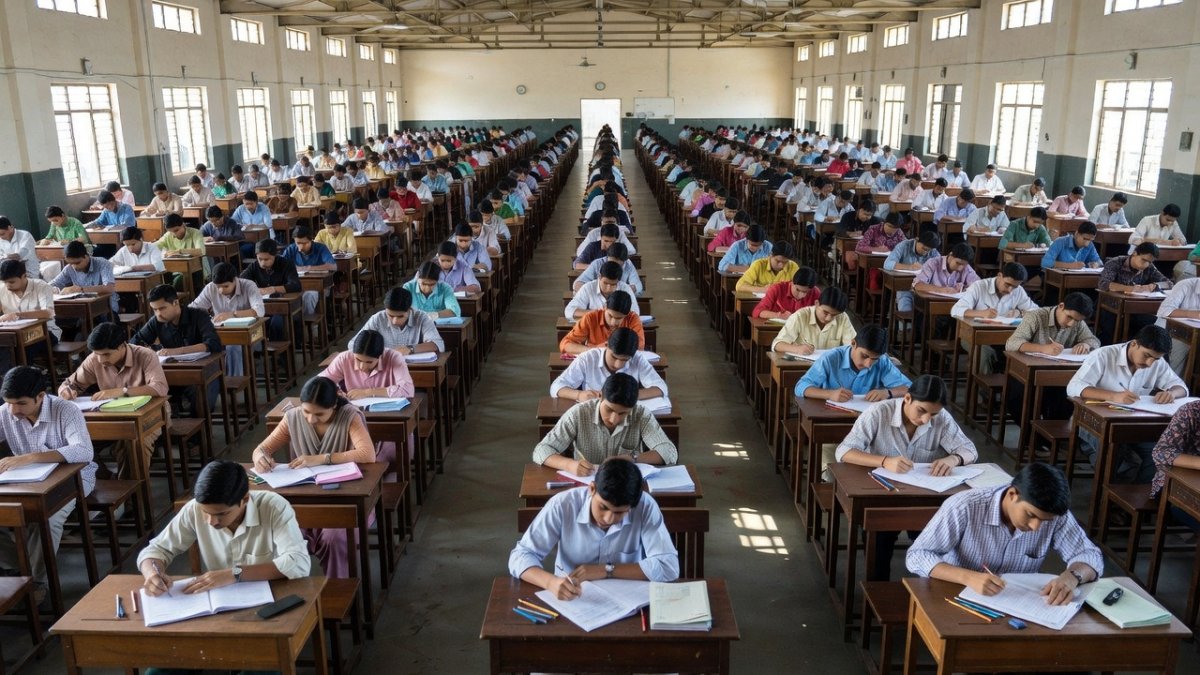
Over 2.27 million candidates sat for NEET-UG 2026 on May 3, yet irregularities in roughly 120 questions forced cancellation and a re-exam on June 21, exposing deep flaws in India's public examination system that directly affect medical admissions for lakhs of students from states like Rajasthan and Maharashtra.
NEET 2026 Leaks and CBSE Errors Force Structural Overhaul of India's Exam Bodies
New Delhi, August 6 — The chain of events from the May 3 NEET-UG paper leak to the July 30 passage of the Public Examinations (Prevention of Unfair Means) Amendment Bill has placed the National Testing Agency and CBSE under unprecedented scrutiny, with direct consequences for students, parents and the coaching economies of Kota and Sikar.
The 2026 Exam Season Crisis Unfolds
The sequence of disruptions in 2026 built directly on earlier vulnerabilities, making procedural safeguards more urgent than ever. NEET-UG 2026 was held on May 3 for 2.27 million aspirants seeking roughly 130,000 medical seats. On May 12 the NTA cancelled the test after investigators confirmed that approximately 120 questions matched a pre-circulated guess paper, first flagged by a chemistry teacher in Sikar, Rajasthan. The CBI registered a case the same day.
CBSE Class 12 results declared on May 13 faced separate controversy over the new On-Screen Marking system, with the board acknowledging around 5,000 cases of blurred scans and evaluation errors. The NEET re-exam took place on June 21, and results released on July 16 showed 11.2 lakh candidates qualified. Aryan Gupta from Punjab and Panshul Bansal from Haryana shared All India Rank 1 with 715 out of 720 marks; 138 candidates scored above 690, with over 93 percent appearing for the first time and 99 percent aged 17-19.
India's NEET process each year pits roughly 2 million candidates against about 130,000 medical seats, turning a single leaked paper into a life-altering event for students in coaching hubs such as Kota. Families redirect years of savings into tuition fees, and one compromised question paper can erase months of preparation for an entire cohort. The May 12 cancellation triggered a CBI investigation and refund processes, yet the disruption left aspirants facing an unplanned second sitting on June 21 — and that compressed timeline compounded the anxiety of first-time takers who had already spent a full year preparing for a single examination day that determines entry into medical education. Repeated disruptions of this kind do not merely delay admissions; they corrode the procedural integrity on which public trust in health-sector recruitment depends.
(Image: Global 1 News)
Student Movement Emerges as Cockroach Janta Party
Chief Justice of India Surya Kant's May 15 remark describing fraudulent entrants as "cockroaches" and "parasites of society" was reclaimed as a symbol of resilience by Abhijeet Dipke, a digital communications professional who returned to India to launch the Cockroach Janta Party on May 16. What began as a digital response quickly translated into street actions: protests started at Jantar Mantar on June 6, drawing established bodies — the Students Federation of India, the All India Students Association and the All India Students Federation — into a coalition that combined meme-driven visibility with decades of organisational experience.
The movement's demands were specific: the resignation of Education Minister Dharmendra Pradhan, compensation of roughly Rs 1 crore per family for students who died by suicide, implementation of the Public Examinations (Prevention of Unfair Means) Act, 2024, structural reform of the NTA and CBSE, a students' rights charter and standing parliamentary oversight. Suicides linked to the exam disruption — including a 19-year-old NEET re-exam candidate in Maharashtra who died after receiving her score — gave the campaign its emotional core; Union Minister JP Nadda announced compensation for the families of aspirants who died. That blend of digital origin, student-body alliances and grief-driven motivation sustained momentum even as the movement shifted from online posts to physical marches.
(Source: India Today)
Sansad Chalo March Turns Violent
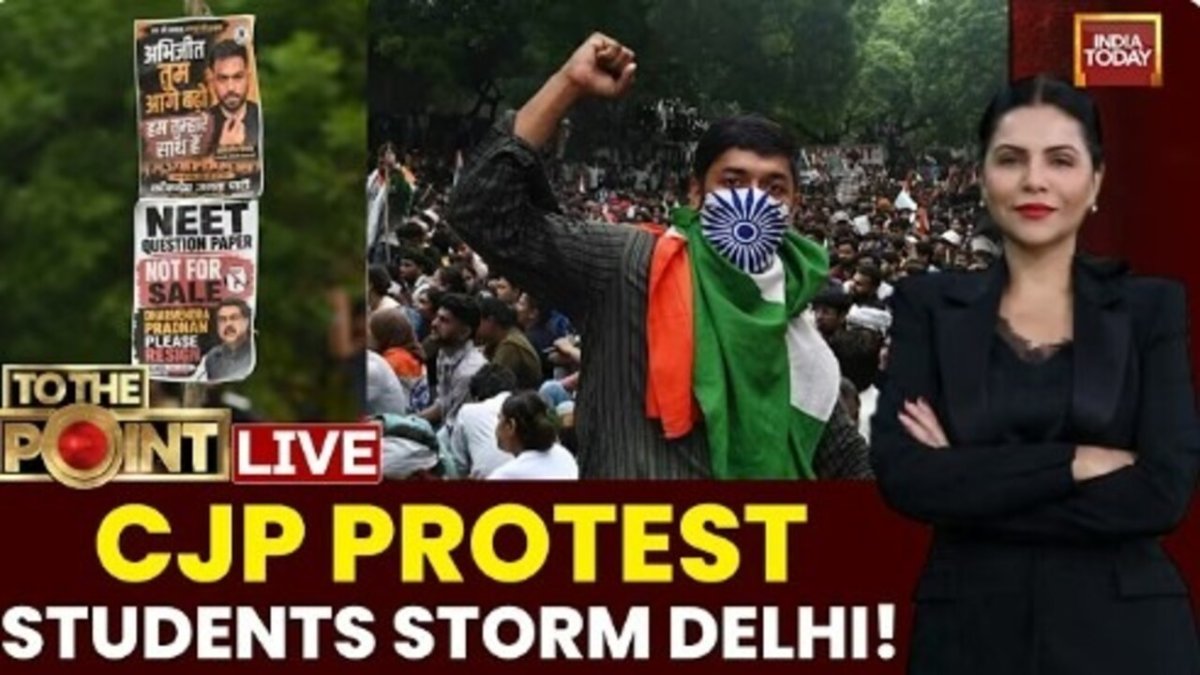
On July 20 more than 10,000 marchers converged on Parliament in the "Sansad Chalo" demonstration. Delhi Police used tear gas and lathi charges, detaining over 100 people. Organisers described the response as excessive, while police accounts emphasised crowd control; allegations that the BJP sent outsiders into the crowd remained unsubstantiated. Violence near Connaught Place on July 23 left two assistant commissioners of police injured, which police attributed to a group of alleged miscreants, testing the movement's commitment to non-violent tactics.
Activist Sonam Wangchuk's concurrent hunger strike added moral weight to the protests and drew national attention. The clashes highlighted the difficulty of maintaining a peaceful brand amid large-scale mobilisation, yet they also renewed public focus on the underlying demands for exam reform and accountability.
(Source: India Today)
Resignation, Task Force and Legislative Changes
Dharmendra Pradhan resigned on July 25, 2026 under Article 75(2) of the Constitution, with Pralhad Joshi named as the new Union Education Minister. The government accepted the movement's two headline demands — the minister's departure and compensation for the families of students who died by suicide — prompting the CJP to end its weeks-long occupation of Jantar Mantar. As part of the reform drive, 47 National Testing Agency officials were terminated, and a high-powered task force chaired by former UIDAI chief Nandan Nilekani was mandated to design leak-proof, technology-driven, tamper-resistant examinations.
On the legislative side, the Public Examinations (Prevention of Unfair Means) Amendment Bill, 2026 was introduced in the Lok Sabha on July 27 by Dr. Jitendra Singh and passed by voice vote in both houses by July 30 amid an Opposition walkout. Penalties were sharply raised: individuals involved in unfair means now face five to ten years' imprisonment and fines up to Rs 50 lakh; persons in charge of service providers face three to ten years and fines of Rs 1 crore, with minimums raised to five years and Rs 5 crore; and organised exam mafia face a minimum of seven years and Rs 10 crore. Service provider debarment extends from four to eight years.
The enforcement machinery is equally compressed. The Bill empowers the central government to constitute a Special Task Force, requires investigations to be completed within two months, obliges every state and union territory to designate a Court of Session as a Special Fast Track Court, mandates day-to-day trials completed within three months of the chargesheet, and sets a 30-day window for appeals before a two-judge High Court bench, with no appeal entertained after 90 days. On the technology front, the Dr. K. Radhakrishnan Committee's recommendations — DIGI-EXAM, Aadhaar-based biometric authentication, AI-enabled monitoring, encrypted question-paper transmission, government examination centres and enhanced cybersecurity — anchor the overhaul that the Nilekani task force is now expected to implement.
Implications for Students, Parents and Coaching Hubs
With roughly 2 million candidates competing annually for 130,000 medical seats, families in Rajasthan and Maharashtra redirect savings into Kota-style coaching. The 2026 crisis compounded the 2024 NEET leak and the CBSE OSM dispute, raising questions about youth unemployment and the gap between qualified graduates and available opportunities under the NEP 2020 digital assessment framework.
For health and science journalism, however, this is also a public-health story. The suicides reported after the exam disruption are the most visible symptom of a broader psychological burden borne by adolescent aspirants — the same cohort, aged 17 to 19, that dominates NEET's top ranks. When a national examination is cancelled and re-conducted within weeks, the emotional cost falls on teenagers and their families, not on the institutions that erred. Any reform agenda that treats leak prevention as purely a law-and-order or technology problem will miss the human dimension that turned an administrative failure into a national movement.
The Dialogue That Must Follow
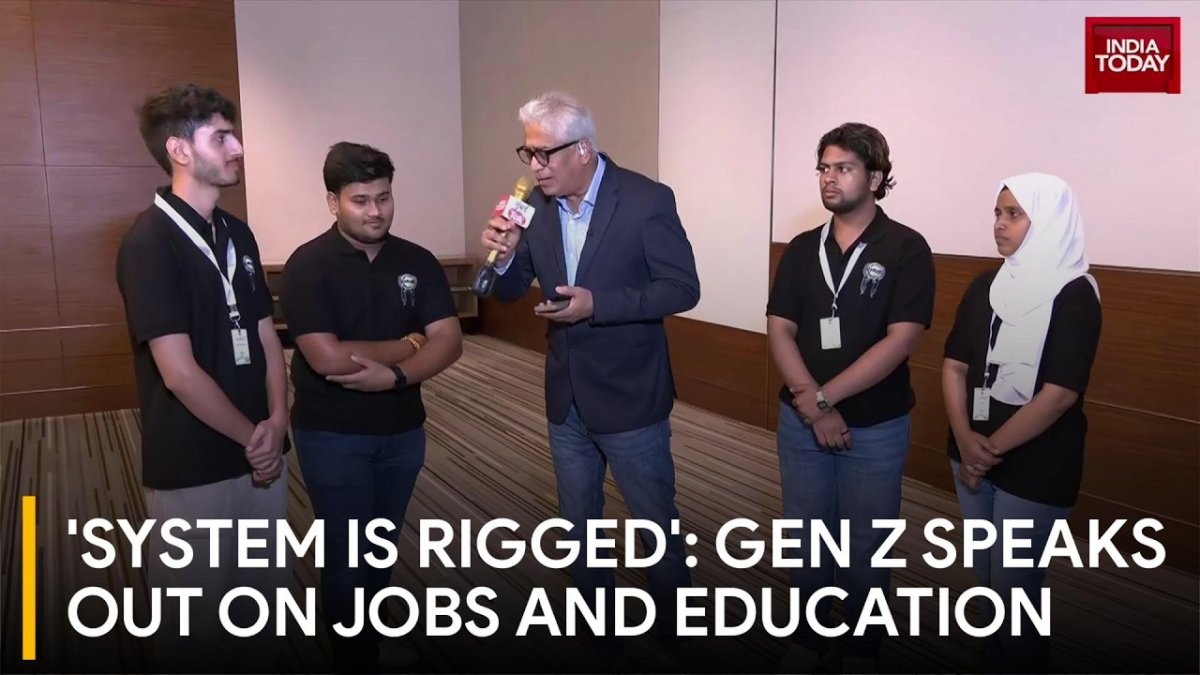
The 2026 events deepened the trust deficit first exposed in 2024, as repeated disruptions left aspirants and families questioning whether examination bodies could deliver fair outcomes. Young Indians interviewed in an India Today video released on August 6 described the exam system as fundamentally flawed and called for transparency, accountability and sustained dialogue with authorities. Prime Minister Narendra Modi's August 1 statement that punishing student protesters would not resolve the situation signalled openness to engagement, while a Reuters report on August 3 noted that employment-examination grievances had turned segments of the youth against the government despite India's status as the world's fastest-growing major economy.
Meaningful follow-up requires standing parliamentary oversight, a formal students' rights charter and clear implementation timelines for the Nilekani task force recommendations. Without these structures, the risk remains that reform momentum will dissipate once immediate headlines fade, leaving systemic vulnerabilities unaddressed for the next examination cycle. Dialogue with young India must therefore move beyond immediate legislative fixes to address the cumulative psychological and financial strain on coaching-hub families, ensuring that future cycles restore confidence rather than repeat the cycle of leaks and protests.
The Bottom Line
The sequence of 2.27 million candidates, 120 leaked questions, 11.2 lakh qualifiers and the July 30 Amendment Bill marks the most significant tightening of India's examination regime since the 2024 parent Act. For students and taxpayers the outcome hinges on whether the Nandan Nilekani task force and new fast-track courts deliver leak-proof, transparent systems before the next admission cycle.
— By Dr. Raj Patel, Staff Writer
This article was produced with AI-assisted research and editorial support. Reporting is based on sources cited in the article.
What's Your Reaction?
 Like
0
Like
0
 Dislike
0
Dislike
0
 Love
0
Love
0
 Funny
0
Funny
0
 Wow
0
Wow
0
 Sad
0
Sad
0
 Angry
0
Angry
0

India/South Asia Correspondent at Global1.News. Analytical voice with a background in science and health journalism. Based in New Delhi, covering Indian politics, education, healthcare, technology, and policy. Breaks down complex data into clear, actionable reporting.














Comments (0)