
Navy Deploys 1,700 to Mazatlán After Deadliest Month
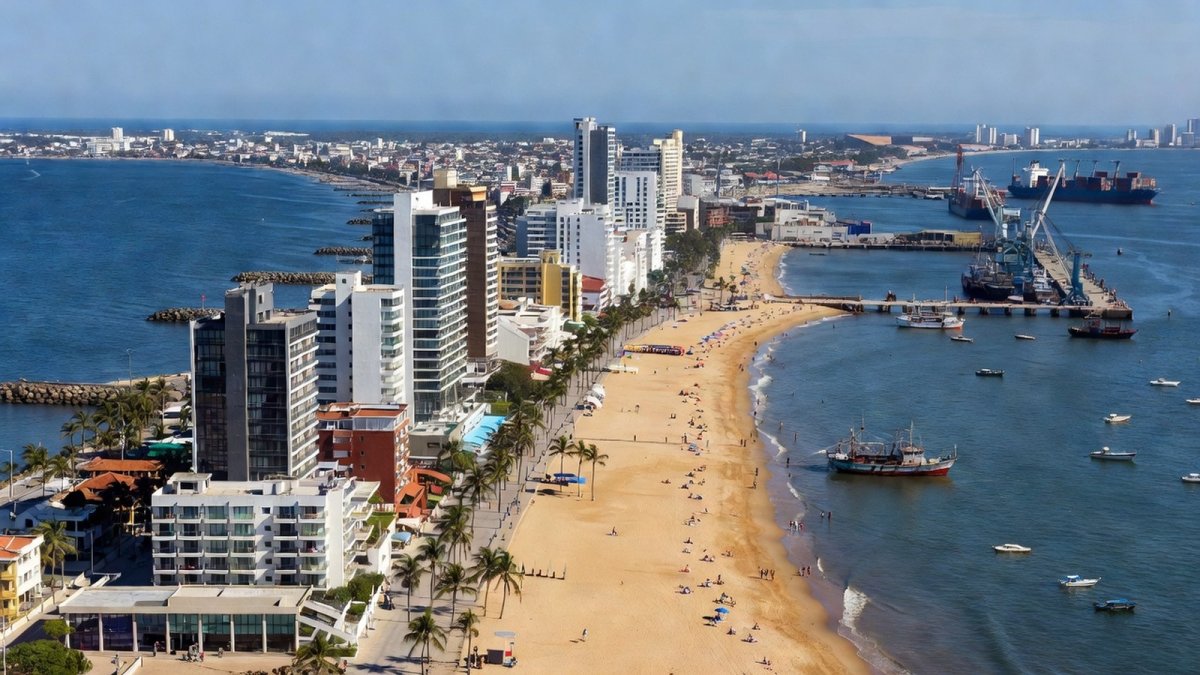
Navy Arrives in Mazatlán: A City on Edge Seeks Peace The familiar rhythm of Mazatlán — the crash of waves on the malecón, the call of vendors in the tianguis, the laughter of families on the beach at sunset — has been interrupted by a more ominous sound: the roar of military convoys and the hum of surveillance drones overhead.
Navy Arrives in Mazatlán: A City on Edge Seeks Peace
The familiar rhythm of Mazatlán — the crash of waves on the malecón, the call of vendors in the tianguis, the laughter of families on the beach at sunset — has been interrupted by a more ominous sound: the roar of military convoys and the hum of surveillance drones overhead. On Saturday, August 8, 2026, the Mexican Navy (SEMAR) announced the deployment of more than 1,700 personnel to this "Pearl of the Pacific," launching "Operation Sable" Mazatlán in direct response to a harrowing statistic: 36 homicides in July, the city's highest monthly total of 2026. For the families in the colonias of Lomas de Monterrey and Infonavit Alarcón, for the hotel workers along the Zona Dorada, and for the fishermen in the coastal communities, this deployment is more than a headline. It is a promise — and a question. Can the presence of uniformed personnel restore the peace that has allowed this city to thrive as one of Mexico's most beloved tourist destinations? The Navy's statement, released through official channels, frames the operation as a commitment to "the well-being" of residents and visitors alike, with operational actions focused on "strategic areas" to "reestablish peace and public order." The numbers paint a stark picture. According to El Sol de Mazatlán, the 36 victims in July included 32 men and four women, with two cases investigated as femicides; two of the victims were minors. These are not abstract figures; they represent abuelos, hijos, and vecinos whose lives were cut short in a wave of violence that has transformed the city's landscape. The deployment follows the arrival of 900 Mexican Army troops on July 23, part of an earlier security reinforcement after a series of armed attacks.Understanding the Violence: A Cartel Battle Spills Over
To understand why Mazatlán has become a flashpoint, one must look beyond the city's palm-lined boulevards to the rugged terrain of the Sierra Madre Occidental and the ongoing war between factions of the Sinaloa Cartel. The violence is rooted in a bitter struggle between "Los Chapitos," the faction led by the sons of Joaquín "El Chapo" Guzmán, and "Los Mayos," the group formerly commanded by Ismael "El Mayo" Zambada. The conflict intensified dramatically in 2024, following the dramatic kidnapping of Zambada by Joaquín Guzmán López, who flew him to New Mexico, where both were arrested by US authorities at Doña Ana County International Jetport. While the heaviest fighting has historically centered on Culiacán, the state capital, the battle has now spilled into Mazatlán and the surrounding southern region. The July 17-18 period saw six armed attacks in less than 24 hours, leaving four dead and three wounded; just days later, on July 22-23, five more people were murdered. The attacks have not been confined to marginalized areas — they have struck homes in tourist zones like Zona Dorada and Pradera Dorada, as well as residential neighborhoods such as San Marcos, Santa Fe, and Hacienda del Seminario, with firearms and explosives used in both rural and urban settings. One particularly brazen attack allegedly perpetrated by the "Los Chapitos" faction targeted marines themselves, resulting in the deaths of two naval personnel. The marines returned fire, killing 10 criminals in the ensuing confrontation. This direct assault on federal forces underscores the audacity of the criminal groups and the challenges facing security personnel. The Navy's statement acknowledges the need to weaken "illicit infrastructure that fuels schemes of violence," a term that encompasses clandestine drug laboratories, cartel vehicles, and other assets supporting narcotics distribution.Life Under Siege: Voices from the Community
The human cost of this violence extends far beyond the homicide statistics. In the highlands of Concordia, south of Mazatlán, a resident sent a chilling warning to relatives who had fled to the city: "Don't even go near the mountains; it's full of armed men, and it's dangerous because the fighting is still going on in the towns below." This message, reported by El País, captures the reality for thousands of families who have been displaced by the conflict, seeking refuge in Mazatlán only to find the violence has followed them. The first week of August brought no respite. Up to 32 violent events were officially recorded, with 14 people — almost all men — confirmed murdered and eight injured. Among the injured were three state police officers attacked by drones on the Mazatlán-Culiacán bypass near El Chilillo, a stark reminder that even those tasked with protecting the public are not immune. The use of drones as weapons represents a disturbing evolution in cartel tactics, turning commercial technology into instruments of war. Interim Mayor Minerva Osuna Zavala, speaking after a Mesa de Seguridad meeting, acknowledged that authorities have identified a territorial dispute between two factions of a criminal group as the primary driver of the violence spike. She urged residents to shelter in place during dangerous situations and to use the emergency number 911 to report suspicious activity. Her message reflects a sobering reality: while security forces are deploying in force, the immediate safety of citizens may depend on their own vigilance and cooperation with authorities.Security Operations: A Multi-Dimensional Response
The scale of the federal response is unprecedented for Mazatlán. According to The Mazatlan Post, the recent SEMAR arrivals, combined with Army and Guardia Nacional contingents, bring the total operational forces in southern Sinaloa to approximately 5,000 to 8,000 active agents. This represents a dramatic increase in federal presence, with large-scale surveillance and patrols now covering the urban center, rural communities, and coastal corridors under the ongoing "Verano Seguro 2026" initiative. The patrols are multi-dimensional: on land, pick-up trucks, motorcycles, and foot patrols move through neighborhoods; at sea, watercraft and jet skis conduct coastal search-and-rescue operations; in the air, drones and military helicopters provide aerial surveillance. Strict security filters have been established at primary entry and exit points of the port city, with intensified checkpoints on federal and state highways connecting Mazatlán to Escuinapa, Concordia, and Rosario. Recent military action has yielded tangible results. In the rural community of La Urraca, security forces seized significant volumes of illicit fuel, weapons, and tactical equipment, dealing a blow to the logistical capabilities of criminal groups. The Navy's statement emphasizes that its presence "in the streets and on the coast has the sole aim of providing a safe and protected environment," while making a "respectful call" for citizens and tourists to have "full confidence and certainty in the deployed forces." The institution's central focus, according to the statement, is to "protect Mexican families while acting at all times with strict adherence to human rights, the proportional use of force and the current legal framework."Economic Impact and the Road Ahead
For a city whose economy is deeply intertwined with tourism, the violence poses an existential threat. Mazatlán has been one of Mexico's fastest-growing tourist destinations over the past three decades, attracting visitors from across the country and around the world with its beaches, historic center, and world-famous carnival. The question on everyone's mind is whether the security crisis will deter visitors and devastate the local economy.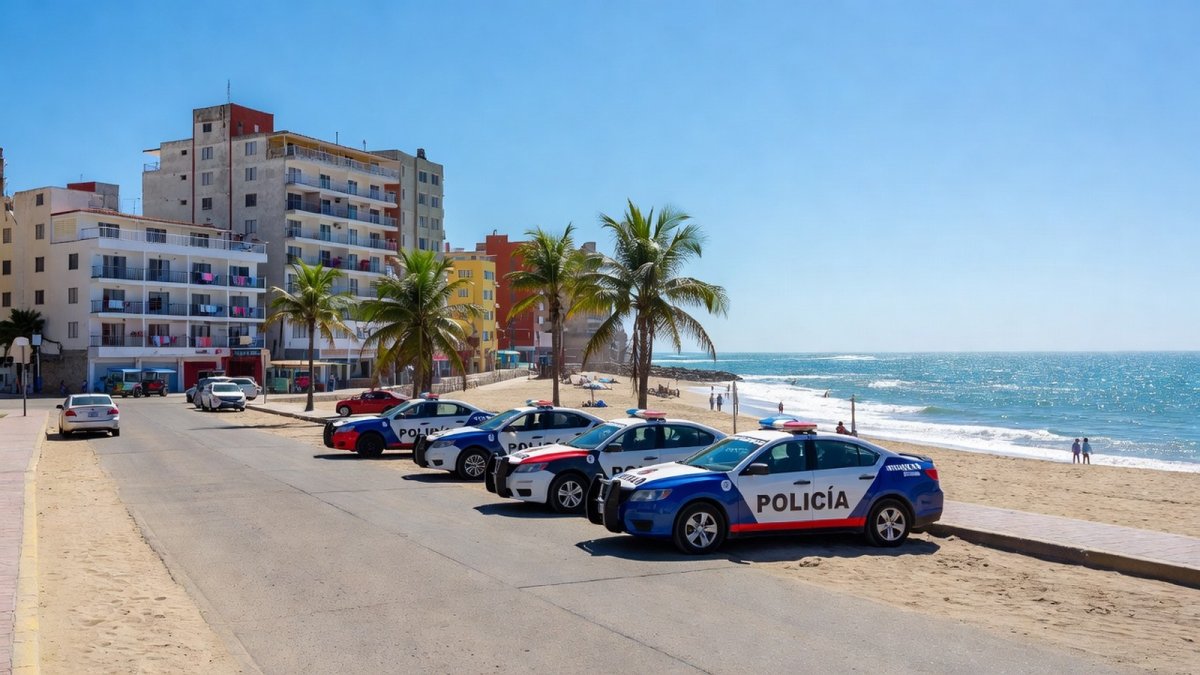 Thus far, the hotel sector has reported no significant cancellations tied to insecurity, with last-minute reservations continuing to come in, according to UNOTV. But the situation remains fragile. The southern region of Sinaloa has become the area of greatest concern in Mexico, with violence that previously ravaged other municipalities, especially Culiacán, now shifting southward. INEGI data reveals that Sinaloa recorded 1,805 homicides in 2025 — 150 more than the state prosecutor reported — the sharpest increase in the country: while homicides nationwide fell 18%, Sinaloa's rose 75%.
The broader context is sobering. Sinaloa's July 2026 total reached 139 homicidios dolosos, with Mazatlán accounting for 36 of the 53 homicides in the southern region, and the January-July 2026 period has accumulated 935 homicides across the state. Culiacán remains the epicenter — the scene of eight out of every 10 murders and disappearances in the state over the past two years. Yet the shift of violence to Mazatlán, a city of beaches, tourism, and family vacations, has captured national attention and prompted this massive federal response.
Thus far, the hotel sector has reported no significant cancellations tied to insecurity, with last-minute reservations continuing to come in, according to UNOTV. But the situation remains fragile. The southern region of Sinaloa has become the area of greatest concern in Mexico, with violence that previously ravaged other municipalities, especially Culiacán, now shifting southward. INEGI data reveals that Sinaloa recorded 1,805 homicides in 2025 — 150 more than the state prosecutor reported — the sharpest increase in the country: while homicides nationwide fell 18%, Sinaloa's rose 75%.
The broader context is sobering. Sinaloa's July 2026 total reached 139 homicidios dolosos, with Mazatlán accounting for 36 of the 53 homicides in the southern region, and the January-July 2026 period has accumulated 935 homicides across the state. Culiacán remains the epicenter — the scene of eight out of every 10 murders and disappearances in the state over the past two years. Yet the shift of violence to Mazatlán, a city of beaches, tourism, and family vacations, has captured national attention and prompted this massive federal response.
What to Watch For
There are glimmers of hope. On July 8, the security cabinet announced that Cristhian Guadalupe Pérez Pérez, alias "El Texas" or "El 01," identified as the Los Chapitos plaza boss in Culiacán, was killed in an operation by the Army and the state Public Security Secretariat. Sinaloa Public Security Secretary General Sinuhé Téllez López expressed optimism: "We expect homicides to go down with this event." The killing of a key cartel leader may disrupt operations, but history suggests that such victories can also trigger succession battles and further violence. The coming weeks will test whether Operation Sable changes the trajectory in Mazatlán — whether the patrols, checkpoints, and coastal surveillance deter attacks in the tourist zones hit this year, and whether the hotel sector, which so far reports no significant cancellations, can hold onto visitors' confidence. For the families of the 36 victims of July, for the hotel workers hoping for a full season, and for the children who deserve to play on the beaches without fear, the success of Operation Sable cannot come soon enough. Mazatlán, the Pearl of the Pacific, has weathered storms before — hurricanes, economic crises, and the challenges of a changing world. This storm, born of cartel warfare and criminal ambition, will require not just the presence of 1,700 marines, but the collective resolve of a community determined to reclaim its peace.Tags: Mazatlán security, Operation Sable, SEMAR deployment, Sinaloa violence, Los Chapitos, Los Mayos, Mazatlán homicides, Verano Seguro 2026, Sinaloa Cartel, Mexican Navy, Pacific coast security, tourist safety Mexico, Mazatlán tourism, cartel violence, federal forces Mexico
By Rosa Martinez, Staff Writer
This article was produced with AI-assisted research and editorial support. Sources: Mexico News Daily, SEMAR, El Sol de Mazatlán, El País, The Mazatlan Post, Luz Noticias, Expansión.
What's Your Reaction?
 Like
0
Like
0
 Dislike
0
Dislike
0
 Love
0
Love
0
 Funny
0
Funny
0
 Wow
0
Wow
0
 Sad
0
Sad
0
 Angry
0
Angry
0

Rosa Martinez
Latin America/Andes Correspondent at Global1.News. Based in Bogota, covering politics, environment, energy, and social movements across the Andean region. Passionate about environmental journalism and communities protecting their land.













Comments (0)