
Milind Soman's 15-Minute Routine Exposes Gaps in India's Preventive Health Strategy
At a time when nearly 50% of Indian adults remain insufficiently active according to 2022 data analysed in the June 2024 Lancet Global Health study, Milind Soman's minimalist approach to fitness offers a practical counter-model.
At a time when nearly 50% of Indian adults remain insufficiently active according to 2022 data analysed in the June 2024 Lancet Global Health study, Milind Soman's minimalist approach to fitness offers a practical counter-model. The 60-year-old actor and Ironman finisher discussed his 10-15 minute daily routines, whole-food emphasis and mindset of "you can get older, but you don't need to get old" in an exclusive India Today Health 360 interview with Sneha Mordani published on 19 July 2026.
Milind Soman's 15-Minute Routine Exposes Gaps in India's Preventive Health Strategy
Mumbai, Maharashtra — July 19, 2026 — In the Health 360 conversation, Soman outlined a no-gym, movement-first philosophy that directly addresses the "sitting disease" affecting office workers across Indian cities from Bengaluru to Delhi.

The 15-Minute Workout Philosophy
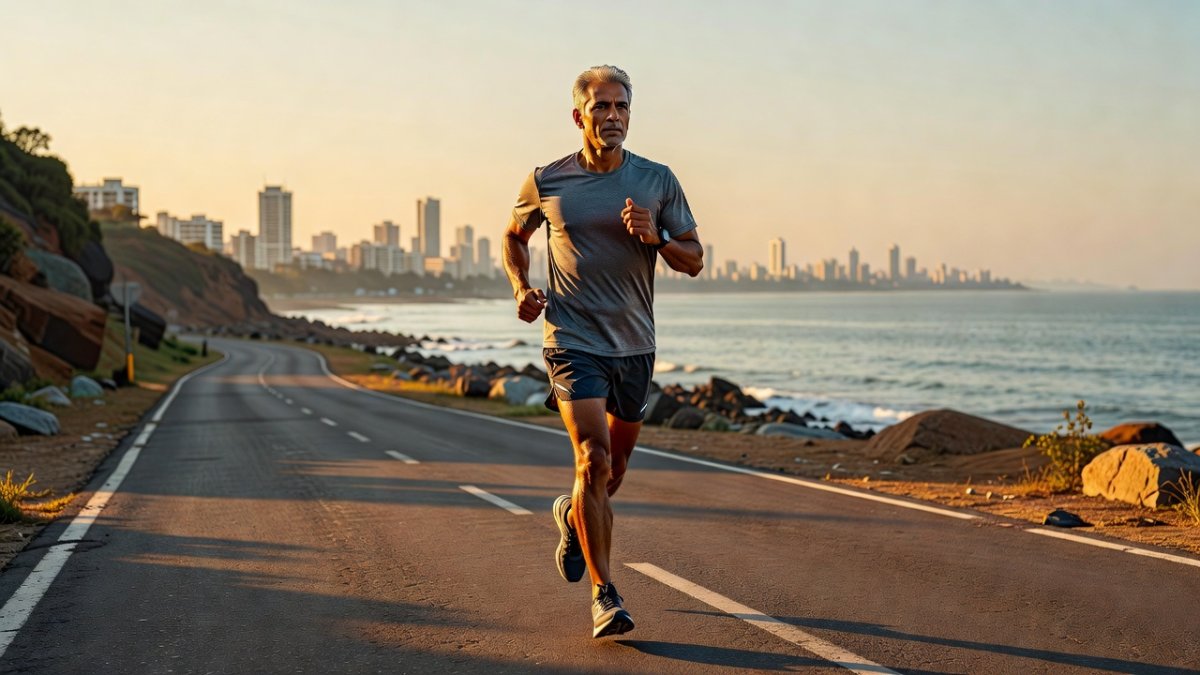
Soman stated he exercises for only 10 or 15 minutes daily, relying on bodyweight movements such as pull-ups, push-ups, squats and lunges. He avoids commercial gyms entirely, preferring running, swimming and walking in natural settings.
This approach aligns with WHO recommendations of 150 minutes of moderate activity weekly yet requires far less time commitment than many structured programmes. For Indian professionals spending long hours at desks in IT hubs like Hyderabad and Pune, Soman's advice to stand and move every 30 minutes offers an immediate intervention against spinal and joint strain.
Consistency over intensity forms the core message. Soman urges beginners to start small rather than chase elaborate routines that often lead to dropout within weeks.
Indian public health experts align 10-15 minute daily sessions with ICMR physical activity guidelines and WHO targets of 150 minutes moderate activity per week, noting that brief bouts interrupt prolonged sedentary time more effectively than infrequent longer workouts. Data from the NSO Time Use Survey 2024 show that only 10 percent of adults meet these thresholds, underscoring how short movement breaks every 30 minutes can offset metabolic harm from extended sitting, a pattern Indian Express reporting links directly to Soman's advice for office workers in IT centres. This approach counters the "sitting disease" by maintaining insulin sensitivity and reducing cardiovascular strain without requiring dedicated blocks of time that conflict with work schedules.
Gym culture remains inaccessible for most Indians due to high membership costs and limited facilities outside major metros, leaving residents in tier-2 towns such as Indore or Kochi without viable options. Soman's bodyweight method using pull-ups, push-ups, squats and lunges eliminates these barriers, allowing consistent practice in household spaces or open areas. The Lancet Global Health 2024 analysis projects inactivity rising to 60 percent of adults by 2030, making scalable, zero-cost routines essential for reversing trends observed since the 1998 baseline surveys.
Diet Without Deprivation: What a 60-Year-Old Ironman Eats
Soman eats biryani, pizza and hamburgers without restriction but minimises over-processed and refined foods in favour of whole, home-cooked meals. His breakfast typically includes a whole papaya or two small ones, half a watermelon, five or six mangoes in season, multiple bananas, plus muesli, dry fruits and cereal if needed. He skips tea, biscuits and namkeen in the morning.
Lunch and dinner remain simple dal, rice and vegetables, with non-vegetarian items avoided at night to aid digestion. Intermittent fasting within an eight-hour eating window supports his energy levels and recovery.
These habits demonstrate that discipline need not equate to austerity, a relevant lesson for middle-class households navigating rising processed-food availability in Indian markets.
Soman's fruit-heavy breakfast supplies substantial fibre, vitamin C and potassium from seasonal bananas, papayas, watermelons and mangoes, aligning with Indian Dietetic Association guidance that prioritises whole fruits over packaged cereals for better micronutrient absorption and satiety. National Family Health Survey trends document rising processed-food intake linked to higher obesity and anaemia rates across urban and rural populations, making this pattern a direct counter to those shifts. Nutritionists note that such meals deliver sustained energy without refined sugars, supporting metabolic health in line with ICMR dietary recommendations.
Intermittent fasting within an eight-hour window receives cautious endorsement from Indian endocrinologists when adapted to traditional early-dinner patterns that avoid late snacking. The approach matches longstanding household routines in many regions yet requires monitoring for diabetics and older adults to prevent hypoglycaemia or nutrient shortfalls. ICMR 2023 data on 101 million diabetes cases highlight the need for personalised application, positioning the method as compatible with preventive strategies under Ayushman Bharat wellness programmes.
The Data Behind India's Inactivity Crisis
The National Statistics Office Time Use Survey 2024, covering roughly 450,000 respondents, found only 10% of adults, 20% of seniors and 1.7% of children meet WHO daily activity guidelines. Exercise participation has remained near the 8% level recorded in the 1998 survey.
Physical inactivity elevates risks of cardiovascular disease, type 2 diabetes, dementia and certain cancers—the very non-communicable diseases straining India's public health infrastructure. With projections showing inactivity rising to 60% of adults by 2030, the economic burden on taxpayers through Ayushman Bharat and state health schemes will intensify without behavioural shifts.
The gender gap shows 57 percent of Indian women insufficiently active compared with 42 percent of men, driven by safety concerns, domestic workloads and scarce public spaces according to Lancet Global Health 2024 findings. State initiatives such as open gyms in parks, Pinkathon women-only runs founded by Soman, and Khelo India programmes aim to close this divide by creating secure, accessible venues. NSO Time Use Survey 2024 data confirm lower participation among women across age groups, indicating these targeted efforts must expand to address structural barriers beyond metros.
Inactivity imposes heavy economic costs through NCD treatment under Ayushman Bharat and state schemes, with ICMR 2023 estimates of 101 million diabetes cases and rising cardiovascular burdens. Projections of 60 percent adult inactivity by 2030 from Lancet Global Health 2024 suggest escalating taxpayer-funded expenditures unless prevention scales. Consistent activity reduces complications that drive hospital admissions, offering measurable savings for public health budgets already strained by diabetes and related conditions.
Fitness at Every Age: The Fit India Movement
Soman completed the fifth edition of the Fit India Freedom Run from 26-30 June 2026, covering 600 km from Mumbai's Shivaji Park to Goa in five days. Each day combined 90 km cycling and 21 km running through the Konkan belt via Pen, Kolad, Chiplun, Ratnagiri and Kankavli.

Launched by Prime Minister Narendra Modi in August 2019, the Fit India Movement positions mass participation events as tools for preventive health. Soman's earlier feats, including India's first Ironman finish in Zurich in 2015 at age 50 and the 2017 Ultraman in Florida, illustrate that age need not limit endurance when consistent activity is maintained.
What This Means for India
Soman's interview arrives as the government expands school physical activity guidelines and Ayushman Bharat wellness centres. Yet the gap between policy intent and daily behaviour remains wide, particularly among women where inactivity reaches 57% versus 42% for men.
Adopting Soman's principles—short daily movement, whole foods and positive mindset—could reduce long-term healthcare costs for Indian families and ease pressure on district hospitals managing NCD complications. The message resonates beyond metros to smaller towns where access to gyms is limited but open spaces for walking remain available.
Ministry of Health and Family Welfare, NITI Aayog and state governments can apply Soman's model through walkable urban design, mandatory school sports periods and workplace wellness mandates that integrate short daily movement. The Fit India Movement launched in August 2019 provides existing infrastructure for such policies, yet implementation gaps persist in smaller towns. Evidence from NSO surveys shows minimal progress since 1998, underscoring the need for coordinated action that prioritises accessible activity over facility-dependent programmes.
The message that individuals can age without functional decline serves as a public health imperative for India's projected 300 million people aged 60 and older by 2050 per UN estimates. Active ageing lowers dependence on family caregivers and district hospitals managing NCD complications, aligning with Ayushman Bharat goals. Widespread adoption of consistent, low-barrier habits could shift population-level outcomes before inactivity reaches the 60 percent threshold projected for 2030.
The Bottom Line
Milind Soman's 15-minute philosophy and rejection of age-related decline provide a scalable template for millions of Indians. When paired with the Fit India Movement's infrastructure and stronger implementation of WHO-aligned activity targets, such individual discipline can translate into measurable public health gains. The interview underscores that sustainable fitness in India hinges less on expensive facilities and more on consistent, accessible habits.
— By Dr. Raj Patel, Staff WriterThis article was produced with AI-assisted research and editorial support. Reporting is based on sources cited in the article.
What's Your Reaction?
 Like
0
Like
0
 Dislike
0
Dislike
0
 Love
0
Love
0
 Funny
0
Funny
0
 Wow
0
Wow
0
 Sad
0
Sad
0
 Angry
0
Angry
0

India/South Asia Correspondent at Global1.News. Analytical voice with a background in science and health journalism. Based in New Delhi, covering Indian politics, education, healthcare, technology, and policy. Breaks down complex data into clear, actionable reporting.














Comments (0)