
Mexico Overtakes Taiwan as Top US AI Server Supplier
Mexico overtook Taiwan as the No. 1 supplier of US AI server imports in Q2 2026, with AI infrastructure exports surpassing automobiles for the first time and reshaping manufacturing across Jalisco, Chihuahua and the border region.
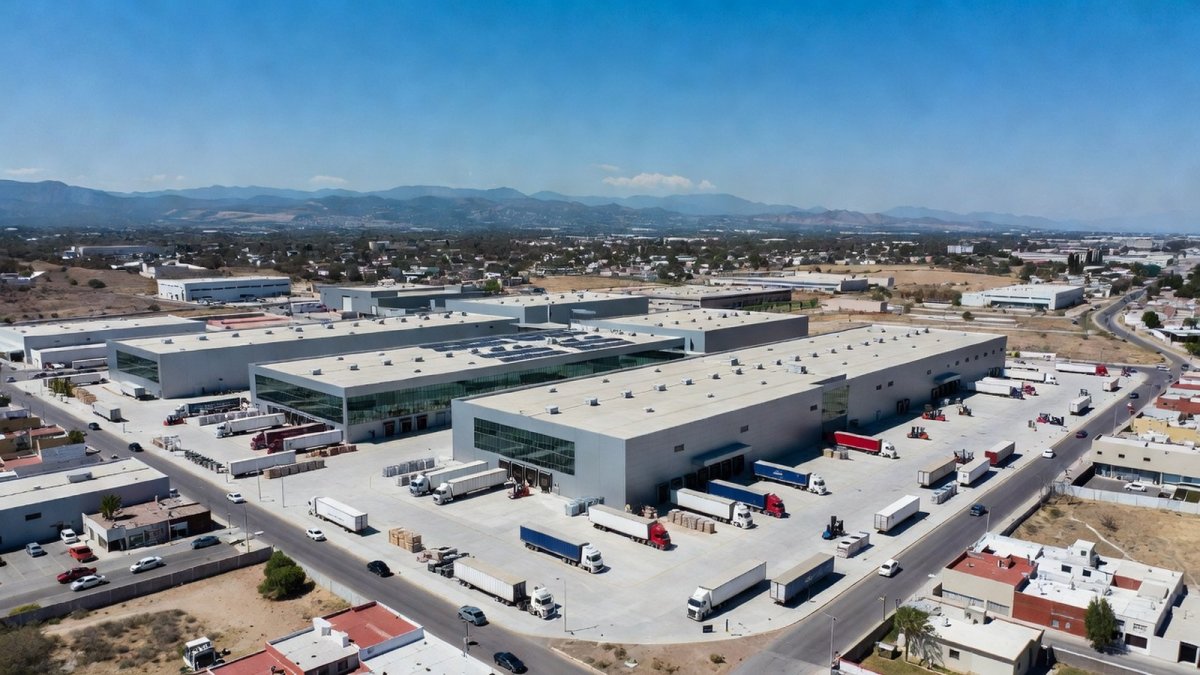
Mexico Overtakes Taiwan as Top US AI Server Supplier, Marking a Historic Shift in Global Tech Manufacturing
In a development that signals a profound transformation of Mexico's industrial landscape, the country has officially surpassed Taiwan as the leading supplier of artificial intelligence servers to the United States. According to a report published on August 14, 2026, by the Economic Studies Department of Grupo Financiero Banamex, Mexico's share of U.S. server imports reached 34.5% in the first half of the year, edging closer to Taiwan's 36% overall. The overtaking came in the second quarter: by that point Mexico was supplying nearly 40% of the U.S. market, having first led Taiwan in monthly sales back in May 2026.
This is not merely a statistic on a trade ledger; it represents the sound of hammers in new factories, the hum of advanced machinery in Jalisco and Chihuahua, and a new chapter for Mexican workers who are now building the digital backbone of the 21st century. For the first time in modern history, Mexican exports of AI infrastructure—computers, servers, electronic boards, and specialized cabling—have surpassed automobiles as the country's top export to the United States. The data shows that during the first half of 2026, Mexico exported more than US$60.4 billion worth of computer servers to AI data centers in the U.S., with May 2026 marking the first month Mexico led Taiwan in monthly sales.
Tags: Mexico AI servers, Taiwan, US imports, Banamex, Foxconn, Inventec, Guadalajara, Ciudad Juarez, nearshoring, AI infrastructure, Mexican exports, Claudia Sheinbaum, T-MEC, tariffs, Jalisco, Chihuahua
The Banamex Data: A New Leader in U.S. Server Imports
The numbers coming out of the Banamex report paint a clear picture of a historic realignment. Mexico's share of U.S. server imports through the first half of 2026 stood at 34.5%, just behind Taiwan's 36%. However, the momentum was unmistakable. In the second quarter alone, Mexico was supplying nearly 40% of U.S. server imports, selling more components and servers for AI data centers than Taiwan. This surge pushed Mexican exports of AI infrastructure to a record US$105.8 billion between January and May 2026, a staggering 84.5% growth year over year.
This boom has fundamentally altered the composition of Mexican exports. AI infrastructure products now account for 33.3% of Mexico's total foreign sales, which reached a historic US$317.2 billion in the first five months of 2026. Computer-equipment exports alone climbed 172% during the first half of the year, reaching US$82.9 billion. To put this in perspective for families in Mexico, this figure now exceeds the US$74.8 billion generated by vehicle and auto-parts exports—a sector that has long been the pride of Mexican manufacturing. The shift is stark: vehicle exports totaled US$60.5 billion in January-May 2026, representing 19% of total exports, down from 23.7% a year earlier, as shipments declined 1.5% year over year amid pressure from the 25% tariffs imposed by U.S. President Donald Trump.
From Autos to Algorithms: The State-by-State Manufacturing Picture
The AI server boom is not concentrated in a single industrial corridor; it is weaving a new economic fabric across multiple Mexican states. Jalisco and Chihuahua remain the leading production centers, but Baja California, Nuevo Leon, Coahuila, and Tamaulipas have all expanded their roles in assembling servers, electronic boards, electrical systems, and specialized cabling. This geographic diversification means that the benefits of this boom are reaching workers in colonias and communities far beyond the traditional maquiladora zones.
Jalisco, in particular, has emerged as one of Mexico's most important electronics clusters, concentrating about 70% of the country's semiconductor companies and 23% of its software developers. The state's capital, Guadalajara, is often referred to as the "Silicon Valley of Mexico," and for good reason. The Financial Times reported that the AI server boom is changing Mexico's regional economic balance, with central Jalisco state leapfrogging several states to become the second-largest exporter by value in the first quarter of 2026. For the families in Guadalajara and its surrounding areas, this means new opportunities in high-tech manufacturing, a departure from the traditional reliance on agriculture or low-wage assembly work.
The Taiwanese Investment Wave: Foxconn, Inventec, and the New Maquiladoras
This transformation is being driven by a wave of Taiwanese investment that is reshaping the Mexican manufacturing landscape. Banamex described the relationship as a regional reorganization led by Taiwanese manufacturers such as Inventec, Wistron, and Flex. These companies are not abandoning their Asian operations; rather, they are building a complementary assembly platform close to the U.S. market. As Banamex noted, "Mexico has established itself as an assembly platform close to the U.S. market, while design, technological integration and chain coordination activities (for artificial intelligence computing production) remain concentrated in Asia."
The scale of this investment is remarkable. In early August 2026, Inventec announced plans to invest US$450 million in the border city of Ciudad Juarez, Chihuahua—an expansion expected to create up to 6,000 jobs, using the HubsPark Juarez industrial platform developed by Meor. Even more significant, Taiwanese multinational Foxconn (Hon Hai Precision Industry), the world's largest electronics contract manufacturer, announced in April 2026 that it is building one of the world's largest AI server assembly factories near Guadalajara. This is an investment of about US$900 million using Nvidia's advanced GB200 AI chips, expected to be completed within a year. Jalisco Governor Pablo Lemus Navarro confirmed construction would finish in a year despite Trump tariff threats. Foxconn had previously invested US$168 million to expand AI server production at its Jalisco plant via Foxconn Industrial Internet (FII).
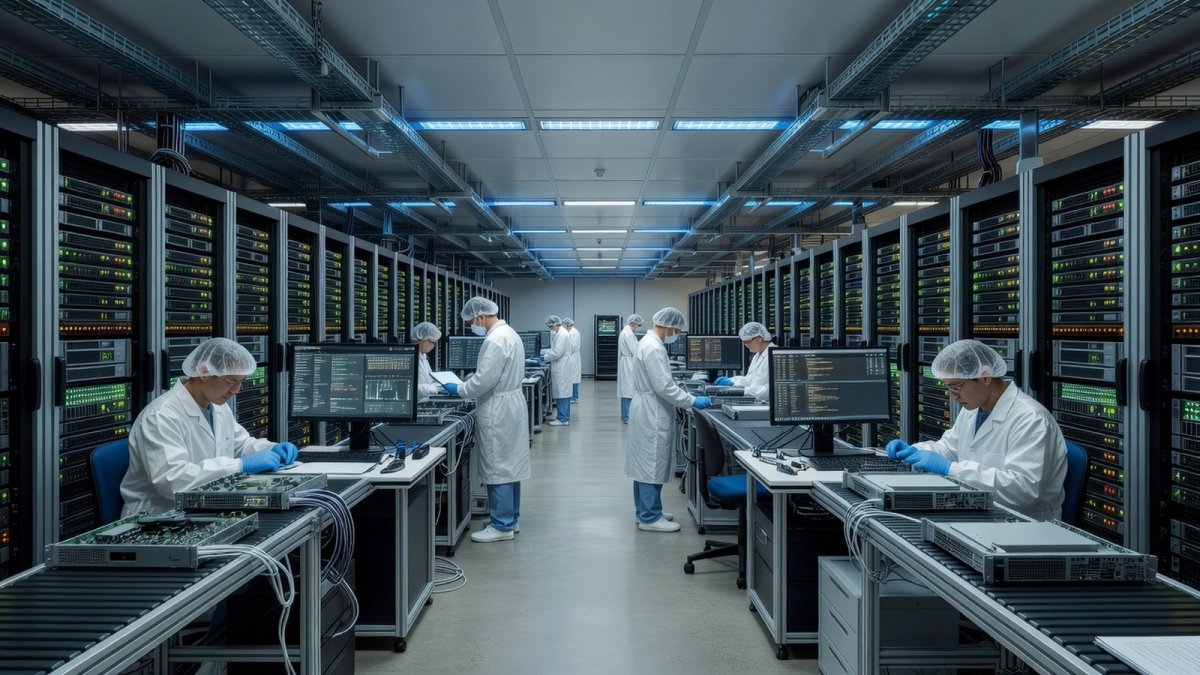
What This Means for Mexican Workers and Communities
For the campesinos' children in Jalisco and the young engineers in Chihuahua, this boom represents a tangible path to economic mobility. The new factories are not just assembly lines; they are centers for learning and skill development. Workers are being trained to handle advanced electronics, cooling systems, and data processing units—skills that command higher wages than traditional automotive assembly. The presence of global manufacturers including Foxconn, Flex, Jabil, and Sanmina means that Mexican workers are now integral to the supply chains of the world's largest technology companies serving the U.S. market.
This is particularly significant for border communities like Ciudad Juarez, which have historically been associated with the volatility of the maquiladora industry. The Inventec expansion, with its promise of 6,000 new jobs, offers a measure of stability and hope. For the families in these communities, this means more than just a paycheck; it means the ability to plan for the future, to send children to school, and to invest in their homes. The boom is also benefiting from AI investment without the same electricity grid pressure associated with large-scale data center operations, as Mexico is producing and exporting data processing units, graphics processing units (GPUs), cooling systems, and other electronic components required to build AI infrastructure.
Tariff and Trade-Policy Risks: The Shadow of Trump's 25% Tariffs
However, this new era is not without its challenges. The shift creates new exposure to tariffs, while requiring trade-policy changes to address component sourcing and delivery disruptions across the Taiwan-Mexico-U.S. supply chain. The 25% tariffs imposed by President Trump on autos and other goods have already taken a toll on the traditional automotive sector, and there is concern that similar measures could be extended to electronics. The Banamex report warns that the recent server boom represents a deepening of Mexico's manufacturing integration, rather than a displacement of Taiwanese industrial leadership, which means Mexico is now more exposed to the geopolitical tensions between Washington and Beijing.
For the Sheinbaum administration, this presents a delicate balancing act. President Claudia Sheinbaum must navigate the complexities of the T-MEC/USMCA agreement while fostering an environment that attracts continued foreign investment. The challenge is to ensure that the benefits of this boom are distributed equitably and that Mexican workers are protected from the volatility of global trade politics. AI servers are now going head-to-head with automobiles as the No. 1 export to the United States, but this position comes with new responsibilities and risks.
What to Watch For: The Future of Mexico's AI Manufacturing Boom
As we look ahead, several key indicators will determine whether this boom translates into long-term prosperity for Mexican communities. First, the completion of Foxconn's Guadalajara mega-factory, expected within the next year, will be a critical test of Mexico's ability to handle large-scale, high-tech manufacturing. Second, the continued expansion of Taiwanese manufacturers like Inventec, Wistron, and Flex will signal whether this is a lasting trend or a temporary shift. Third, the response of the U.S. government to this new trade dynamic will be crucial—will there be new tariffs on electronics, or will the T-MEC framework accommodate this evolving supply chain?
Banxico had already identified the emerging trend in its July-September 2025 Quarterly Report, noting U.S. imports were increasingly weighted toward computer equipment. This foresight suggests that Mexican policymakers have been preparing for this shift. The question now is whether they can build on this momentum to create a more resilient and diversified economy. For the workers in Guadalajara, Ciudad Juarez, and beyond, the hope is that this AI server boom will not just be another cycle of boom and bust, but a foundation for a new era of Mexican innovation and prosperity. The world is watching, and for the first time in a long while, Mexico is not just assembling the past—it is building the future.
This article was produced with AI-assisted research and editorial support. Sources: Mexico News Daily, Mexico Business News, Financial Times.
By Rosa Martinez, Staff Writer
What's Your Reaction?
 Like
0
Like
0
 Dislike
0
Dislike
0
 Love
0
Love
0
 Funny
0
Funny
0
 Wow
0
Wow
0
 Sad
0
Sad
0
 Angry
0
Angry
0

Latin America/Andes Correspondent at Global1.News. Based in Bogota, covering politics, environment, energy, and social movements across the Andean region. Passionate about environmental journalism and communities protecting their land.















Comments (0)