
Protesters Rally Against Meta's Planned $13-Billion Data Centre in Sturgeon County
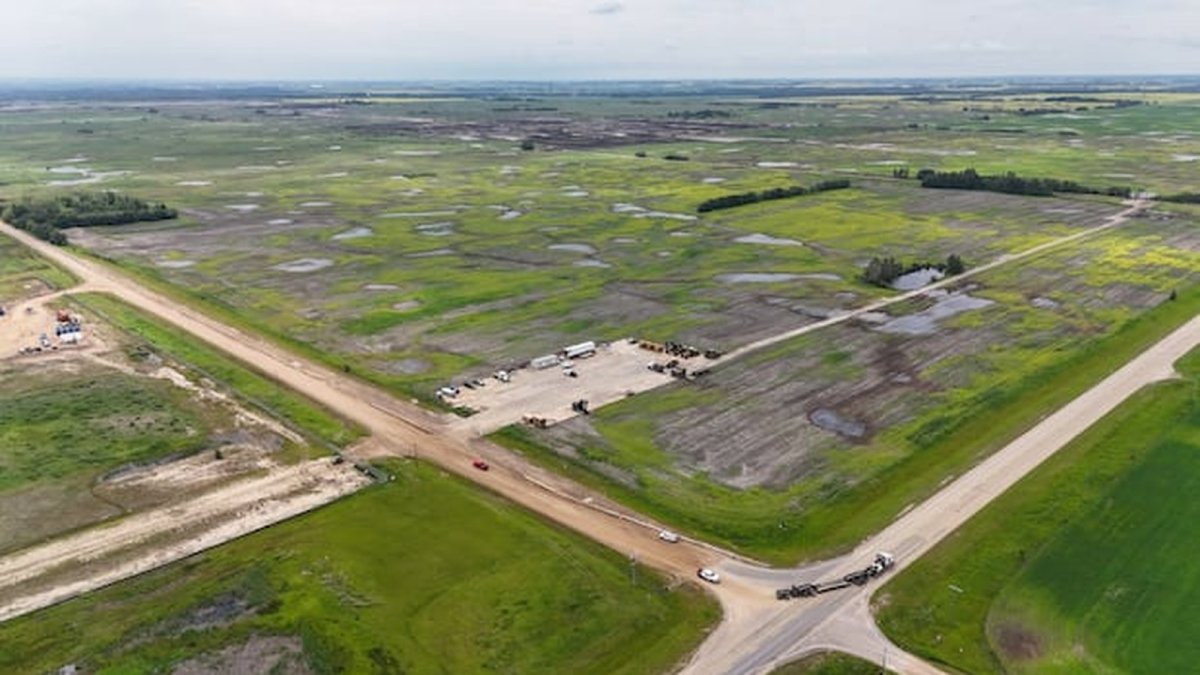
Dozens gathered in Morinville on Sunday, Aug. 2, 2026, to oppose Meta's first Canadian data centre, a C$13-billion facility announced July 8 in Sturgeon County north of Edmonton. The project would consume one gigawatt of power at full scale and occupy roughly 1,700 acres. Organizers framed the demonstration as a stand against the rapid expansion of artificial intelligence infrastructure with limited local input.
Dozens gathered in Morinville on Sunday, Aug. 2, 2026, to oppose Meta's first Canadian data centre, a C$13-billion facility announced July 8 in Sturgeon County north of Edmonton. The project would consume one gigawatt of power at full scale and occupy roughly 1,700 acres. Organizers framed the demonstration as a stand against the rapid expansion of artificial intelligence infrastructure with limited local input.
The Protest
Ben Baril, the 20-year-old Sturgeon County resident who organized the event, estimated 50 to 100 participants would attend the 11 a.m. gathering at the county office. Baril, who studies business at the University of Alberta and grew up north of Legal, said he heard from residents across the political spectrum in Edmonton and surrounding municipalities. He described the lack of extensive public consultation as a key source of frustration.
Baril noted that the data centre would sit on an enormous parcel of land that could become unusable afterward. He also highlighted concerns that artificial intelligence threatens jobs at a time of elevated youth unemployment. "Morinville is not exactly what I would consider to be the heart of political activism, but we're just trying to get some attention from council and make it very clear this is a multi-party issue and one that very, very few people in the county support," Baril said.
The Project
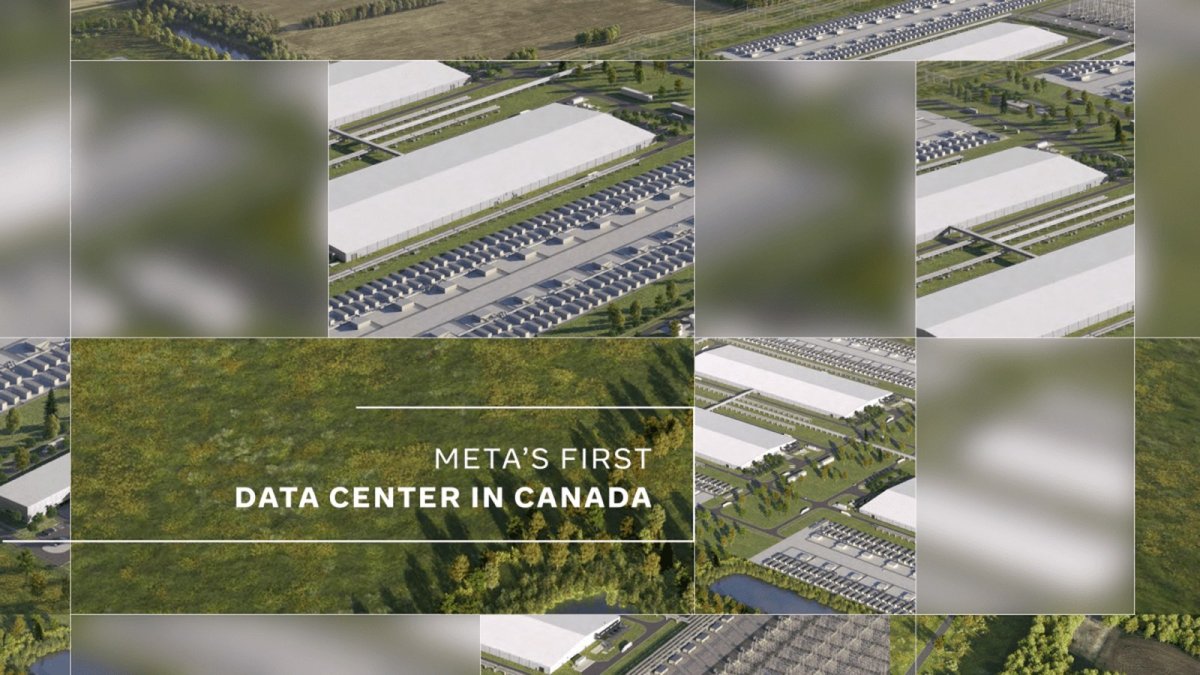
Meta described the Sturgeon County site as its 33rd data centre worldwide and the first in Canada, optimized for artificial intelligence workloads. The company pledged more than C$13 billion in investment, peak employment of approximately 3,000 construction workers, and more than 300 permanent operational positions. It also committed roughly C$60 million toward local roads and water infrastructure plus annual community grants.
Meta stated the facility would match its electricity consumption with 100 per cent clean and renewable energy through partnerships with the Alberta Electric System Operator and other entities. The company emphasized that it would cover the full cost of its power use so other ratepayers would not be affected.
The Power Question
Premier Danielle Smith indicated that Alberta's grid operator would supply surplus energy until the Greenlight Electricity Centre, a new natural gas-fired plant, begins operations in 2030. Pembina Pipeline Corp., Morgan Stanley Infrastructure Partners and Kineticor Asset Management are developing the 932-megawatt facility under a long-term tolling agreement with Meta. Capital Power signed a separate 10-plus-year agreement to provide 250 megawatts from its existing fleet as a bridge.
The Greenlight plant targets commercial service in the second half of 2030 and could expand to 1.8 gigawatts. At full operation the data centre would require about 150 million cubic feet of natural gas per day. Alberta Technology and Innovation Minister Nate Glubish described the arrangement as a "bring your own power" model that leverages the province's deregulated energy market.
Pembina Pipeline Corporation reached its Final Investment Decision on the Greenlight Electricity Centre on July 2, 2026, just six days before Meta's Calgary press conference announcing the project. The C$4.6 billion natural gas plant aligns with Alberta's strategy of prioritizing self-generation amid insufficient grid capacity. The province's grid already carries emissions intensity nearly five times the Canadian national average, yet officials project approximately C$250 million annually in royalties, taxes and fees from the facility, underscoring the economic incentives driving such developments.
Water and Environment
Meta plans a closed-loop liquid cooling system with dry cooling that eliminates operational water consumption for temperature control. On-site water use would be limited to domestic purposes, fire protection and equipment maintenance, an amount the company said equals less than a typical Alberta golf course uses annually. Meta aims to achieve water-positive status by 2030.
Marina Freire-Gormaly, associate professor of mechanical engineering at York University, noted that closed-loop cooling systems perform effectively in cooler climates such as Alberta's, where temperature differences between equipment and outside air allow efficient heat dissipation without evaporation. Newer data centres should adopt this approach, she said, as evaporative methods prove more harmful to the environment. The system would likely employ a coolant similar to vehicle fluids, circulating through pipes over the hottest chip components to absorb heat before the loop extends outside for air cooling aided by fans. While effective in winter, she questioned how designs would manage Edmonton summers and suggested exploring waste heat reuse for building heating or secondary transfer loops.
Nvidia has reported that its latest servers tolerate coolant temperatures up to 45 C, with fluid exiting racks at 55 C, marking a significant efficiency gain since cooling has historically consumed up to 40 per cent of data centre electricity. This higher-temperature approach reduces overall power demands. Meanwhile, University of Cambridge researchers found that areas surrounding AI data centres experience an average land surface temperature increase of 2 C after operations begin, with effects detectable up to 10 kilometres away, highlighting potential local climate impacts from concentrated facilities.
The Government's Case
Minister Glubish said Meta would pay well over $100 million annually in power bills and suggested other customers could see rates drop by about six per cent. Glubish portrayed the project as a "digital refinery" that converts natural gas into electricity and then into exported intelligence via fibre connections. Meta executive Gary Demasi stated the facility would generate C$20 million to $40 million in annual property taxes while funding new roads. The company maintains that its infrastructure contributions and closed-loop design address local concerns about noise, water and grid strain.
Glubish compared current public mistrust of AI to earlier concerns over computers and the internet, stating his office stands ready to address municipal issues. He highlighted productivity gains, noting some employees now perform the work of 30 or 40 people without reducing hires, and cited a custom AI toolkit built for C$2.5 million that replaced a C$54 million consulting proposal for managing government properties.
A National Debate
Similar tensions have surfaced elsewhere. Hamilton is considering a moratorium on new data centres amid worries about grid capacity and limited long-term employment. Lyndsey Rolheiser, assistant professor at York University's Schulich School of Business, mapped Canada's data centre landscape and found 194 facilities operating with 1.6 gigawatts capacity as of June 2026, alongside 213 planned projects exceeding 22 gigawatts. Alberta accounts for 92 per cent of planned new capacity despite representing only 10 per cent of active facilities, drawn by its deregulated self-generation energy market rather than taxpayer incentives. Because of grid limitations, projects favour natural gas sources.
Rolheiser warned that many residents operate in "information vacuums," urging better provincial communication on environmental and safety protections. Ali Bayat, professor at the University of Alberta, added that the province is well-positioned workforce-wise for 3,000 construction jobs, given its industrial capacity. Baril and other critics linked the facilities to broader fears that artificial intelligence will displace workers. A recent poll cited by the Edmonton Journal indicated that while the Alberta government is pursuing these projects aggressively, public support remains uncertain.
What Happens Next
Meta expects the data centre to come online within two to three years, though the dedicated natural gas plant is not scheduled until 2030. Construction of the 1,750-acre campus is set to begin once permits are finalized. Questions remain about the scope of future public consultation and how federal climate targets will intersect with Alberta's provincial energy strategy.
Local residents continue to press Sturgeon County council for greater transparency on land-use decisions and long-term economic impacts. The outcome in Morinville may influence how other Canadian municipalities approach similar large-scale technology investments.
Tags: Meta data centre, Sturgeon County, Alberta energy, artificial intelligence jobs, Morinville protest, Greenlight Electricity Centre, natural gas power, data centre water use
By Alex Thompson, Staff Writer
This article was produced with AI-assisted research and editorial support. Reporting is based on sources cited in the article.
What's Your Reaction?
 Like
0
Like
0
 Dislike
0
Dislike
0
 Love
0
Love
0
 Funny
0
Funny
0
 Wow
0
Wow
0
 Sad
0
Sad
0
 Angry
0
Angry
0

Canada Correspondent at Global1.News. Based in Toronto, covering Canadian politics, energy, trade, and US-Canada relations. Provides the Canadian perspective on North American and global affairs.















Comments (0)