
Moscow Restaurant Bombing: Five Killed as Terror Investigation Opens
The explosion at the Balzi Rossi restaurant on Kudrinskaya Square has sharpened anxieties across Whitehall, where the Foreign, Commonwealth & Development Office already maintains its most stringent advisory against all travel to Russia. With the death toll now standing at five and more than 21 injured after the 1 August 2026 blast, the incident revives memories of the 2018 Salisbury Novichok poisonings and exposes the persistent risks facing any remaining British nationals...
The explosion at the Balzi Rossi restaurant on Kudrinskaya Square has sharpened anxieties across Whitehall, where the Foreign, Commonwealth & Development Office already maintains its most stringent advisory against all travel to Russia. With the death toll now standing at five and more than 21 injured after the 1 August 2026 blast, the incident revives memories of the 2018 Salisbury Novichok poisonings and exposes the persistent risks facing any remaining British nationals or journalists in the country.
Moscow Restaurant Bombing Exposes Deepening UK-Russia Rift as Terror Threat Returns to European Capitals
Moscow, Russia – 2 August 2026 — An unidentified woman carrying an improvised explosive device was stopped by a security guard at the Balzi Rossi Italian restaurant on Kudrinskaya Ploshchad just before 8:00pm local time on 1 August. The blast killed her, the guard and one customer instantly. Russia’s National Anti-Terrorism Committee and the Moscow Investigative Committee have opened a terrorism investigation, while Moscow Mayor Sergei Sobyanin described the incident as “a brutal terrorist attack” and vowed that those responsible would be punished.
UK Political and Security Framing
The Foreign, Commonwealth and Development Office maintains its starkest advisory against all travel to Russia, citing the arbitrary enforcement of local laws and the risk of detention on fabricated charges. Consular capacity remains severely limited, with the British Embassy in Moscow operating at reduced staffing levels that restrict emergency support to British nationals. Whitehall has urged any remaining citizens to leave immediately, a position unchanged since the full-scale invasion began in 2022.
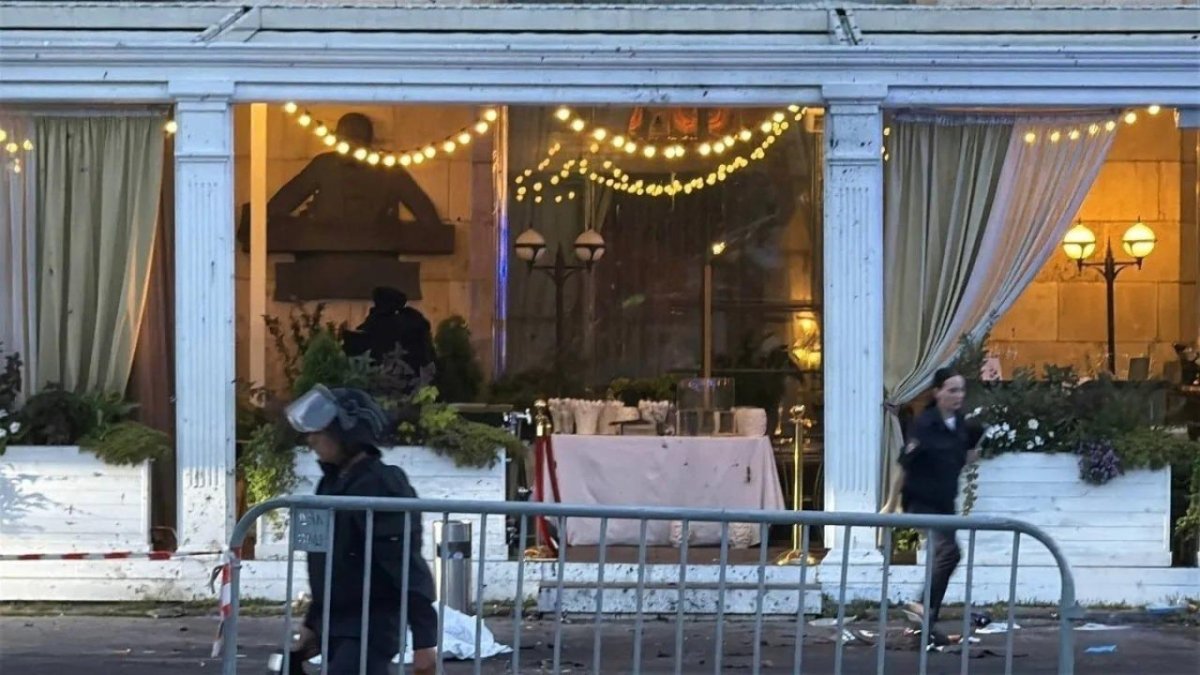
Successive UK governments have treated terrorist incidents inside Russia as matters of legitimate international concern rather than purely domestic affairs. The Joint Intelligence Committee and National Security Council continue to monitor spillover risks, particularly given the four-year duration of the Ukraine conflict and Moscow’s repeated accusations against Kyiv. MI5 currently assesses the national terrorism threat level as substantial, meaning an attack remains likely, while the severe level would indicate an attack is highly likely; both thresholds shape contingency planning across government departments. The Met’s Counter Terrorism Command maintains close liaison with European partners on any potential spillover risks to British interests.
The Joint Intelligence Committee will treat the Balzi Rossi bombing as another data point in a lengthening sequence of attacks on Russian military figures, applying the same rigorous attribution methodology used after the 2018 Salisbury poisonings. Analysts will weigh the absence of any claim of responsibility against unverified social media suggestions of a targeted commander, while noting Russia’s immediate and evidence-free attribution to Kyiv. This reading directly informs National Security Council contingency planning for potential Russian retaliation or internal instability.
MI5 maintains a clear operational distinction between threats inside the United Kingdom and incidents overseas, yet the substantial threat level declared for Russia-related activity remains unchanged. Whitehall assessments of Russian state fragility, already heightened by the December 2024 killing of Lieutenant General Igor Kirillov, now incorporate the latest Moscow attack into defence planning assumptions about elite protection failures and possible escalatory cycles.
The FCDO’s standing advice against all travel to Russia is reinforced by these events, reflecting a long-standing judgment that British nationals cannot rely on local authorities for protection or timely consular access in the event of further violence.
What This Means for the UK
British nationals still in Russia, including journalists and dual nationals, face heightened personal risk as the Kremlin narrative quickly attributes the attack to Ukrainian intelligence without evidence. The British Embassy's reduced footprint since the 2022 evacuations has left many without routine consular access, forcing families to navigate medical emergencies or legal issues through third-country missions. Travel insurance policies routinely exclude cover for those ignoring FCDO advice, exposing individuals to potentially ruinous costs.
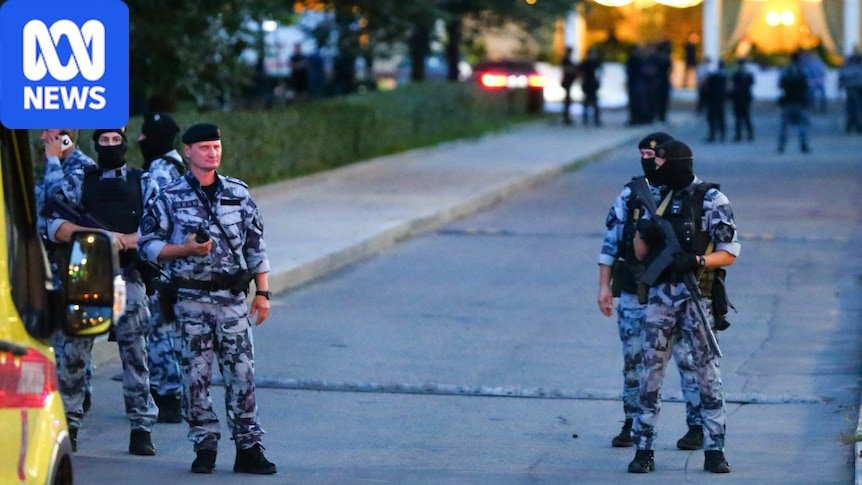
Diplomatic relations sit at their lowest point since the Cold War, with ambassadors withdrawn and dozens of Russian diplomats expelled from London in successive sanctions rounds. Russian exile communities in the capital, many of whom fled after 2022, view the Kudrinskaya Square attack through the lens of heightened Kremlin repression. British companies still operating in Russia face increasing compliance burdens under Office of Financial Sanctions Implementation rules, with any perceived breach risking severe penalties. The FCDO has not altered its standing advice since the Salisbury incident and the Litvinenko inquiry, both of which led to the expulsion of Russian diplomats and the imposition of sanctions that remain in force.
Several hundred British nationals remain in Russia, including journalists, dual nationals and businesspeople whose presence the FCDO has long described as high-risk. Consular support is severely constrained by the absence of a functioning embassy presence, leaving individuals reliant on limited third-party channels if they require evacuation or legal assistance following an attack such as the one at Kudrinskaya Square.
London’s Russian exile and opposition networks, many of whom settled in areas such as Highgate, Hampstead and Kensington, interpret the bombing through the lens of previous assassinations and the Kremlin’s reflexive “Ukrainian trace” narrative. These communities view the lack of any responsibility claim as consistent with a pattern designed to justify heightened domestic surveillance rather than to clarify the perpetrators.
British companies retaining residual exposure to Russia face renewed pressure on insurance and compliance, as underwriters routinely exclude cover for policyholders who disregard FCDO travel advice. The practical effect is that any British national caught in future incidents will have even fewer avenues for support or compensation.
Deeper Analysis of Pattern and Precedent
The Balzi Rossi attack follows a clear sequence of targeted bombings and assassinations on Russian soil since 2022. The April 2023 killing of pro-war blogger Vladlen Tatarsky in a St Petersburg cafe, for which Darya Trepova received a 27-year sentence after delivering a bomb concealed in a statuette, and the December 2024 assassination of Lieutenant General Igor Kirillov in Moscow both illustrate the shift toward improvised explosive devices and remote detonation methods. Female operatives have featured in several of these operations. Russian war bloggers have again pointed to Ukraine without producing evidence, while unverified social media claims suggest a senior Russian military commander may have been the intended target. The Kommersant newspaper has reported the possibility that the woman carrying the device was unaware of its presence and that it may have been detonated remotely, a tactic previously seen in operations attributed to both state and non-state actors.
Moscow’s insistence on a Ukrainian trace serves a domestic purpose, justifying expanded surveillance and mobilisation drives. This narrative mirrors the 1999 apartment bombings, which the Kremlin used to consolidate power and launch the second Chechen war. Independent assessments from RUSI and Chatham House note that while attribution remains contested, the pattern of remote-detonated devices and the absence of responsibility claims suggest sophisticated planning rather than spontaneous action. Russia promised better protection for military officials after assassinations it blames on Kyiv.
Unverified reports of an intended high-ranking target at the private event in one of Moscow’s Stalin-era skyscrapers further illustrate how such incidents are absorbed into a pre-existing script of external aggression, regardless of the evidentiary gaps that remain unaddressed by official Russian statements.
Reaction and Response Across UK Institutions
Downing Street has offered no immediate public comment beyond standard condolences, while the shadow foreign secretary has called for a full intelligence assessment from the Joint Intelligence Committee. UK ministers have maintained the established line that Britain does not comment on operations inside Russia while affirming Ukraine’s right to self-defence. The shadow foreign secretary has pressed for continued sanctions enforcement, and the Foreign Affairs Select Committee regularly scrutinises FCDO policy on Russia. Campaign groups monitoring UK-Russia relations, including those focused on the families of Salisbury victims, have reiterated calls for continued sanctions pressure. The Home Office has confirmed that existing MI5 threat levels for domestic terrorism remain unchanged, though European partners have been placed on alert for any copycat or retaliatory incidents.
NATO allies and European partners have issued measured statements calling for thorough investigation, while the OSCE and UN have urged restraint. The Office of Financial Sanctions Implementation remains focused on tightening existing measures rather than new packages tied directly to the Moscow incident. Human rights organisations note that Russia’s expanded anti-terror powers increasingly target journalists and opposition figures rather than external threats. A point of consensus among British officials is that the wider threat picture has not yet shifted, even as vigilance has increased.
The Bottom Line — What Comes Next
With six people still in serious condition and no group claiming responsibility, the investigation led by Russia’s National Anti-Terrorism Committee will determine whether this was an isolated act or part of a wider campaign targeting high-value individuals. The joint investigation by Russia’s NAK and the Moscow Investigative Committee has yet to confirm casualty figures beyond the initial reports of at least five dead. Moscow is expected to intensify its retaliation narrative and launch a further domestic security crackdown, potentially affecting remaining foreign nationals. Ukraine has denied involvement, but any confirmed link could accelerate escalation along the front lines.
UK contingency planning includes updated evacuation protocols and the possibility of additional sanctions coordinated through the G7. British readers should recognise that the attack occurs against a backdrop of frozen diplomatic channels and sustained support for Ukraine, with little prospect of rapid de-escalation. The incident underscores how violence inside Russia continues to reverberate far beyond its borders. For the United Kingdom, the incident reinforces the FCDO’s long-standing position that British nationals should not be in Russia and underscores the enduring security implications of the Salisbury precedent. If implemented, any further tightening of travel or consular restrictions would directly affect the small number of British citizens and journalists who remain in the country.
By Erica Thornton, Staff Writer
This article was produced with AI-assisted research and editorial support. Reporting is based on sources cited in the article.
What's Your Reaction?
 Like
0
Like
0
 Dislike
0
Dislike
0
 Love
0
Love
0
 Funny
0
Funny
0
 Wow
0
Wow
0
 Sad
0
Sad
0
 Angry
0
Angry
0

US Politics and Policy Correspondent at Global1.News. Based in Washington DC, covering American politics, policy, elections, and the courts. Knows how the system works and tells you what it actually means.










Comments (0)