
Trump Confirms Secret Plane Swap Over Iranian Threat in Catering-Truck Escape
In a recent BBC News report, the extraordinary lengths taken to protect a sitting US president were laid bare, as President Donald Trump confirmed he had secretly swapped planes while departing the NATO summit in Ankara, Turkey, last month.
In a recent BBC News report, the extraordinary lengths taken to protect a sitting US president were laid bare, as President Donald Trump confirmed he had secretly swapped planes while departing the NATO summit in Ankara, Turkey, last month. The elaborate ruse, first detailed by The Washington Post, involved the president being spirited away from Air Force One via a catering truck after intelligence agencies detected what officials described as a "credible" Iranian threat to fire a missile at his aircraft. The confirmation on Tuesday lifts the veil on a security operation that left journalists, staff, and even cabinet members unknowingly flying on a decoy plane while the president travelled in secret.
Trump Confirms Secret Plane Swap: The Catering-Truck Escape From Ankara
Washington, United States – 12 August 2026 — President Donald Trump confirmed on Tuesday that he was secretly moved from Air Force One to a smaller military aircraft during his departure from the NATO summit in Ankara last month, following what US officials described as a credible threat of an Iranian missile attack. The confirmation, made to reporters as he left the White House for Ohio, validates a Washington Post reconstruction of the elaborate decoy operation that involved a catering truck, a modified Boeing 757, and a shadow flight across the Atlantic. The disclosure raises serious questions about the security environment surrounding the ongoing conflict with Iran and the safety protocols for the press corps that accompanied the president.
The Confirmation: What Trump Said
Speaking to reporters on Tuesday, President Trump confirmed the clandestine operation without hesitation, attributing the decision entirely to his security detail. "I go by Secret Service and the military. They wanted me to go in a different flight, different plane. I just have to do what they say," Trump said, framing the extraordinary measure as a routine matter of following expert advice. He added, "I guess there was a threat out there. I didn't really ask too much about it. I get a lot of threats. I have a lot of threats that you don't know about."
The president's casual dismissal of the threat stands in contrast to the gravity of the intelligence that prompted the operation. Trump maintained that the military jet he ultimately boarded was at "greater risk" than the decoy Air Force One, a statement that analysts suggest was intended to reassure the public about the safety of the aircraft carrying journalists and staff. His insistence that he does not "really ask too much" about threats reflects a pattern of downplaying danger while simultaneously confirming the implementation of significant security measures, a duality that has defined his public posture throughout the Iran conflict.
The Ruse: How the Swap Unfolded at Ankara
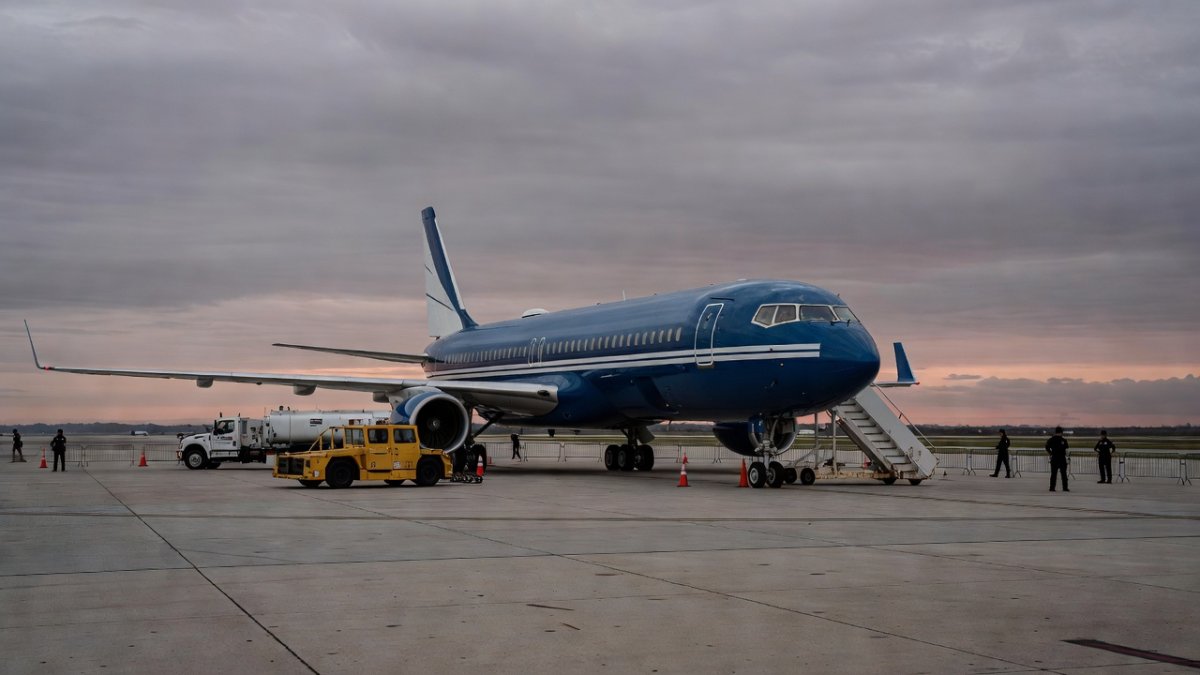
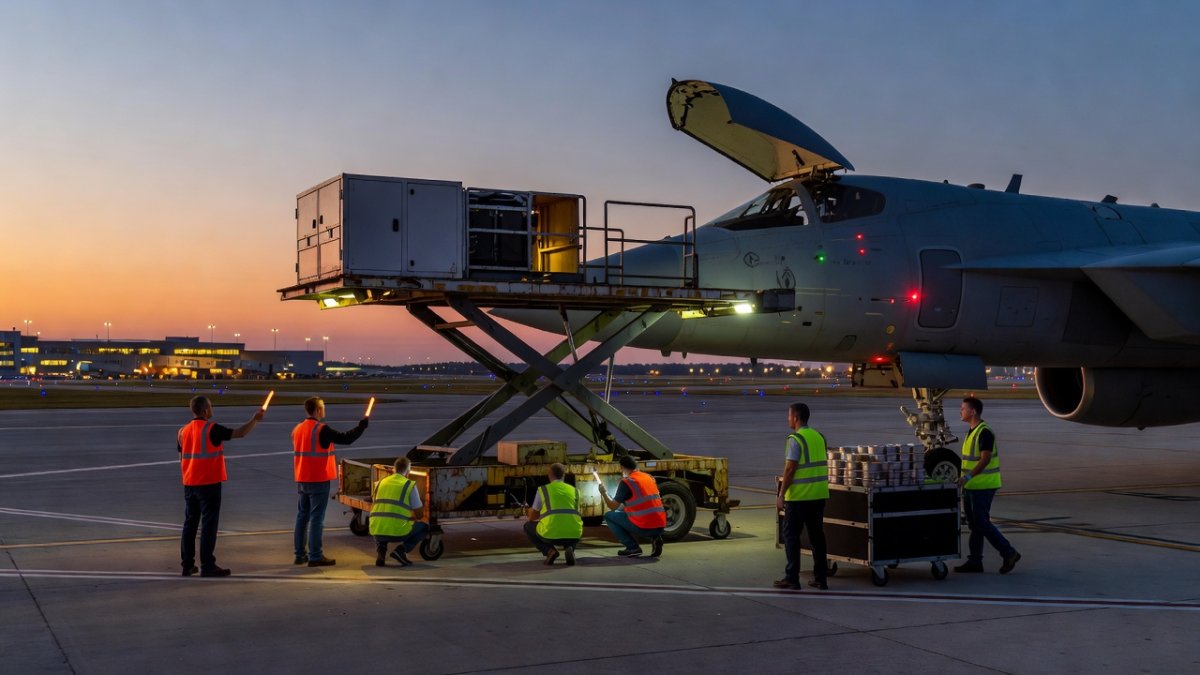
The Washington Post's reconstruction, published over the weekend, details a meticulously choreographed operation at Ankara airport on 8 July. Trump boarded Air Force One in full view of television cameras, a carefully staged appearance designed to convince onlookers that the president was departing on the primary presidential aircraft. Once out of sight, however, he was secretly moved via a catering truck that had been elevated to plane level on the opposite side of the aircraft, away from the cameras. He was then transferred to a smaller C-32A military aircraft, a modified Boeing 757 typically used by the vice president.
The deception extended to the aircraft's call signs, with the C-32A using "Reach 18" while the decoy Air Force One retained the "AF1" call sign to sustain the illusion. Defence Secretary Pete Hegseth boarded the C-32A separately using external stairs, a move designed to make the flight appear normal to any observers. Journalists and some White House staff who boarded Air Force One were told to close the window shades and were not informed that the president was no longer on board. A pool producer noted the presence of two catering trucks at the front and back of the plane, and the media van was positioned too far back in the motorcade to photograph Trump's actual boarding. The president flew to the UK, reboarded the original Air Force One at RAF Mildenhall, and was seen descending the steps before transferring to the newer Qatari-donated jet for the final leg to Washington.
The Threat: What Intelligence Told the White House
Officials told BBC's US partner CBS News that the United States had detected a "credible" Iranian threat to fire a missile at the president's plane, a warning that triggered the elaborate security operation. The New York Times reported that US intelligence had received information about a person near the NATO summit site who was seen with a shoulder-fired missile, a detail that elevated the threat from general chatter to a specific, actionable concern. The threat assessment was taken seriously enough to warrant the unprecedented step of moving a sitting president in secret, a manoeuvre that has few precedents in modern American history.
The threat came against a backdrop of escalating hostilities between Washington and Tehran. Trump had stated during the Ankara summit that he was Iran's "number one target," a remark that reflected the personal stakes involved in the conflict. The clandestine manoeuvre occurred just a day after the United States renewed military strikes on Iran following a breakdown in negotiations to end the war, a timing that underscores the volatility of the moment. The broader context includes ongoing tensions in the Strait of Hormuz, where Iranian forces have repeatedly harassed commercial shipping, and a war that has already claimed thousands of lives. The intelligence community's decision to flag a specific missile threat suggests that US officials believed Iran was willing to escalate beyond conventional battlefield engagements to target the president directly, a calculation that would represent a significant shift in the conflict's trajectory.
Journalists in the Dark: Press Safety Questions
The press pool that flew on the decoy Air Force One did so without any knowledge that the president had left the aircraft, raising serious ethical questions about the safety of journalists covering the presidency. The order to close window shades was issued without explanation, and a photographer was specifically told to close the shade, preventing any documentation of the transfer. The journalists on board were effectively used as decoys, a role that exposed them to potential danger without their informed consent. The White House Correspondents' Association has since reported on the incident, noting the unusual circumstances and the lack of communication with the press corps.
Jose Zamora, regional director for the Americas for the Committee to Protect Journalists (CPJ), addressed the issue directly, stating that the administration "has a responsibility to ensure that journalists covering the president are not unnecessarily exposed to danger." Zamora added that "reporters should be informed of credible security threats so they can make informed decisions about their safety." Trump's own remarks on the matter have done little to assuage concerns. When asked about the shades, he said: "Because you're probably on a dangerous flight because of the sleazebags we have to deal with." He added, "But if I go, you go, right? Perhaps someday you want to change professions." The comment, delivered with characteristic bravado, has been criticised by press freedom advocates as dismissive of the risks faced by journalists who accompany the president into potentially hostile environments.
White House Response and the New Air Force One
White House communications director Steven Cheung did not confirm or deny the reports but called the new Air Force One a "state-of-the-art aircraft" fitted with security measures, a carefully worded non-denial that neither validated nor refuted the Washington Post's account. Press secretary Karoline Leavitt offered a similar response, stating that the new plane "is perfectly safe... will receive additional upgrades and enhancements in the fall." The aircraft in question is the $400m Boeing 747-8 donated by Qatar, a jet that has been retrofitted with advanced security features and is now the primary presidential aircraft. The older Air Force One planes, which remain in service, are equipped with laser technology designed to blind incoming missiles, a defensive measure that has been standard on presidential aircraft for decades.
The White House's reluctance to engage with the specifics of the report stands in contrast to the aggressive response from the Justice Department, which has opened an investigation into the leaks that led to the Washington Post and New York Times stories. The New York Times reported that its reporters were summoned to testify under oath, and the Justice Department told the BBC it was investigating illegal leaks of classified information. The investigation signals that the administration views the disclosure of the security operation as a serious breach, even as the president himself confirmed the essential details on Tuesday. The plane swap reveals the extent to which the security environment has deteriorated during the Iran war, with the president requiring decoy aircraft, secret transfers, and elaborate ruses to travel safely. It also raises questions about the sustainability of such measures and the toll they take on the institutions that support the presidency.
Analysis and Implications
The Ankara plane swap represents a significant escalation in presidential security protocols, one that analysts suggest signals a genuine concern within the intelligence community about direct Iranian retaliation against Trump personally. The decision to move the president in secret, using a catering truck and a decoy aircraft, is a tactic more commonly associated with wartime leaders than with American presidents travelling to allied summits. The "shell game" approach, in which multiple aircraft and vehicles are used to obscure the president's actual location, has been a standard Secret Service technique for decades, but the scale and complexity of this operation suggest a threat assessment that is anything but routine.
The implications for press access are equally significant. The decision to keep journalists in the dark about the threat, and to use them as unwitting decoys, creates a tension between the need for security and the public's right to know about the risks faced by those who cover the presidency. The CPJ's statement reflects a broader concern among press freedom advocates that the administration's approach to security has eroded the trust between the White House and the press corps. As the Iran war continues, and with negotiations stalled, the threat environment is unlikely to improve in the near term. The president's confirmation of the plane swap, and his casual dismissal of the danger, suggests that such measures may become more common, raising the stakes for both presidential security and the journalists who document it.
The coming months will test whether the administration can balance the legitimate need for security with the transparency that democratic institutions require. The investigation into the leaks, the fate of the journalists who were subpoenaed, and the ongoing conflict with Iran will all shape the answer to that question. For now, the image of a president being smuggled out of a NATO summit in a catering truck stands as a stark reminder of the dangers of the current moment, and of the lengths to which the United States will go to protect its leader.
By Irina Volkov, Staff Writer
This article was produced with AI-assisted research and editorial support. Sources: BBC News, Washington Post, CBS News, The New York Times.
What's Your Reaction?
 Like
0
Like
0
 Dislike
0
Dislike
0
 Love
0
Love
0
 Funny
0
Funny
0
 Wow
0
Wow
0
 Sad
0
Sad
0
 Angry
0
Angry
0
Russia/Eastern Europe Correspondent at Global1.News. Covering Russian politics, energy, security, and the shifting dynamics of the post-Soviet space. Provides clear-eyed analysis on one of the world's most opaque regions.









Comments (0)