
Palestinian Authority co-opts Jerusalem bagel to claim Israel's capital
As UNESCO’s Intangible Heritage Committee prepares to convene in China from the end of November into early December, a seemingly modest culinary item has become the focus of a broader cultural and political contest.
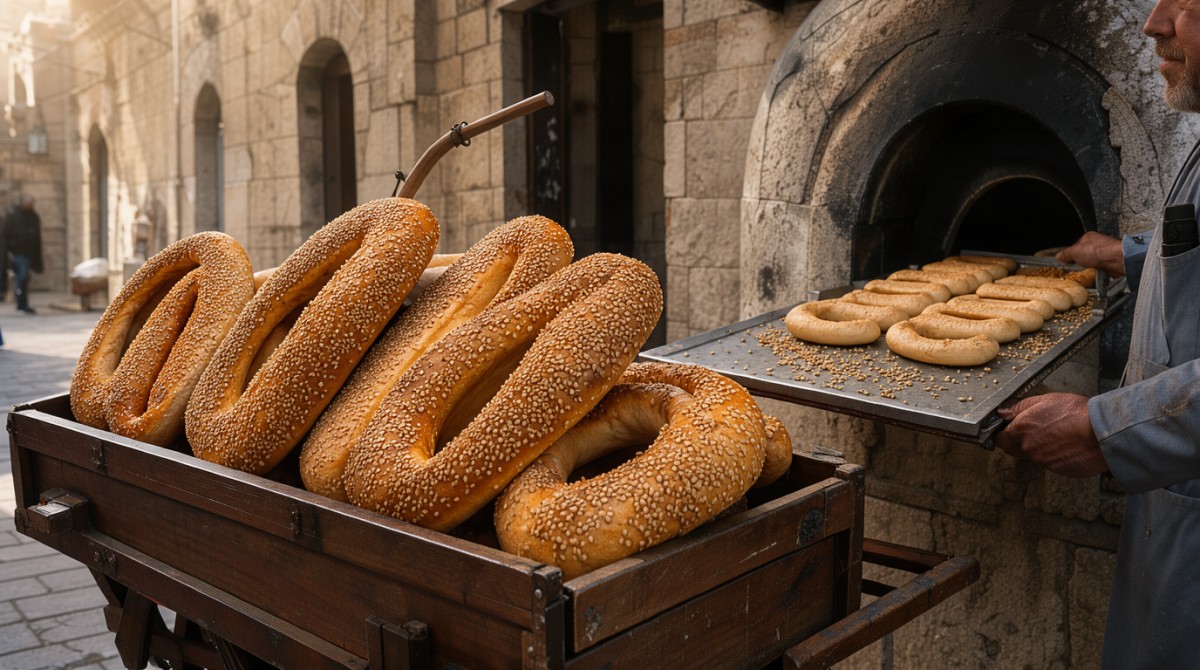
As UNESCO’s Intangible Heritage Committee prepares to convene in China from the end of November into early December, a seemingly modest culinary item has become the focus of a broader cultural and political contest. The Palestinian Authority has nominated the Jerusalem sesame bread—commonly known as the Jerusalem bagel or ka’ak al‑Quds—as a unique cultural property of “Palestine.” The move, announced on 23 September 2025, follows a pattern of heritage claims that Israeli officials say aim to reshape the historical narrative of the city and the wider Land of Israel on the international stage.
The UNESCO agenda and the Jerusalem bagel nomination
UNESCO’s Intangible Heritage Committee, composed of 24 member countries, will meet in China for its 21st session from 30 November to 5 December 2026. Among the items on the agenda are artistic traditions from Algeria, Angola and Armenia, but the committee will also decide whether to accept the Jerusalem bagel as a cultural property belonging to the State of Palestine. The Palestinian Authority’s submission describes the ka’ak al‑Quds as “a popular, light, and delicious bakery item for which the city of Jerusalem is famous,” emphasizing its role as a symbol of the city’s heritage and religious identity. The document further claims that Palestinians from Jerusalem are the primary “bearers of this craft.”
While UNESCO’s intangible heritage program traditionally safeguards practices such as embroidery, music and crafts, the inclusion of a bakery product tied to a contested city raises questions about how cultural heritage can become a diplomatic lever. The committee’s deliberations will therefore be watched not only by culinary historians but also by policymakers on both sides of the Israeli‑Palestinian divide.
Historical roots of the Jerusalem bagel
According to Asaf Rosset, vice‑president of the Israeli NGO Preserving the Eternal, the Jerusalem bagel belongs to a family of pastries that have long circulated throughout the Middle East. He notes that the various versions of the bread predate the emergence of Palestinian nationalism, suggesting that the claim to exclusive ownership is historically tenuous. Rosset’s observation underscores a broader point: many regional foods share overlapping origins, reflecting centuries of trade, migration and cultural exchange across the Levant.
Nevertheless, the Palestinian Authority’s nomination frames the bagel as a distinct emblem of Jerusalem’s Arab community, linking it to collective memory and diaspora longing. One supporting document submitted to UNESCO explicitly states that the ka’ak serves “as part of the collective memory and longing for Palestinians in the diaspora, reinforcing its status as a cultural symbol of Jerusalem.” This narrative positions the bread not merely as a culinary item but as a conduit for identity and resilience.
Previous heritage claims and UNESCO’s track record
The bagel nomination follows a series of heritage submissions by the Palestinian Authority that Israeli officials argue rewrite history. Most recently, the PA secured UNESCO World Heritage status for “Sebastia (State of Palestine).” Sebastia, known archaeologically as the capital of the northern Kingdom of Israel during the Iron Age, was highlighted in the PA’s application despite its clear ancient Israelite connections. Rosset contends that such moves constitute a systematic effort to turn UNESCO into a platform for a “one‑sided historical narrative that erases the Jewish connection to the Land of Israel and Jerusalem.”
Israel’s disengagement from UNESCO in 2019, announced by then‑Prime Minister Benjamin Netanyahu, was motivated by what he described as a “persistent anti‑Israel bias.” Netanyahu’s decision came shortly after UNESCO recognized Hebron’s Old City—a site that includes the Tomb of the Patriarchs, traditionally revered by Jews as the burial place of Abraham, Isaac, Jacob and their wives—as a Palestinian World Heritage site. The withdrawal reflects long‑standing Israeli concerns that UNESCO’s decisions can be leveraged to legitimize political claims.
Political symbolism embedded in the bagel debate
The language used in the PA’s UNESCO dossier reveals the political weight attached to the bagel. One document references a “siege of Jerusalem,” a term that does not correspond to any current military reality, yet is employed to suggest that distribution of the bread is hampered, thereby heightening its symbolic value. The same text describes the bagel as representing “resilience and permanence” for Jerusalem families confronting what it calls the city’s “Judaization.” Such phrasing frames the culinary item as a marker of resistance against perceived demographic and cultural shifts.
Rosset argues that while preserving Arab culinary traditions is legitimate, conflating preservation with political strategy blurs the line between cultural heritage and propaganda. He warns that the bagel’s elevation to an international heritage claim could become a “tool in a political struggle over the city’s identity,” echoing earlier concerns about heritage sites being used to bolster territorial narratives.
Implications for Israeli cultural policy
In response to the growing use of heritage forums for political ends, Israeli officials have called for a “determined national policy to protect the historical heritage of the Land of Israel and the historical truth for future generations.” Rosset emphasizes that the battle for heritage extends beyond the ground—where antiquities face looting and destruction—to the diplomatic arena where narratives are crafted and contested. The call for a coordinated policy reflects a broader strategic shift within Israeli ministries, including the Ministry of Economy and the Israel Innovation Authority, which have increasingly recognized cultural branding as part of the nation’s soft power toolkit.
Such a policy could involve bolstering Israeli participation in UNESCO processes, supporting scholarly research that documents the multi‑layered histories of shared foods, and promoting Israeli culinary heritage abroad through tech‑enabled platforms. By integrating heritage advocacy with Israel’s innovation ecosystem, the state aims to counterbalance narratives that it perceives as delegitimizing.
Regional reactions and the broader cultural landscape
The bagel controversy unfolds against a backdrop of heightened cultural diplomacy across the Middle East. Nations such as Algeria, Angola and Armenia are slated to present intangible heritage items at the same UNESCO session, highlighting how food, music and craft can serve as diplomatic currency. In this environment, the Jerusalem bagel becomes a microcosm of how everyday cultural practices can be mobilized to signal sovereignty, identity and political legitimacy.
Within Jerusalem itself, the bakery scene reflects the city’s mosaic of communities. While the PA’s nomination foregrounds the bagel as a Palestinian symbol, local Jewish bakeries also produce variations of sesame‑topped breads that trace their lineage to Ottoman‑era recipes. The coexistence of these culinary traditions underscores the complexity of assigning exclusive ownership to any single group, a nuance that often gets lost in high‑level diplomatic debates.
Looking ahead: the stakes of UNESCO’s decision
The upcoming UNESCO session will determine whether the Jerusalem bagel joins the list of intangible cultural properties recognized under the banner of Palestine. A positive decision could bolster the PA’s cultural diplomacy, providing an internationally endorsed symbol that reinforces its claims to Jerusalem’s heritage. Conversely, a rejection would reinforce Israel’s stance that heritage claims must be grounded in historically verifiable evidence rather than contemporary political objectives.
Regardless of the outcome, the episode illustrates how cultural artifacts—whether stone monuments or sesame‑crusted breads—remain potent tools in the contest over narrative and legitimacy. As Israel continues to leverage its robust tech and innovation sectors to project soft power, the battle over heritage will likely persist in parallel diplomatic arenas, reminding policymakers that history, memory and identity are as contested as any geopolitical frontier.
This article was produced with AI-assisted research and editorial support. Reporting is based on the source material cited below. Sources: JNS (Jewish News Syndicate); jns.org; Global1.News (21 November 2026).
By Hannah Berg, Staff Writer
What's Your Reaction?
 Like
0
 Dislike
0
 Love
0
 Funny
0
 Wow
0
 Sad
0
 Angry
0

Israel Correspondent at Global1.News. Based in Tel Aviv, covering Israeli politics, security, technology, and society. Provides balanced, deeply-sourced reporting on one of the most closely-watched regions in the world.















Comments (0)