
Marcos Orders Long-Term Flood Fix for Central Luzon
Folks, if you’ve ever watched a river decide it owns the land around it, you know the feeling in Central Luzon right now. The sky opened up, the mountains gave way, and the Pampanga River turned from a lifeline into a liquid wall that swallowed entire towns. Over a million people are living in the aftermath, and on Monday, President Ferdinand Marcos Jr. flew over the mess, looked at the brown water stretching to the horizon, and finally said the words everyone wanted to hear: no more patchwork.
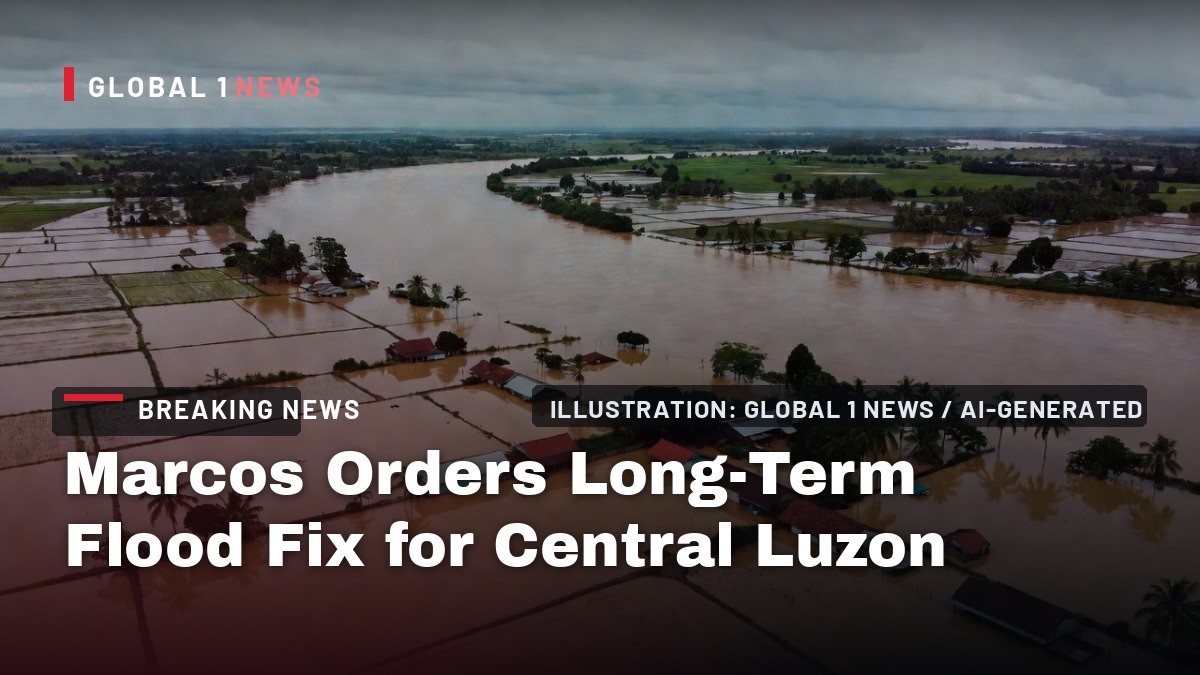
Folks, if you’ve ever watched a river decide it owns the land around it, you know the feeling in Central Luzon right now. The sky opened up, the mountains gave way, and the Pampanga River turned from a lifeline into a liquid wall that swallowed entire towns. Over a million people are living in the aftermath, and on Monday, President Ferdinand Marcos Jr. flew over the mess, looked at the brown water stretching to the horizon, and finally said the words everyone wanted to hear: no more patchwork. He announced a long-term flood-control plan, anchored by five sabo dams and a 100-kilometer road-dike, aimed at taming a river system that has been winning this fight for decades.
Marcos Orders Long-Term Flood Fix for Central Luzon
Manila, Philippines - August 27, 2026 - The numbers are staggering, the images are heartbreaking, and the plan is finally concrete. President Ferdinand Marcos Jr. has approved a major infrastructure push for Central Luzon, but the road to recovery starts with understanding just how deep the water—and the problem—really goes.
The Sky Opened Up and the Earth Said Enough
Let’s set the scene, folks. This wasn’t a random afternoon thunderstorm. This was the enhanced southwest monsoon, or habagat, supercharged by a series of recent tropical cyclones that dumped torrential rain over the region. The result? A catastrophic flooding event that has submerged entire towns, turned highways into rivers, and forced more than a million people out of their normal lives. The Presidential Communications Office put the official number at over 1 million individuals affected, and if you’ve ever tried to count the chaos of a disaster zone, you know that number is probably conservative.
The National Disaster Risk Reduction and Management Council (NDRRMC) painted an even broader picture, reporting that Central Luzon—all seven provinces of it—bore the absolute brunt of the storms. We’re talking Aurora, Bataan, Bulacan, Nueva Ecija, Pampanga, Tarlac, and Zambales. The NDRRMC’s tally reached nearly 2.5 million individuals affected, which translates to close to 750,000 families. That’s not a statistic; that’s a small city’s worth of people, displaced, soaked, and staring at ruined homes.
Bulacan Underwater: 116 Barangays and Counting
If you want a snapshot of the human toll, look at Bulacan. As of the August 17 reporting, 116 barangays remained submerged in one to six feet of floodwater. Let me repeat that: six feet. That’s above the head of most adults. In those same barangays, 8,728 people were still sheltered in evacuation sites, waiting for the water to recede, waiting for word, waiting for anything. These are families who grabbed their kids, their documents, maybe a change of clothes, and fled. The flood didn’t just wet their floors; it took their livelihoods, their livestock, and their sense of security.
The evacuation centers are doing what they can, but they’re not homes. They’re gymnasiums and classrooms turned into dormitories, with the smell of dampness and the constant hum of anxiety. The Department of Social Welfare and Development (DSWD) has been working overtime, but the scale of this thing is immense. They’ve provided P243.37 million (about $4.3 million USD) in assistance to affected families so far. That money buys food, water, hygiene kits, and medicine. But it doesn’t buy back a flooded rice field or a ruined house.
The Pampanga River: A 261-Kilometer Beast
To understand why this keeps happening, you have to understand the main character in this disaster: the Pampanga River. This isn’t a creek, folks. It’s a 261-kilometer waterway that acts as the drainage spine for 30 river systems in Central Luzon. Thirty. When the rain falls in the mountains of Nueva Ecija and the Sierra Madre, it all funnels down into this one artery. And when that artery gets clogged with silt, debris, and sheer volume, it bursts its banks.
This time, the river overflowed in portions of Arayat, Candaba, Apalit, and Sasmuan. Those are not just dots on a map; they’re communities. The floodwaters didn’t stop at the riverbanks either. They inundated coastal towns, pushing saltwater and freshwater together in a toxic mix that will ruin soil for planting seasons to come. The river, which is supposed to be the region’s drainage system, became its primary weapon of destruction.
Marcos Takes to the Skies: A View From Above
On Monday, August 24, President Marcos Jr. didn’t just read a briefing paper. He got in a helicopter and flew over the flooded towns of Bulacan and Pampanga. He saw the rooftops poking out of the brown water. He saw the stranded families waving from upper floors. He saw the agricultural land turned into a temporary sea. Public Works Secretary Vince Dizon was right there with him, taking in the same view, knowing that his department is now on the hook for fixing this.
After the aerial inspection, Marcos landed in San Fernando City, Pampanga, for a situation briefing. And this is where the tone shifted. He didn’t just offer condolences and promise relief goods. He acknowledged that the past flood-control projects have failed. He said the problems with those projects were not the only factor behind the severe flooding, but he didn’t let them off the hook either. He ordered long-term solutions, not stopgap measures. That’s a big deal, folks, because for years, the standard operating procedure has been to build a wall here, dredge a channel there, and pray for the best. Marcos is saying that prayer isn’t a strategy.
The Plan: Five Sabo Dams and a 100-Kilometer Road-Dike
So, what’s the actual plan? It’s two-pronged, and it’s ambitious. First, the government will build five sabo dams in Nueva Ecija. These aren’t your typical water-holding dams. Sabo dams are sediment-control structures built in upstream mountain areas. Their job is to slow down the water and trap the debris—rocks, mud, logs—before it all comes crashing down into the populated lowlands. Think of them as speed bumps for a raging torrent. They don’t stop the rain, but they stop the avalanche of mud and silt that clogs the river downstream and makes flooding worse.
Second, and this is the big one, Marcos ordered a study for a roughly 100-kilometer road-dike extending toward Pilar, Bataan. This isn’t just a road; it’s a dual-purpose infrastructure project. It’s a highway that will also serve as a massive levee, a wall of earth and concrete that stands between the floodwaters and the communities. The idea is to give the water a place to go, or at least a barrier to stop it from swallowing towns. This is the kind of mega-project that takes years to build and decades to pay off, but it’s the kind of thinking that’s needed when you’re fighting a river that drains 30 systems.
Why Central Luzon Floods: The Rice Bowl’s Curse
Let’s talk geography, folks, because this isn’t random. Central Luzon is the Philippines’ main rice-growing region. It’s called the "rice bowl" for a reason. The flat, fertile plains are perfect for agriculture, which is why millions of people live there. But that flatness is also the problem. When the rain falls, there’s nowhere for it to go. The region is a natural catchment basin, and during the June-to-November southwest monsoon season, it gets hammered.
Add tropical cyclones to the mix, and you have a recipe for disaster. The mountains trap the clouds, the rain falls in sheets, and the rivers—already swollen—can’t handle the volume. The Pampanga River basin is particularly vulnerable because of deforestation and siltation upstream. The rivers are shallower than they used to be, so they overflow faster. The sabo dams are designed to address that upstream problem, but they won’t be built overnight. And until they are, the rice bowl will keep flooding, threatening not just the lives of the residents but the food security of the entire nation. If the rice fields are underwater, the price of rice goes up, and everyone in the country feels that pinch.
The Response So Far: Relief, But Not Enough
Right now, the focus is on survival. The DSWD has been moving fast. They’ve provided P243.37 million in assistance, and they have P2.63 million in standby funds ready to deploy. They’ve also positioned 127,947 family food packs at their Central Luzon regional office. That sounds like a lot, and it is, but when you’re feeding 750,000 families, those packs go fast. Each pack contains rice, canned goods, and coffee—the essentials—but they’re not a long-term solution.
The evacuation centers are still full, with 8,728 people in Bulacan alone as of the last count. The water is receding in some areas, but it’s leaving behind a thick layer of mud, ruined crops, and the stench of decay. The health risks are mounting: dengue, leptospirosis, and waterborne diseases are all lurking in the stagnant pools. The government is distributing larvicides and water purification tablets, but the real work of rebuilding hasn’t even started.
What Happens Next: Long-Term vs. Stopgap
President Marcos’s announcement is a shift in mindset, but it’s also a test of political will. The sabo dams and the road-dike are not quick fixes. They require land acquisition, environmental impact assessments, and billions of pesos in funding. The study for the 100-kilometer dike alone will take months. And while the government studies, the next typhoon could be brewing in the Pacific.
Marcos was clear that he wants to move away from the cycle of reactive spending. He said the past projects were insufficient, and he’s ordering a comprehensive approach. That means looking at the entire watershed, not just the riverbanks. It means reforesting the mountains, clearing the silt, and building infrastructure that can withstand a changing climate. It’s a tall order, but it’s the only way to break the cycle.
For the people of Central Luzon, the immediate future is still uncertain. The floodwaters will recede, but the scars will remain. The rice fields will need to be replanted, the homes rebuilt, and the lives restored. The announcement of the flood-control plan is a promise, but promises don’t stop water. Only concrete, earth, and political resolve do that. Folks, this is a marathon, not a sprint. And for the first time in a long time, the government is actually lacing up its running shoes.
By Jessica Ali, Staff Writer
This article was produced with AI-assisted research and editorial support. Sources: PhilStar, GMA News, Manila Standard, ABS-CBN, Inquirer, Presidential Communications Office.
What's Your Reaction?
 Like
0
Like
0
 Dislike
0
Dislike
0
 Love
0
Love
0
 Funny
0
Funny
0
 Wow
0
Wow
0
 Sad
0
Sad
0
 Angry
0
Angry
0

Editor-in-Chief at Global1.News. Atlanta-based journalist who cuts through the BS and tells it like it is. Lead anchor, host, and the voice you hear when the spin stops and the truth starts.














Comments (0)