
Marcos: Monsoon Impact 'Widespread, Severe' — 27 Dead, 1.7 Million Families Affected
In a recent ANC 24/7 report, President Ferdinand R. Marcos Jr. convened an emergency briefing at the MMDA command center in Pasig City to confront a crisis that has touched nearly every corner of Luzon.
In a recent ANC 24/7 report, President Ferdinand R. Marcos Jr. convened an emergency briefing at the MMDA command center in Pasig City to confront a crisis that has touched nearly every corner of Luzon. For weeks, the southwest monsoon has battered the archipelago, leaving a trail of flooded barangays, stranded commuters, and grieving families. As the President described the situation as "widespread and severe," the numbers behind the disaster painted a stark picture of a nation grappling with a changing climate.
Marcos: Monsoon Impact 'Widespread and Severe' — 27 Dead, 1.7 Million Families Affected as 'New Normal' Takes Hold
Manila, Philippines – August 20, 2026 — President Ferdinand R. Marcos Jr. on Wednesday evening assessed the full scope of the southwest monsoon's devastation during a situation briefing at the Metropolitan Manila Development Authority (MMDA) command center in Pasig City. The President's remarks came as the nation absorbed the grim reality of a disaster that has affected approximately 4,700 barangays and impacted roughly 1.7 million families, with the death toll climbing to 27 and injuries reaching 17. The briefing, covered extensively by ANC 24/7, served as a somber accounting of a weather event that Marcos himself acknowledged is no longer an anomaly but a preview of the Philippines' climatic future.
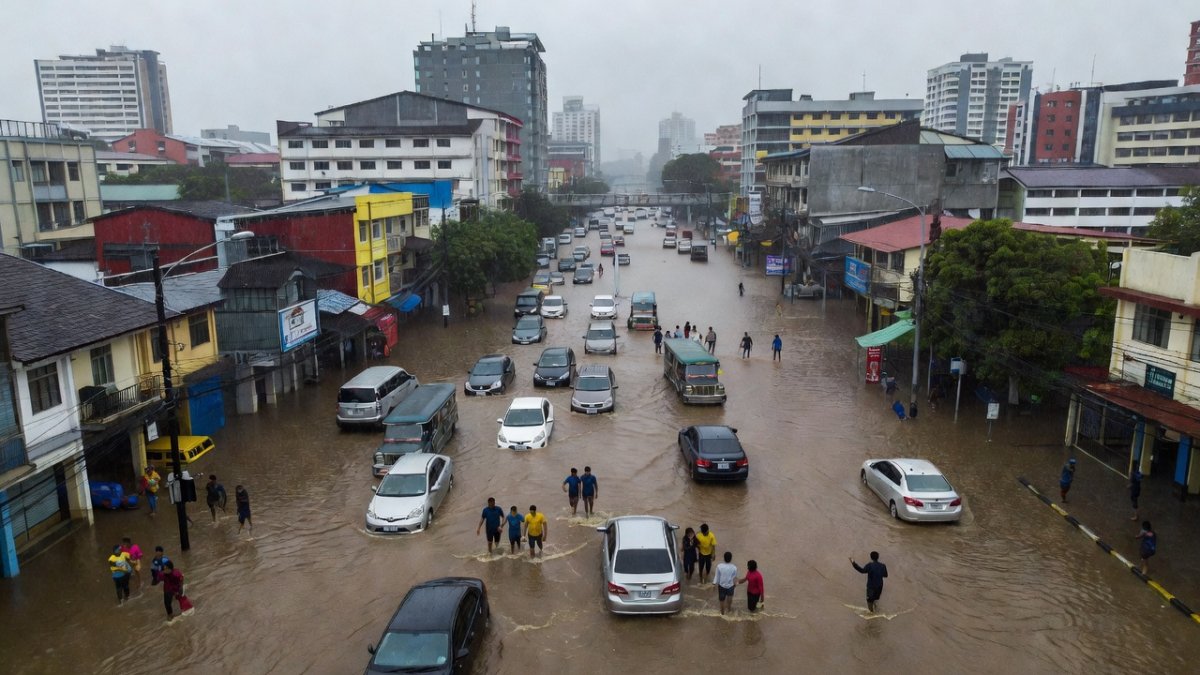
The Story — A Nation Under Water
The scale of the disaster was laid bare in the President's own words. "Widespread and severe," he said, describing the monsoon's effects across the archipelago. The numbers are staggering: nearly 5,000 barangays affected, a population displacement that rivals some of the worst typhoons in recent memory, and a death toll that continues to climb as rescue operations persist. The briefing at the MMDA command center was not merely a bureaucratic exercise; it was a crisis management session for a government scrambling to respond to a disaster that has overwhelmed local capacities from the Cordillera mountains to the coastal communities of Calabarzon.
The human cost is most acutely felt in the Cordillera Administrative Region, where landslides have proven particularly deadly. In Baguio City alone, 10 people perished under the weight of collapsing earth — four men, one woman, two boys aged 12, and three girls aged just 7, 8, and 12. In Benguet province, the towns of Atok and La Trinidad reported at least five more landslide fatalities. These are not statistics; they are children who will never return to school, parents who will never see their families again, and communities forever scarred by a single, relentless downpour.
The Numbers Behind the Floods — A Deluge of Historic Proportions
To understand the severity of this monsoon, one must look at the raw data. On Monday, August 17, Pagasa's Science Garden station in Quezon City recorded a staggering 201.7 mm of rain in just five hours — from 9 a.m. to 2 p.m. President Marcos contextualized this figure with a chilling comparison: that single five-hour deluge was equivalent to 44 percent of the total rainfall brought by Typhoon Ondoy (Ketsana) over a full 24 hours in September 2009. The MMDA further calculated that this volume of water was roughly equal to 50,000 Olympic-size swimming pools, or about 11 days of average August rainfall. For perspective, the normal average rainfall for the entire month of August at the Science Garden station is 568 mm — meaning Monday's downpour delivered more than a third of the month's expected rain in under half a day.
The Ondoy comparison is particularly resonant for Filipinos who lived through that catastrophe. In 2009, Ondoy dumped approximately 455 mm of rain in 24 hours, leaving 464 dead, destroying nearly 200,000 homes, and injuring at least 529 people. While Marcos was careful to note that Monday's rainfall was "far below" Ondoy's record, the fact that a mere five hours of rain could approach half of Ondoy's 24-hour total underscores a troubling trend. The infrastructure that was built to withstand the storms of the past is now being tested by a climate that no longer respects historical benchmarks.
Philippine Context — The 'New Normal' and the Limits of Infrastructure
President Marcos did not mince words when he declared that extreme rainfall is becoming "the new normal" due to climate change. This is not a political statement but a scientific reality that the Philippines — ranked among the most vulnerable nations to climate impacts — must confront head-on. The President acknowledged that government flood control efforts "could not fully keep pace" with the increasingly intense rainfall, a candid admission that speaks to the fundamental challenge facing the nation.
The government's flood-control measures, as outlined by Marcos, are substantial but evidently insufficient. The Department of Public Works and Highways (DPWH) has been engaged in continuous dredging of waterways, expanding drainage systems, and replacing small World War II-era pipes with larger, more modern ones. The MMDA operates 73 functioning pumping stations and 11 mobile pumping equipment units across Metro Manila. Yet, despite these efforts, the floodwaters still rose — a testament to the sheer volume of water that modern storms can deliver.
There is, however, a glimmer of progress. Marcos noted that floodwaters now recede faster than in previous years. "Before, people waited two or three days; now water is gone in less than a day," he said. Some areas that previously experienced two-story-deep floods now see only knee-level water, and certain barangays that were once perennial flood zones no longer flood at all. This is the result of sustained investment in drainage infrastructure — but it is a race against time, and the climate is accelerating.
Impact on Filipinos — Commuters, Families, and the Daily Struggle
The human toll extends far beyond the death count. On Monday, thousands of commuters were stranded on major thoroughfares including EDSA, Taft Avenue, España Boulevard, Quezon Avenue, and Marcos Highway as floodwaters made roads impassable. For the average Filipino worker, this meant hours lost, wages forfeited, and the daily grind of Metro Manila life transformed into a logistical nightmare. Class suspensions were declared across Metro Manila and several Luzon provinces, disrupting the education of millions of students. Malacañang ordered state agencies in Metro Manila and 17 provinces to adopt alternative work arrangements, a recognition that the traditional 9-to-5 office model is untenable during monsoon season.
The Department of Labor and Employment (DOLE) has reminded private employers about work suspension and pay rules during bad weather, but for many informal workers — the vendors, the drivers, the day laborers — there is no such protection. When the rains come, their income stops. The floodwaters that recede from the streets do not wash away the economic hardship they leave behind. For families in flood-prone barangays, the cycle is exhausting: evacuate, clean up, rebuild, and wait for the next storm.
Reactions and Responses — Government Action and Accountability
The government's response has been multifaceted. President Marcos inspected clearing and waste collection operations at the Redemptorist Water Channel in Parañaque City on Wednesday, where a "sea of trash" had accumulated — a stark reminder that poor waste management exacerbates flooding. The MMDA, under chairperson Don Artes, has been at the forefront of the response, and Artes revealed that the agency is working with Dutch engineering and consultancy firm Haskoning on a study of flood mitigation measures for Metro Manila. The Netherlands, a country that has mastered the art of living below sea level, is an apt partner for a nation learning to live with rising waters.
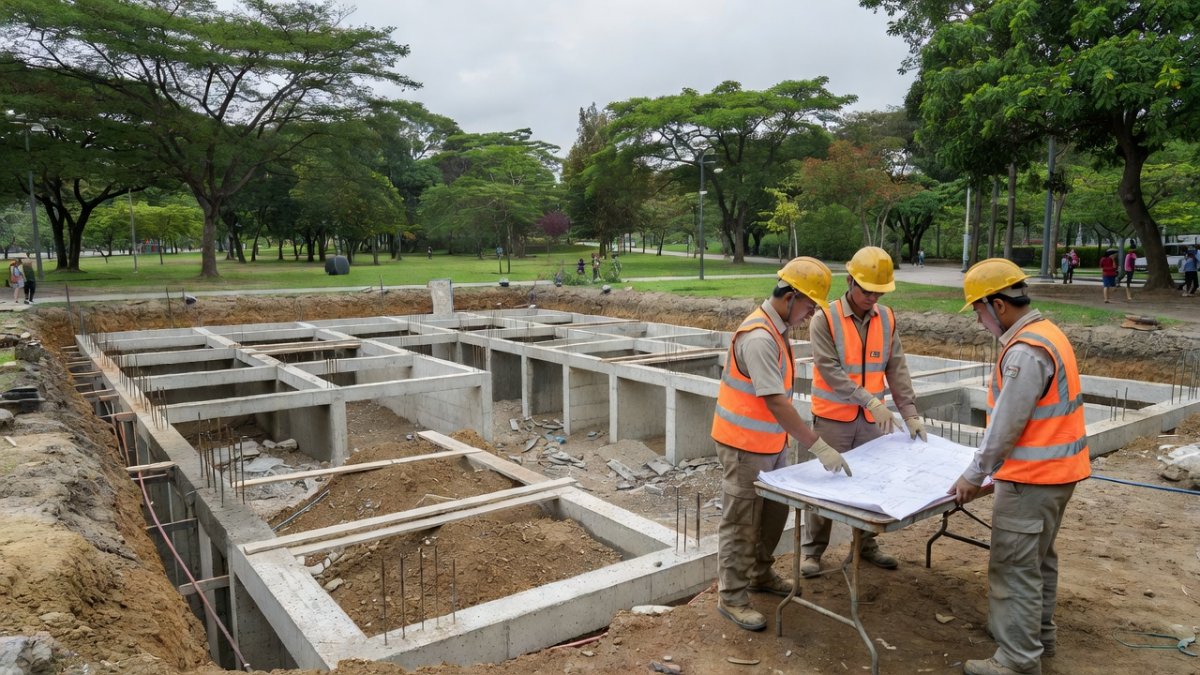
Perhaps the most ambitious proposal to emerge from the briefing is the plan to build underground cisterns — floodwater storage facilities — beneath existing infrastructure. Marcos announced that the government has identified 30 sites in Metro Manila where these cisterns could be constructed, including beneath football fields, open fields, and even under buildings. Identified areas include Rajah Sulayman, Rizal Memorial, Camp Aguinaldo, and the University of Santo Tomas. The President said detailed engineering would be completed within the month, after which the government would prioritize and begin digging. Artes expressed optimism that the underground water facilities could be completed in about a year.
This is not merely an infrastructure project; it is a philosophical shift in how the Philippines approaches flood control. Instead of simply channeling water away as quickly as possible, the government is exploring systems to capture and reuse floodwater for household, irrigation, and industrial use — transforming a destructive force into a valuable resource. Marcos said the government is exploring these water reuse systems, a forward-thinking approach that could redefine urban water management in the tropics.
What to Watch For — Dams, Forecasts, and the Road Ahead
As the nation looks forward, several factors will determine the trajectory of this crisis. Pagasa has forecast that monsoon rain will persist over Luzon and parts of Visayas for at least the next five days, meaning the worst may not yet be over. The weather bureau is also monitoring a low pressure area east of northern Luzon, though it currently has a low chance of developing into a storm within 24 hours. Four dams that previously recorded lower levels — Ambuklao and Binga in Benguet, Ipo in Bulacan, and La Mesa in Quezon City — are now near spilling levels, while Angat, San Roque, Pantabangan, Magat, and Caliraya dams have recorded higher water levels. Dam management will be critical in the coming days to prevent catastrophic downstream flooding.
The political dimension cannot be ignored. Senator Panfilo Lacson has been demanding answers on P1.9 trillion in flood-control spending, questioning why, after decades of investment, Metro Manila still floods so easily. This is a legitimate question that deserves a substantive answer. The National Disaster Risk Reduction and Management Council (NDRRMC) earlier reported at least 22 dead and 17 injured from the combined effects of tropical cyclones Luis and Maymay and the southwest monsoon as of August 15 — numbers that have since climbed, underscoring the dynamic nature of this disaster.
The underground cistern project, if realized, could be a game-changer. But a year is a long time for families living in flood-prone areas, and the monsoon will return long before the first cistern is dug. The Dutch study, the infrastructure upgrades, and the water reuse systems are all long-term solutions to a problem that is happening right now, in real time, in the flooded streets of Quezon City and the landslide-ravaged hills of Benguet.
For the Filipino people, this monsoon season is a preview of a future that is already here. The "new normal" that President Marcos speaks of is not a distant threat but a present reality. It demands not just better infrastructure but a fundamental reimagining of how we build our cities, manage our water, and protect our most vulnerable citizens. The 27 dead are a solemn reminder that the cost of inaction is measured in human lives. As the rains continue to fall and the waters continue to rise, the question is no longer whether the Philippines can adapt to climate change — but whether it can adapt fast enough.
By Bella Reyes, Staff Writer
This article was produced with AI-assisted research and editorial support. Reporting is based on sources cited in the article.
What's Your Reaction?
 Like
0
Like
0
 Dislike
0
Dislike
0
 Love
0
Love
0
 Funny
0
Funny
0
 Wow
0
Wow
0
 Sad
0
Sad
0
 Angry
0
Angry
0

Philippines/Southeast Asia Correspondent at Global1.News. Manila-based journalist covering Philippine politics, environment, maritime security, and social issues. Passionate about marine conservation and the communities protecting the Philippines' natural heritage.













Comments (0)