
Macklemore donates $1M to Palestinian groups amid Ed Sheeran tour backlash
Canadian audiences are watching a dispute that began on a North American stadium stage and has now spiralled into a high‑profile debate over artistic freedom, corporate influence and humanitarian aid.
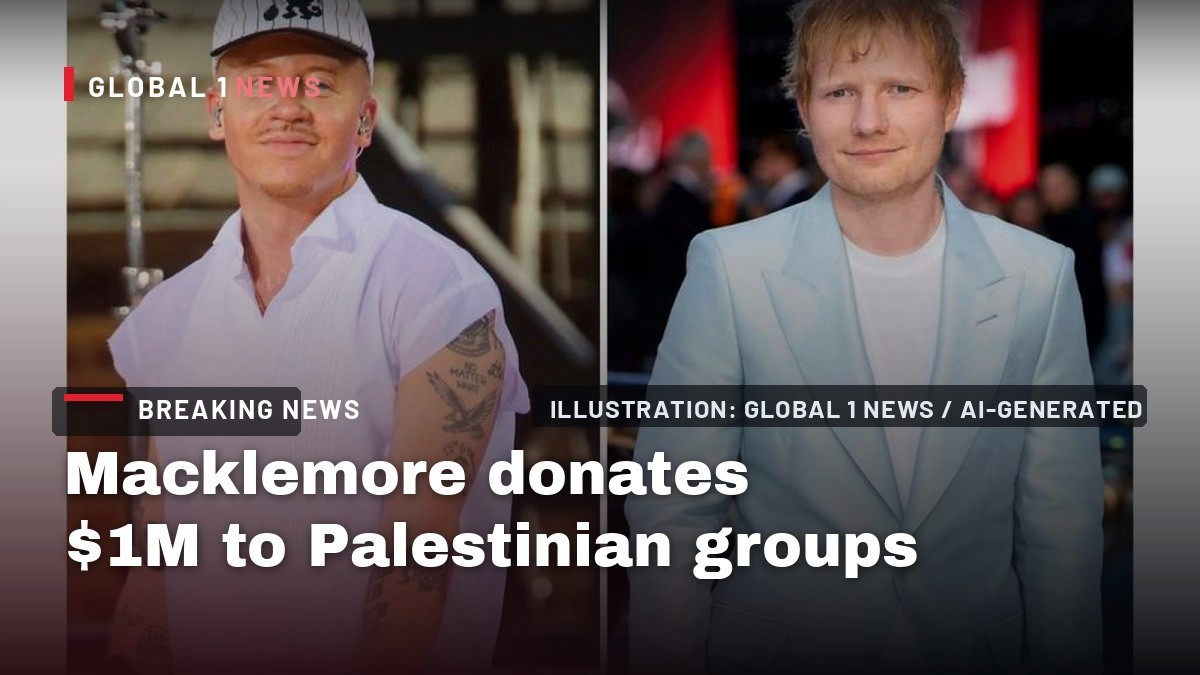
Canadian audiences are watching a dispute that began on a North American stadium stage and has now spiralled into a high‑profile debate over artistic freedom, corporate influence and humanitarian aid. Rapper Macklemore announced on Wednesday that he will donate the full $1 million net earnings he earned from supporting Ed Sheeran’s Loop Tour to organisations that provide direct relief to the Palestinian people. The pledge comes after Macklemore was removed from the tour following comments on the Gaza conflict, and it has reignited discussions about the role of entertainers, venue owners and the broader public in contentious geopolitical issues.
The donation and its immediate context
Macklemore used an Instagram post to declare that the entire $1 million he earned from the Sheeran tour would be given to groups working directly with the Palestinian population. He framed the gesture as a way to “bring the conversation back to where it belongs: to the Palestinian people,” and urged stadium owner Robert Kraft to match the contribution. The rapper’s statement emphasised that a Palestinian life is “no less valuable than any other life on this earth,” positioning his donation as a moral counter‑balance to the commercial pressures that led to his dismissal.
In the same post, Macklemore extended an invitation to Kraft, who owns Gillette Stadium and the New England Patriots, to “match my donation.” He suggested that despite any disagreements, both parties could agree on the principle that “Palestinian lives are worth protecting.” The call for a matching donation underscores the rapper’s aim to leverage corporate influence in service of a humanitarian cause.
How the removal unfolded
The rapper’s removal from the tour was announced on Monday, ten days after he used a MetLife Stadium performance in New Jersey on Sept. 4 to voice support for “Free Palestine” and highlighted the plight of Gaza and the occupied West Bank. During that set, Macklemore performed “Hind’s Hall,” a song about pro‑Palestinian demonstrators at Columbia University, before delivering his political remarks. Following the show, Ed Sheeran confirmed that venue owners, including Kraft, had issued an ultimatum: if Macklemore remained on the bill, the concerts would be cancelled at their facilities.
Macklemore later explained that Sheeran had relayed the owners’ stance, stating that Kraft and other venue operators had “rallied together to give Sheeran an ultimatum.” He wrote that the decision meant “If Macklemore stays on tour, you will not be allowed to play in our venues.” Sheeran, for his part, said he had been in talks with the parties involved to “build a bridge,” but ultimately described the venue and promoter decision as “final.”
Robert Kraft’s response and the broader corporate angle
In a statement released shortly after Macklemore’s pledge, Kraft said he had been contacted by Sheeran, who asked him to make a $2 million donation to “aid in the region.” Kraft noted that he was asked to match a $2 million endowment that Sheeran purportedly intended to give. The singer has not publicly confirmed whether he has made such a donation or identified the recipients.
Kraft also defended his stance on the removal, linking it to a “broader history of antisemitic rhetoric and imagery” that he said has been “deeply offensive and hurtful to the Jewish community.” He clarified that the decision was not intended to diminish Palestinian suffering, acknowledging that “their pain and loss are real.” Kraft added that he has long supported initiatives that create opportunities for Palestinians and Israelis, citing efforts to build businesses, create jobs and foster relationships.
Historical controversy surrounding Macklemore
The current dispute revives a 2014 incident in which Macklemore performed in Seattle wearing a black beard, wig and prosthetic nose. Jewish activist groups criticised the costume as resembling an antisemitic caricature of an Orthodox Jew. Macklemore later apologised, acknowledging that “the costume could, within a context of stereotyping, be ascribed to a Jewish caricature.” He insisted that it was “absolutely not my intention” and that he had not foreseen how it would be perceived.
This earlier controversy provides context for Kraft’s reference to “a broader history of antisemitic rhetoric and imagery.” While Kraft framed the removal as a response to that history, Macklemore’s recent statements emphasise his commitment to Palestinian advocacy, suggesting a clash of narratives about what constitutes offensive speech and where the line should be drawn in public performances.
Repercussions for the Loop Tour and other support acts
Following Macklemore’s removal, all remaining support acts on the Loop Tour withdrew, citing solidarity with the Palestinian cause. This collective exit underscores how the controversy has resonated with other artists, who appear to view the decision as an attempt to silence pro‑Palestinian voices. The withdrawals have added pressure on Sheeran and his promoters, as the tour now faces logistical challenges without its opening acts.
In a separate statement, Kraft said that Sheeran is reaching out to other venues to “continue to work together to build bridges.” This language suggests an ongoing effort to repair relationships with artists and promoters while maintaining the stance that led to Macklemore’s dismissal. The outcome for the remaining dates of the tour remains uncertain, as venue owners and promoters weigh the commercial implications of further controversy.
Implications for Canadian audiences and policy debates
While the dispute is centred on U.S. venues and artists, it touches on themes that resonate across Canada. Canadian musicians and festivals have grappled with similar questions about whether to allow political statements on stage, particularly concerning the Israel‑Palestine conflict. Recent debates in Parliament Hill have seen members discuss the balance between freedom of expression and the potential for perceived bias or hate speech at public events.
Moreover, the involvement of high‑profile corporate owners like Kraft raises questions about the influence of private stakeholders on cultural programming. In Canada, similar concerns have arisen regarding the role of stadium owners and corporate sponsors in shaping the content of concerts and sporting events. The Macklemore episode may prompt Canadian venue owners to reassess policies on political expression, especially as public sentiment continues to evolve on international humanitarian issues.
Looking ahead: potential outcomes and broader lessons
The immediate future of Ed Sheeran’s Loop Tour remains uncertain, with venue owners, promoters and artists navigating a complex web of expectations. Macklemore’s $1 million donation, while a clear act of solidarity, also serves as a strategic appeal to corporate actors to leverage their financial power for humanitarian ends.
For Canadian observers, the episode underscores the importance of transparent dialogue between artists, venue owners and the public when political issues intersect with entertainment. As Canada continues to confront its own debates on foreign policy, human rights and the role of cultural institutions, the Macklemore‑Sheeran‑Kraft saga offers a case study in how public figures can both amplify and be constrained by the platforms they occupy. The balance between artistic freedom, corporate influence and ethical responsibility will likely remain a focal point of discussion in Canadian media and policy circles for months to come.
This article was produced with AI-assisted research and editorial support. Reporting is based on the source material cited below. Sources: Global News Canada; globalnews.ca; Global1.News (17 September 2026).
By Alex Thompson, Staff Writer
What's Your Reaction?
 Like
0
Like
0
 Dislike
0
Dislike
0
 Love
0
Love
0
 Funny
0
Funny
0
 Wow
0
Wow
0
 Sad
0
Sad
0
 Angry
0
Angry
0
Canada Correspondent at Global1.News. Based in Toronto, covering Canadian politics, energy, trade, and US-Canada relations. Provides the Canadian perspective on North American and global affairs.










Comments (0)