
3 firms fined over HK$900,000 each for role in apprentice electrician’s death
In a case that highlights the growing pains of Hong Kong’s renewable‑energy expansion, a magistrate this week imposed fines of more than HK$900,000 on a main contractor and two subcontractors for their role in the death of a 38‑year‑old electrician.
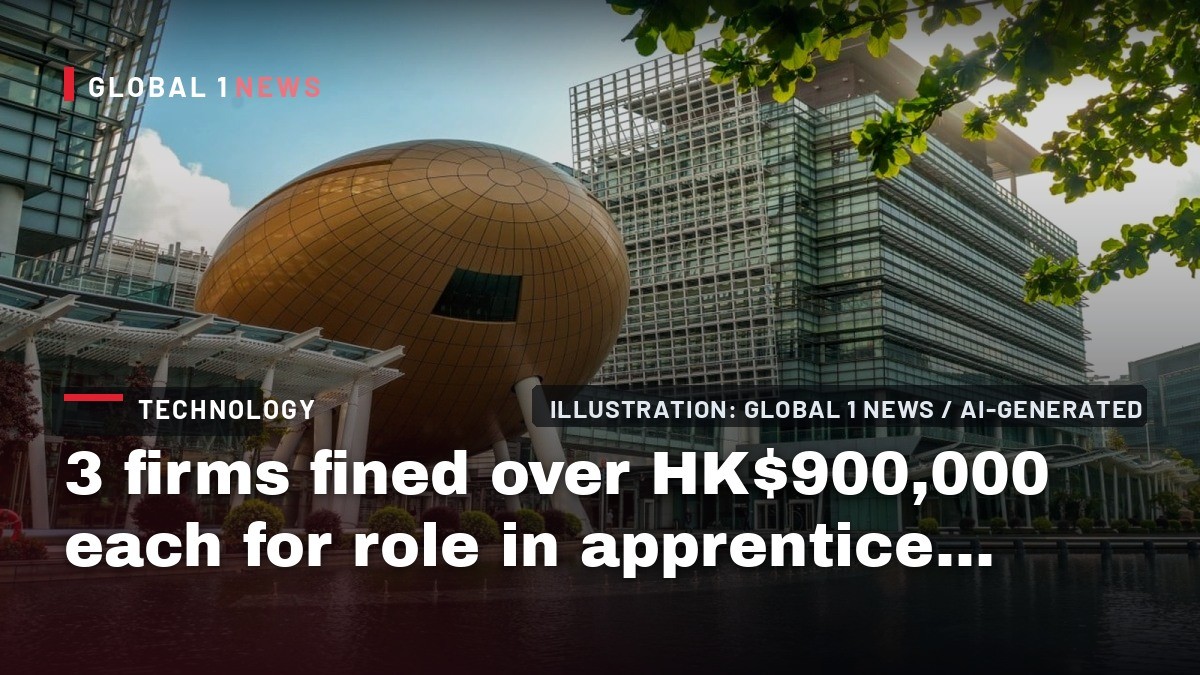
In a case that highlights the growing pains of Hong Kong’s renewable‑energy expansion, a magistrate this week imposed fines of more than HK$900,000 on a main contractor and two subcontractors for their role in the death of a 38‑year‑old electrician. The worker was electrocuted while handling wiring for solar panels amid rain at the Hong Kong Science Park three years ago. The judgment, delivered by Magistrate Jeffrey Sze Cho‑yiu, underscores the legal and ethical responsibilities that accompany large‑scale clean‑energy projects in the city’s high‑tech corridors.
Background of the incident
The fatal accident occurred during the installation of solar‑panel arrays at the Hong Kong Science Park, a hub for research and development that has increasingly become a showcase for green‑technology pilots. The worker was engaged in wiring work when wet weather created hazardous conditions. According to the magistrate’s findings, the combination of rain and live electrical conductors led to the electrocution that claimed the electrician’s life.
While the exact sequence of events was not detailed in the court record, the magistrate’s remarks make clear that the worker was performing routine installation duties when the accident happened. The tragedy has drawn attention to the safety protocols—or lack thereof—applied on site, especially when weather conditions turn adverse.
Legal findings and penalties
Magistrate Jeffrey Sze Cho‑yiu concluded that the main contractor, China Power International Development, and the two subcontractors—A Kourage and Skynet Engineering Company—failed to provide adequate on‑site supervision. He described the supervision as absent “in the slightest,” indicating a total breakdown in oversight. The joint venture Towngas‑China Power (HK) Integrated Energy Company, formed between China Power and the Hong Kong and China Gas Company, was also implicated for its role in the project hierarchy.
Each of the three tiers—main contractor, subcontractors, and joint‑venture partner—was found to have committed “serious negligence” by not ensuring that safety measures were in place. The magistrate imposed fines of more than HK$900,000 on each party, reflecting the seriousness with which the court views breaches of occupational safety in high‑risk construction environments.
Implications for the solar‑panel sector
The ruling arrives at a time when Hong Kong is actively promoting renewable‑energy projects to meet its climate‑change commitments. Solar‑panel installations, once a niche activity, are now proliferating across commercial and industrial sites. The case serves as a cautionary tale for firms seeking to capitalize on the city’s green‑energy agenda: compliance with safety standards is not optional, even when projects are driven by public policy imperatives.
Industry observers note that the fines, while substantial, may represent only a fraction of the total cost of a large‑scale solar‑panel project. Nevertheless, the reputational damage and potential for further regulatory scrutiny could outweigh the monetary penalty. Companies are likely to reassess their risk‑management frameworks to avoid similar legal exposure.
Safety culture and on‑site supervision
The magistrate’s criticism of “no supervision in the slightest” points to a systemic issue rather than an isolated lapse. Effective on‑site supervision involves continuous monitoring of work practices, especially when electrical work is performed under adverse weather conditions. The absence of such oversight suggests that safety protocols were either inadequately designed or poorly enforced.
In the construction sector, safety culture is built on clear lines of responsibility, regular training, and real‑time hazard assessment. The judgment implies that the firms involved failed to establish these mechanisms, allowing a hazardous situation to develop unchecked. The case may prompt a broader industry dialogue on how to embed safety into the daily routines of project teams, particularly in fast‑moving renewable‑energy installations.
Regulatory environment in Hong Kong
Hong Kong’s occupational safety framework is governed by the Occupational Safety and Health Ordinance, which obliges employers to provide a safe working environment and to take reasonable steps to prevent accidents. The magistrate’s decision reflects the courts’ willingness to enforce these obligations rigorously, especially when negligence leads to fatal outcomes.
The fines imposed on China Power International Development and its subcontractors signal that regulators and the judiciary are prepared to hold not only direct employers but also higher‑level contractors accountable. This approach aligns with recent trends in other jurisdictions where supply‑chain responsibility is increasingly scrutinised.
Impact on the parties involved
China Power International Development, as the main contractor, bears the primary responsibility for coordinating safety across the project. The fine levied against it may affect its standing in future public‑sector contracts, where safety records are often a decisive factor in bid evaluations. The joint venture Towngas‑China Power (HK) Integrated Energy Company, linking a power developer with a major gas utility, also faces reputational risk that could influence its strategic partnerships.
The subcontractors A Kourage and Skynet Engineering Company, while smaller in scale, are not insulated from the fallout. Their involvement in the negligence finding may lead to heightened scrutiny from clients and insurers, potentially increasing their cost of doing business. The case underscores that even secondary contractors must maintain robust safety practices to protect both workers and corporate interests.
Broader lessons for the Asia‑Pacific region
The incident and subsequent fines resonate beyond Hong Kong, offering a cautionary example for the wider Asia‑Pacific construction and renewable‑energy sectors. Rapid deployment of solar‑panel infrastructure is a common goal across the region, yet the speed of implementation must be balanced against the imperative to safeguard workers.
Stakeholders—from government agencies to private developers—can draw from this case the importance of integrating safety oversight into project contracts, ensuring that all tiers of the supply chain are bound by clear, enforceable safety obligations. As the region continues to invest heavily in clean‑energy projects, the Hong Kong judiciary’s stance may serve as a benchmark for how negligence is judged and penalised, reinforcing a culture where worker protection is paramount.
This article was produced with AI-assisted research and editorial support. Reporting is based on the source material cited below. Sources: South China Morning Post; scmp.com; Global1.News (17 September 2026).
By Kenji Tanaka, Staff Writer
What's Your Reaction?
 Like
0
Like
0
 Dislike
0
Dislike
0
 Love
0
Love
0
 Funny
0
Funny
0
 Wow
0
Wow
0
 Sad
0
Sad
0
 Angry
0
Angry
0

Japan Correspondent at Global1.News. Tokyo-based voice covering Japanese politics, technology, economy, and culture. Tracks the intersection of tradition and innovation in one of the world's most dynamic societies.














Comments (0)