
Livestreamer's Murder Raises Questions About Mexico's Creators and Cartels
A 25-year-old TikTok star with over 600,000 followers was shot dead during a livestream in Culiacán, Sinaloa, as Mexican authorities investigate whether posts referencing a cartel faction sealed his fate.
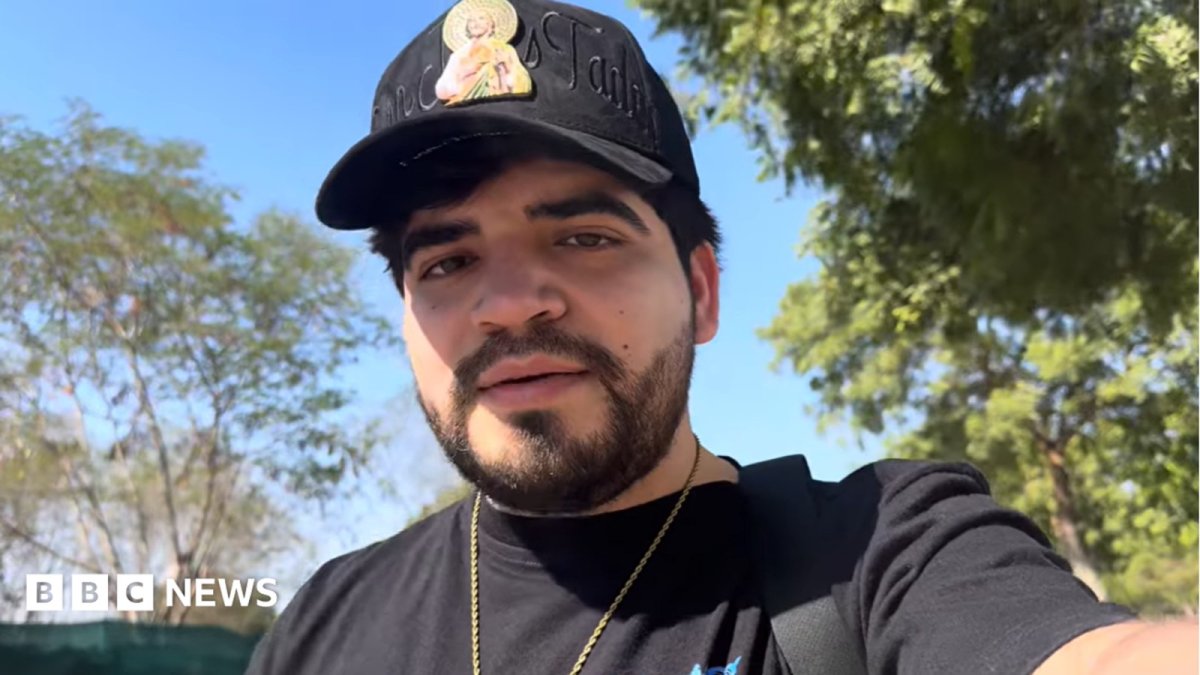
Livestreamer's Murder Raises Questions About Mexico's Creators and Cartels
The murder of a 25-year-old influencer, broadcast live to his hundreds of thousands of followers, has thrust the murky relationship between social media fame and organized crime back into the spotlight in Mexico. César Gastélum was shot in the head at close range on Tuesday while livestreaming outside a fast-food restaurant in Culiacán, Sinaloa, the heart of the cartel war that has torn the state apart for two years. The killing, witnessed in real-time by his online audience, has prompted federal authorities to investigate whether his social media posts — some of which referenced a criminal faction — sealed his fate.
Culiacán, Mexico — The video, verified by Reuters, shows two helmeted men on a motorcycle pulling up to Gastélum as he chatted with friends. Within seconds, the driver draws a weapon and fires at point-blank range before the pair speeds away. The Sinaloa state prosecutor's office has offered few details, but confirmed that its lines of inquiry include a series of posts Gastélum published, "some of which refer to a criminal group." The attack occurred near the local prosecutor's office, a detail that underscores the brazenness of the violence that has come to define daily life in this capital city.
A Digital Graveyard in Sinaloa
Gastélum is not an isolated case. At least ten content creators have been murdered in Sinaloa since September 2024, when a bloody schism erupted between two factions of the Sinaloa Cartel: Los Chapitos, loyal to the sons of Joaquín "El Chapo" Guzmán, and Los Mayos, followers of Ismael "El Mayo" Zambada. Both leaders are serving life sentences in the United States, but their organizations continue to wage war for control of Culiacán, Mazatlán, and the lucrative trafficking corridors that run through the state.
Local media reports suggest the number of slain influencers in Sinaloa alone could be as high as twelve over the past two years. The Armed Conflict Location & Event Data Project (ACLED) has recorded at least sixteen such killings across Mexico since 2018. There is no official government registry tracking the deaths of content creators, a gap that analysts say reflects how quickly this phenomenon has outpaced institutional response.
Officials have stated that Gastélum had not received threats from criminal groups, nor was he under police investigation for alleged cartel ties — a distinction that set him apart from some previous victims. But the absence of a prior warning did not spare him. The Federal Security Cabinet announced on Wednesday that it is analyzing surveillance camera footage and other evidence to determine whether the attack was linked to "various posts" in which Gastélum made reference to a faction of a criminal group.
The Allure of Narcoculture
Claudia Arruñada, a communications expert at Mexico's Iberoamerican University, argues that the convergence of social media algorithms and cartel aesthetics is no coincidence. "The algorithm and the narcos promote the same thing: consumption and luxury as ultimate values, to be achieved in the quickest way possible," she said. "The model for success is no longer based on methodically working on your career, but rather on having a meteoric rise."
Gastélum's online persona fit this mold. His feed was a collage of expensive cars, nightlife escapades, luxury trips, and comedy skits — a curated lifestyle that resonated with hundreds of thousands of followers on TikTok and YouTube. In one photograph, he posed at the grave of Leobardo Aispuro, known as "El Gordo Peruci," an influencer murdered in 2024. The image, shared publicly, hinted at a world where digital fame and cartel violence intersect in ways that are both visible and opaque.
Content creators who have been labeled "narco-influencers" reject the term, arguing that simply being a young public figure flaunting wealth in Culiacán makes you a target. In a city where cartel factions surveil social media as closely as they do street corners, the line between performance and provocation can blur fatally.
When Propaganda Becomes a Death Sentence
Some studies suggest that cartels operate like multinational corporations, employing content creators as community managers to promote their "brand" and spread propaganda. When rival factions turn on each other, those perceived as loyal to one side become targets for the other. This dynamic was laid bare in January 2025, when leaflets were dropped from an aircraft over Culiacán.
The pamphlets accused 25 influencers and musicians of links to La Mayiza, the faction aligned with Mayo Zambada. Four of those named had already been killed and were marked on the leaflet as "eliminated." Two more have been murdered since. Gastélum's name was not on that list, but his killing is widely seen as part of the same trend — a chilling message to anyone who uses digital platforms to navigate or profit from the criminal underworld.
David Saucedo, a Mexican security analyst, notes that influencers are killed or threatened for a wide range of reasons, from unpaid debts to perceived slights to outright propaganda work. "The motives are as varied as the victims," he said. "But the result is the same: a public execution designed to be seen."
A Parallel Case in Jalisco
The phenomenon is not confined to Sinaloa. In May 2025, Valeria Márquez, a beauty influencer, was shot dead during a TikTok livestream at a salon in Zapopan, Jalisco. The killing, also broadcast live, sparked national outrage and a prolonged investigation. At the end of July 2026, authorities arrested Ramón Ángel Álvarez Ayala, known as "R1," the alleged leader of a cell linked to the Jalisco New Generation Cartel (CJNG), in connection with Márquez's murder.
The arrest offered a rare glimpse of accountability in a case involving an influencer's death. Whether Gastélum's killers will face similar justice remains uncertain. President Claudia Sheinbaum said on Wednesday that local and national authorities would pursue both the perpetrators and those who ordered the killing. "The actual perpetrators — and, if applicable, the mastermind — must be arrested, and the reason behind this tragic homicide must be uncovered," she said.
Government Crackdown and the Limits of Progress
Sheinbaum's administration has made severing the link between popular culture and organized crime a priority, denouncing narcocorridos — songs that glorify cartel figures — and deploying additional security forces to Sinaloa. Official figures claim that murders fell by 48% in 2025, a statistic the government cites as evidence that its security strategy is working.
But the killing of Gastélum, witnessed by followers in real-time, undermines that narrative. The same night, a second victim was found shot dead half a mile away in Culiacán's botanical garden, after a screening of a Lady Gaga documentary. The proximity of the two killings suggests a coordinated wave of violence that no official statistic can fully capture.
For the people of Culiacán, the message is clear: the cartels' reach extends beyond the streets and into the digital platforms where young Mexicans build their identities and careers. The murder of César Gastélum is not just a tragedy for his family and followers — it is a warning to an entire generation of creators navigating a landscape where a single post can be a death sentence.
This article was produced with AI-assisted research and editorial support. Sources: BBC News, Reuters, Mexico Daily Post.
By Elena Vasquez, Staff Writer
What's Your Reaction?
 Like
0
Like
0
 Dislike
0
Dislike
0
 Love
0
Love
0
 Funny
0
Funny
0
 Wow
0
Wow
0
 Sad
0
Sad
0
 Angry
0
Angry
0

Latin America Correspondent at Global1.News. Based in Mexico City, covering politics, economics, energy, and culture across the region. Brings an on-the-ground perspective to stories spanning from the Rio Grande to Patagonia.











Comments (0)