
Northwood Space raises $375M Series C at a $2B valuation from a16z and DFJ growth
Northwood Space’s fresh $375 million Series C round isn’t just a cash infusion; it’s a signal that the satellite‑ground link is becoming the next battlefield for tech investors.
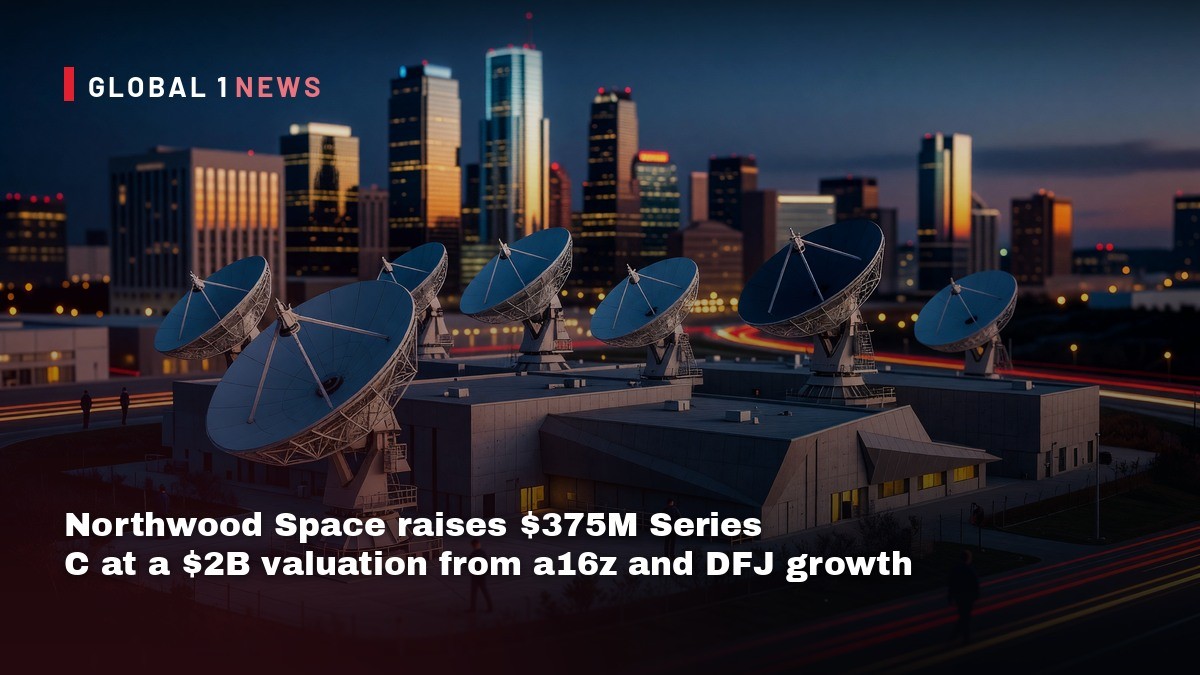
Northwood Space’s fresh $375 million Series C round isn’t just a cash infusion; it’s a signal that the satellite‑ground link is becoming the next battlefield for tech investors. Co‑led by Andreessen Horowitz and DFJ Growth, the round lifts the startup’s valuation to $2 billion, cementing its place among the handful of private firms that are now shaping the United States’ orbital communications architecture. For a company that launched only four years ago, the trajectory from a modest seed to a “unicorn‑scale” valuation reads like a textbook case of how niche hardware can become a strategic asset when the right backers and contracts line up.
The financing sprint: From Series B to Series C
The most immediate takeaway from the announcement is the sheer scale of the new raise. Northwood’s $375 million Series C dwarfs the $100 million Series B it closed in January, a round that was also co‑led by Andreersen Horowitz. The jump in capital reflects both the company’s growing order backlog and the appetite of venture capitalists to double‑down on space‑infrastructure plays that sit at the intersection of defense, telecom and emerging data services.
Andreessen Horowitz’s continued involvement signals confidence in the firm’s long‑term roadmap. By staying on the lead syndicate, the firm not only protects its earlier stake but also positions itself to benefit from any upside that comes from scaling Northwood’s antenna and software platforms. DFJ Growth, meanwhile, adds a layer of growth‑stage expertise, suggesting that the next phase will focus less on product validation and more on market capture and operational expansion.
Strategic contracts: The U.S. Space Force connection
Northwood’s relevance to national security was already evident when it secured a nearly $50 million contract with the U.S. Space Force to upgrade the nation’s satellite control network. That deal, reported earlier by TechCrunch, gave the startup a foothold in a high‑stakes arena where reliability and performance are non‑negotiable. The contract not only provided a revenue stream but also validated the company’s technology in a real‑world, mission‑critical environment.
With the fresh Series C funds, Northwood can now deepen that partnership. The financing statement mentions that the capital will be used to “fulfill existing contracts,” implying that the Space Force agreement is still in execution mode and may expand as the agency looks to modernize its ground segment. For ordinary citizens, the downstream effect could be more resilient GPS services, better weather forecasting and a smoother flow of data from the growing constellation of low‑Earth‑orbit satellites that power everything from smartphones to autonomous vehicles.
Leadership with a pop‑culture twist
Bridgit Mendel, the co‑founder and CEO, brings a unique blend of creative flair and technical ambition to the helm. A former actress turned tech entrepreneur, Mendel’s public profile adds a human‑interest angle that resonates with a broader audience beyond the typical venture‑capital crowd. Her leadership style, while not detailed in the source, can be inferred as visionary—steering a hardware‑centric startup through the complex regulatory and procurement landscape of U.S. defense contracts.
The fact that a former entertainer is now leading a $2 billion space‑infrastructure firm underscores a broader cultural shift: the tech sector increasingly values narrative and brand as much as engineering prowess. For aspiring founders, Mendel’s trajectory illustrates that non‑traditional backgrounds can be leveraged into credibility, especially when paired with solid technical teams and clear market demand.
Financial architecture: HSBC’s role
Beyond the venture capital infusion, Northwood announced a financial agreement with HSBC. While the specifics of the arrangement aren’t disclosed, the mention that the agreement will be used “along with the funding” to scale operations suggests a hybrid financing model that blends equity with credit facilities. This structure can help the company manage cash flow while it ramps up production, hires talent, and meets contract milestones.
For the broader ecosystem, HSBC’s involvement signals that traditional banking institutions are warming up to space‑tech as a creditworthy sector. As more startups secure government contracts and demonstrate recurring revenue, banks may increasingly offer tailored financing solutions, reducing the reliance on pure equity rounds and potentially lowering dilution for founders.
Market implications: Who wins, who loses?
The influx of capital into Northwood is a win for suppliers and partners in the satellite ground‑segment supply chain. Antenna manufacturers, software developers and test facilities stand to benefit from increased orders as Northwood scales. Conversely, competitors that lack similar defense contracts or venture backing may find it harder to attract talent and secure market share.
From a consumer perspective, the downstream benefits are subtle but significant. Better ground‑to‑satellite communication translates into higher‑throughput broadband services, more reliable IoT connectivity in remote areas and improved emergency‑response communications. In essence, the money flowing into Northwood could ripple out to everyday users who rely on satellite‑enabled services, even if they never hear the company’s name.
Growth roadmap: Hiring and scaling
The financing statement explicitly cites hiring as a priority. Scaling a hardware‑intensive operation typically requires expanding engineering, manufacturing and supply‑chain teams. Given the company’s recent contracts, it’s likely that Northwood will prioritize talent that can accelerate antenna design cycles, integrate software with legacy ground stations and navigate the certification processes required for defense contracts.
Hiring also has a cultural dimension. As a fast‑growing startup, Northwood will need to preserve its innovative edge while instituting the processes needed for large‑scale production. The balance between startup agility and the rigor demanded by government contracts will be a key internal challenge in the months ahead.
What the $2 billion valuation really means
A $2 billion valuation places Northwood among a select group of space‑tech firms that have crossed the “unicorn” threshold. It reflects both the tangible assets—antennas, software platforms, contracts—and the intangible promise of future market capture as the satellite ecosystem expands. For investors, the valuation is a bet that the company will secure additional contracts, possibly with commercial satellite operators, and that its technology will become a de‑facto standard for ground‑segment communications.
For the industry, the valuation acts as a benchmark. It signals that investors see a clear path to monetizing ground‑segment improvements, not just the more glamorous launch‑vehicle side of space. As more constellations launch, the bottleneck will increasingly shift to how efficiently data can be beamed down, processed and delivered—a problem Northwood is positioning itself to solve.
This article was produced with AI-assisted research and editorial support. Reporting is based on the source material cited below. Sources: TechCrunch; techcrunch.com; Global1.News (02 November 2026).
By Nova Chen, Staff Writer
What's Your Reaction?
 Like
0
 Dislike
0
 Love
0
 Funny
0
 Wow
0
 Sad
0
 Angry
0

Trend Reporter at Global1.News. Based in San Francisco, tracking the stories crossing from social platforms, forums, and community discussions into mainstream news — tech breakthroughs, cultural shifts, and world events that real people are engaging with right now.















Comments (0)