
Türkiye could hold elections 1-2 months early: Officials
Turkey’s political calendar is poised for a subtle yet potentially consequential shift as senior officials hint that the nation’s next presidential and parliamentary elections could be moved forward from the constitutionally scheduled May 14, 2028.
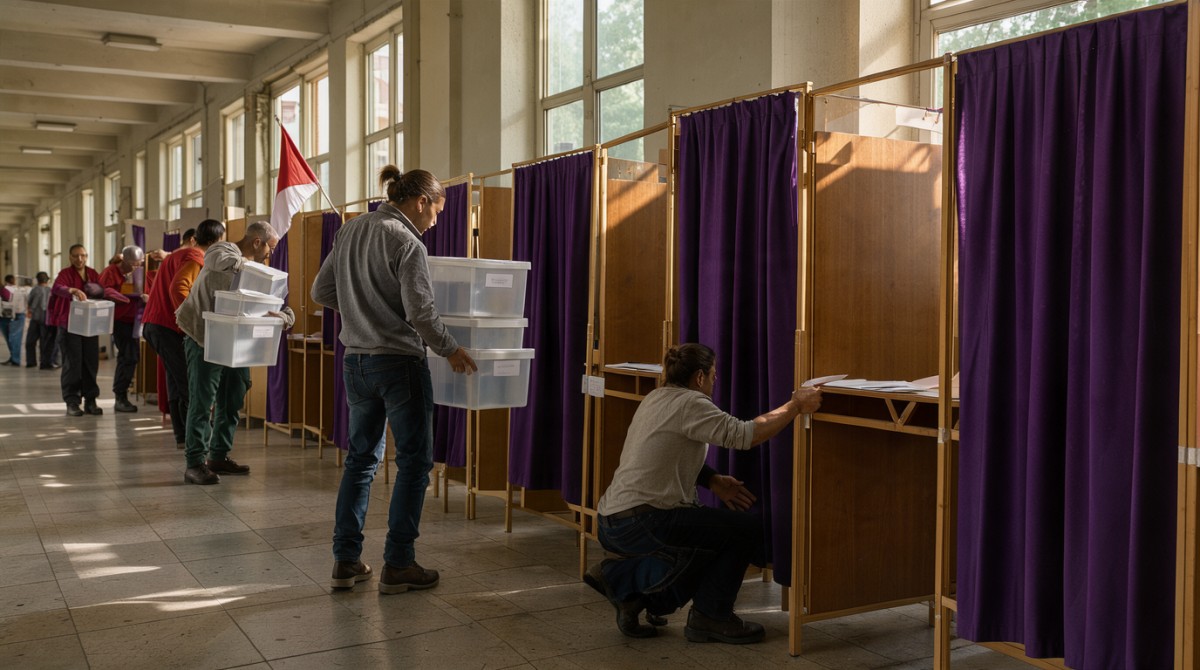
Turkey’s political calendar is poised for a subtle yet potentially consequential shift as senior officials hint that the nation’s next presidential and parliamentary elections could be moved forward from the constitutionally scheduled May 14, 2028. The prospect of an early poll—by a few weeks or months—has emerged from statements by presidential adviser Ayhan Oğan and Vice President Cevdet Yılmaz, both of whom underscored the flexibility embedded in Turkey’s parliamentary system. While the ruling People’s Alliance appears united behind President Recep Tayyip Erdoğan’s candidacy, the timing of the vote could intersect with broader strategic calculations, from domestic constitutional reform to regional power dynamics that continue to shape the Middle East.
Legal framework and procedural levers for an early election
Under Turkey’s constitution, the regular election date is set for mid‑May 2028. However, the legal text also grants Parliament the authority to trigger an early election, provided that at least 360 of the 600 members—constituting a clear majority—support the move. This threshold, while high, is not insurmountable for the ruling coalition, which currently enjoys a dominant position in the Grand National Assembly. The mechanism is designed to allow flexibility in exceptional circumstances, yet its activation can be a strategic tool for the incumbent government.
Adviser Oğan’s comments, delivered during a televised interview, clarified that any decision to advance the poll would require a parliamentary vote, emphasizing that “moving the elections forward by a few weeks or months would constitute early elections, which would require a parliamentary decision.” The phrasing suggests that the government is prepared to navigate the procedural requirements, should it deem an earlier timetable advantageous.
Political calculus within the People’s Alliance
The People’s Alliance, a coalition led by President Erdoğan’s Justice and Development Party (AKP) and bolstered by the Nationalist Movement Party (MHP), has signaled internal consensus on the president’s re‑election bid. Vice President Yılmaz affirmed that “there is already a consensus within the alliance for Erdoğan to run again as a candidate.” This unanimity reduces the risk of intra‑alliance friction over the election schedule, allowing the coalition to focus on broader strategic objectives.
Moreover, Oğan highlighted that the MHP’s chair, Devlet Bahçeli, had previously endorsed Erdoğan as the alliance’s presidential candidate. This endorsement reinforces the alliance’s cohesion and suggests that any decision to bring the election forward would likely enjoy “broad support,” as Oğan put it. The political calculus, therefore, appears to balance procedural legitimacy with the desire to capitalize on favorable conditions for the incumbent.
Strategic timing and domestic reform agenda
One of the most salient contextual factors is the ongoing discussion about a new Turkish constitution. Oğan indicated that constitutional reform is expected to be taken up during the 29th legislative term, with candidates likely to campaign on pledges to draft a new charter. By advancing the election date, the ruling coalition could potentially align the electoral mandate with the initiation of constitutional talks, thereby framing the reform agenda as a central campaign theme.
This timing could also serve to pre‑empt opposition narratives that might emerge if the constitutional debate were to unfold over a longer period. An early election would compress the political calendar, limiting the opposition’s ability to organize a coordinated response to the proposed charter changes, while simultaneously allowing the government to claim a fresh democratic mandate for any constitutional overhaul.
Regional implications of an early Turkish poll
Turkey’s electoral timing does not occur in a vacuum. The nation’s foreign policy, particularly its involvement in the Syrian theatre, its maritime disputes in the Eastern Mediterranean, and its complex relationship with both the United States and Russia, is closely tied to domestic political stability. An early election could be interpreted by regional actors as a signal of confidence from Ankara, reinforcing its assertive posture in ongoing negotiations over energy exploration rights and security arrangements.
Conversely, a shift in the election calendar might also be read as a precautionary move, allowing the government to secure a renewed mandate before any potential escalation in regional tensions—be it renewed clashes along the Syrian border or heightened competition over gas fields in the Levantine basin. By locking in a presidential term through a May‑or‑April 2028 vote, Turkey would aim to avoid domestic political uncertainty during a period of heightened great‑power rivalry in the region.
Economic considerations and energy market dynamics
Turkey’s economy, still navigating the aftershocks of pandemic‑era disruptions and the volatility of global energy markets, could also be a factor in the decision to move the election forward. While the source material does not provide explicit economic data, the broader context of Turkey’s reliance on imported energy and its ambitions to become an energy hub in the Eastern Mediterranean suggests that political stability is paramount for investor confidence.
By potentially securing an early electoral endorsement, the ruling coalition could aim to present a stable policy environment for ongoing energy projects, including offshore gas exploration and pipeline negotiations with neighboring states. This stability would be particularly valuable as Turkey seeks to balance its energy imports from Russia with diversification efforts involving the Gulf and European markets.
Potential opposition response and democratic safeguards
Although the source material does not detail opposition reactions, the procedural requirement of securing 360 parliamentary votes implies that any early election move would be subject to scrutiny within the legislature. Opposition parties, should they hold sufficient seats, could leverage the debate to demand transparency on the constitutional reform agenda or to question the timing of the electoral shift.
The necessity of a parliamentary vote also serves as a democratic safeguard, ensuring that an early election cannot be unilaterally imposed by the executive. This institutional check, however, is mitigated by the ruling coalition’s current parliamentary dominance, which could render the vote a formality rather than a contested decision.
Outlook and scenarios for the 2028 electoral timeline
In sum, the statements from Ayhan Oğan and Vice President Cevdet Yılmaz outline a clear possibility: the 2028 Turkish elections could be advanced from the statutory May 14 date to an April timeline, contingent upon parliamentary approval. The driving forces behind this potential shift appear to be a combination of strategic timing for constitutional reform, a desire to cement Erdoğan’s candidacy under favorable conditions, and broader considerations of regional stability and economic confidence.
Should the People’s Alliance secure the requisite parliamentary majority, an early election could be announced within the coming months, setting the stage for a campaign that intertwines domestic constitutional ambitions with Turkey’s assertive regional posture. Conversely, if internal or external pressures mount, the coalition may opt to retain the original schedule, using the May 2028 date as a predictable anchor for its policy agenda. Observers will need to watch closely how the parliamentary vote unfolds, as it will not only determine the election calendar but also signal the extent of consensus within Turkey’s ruling bloc at a pivotal moment for both domestic governance and Middle Eastern geopolitics.
This article was produced with AI-assisted research and editorial support. Reporting is based on the source material cited below. Sources: Daily Sabah Middle East; dailysabah.com; Global1.News (27 November 2026).
By Malik Hassan, Staff Writer
What's Your Reaction?
 Like
0
 Dislike
0
 Love
0
 Funny
0
 Wow
0
 Sad
0
 Angry
0
Middle East Correspondent at Global1.News. Based in Beirut, covering politics, conflict, energy, and society across the Middle East. Brings context and depth to a region often reduced to headlines.












Comments (0)