
Is Alice Huang a spy or not?
When the headlines scream “Chinese spy” and “CEO scandal” you can bet the hype train is leaving the station without a ticket. It was circulated inside the White House ahead of President Trump’s May trip to China and later fed into the New York Times story on 29 October.
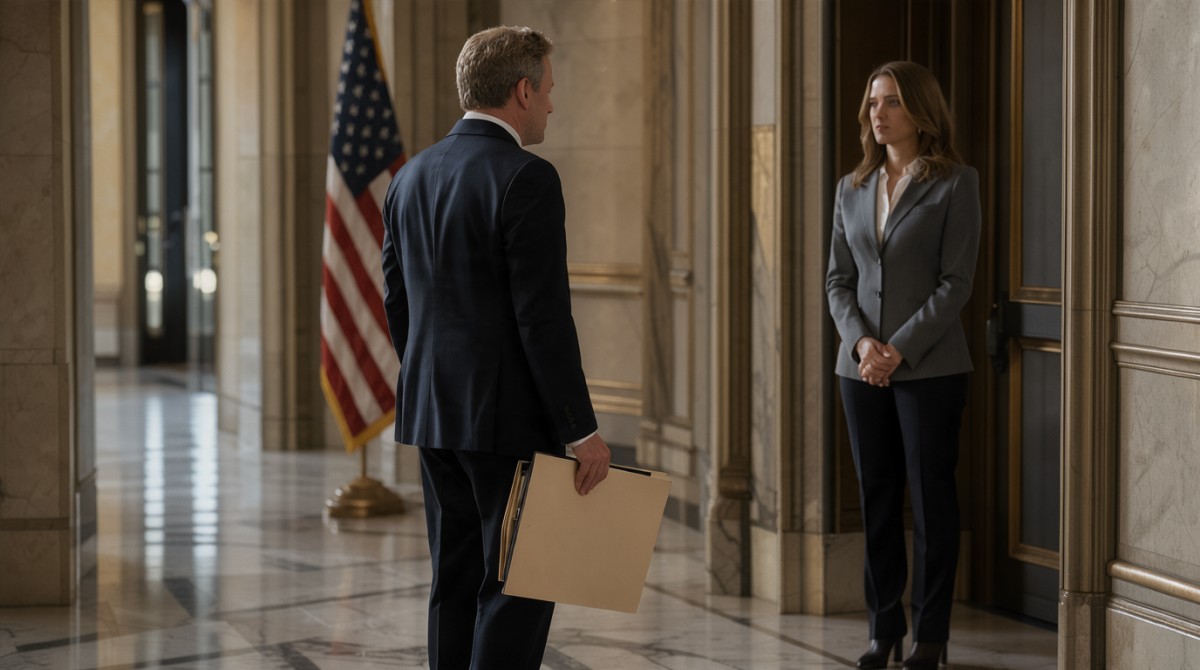
When the headlines scream “Chinese spy” and “CEO scandal” you can bet the hype train is leaving the station without a ticket. The Alice Huang saga is a textbook case of how political spin, half‑baked intelligence claims, and corporate drama get mashed together to create a media circus that does nothing for the real business risk at hand. As someone who runs a data‑center operation in the Caribbean and has spent a decade wrestling with actual production outages, I’m more interested in what this means for independent hosting providers than in the gossip about who’s dating whom.
What the memo actually said – and why it matters
The only concrete document we have is a classified memo drafted in March under Secretary of State Marco Rubio’s oversight. It was circulated inside the White House ahead of President Trump’s May trip to China and later fed into the New York Times story on 29 October. The memo didn’t outright label Alice Huang as a Chinese spy; rather, it flagged her contact with an officer of the Ministry of State Security (MSS) from spring 2025 through fall 2026, a period that overlaps her affair with Nvidia CEO Jensen Huang.
Different outlets have read that memo in wildly divergent ways. The Wall Street Journal reported the memo was non‑committal, while CNN claimed it concluded she was a Chinese intelligence asset. The discrepancy tells you more about media spin than about any hard evidence. For a hosting provider, the takeaway is simple: a single memo, even if classified, is not a forensic report. It’s a piece of raw intel that needs corroboration before you start pulling the plug on a vendor.
The “spy” label – a slippery word
U.S. intelligence has reportedly tracked Alice Huang’s contact with an MSS officer, but officials have not offered public evidence that she was commissioned to target Nvidia’s chief. Senior intelligence officials told Congress there’s no proof the MSS directed her to start the affair. Even Attorney General Todd Blanche, who once defended President Trump, said he sees Nvidia as a “good corporate citizen.” That’s a far cry from a courtroom‑ready indictment.
In practice, the “spy” label is a political weapon. The Chinese government has called the claims a “smear,” and Megaspeed, the data‑center firm where Alice worked, says she left in August 2025 and that its business is legitimate. For us in the hosting world, the lesson is to separate the geopolitical narrative from the operational reality. If a vendor’s product works, is secure, and meets SLA expectations, a rumor about an executive’s personal life shouldn’t be the reason you switch providers.
Political pressure and the timing of the reversal
President Trump lobbied the Nvidia board “directly and indirectly” to reinstate Jensen Huang after his abrupt resignation on 12 November. The administration’s subsequent down‑playing of the spy allegations coincided with that lobbying. Rubio has privately voiced concerns about Jensen’s return, and the White House’s reversal appears tied to the political calculus of keeping a key tech CEO on board during a tense China‑U.S. trade environment.
This is a classic case of policy being driven by optics rather than data. When you run a hosting business, you watch for similar reversals: regulators softening rules after a lobbying push, or a vendor’s board reshuffling under political pressure. The risk is that you could be left holding a service that suddenly becomes a compliance nightmare. Always have a contingency plan for vendor lock‑in, especially when the vendor sits in a jurisdiction prone to political swings.
What the intelligence community actually knows
Recent briefings to Congress indicate the intelligence community is still trying to piece together the full picture. CNN reported that the collected intel does not prove Alice Huang acted as a spy. Rep. Jim Himes, incoming chair of the House Intelligence Committee, called her a “useful idiot” at best. The Wall Street Journal noted that under Xi Jinping, many top corporate executives maintain ties to the MSS without being formal assets.
From an operational standpoint, the key takeaway is that contact with foreign intelligence does not automatically translate into a breach of security for a company’s customers. The real danger lies in whether that contact leads to exfiltration of data or sabotage. So far, there’s no public evidence that any Nvidia or Megaspeed data was compromised. Independent hosting providers should focus on concrete security audits rather than speculative espionage claims.
Impact on Nvidia’s market and the upcoming Senate hearing
Jensen Huang is slated to appear before the Senate Banking Committee next week, and the hearing is expected to be “rough.” The committee’s scrutiny will likely center on the alleged illicit channeling of Nvidia chips to China—a separate but related issue that fed the original scandal. The timing of the hearing, combined with the political drama, could affect Nvidia’s stock and, by extension, any downstream vendors relying on Nvidia hardware.
For hosting operators, a supply‑chain shock in the GPU market can cascade into higher costs or shortages for AI workloads. Keep an eye on Nvidia’s supply‑chain disclosures and consider diversifying GPU sources if you run AI‑heavy workloads. It’s a classic risk‑management move: don’t put all your compute eggs in one basket, especially when that basket is under congressional fire.
Lessons for independent hosting providers
The Alice Huang episode underscores three practical lessons. First, treat intelligence memos as data points, not verdicts. Second, watch for political interference that can reshape vendor relationships overnight. Third, focus on hard security metrics—penetration test results, third‑party audit reports, and real‑time monitoring—rather than headline‑driven speculation.
In my own operation, we run a quarterly vendor risk assessment that includes a “political exposure” score. We look at the vendor’s ownership structure, any known government ties, and the stability of the regulatory environment. That score feeds directly into our contract renewal decisions. It’s a simple framework, but it keeps us from overreacting to every scandal that hits the news cycle.
Actionable steps for founders now
First, audit your current vendor list for any that have been flagged in political or intelligence reports. If you find a vendor with a murky executive background—like Megaspeed’s former exec—dig deeper: request security audit reports, ask for transparency on any government contracts, and evaluate the risk of potential sanctions.
Second, diversify your hardware supply chain. Nvidia’s situation shows that even the biggest chip makers can become political flashpoints. Keep alternative GPU vendors on standby and test your workloads on them now, so you can pivot without downtime.
Third, embed a “political risk” clause in your contracts. Require vendors to notify you of any investigations, executive changes, or regulatory actions that could affect service continuity. A clause like that won’t stop a scandal, but it forces the vendor to be proactive, giving you a heads‑up before the crisis hits your customers.
Finally, stay skeptical of “best practice” recommendations that come from hype‑driven vendors. The industry loves to tout “zero‑trust” or “AI‑driven security” as silver bullets, but without a solid operational foundation they crumble under real‑world pressure. Build your security stack on proven fundamentals—network segmentation, regular patching, and robust monitoring—before layering on the buzzwords.
In short, the Alice Huang saga is a reminder that the tech world is as much about politics as it is about code. As founders, we need to cut through the noise, focus on tangible risk, and keep our infrastructure resilient no matter who’s making headlines.
— Allan Ali, Founder
This article was produced with AI-assisted research and editorial support. Reporting is based on the source material cited below. Sources: TechCrunch; techcrunch.com; Global1.News (27 November 2026).
By Allan Ali, Global1.News
What's Your Reaction?
 Like
0
 Dislike
0
 Love
0
 Funny
0
 Wow
0
 Sad
0
 Angry
0

Publisher of Global1.News. Automation architect, systems builder, and the guy making sure the truth gets published.












Comments (0)