
Disability advocates say more needed as Parliament accessibility work begins
Barbados is taking its first steps toward a more inclusive public sphere as the historic Parliament Buildings become the pilot for the government’s “Access for All” project.
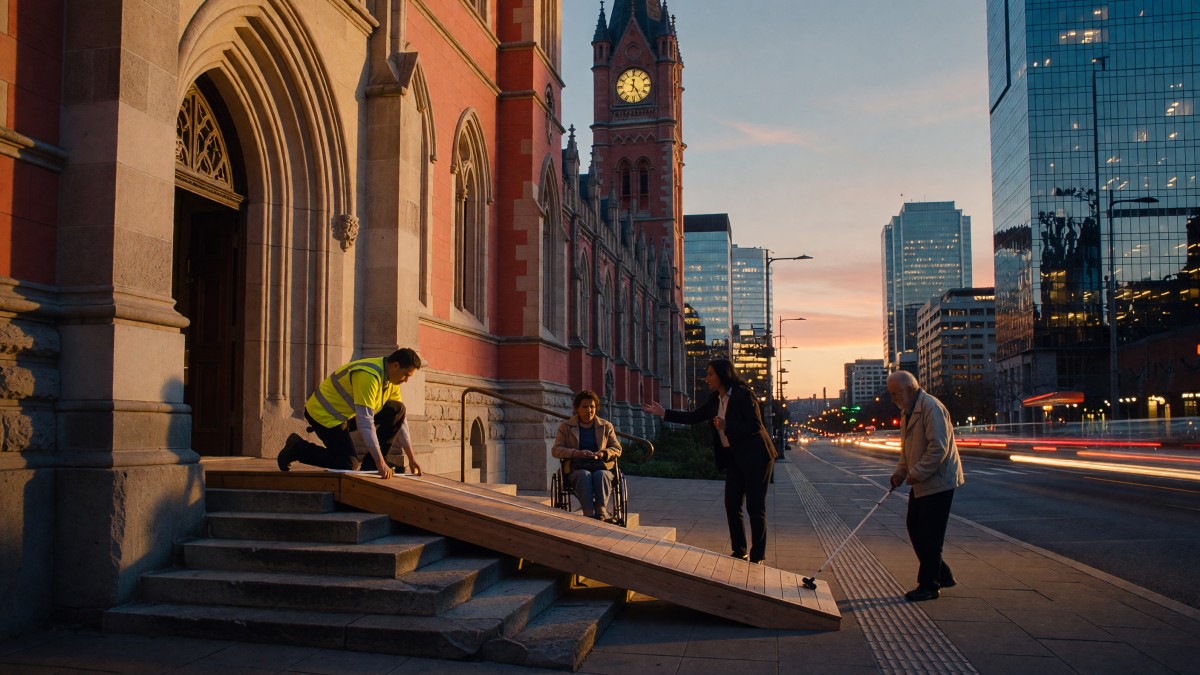
Barbados is taking its first steps toward a more inclusive public sphere as the historic Parliament Buildings become the pilot for the government’s “Access for All” project. Launched earlier this year by Minister of People Empowerment and Elder Affairs Adrian Forde, the initiative seeks to retrofit government facilities with the infrastructure needed for persons with disabilities to move freely and access services on an equal footing. While the inaugural assessment of the 152‑year‑old neo‑Gothic structure has highlighted both progress and lingering gaps, disability advocates stress that the journey toward a fully accessible Barbados will require sustained commitment, especially as the nation grapples with rising living costs and the need to modernise ageing public assets.
Why the Parliament Buildings Matter
The decision to begin the “Access for All” rollout at the Parliament Buildings is symbolic as well as practical. As the house of the people, the building embodies democratic participation, and any physical barrier within its walls risks silencing a segment of the citizenry. Senator Janelle Odle, the National Disability Advocate, underscored this point, noting that the very purpose of Parliament is to hear every voice, and that inaccessible chambers could keep some Barbadians from being heard entirely.
Beyond symbolism, the historic nature of the building presents concrete challenges. Its single elevator, narrow stairways and heritage‑grade design mean that modern accessibility solutions must be carefully integrated to preserve the structure’s character. Special evacuation mats have already been installed to aid emergency egress, acknowledging that safety cannot be compromised even as ramps and lifts are added.
The First Assessment: Findings and First‑Phase Work
Members of the Barbados Council for the Disabled, freshly trained at international seminars, conducted the inaugural audit. Their expertise, highlighted by Minister Forde, ensures that the assessments meet global best practice standards. The audit revealed that while some ramps and the wheelchair‑accessible elevator functioned, many other elements fell short of required specifications. Certified assessor Christopher Gilkes pointed out that certain ramps were “a bit too high,” making navigation difficult for wheelchair users.
Gilkes also reminded stakeholders that accessibility extends far beyond ramps. Door widths, bathroom layouts and tactile signage are all critical components. In several healthcare facilities, for example, doorways were too narrow for standard wheelchairs, and bathroom fixtures did not meet universal design standards. The audit’s findings have set the agenda for Phase One, which focuses on rectifying these immediate shortcomings within the Parliament complex.
Voices from the Community: What Users Experience
Wheelchair user Sean Cooke offered a personal account of the barriers that still exist across government premises. He cited the Immigration Department and the Treasury building as places where he routinely encounters inaccessible spaces, forcing him to request assistance or relocate his business to a more accommodating area. Cooke’s experience underscores a broader pattern: many public offices were not designed with mobility in mind, and retrofitting them poses logistical and financial challenges.
Beyond government offices, Cooke highlighted the urgent need to address accessibility in healthcare settings. He warned that inadequate access could have life‑or‑death implications, especially in emergencies where swift movement is essential. His remarks echo Gilkes’s observation that door widths and bathroom design are often overlooked, creating hidden obstacles that can hinder even routine visits to clinics and hospitals.
Legislative Backdrop: The Persons with Disabilities Act 2025
The Access for All project aligns with the Persons with Disabilities Act 2025, which mandates accessible parking, bathroom facilities and other accommodations across public and private sectors. Minister Forde argued that the government cannot legislate standards it does not meet itself, positioning the Parliament assessment as a proof‑of‑concept for the broader rollout. While the Act provides the legal framework, the practical implementation, as the audit shows, requires detailed technical guidance and sustained funding.
Executive Director of the Social Empowerment Agency, Colleen Walcott, noted that the cost of Phase One is still being finalised, with invoices under collection. This financial transparency signals the government’s intent to monitor expenditures closely, a prudent move given the island’s broader fiscal pressures, including rising energy costs and the need to sustain public services amid a tightening budget.
From Ramps to Whole‑Building Design: A Holistic Approach
Gilkes’s assessment stresses that true accessibility must be baked into the design process from the outset, not tacked on after construction. He advocated for early involvement of accessibility experts to ensure that ramps meet gradient specifications, doorways accommodate wheelchairs, and bathrooms feature grab rails and adequate turning space. This proactive stance is crucial for new builds, such as the Social Empowerment Agency’s client centre at Glebe, St George, slated for completion by December.
In practice, this means that architects, engineers and planners need to collaborate with disability organisations throughout the project lifecycle. The Council for the Disabled’s involvement in the Parliament audit demonstrates a model of partnership that could be replicated across ministries, ensuring that technical standards are met and that community feedback informs design decisions.
Looking Ahead: Phase Two and the Wider Rollout
Phase Two of the Access for All project will extend the audit and retrofit work to the Senate chamber and the House of Assembly, as well as to other sections of the Parliament complex. While no firm timeline has been announced, the momentum generated by the inaugural assessment suggests that the government intends to keep the process moving forward. Senator Odle’s call for “universal access” reinforces the notion that accessibility should become a default expectation rather than a special accommodation.
Beyond the walls of Parliament, the project aims to set a precedent for the private sector. By demonstrating that historic buildings can be sensitively adapted, the government hopes to encourage businesses, schools and tourism operators—particularly in Tobago’s burgeoning visitor economy—to adopt similar standards. This ripple effect could enhance the island’s reputation as an inclusive destination, aligning with broader Caribbean trends toward accessible tourism.
Community Impact and the Road to Full Inclusion
For many Barbadians, the Access for All project represents more than a series of building upgrades; it signals a societal shift toward recognising the rights and contributions of persons with disabilities. As Cooke expressed optimism about Barbados becoming fully accessible within the next five to ten years, his hope rests on sustained political will, adequate funding and continuous community engagement.
In the meantime, the visible changes—tactile signage for the visually impaired, wheelchair‑friendly elevators, and evacuation mats for emergencies—offer immediate relief and a tangible reminder that the state is listening. As the nation navigates the twin challenges of economic pressures and the need to modernise ageing infrastructure, the success of this initiative could serve as a benchmark for how inclusive policy translates into everyday reality for all Barbadians.
This article was produced with AI-assisted research and editorial support. Reporting is based on the source material cited below. Sources: Barbados Today; barbadostoday.bb; Global1.News (27 November 2026).
By Sharon Sahatoo, Staff Writer
What's Your Reaction?
 Like
0
 Dislike
0
 Love
0
 Funny
0
 Wow
0
 Sad
0
 Angry
0

Caribbean Correspondent at Global1.News. Based in Port of Spain, Trinidad, covering Caribbean politics, economy, energy, climate, and culture. Amplifying the voices and stories of the Caribbean region.












Comments (0)