
'It feels very therapeutic': The young hikers swapping screens for walking groups
Across the UK, a quiet revolution is underfoot. Young professionals, once glued to screens in office cubicles, are swapping digital maps for compass needles and city cafés for the hush of forest trails.
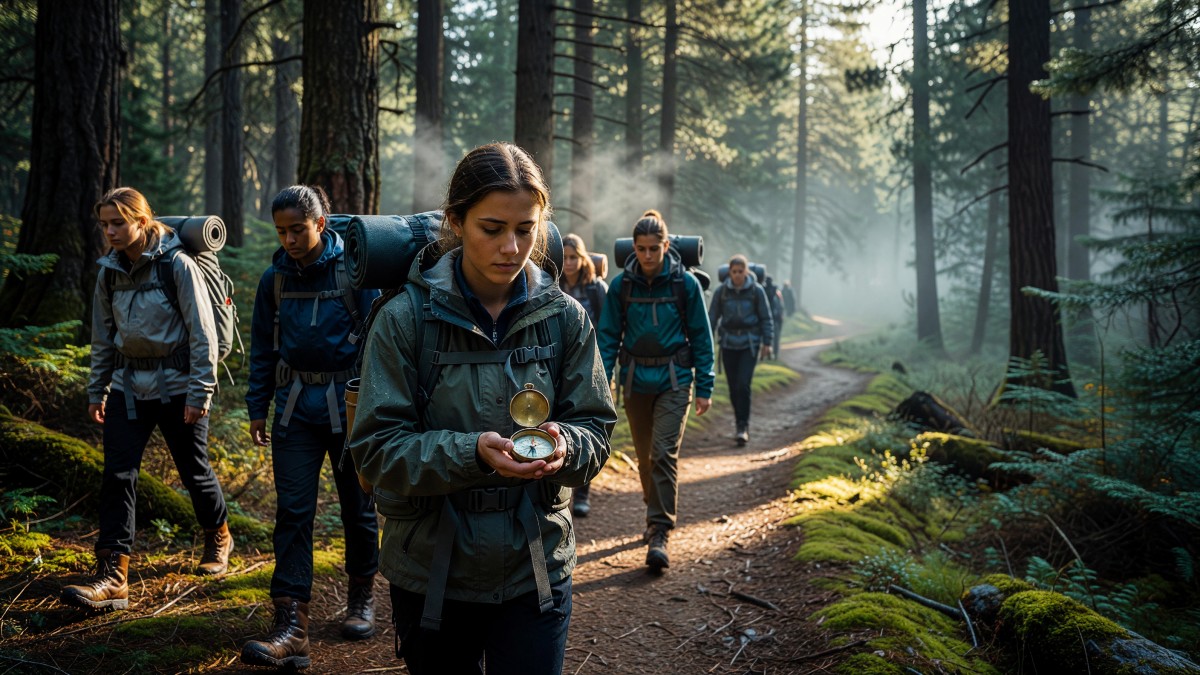
Across the UK, a quiet revolution is underfoot. Young professionals, once glued to screens in office cubicles, are swapping digital maps for compass needles and city cafés for the hush of forest trails. The trend, now evident from the rugged Highlands to the parklands of Leicester, is reshaping how a generation seeks mental clarity, social connection and a sense of purpose.
The rise of a new walking generation
Data from Sport England reveal that almost one in ten 16‑34‑year‑olds now describe themselves as regular hill walkers or hikers – a stark rise from just over two per cent eight years ago. This surge is not confined to remote regions; the Ramblers charity notes that walking groups from Inverness to Nottinghamshire have seen membership swell over the past two years, with some groups nearly doubling their enrolments.
Alistair Cooper, who runs the Out There Award programme, observes a distinct cohort emerging: young adults who missed out on outdoor pursuits during the pandemic and now crave the freedom of the open air, yet often lack the practical know‑how to navigate beyond a blue dot on a phone screen.
From desk‑bound to trail‑bound: personal stories
Mohannad Najjar, a 26‑year‑old former aerospace engineer in Istanbul, epitomises the shift. After years at a desk, he left his career to study nature and theology in Cambridge and now volunteers as a scout leader. Najjar spends weekends trekking the countryside, including the Scottish Highlands, crediting these walks with clearer thinking and a feeling of renewal.
Environmental science student Deborah Odutayo, 24, recounts an “identity crisis” that propelled her into solo hikes across Kent, the Peak District and a camping stint in Dorset. She describes the experience as “very therapeutic”, noting that navigating without a phone feels “more intentional and grounding”. Both narratives echo a broader sentiment: the outdoors offers a restorative counterpoint to the pressures of modern work life.
Health benefits beyond the fresh air
Research cited by the United Nations indicates that roughly 83 % of the UK population lives in towns and cities, environments characterised by noise, traffic and relentless information flow. Dr Danny Longman, a lecturer in human evolutionary physiology at Loughborough University, explains that such stimuli place heavy demands on the brain, compromising mental health.
Longman argues that nature aligns with our evolutionary wiring, delivering measurable gains in wellbeing, cognitive function and physical performance. He points to a theory that simply directing attention to trees and leaves allows the brain to recover, suggesting that even brief, mindful exposure to green spaces can act as a mental reset.
Walking as a social glue
Beyond individual health, walking groups are forging new social networks. Miranda Chambers‑Reid, who leads a Ramblers walking group for twenty‑somethings in Sheffield, highlights that participants seek friendships beyond work or university circles. “They don’t want all of their friends to be work friends or old uni friends,” she says, underscoring the desire for diverse, activity‑based connections.
For mothers like Chambers‑Reid, walking also offers a way to broaden social circles beyond “mum friends”. Her group has grown from 250 to 350 members in two years, reflecting a broader appetite for community built around shared outdoor experiences.
Women leading the way
Sej Chauhan, 27, founded the Leicester‑based Girls Who Walk after a solitary year of study in Bristol. Her initiative centres on park walks, conversation and female companionship, with coffee stops punctuating the routes. In just two years, the group has attracted over 300 members, predominantly aged 25‑35.
Chauhan notes that walking provides a low‑cost, low‑alcohol alternative to traditional socialising. “Social media can often fill the void outside of work and home, but it doesn’t provide the connection that people are craving,” she observes, positioning the simple act of walking as a remedy for the isolation amplified by digital life.
Barriers and practical tips
Despite the enthusiasm, access to green space remains uneven. Work commitments, childcare duties and geographic limitations can hinder participation. Longman offers pragmatic advice for those unable to venture far: listening to the sounds of wind, rain and birdsong; inhaling the distinctive scent of pine; or, when indoors, using apps that simulate natural soundscapes and imagery.
These low‑effort strategies aim to deliver some of the restorative benefits of nature without the need for extensive travel, acknowledging that the therapeutic value of the outdoors can be partially captured within the confines of a home or office.
Looking ahead: a sustainable outdoor culture
The momentum behind young walkers suggests a lasting shift in lifestyle priorities. With demand for map‑and‑compass courses for 18‑25‑year‑olds nearly doubling, organisations are responding to a clear desire for skills that restore autonomy from digital navigation.
If the current trajectory holds, walking could become a cornerstone of youth culture, offering a low‑cost, inclusive avenue for mental health, social cohesion and environmental stewardship. As more young adults trade screens for trails, the UK’s green corridors may well become the new arenas for community building and personal renewal.
This article was produced with AI-assisted research and editorial support. Reporting is based on the source material cited below. Sources: BBC News UK; bbc.co.uk; Global1.News (27 November 2026).
By Erica Thornton, Staff Writer
What's Your Reaction?
 Like
0
 Dislike
0
 Love
0
 Funny
0
 Wow
0
 Sad
0
 Angry
0

US Politics and Policy Correspondent at Global1.News. Based in Washington DC, covering American politics, policy, elections, and the courts. Knows how the system works and tells you what it actually means.













Comments (0)