
Japan's Education Minister Survives Censure Vote Amid Defence Budget Debate
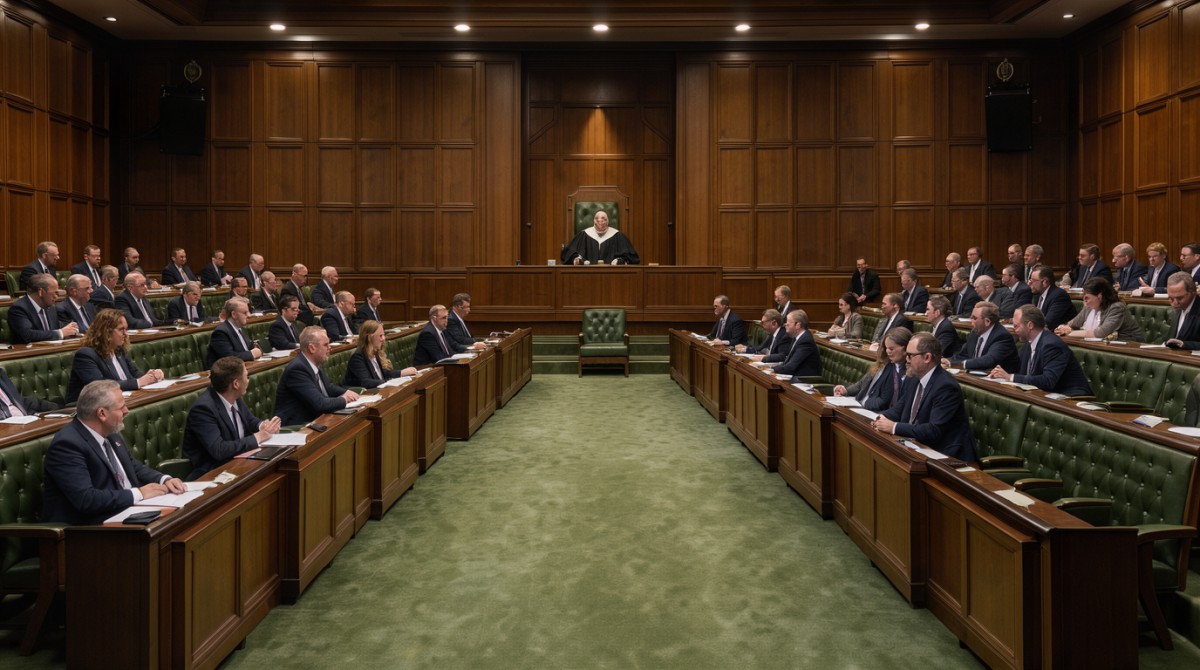
In a tightly contested session of the House of Councillors, Japan's Upper House rejected a censure motion against Education Minister Yoshihiro Seki by a margin of just four votes, according to the CNA report aired on 27 November 2026.
In a tightly contested session of the House of Councillors, Japan's Upper House rejected a censure motion against Education Minister Yoshihiro Seki by a margin of just four votes, according to the CNA report aired on 27 November 2026. The motion, which stemmed from a fundraising scandal that has shadowed Seki's tenure, highlighted the fragility of the ruling Liberal Democratic Party's (LDP) parliamentary dominance and underscored the broader political context in which Japan is debating a substantial increase in its defence spending. The narrow outcome, coupled with parallel discussions on a proposed US$350 billion defence budget through 2031, signals a period of heightened scrutiny for Prime Minister Fumio Kishida's administration as it navigates domestic accountability and strategic security imperatives.
Background to the Censure Motion
The censure motion against Minister Seki arose from allegations that he was involved in an improper fundraising activity during his previous role as a local assembly member. While the video report does not detail the specific nature of the alleged misconduct, it notes that the scandal has become a focal point for opposition parties seeking to challenge the LDP's governance record. The motion was tabled by a coalition of opposition lawmakers who argued that the minister's conduct violated the ethical standards expected of senior cabinet members.
In the Upper House vote, the motion fell short of the required majority by a narrow margin of four votes. This outcome reflects the LDP's ability to marshal sufficient support among its allies and independent councillors, but also reveals a growing willingness among some members to distance themselves from the scandal. The vote tally, though not disclosed in precise numbers, indicates that the opposition made significant inroads, suggesting that future motions could encounter even tighter margins if the ministerial controversy persists.
Analysts cited in the report suggest that the censure episode may have broader implications for the Kishida cabinet's cohesion. The Education Ministry, traditionally a portfolio with limited direct impact on Japan's defence posture, now finds itself entangled in a political narrative that could affect the government's credibility in handling more consequential security matters, such as the upcoming defence budget deliberations.
Defence Budget Proposal and Strategic Context
Concurrently with the censure vote, the report highlighted Tokyo's consideration of a US$350 billion defence budget covering the five-year period from 2027 to 2031. This figure, while lower than the amounts some senior officials and LDP lawmakers have advocated, still represents a substantial increase over the current defence allocation. The proposal reflects Japan's ongoing shift toward a more proactive security stance amid regional tensions, particularly concerning the activities of China and North Korea.
The budget plan, as described in the video, is part of a broader strategic review undertaken by the Ministry of Defence and the Ministry of Economy, Trade and Industry (METI). The emphasis is on modernising the Self‑Defence Forces, expanding missile defence capabilities, and investing in next‑generation technologies such as hypersonic weapons and autonomous systems. The proposal also aligns with the United States' expectations for Japan to assume a greater share of the regional security burden, a theme that has been recurrent in recent trilateral dialogues.
While the exact allocation of the US$350 billion remains under discussion, the report notes that some officials and ruling party lawmakers have been pushing for an even larger figure. The divergence between the current proposal and the higher aspirations underscores an internal debate within the LDP about the pace and scale of Japan's militarisation. The outcome of this debate will have direct implications for procurement programmes, including the acquisition of advanced fighter aircraft, naval vessels, and cyber‑defence infrastructure.
Political Ramifications of the Dual Crises
The juxtaposition of the education minister's censure vote and the defence budget deliberations creates a complex political landscape for Prime Minister Kishida. On one hand, the narrow survival of Minister Seki may embolden opposition parties to pursue further accountability measures, potentially targeting other cabinet members. On the other hand, the defence budget discussion demands a unified front to convey Japan's strategic resolve to both domestic audiences and international partners.
Observers referenced in the CNA coverage suggest that the Kishida administration may need to balance these competing pressures by reinforcing internal party discipline while demonstrating transparency in handling ministerial scandals. The ministry's handling of the fundraising issue could set a precedent for how future allegations are addressed, influencing public trust in the government's overall governance standards.
Moreover, the defence budget debate is likely to become a litmus test for the LDP's ability to rally support for a more assertive security policy. Should the budget be approved at the proposed US$350 billion level, it would signal a decisive shift toward heightened defence readiness. Conversely, a failure to secure sufficient parliamentary backing could expose fissures within the ruling coalition and weaken Japan's negotiating position in regional security forums.
Regional Implications and China’s Market Response
While the video primarily focuses on Japan’s internal political dynamics, it also touches on broader regional developments. Notably, Chinese equities posted their biggest gains in more than two years following a State Council statement pledging to stabilise markets. This market reaction, occurring on the same day as Japan’s censure vote and defence budget discussion, reflects the interconnectedness of East Asian financial and security environments.
The State Council’s intervention, as described, aims to mitigate market volatility amid concerns about external economic pressures. Although the report does not directly link the Chinese market move to Japan’s policy decisions, the timing suggests that both nations are navigating periods of heightened uncertainty. For Japan, the stability of Chinese markets holds significance for its export‑driven economy, especially in sectors such as automotive and high‑tech manufacturing.
Furthermore, the report’s mention of a chip loophole closure and its potential impact on China’s AI development underscores the strategic competition in technology. Japan’s own semiconductor and AI initiatives, overseen by METI, may be influenced by regional policy shifts, as Tokyo seeks to maintain a competitive edge while aligning with allied standards on export controls and intellectual property protection.
Domestic Policy Considerations: Education and Technology
The education scandal involving Minister Seki raises questions about governance standards within Japan’s public institutions. The fund‑raising allegations, while not detailed in the video, have prompted calls for stricter oversight of political fundraising activities and greater transparency in ministerial conduct. This incident could catalyse legislative reforms aimed at tightening ethics rules for public officials, a development that would intersect with broader governance reforms championed by the Kishida cabinet.
In parallel, the report highlights a seemingly unrelated but culturally resonant story: the continued relevance of fax machines in Japan amid major tech outages. This anecdote illustrates the resilience of legacy communication technologies in Japanese society, particularly in sectors where reliability is paramount. The persistence of fax usage may also reflect a cautious approach to digital transformation, a factor that policymakers must consider when promoting new technologies such as AI and cloud services.
These domestic themes intersect with Japan’s strategic objectives. Strengthening ethical standards in government can enhance public confidence, thereby supporting the implementation of ambitious defence and technology policies. Simultaneously, acknowledging the practical role of established technologies can inform a nuanced approach to digital infrastructure upgrades, ensuring that critical services remain uninterrupted during transitions.
Outlook and Potential Developments
Looking ahead, the narrow defeat of the censure motion suggests that Minister Seki’s political future remains precarious. Continued scrutiny from opposition parties and the media may pressure the prime minister to consider a cabinet reshuffle or to impose stricter internal controls on fundraising activities. Such actions would be intended to restore public trust and to preempt further parliamentary challenges.
In the defence arena, the forthcoming deliberations on the US$350 billion budget will likely dominate the legislative agenda in the coming months. The outcome will be a key indicator of Japan’s willingness to expand its defence capabilities in line with allied expectations and regional security demands. The budget’s final figure, whether it aligns with the current proposal or is adjusted upward, will shape procurement schedules, research funding, and the overall posture of the Self‑Defence Forces.
Regionally, the interplay between Japan’s policy choices and China’s market stabilisation measures will continue to influence investor sentiment and strategic calculations across East Asia. The Chinese equities rally, tied to a State Council pledge, may provide short‑term market buoyancy, but longer‑term trends will depend on how both nations manage the balance between economic cooperation and strategic competition.
In sum, the events captured in the CNA broadcast on 27 November 2026 illustrate a pivotal moment for Japan’s domestic politics and its broader security strategy. The narrow survival of the education minister, the debated defence budget, and the surrounding regional economic dynamics together paint a picture of a nation at a crossroads, where careful governance, decisive policy making, and strategic foresight will determine the trajectory of Japan’s role in the Asia‑Pacific landscape for the coming decade.
By Kenji Tanaka, Staff Writer
This article was produced with AI-assisted research and editorial support. Reporting is based on the source material cited below. Sources: CNA video report (27 November 2026); CNA; Global1.News
What's Your Reaction?
 Like
0
 Dislike
0
 Love
0
 Funny
0
 Wow
0
 Sad
0
 Angry
0

Japan Correspondent at Global1.News. Tokyo-based voice covering Japanese politics, technology, economy, and culture. Tracks the intersection of tradition and innovation in one of the world's most dynamic societies.











Comments (0)