
US announces new tariffs on host of countries including China
The United States’ latest wave of tariffs, announced in late November 2026, marks a renewed escalation in the trade confrontation that has defined Sino‑American relations since the early 2020s.
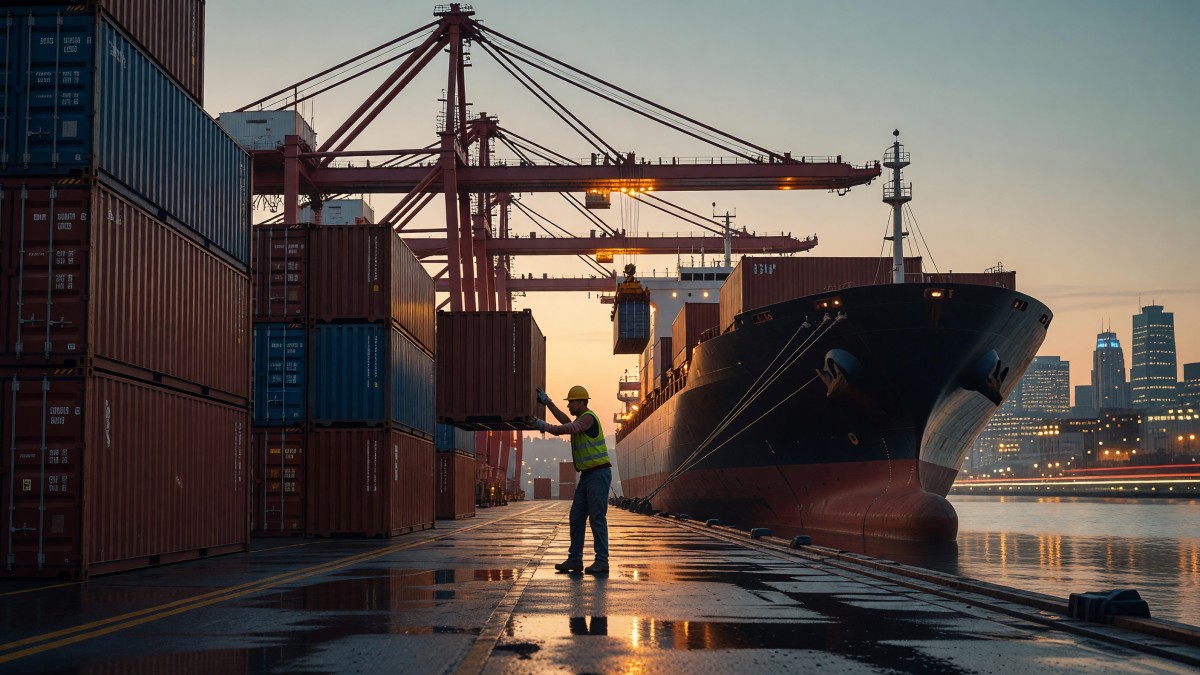
The United States’ latest wave of tariffs, announced in late November 2026, marks a renewed escalation in the trade confrontation that has defined Sino‑American relations since the early 2020s. By targeting a broad swath of Washington’s principal trading partners—including China, the European Union and a dozen Asian economies—the Trump administration is seeking to reshape the rules of global commerce under the banner of “leveling the playing field” for American workers. The move carries profound implications for the world’s two largest economies, for the architecture of multilateral trade governance, and for the broader strategic competition that now extends into technology, supply chains and geopolitical influence.
Scope and Legal Foundations of the New Tariffs
The tariff package, unveiled by the U.S. Trade Representative (USTR) Jamieson Greer, covers imports from China, the European Union, Singapore, Switzerland, Indonesia, Malaysia, Cambodia, Thailand, South Korea, Vietnam, Taiwan, Bangladesh, Japan, and India. Rates vary, with China facing the steepest levy of up to 40 percent, Vietnam up to 35 percent, and other jurisdictions subject to duties of either 20 percent or 25 percent. These figures represent the highest tariff levels imposed by Washington since the early‑2020s trade disputes.
Unlike the “Liberation Day” tariffs of April 2025, which were struck down by the Supreme Court for exceeding presidential emergency powers, the current measures are anchored in the USTR’s authority under Section 301 of the Trade Act. This legal shift is intended to provide a “stronger legal foundation,” as noted by Singapore Management University lecturer Chang Pao‑Li, reducing the likelihood of successful judicial overturns. Nevertheless, the tariffs remain subject to public consultation, potential hearings, and inevitable legal challenges from the affected jurisdictions.
Economic Rationale Presented by Washington
Greer framed the tariffs as a corrective tool against “industrial strategies” that, in his view, have for decades “targeted manufacturing, wage and labor suppression” while employing “market‑distorting practices” that tilt trade balances in favor of foreign producers. The administration argues that these practices erode the United States’ manufacturing base and depress wages, thereby justifying a “new, more sustainable course for the world economy.”
Underlying the rhetoric is a persistent drive to narrow the U.S. trade deficit—a long‑standing policy goal that President Trump has repeatedly invoked. By imposing higher duties on a selected basket of goods, the administration hopes to make imported products less competitive, encouraging domestic production and, ostensibly, “creating jobs” for American workers.
Immediate Reactions from Affected Partners
Responses have been uniformly critical. The Chinese Foreign Ministry dismissed the measures as “political manipulation,” labeling the U.S. claim that China “produces more than it can consume” as false. Vietnam’s Deputy Prime Minister Bui Thanh Son argued that the proposed rates are “not consistent” with the reality of bilateral economic‑trade cooperation. Japan called the tariffs “regrettable,” while Singapore expressed disagreement with the White House’s findings and signaled an intention to engage the USTR to mitigate the impact.
South Korea’s trade minister, however, highlighted a more nuanced stance, noting that a 15 percent tariff aligns with a previously agreed limit and could be deemed “more than a decent outcome.” Seoul had earlier pledged $350 billion in U.S. investment in exchange for lower tariffs, underscoring how tariff negotiations are intertwined with broader investment and strategic considerations.
Potential Economic Impact on Global Trade Flows
Economists caution that the new duties, while limited to a specific set of goods, could still exert upward pressure on consumer prices in the United States. Capital Economics’ Stephen Brown observed that the effective tariff increase is “a touch lower than we’ve been assuming for our forecasts,” suggesting that the immediate price impact may be modest. Nonetheless, any tariff increase tends to be passed on to consumers, contributing to inflationary pressures.
Beyond the United States, the tariffs risk disrupting supply chains that have become increasingly integrated across the Indo‑Pacific. Industries reliant on components from China, Vietnam or Taiwan may face higher input costs, prompting firms to seek alternative sourcing or to absorb higher expenses, potentially slowing the pace of post‑pandemic economic recovery in the region.
Strategic Implications for the U.S.–China Rivalry
The tariff announcement arrives amid a broader strategic contest between Washington and Beijing that now encompasses artificial intelligence, semiconductor technology, and influence over emerging markets. The United States’ decision to impose the steepest rate on China—up to 40 percent—reinforces the perception that trade policy is being wielded as a tool of geopolitical pressure.
While the two leaders, President Trump and President Xi, met recently, no concrete agreement on a trade truce was announced, indicating that the tariff escalation proceeds independently of diplomatic overtures. This parallel track of high‑level dialogue and punitive trade measures reflects a classic “dual‑track” approach, wherein the United States seeks to extract concessions while retaining leverage through economic coercion.
Legal and Institutional Challenges Ahead
Even with the Section 301 basis, the tariffs are not immune to contestation. The European Commission has already signaled intent to investigate the U.S. rationale, noting that the duties are “limited to the 15 percent previously agreed.” Brazil, though not part of the main list, has voiced “outrage” over a separate 10 percent tariff on its aircraft and sugar exports, threatening to challenge the measures in the World Trade Organization.
Historical precedent suggests that tariffs imposed under Section 301 can endure across administrations, as many of Trump’s first‑term duties remained in force during the Biden presidency. However, the current political environment—characterized by heightened partisan polarization and an increasingly litigious global trade system—means that the durability of these tariffs will depend on both domestic legal outcomes and the willingness of trading partners to pursue WTO dispute settlement mechanisms.
Strategic Outlook and Policy Recommendations
For policymakers in Washington, the key question is whether the tariffs will achieve their stated objective of protecting American workers without inflicting undue damage on the broader economy. The modest scope of the duties, coupled with the limited number of goods affected, suggests a calibrated approach, yet the symbolic weight of a 40 percent levy on China carries significant strategic resonance.
Chinese officials are likely to respond with counter‑measures, potentially expanding existing non‑tariff barriers or accelerating efforts to diversify away from the U.S. market. In the longer term, both sides may find greater benefit in negotiating sector‑specific agreements that address intellectual property, market access, and technology transfer concerns, rather than relying on broad‑based punitive tariffs that risk spiralling into a full‑blown trade war.
Regional partners, particularly those in Southeast Asia, should prepare for increased cost pressures while also leveraging the situation to negotiate better terms with both Washington and Beijing. Diversifying supply chains, investing in domestic value‑added capabilities, and engaging in multilateral forums such as the WTO and the Regional Comprehensive Economic Partnership will be essential strategies to mitigate the fallout.
In sum, the November 2026 tariff announcement represents a decisive, albeit legally fortified, escalation in the United States’ trade policy under President Trump. Its impact will be measured not only in the immediate price adjustments for consumers but also in the strategic calculus of the United States, China, and the broader network of trading partners navigating an increasingly contested global economic order.
This article was produced with AI-assisted research and editorial support. Reporting is based on the source material cited below. Sources: BBC News China; bbc.co.uk; Global1.News (28 November 2026).
By Prof. Marcus Chen, Staff Writer
What's Your Reaction?
 Like
0
 Dislike
0
 Love
0
 Funny
0
 Wow
0
 Sad
0
 Angry
0

World Politics Analyst at Global1.News. Based in Beijing, covering US-China relations, global trade, and geopolitical strategy. Brings deep analytical perspective to the power dynamics shaping international affairs.












Comments (0)