
'Justice for sport' - reaction to Afcon final verdict
The Court of Arbitration for Sport’s decision in late October to restore Senegal as the 2025 Africa Cup of Nations champions has sparked a wave of celebration across West Africa and a fresh legal challenge from Morocco.
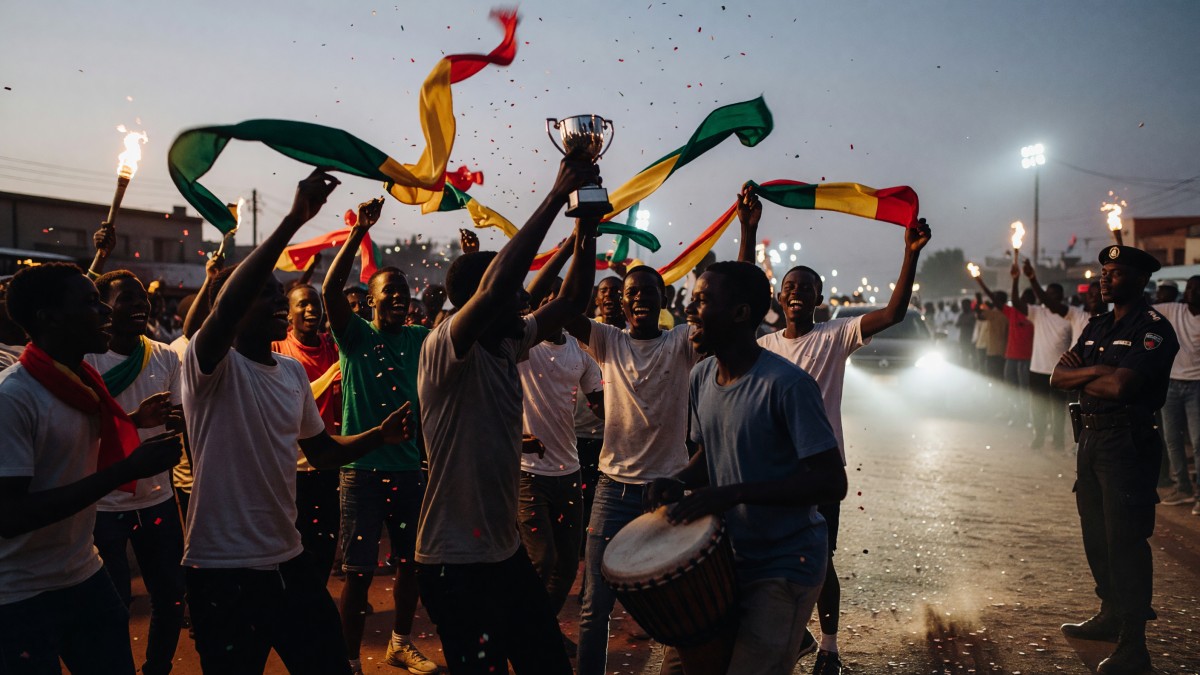
The Court of Arbitration for Sport’s decision in late October to restore Senegal as the 2025 Africa Cup of Nations champions has sparked a wave of celebration across West Africa and a fresh legal challenge from Morocco. The ruling, delivered by a three‑man CAS panel in Lausanne, overturned a CAF appeals board decision that had stripped the Teranga Lions of their title after they walked off the pitch in protest of a penalty awarded to Morocco. While Senegalese players and officials have welcomed the verdict as a vindication of their perseverance, the dispute has highlighted lingering tensions over the interpretation of tournament regulations and the authority of referees on the field.
Background to the controversy
In January 2025, Senegal edged Morocco 1‑0 in the Afcon final held in Rabat, with Pape Gueye scoring the decisive extra‑time goal. The victory was short‑lived; in March, CAF’s appeals board imposed a 3‑0 forfeit on Senegal, citing Articles 82 and 84 of the tournament regulations. Those articles state that a team that leaves the field without the referee’s permission is deemed the loser and must be eliminated, with a 3‑0 scoreline applied. The board argued that Senegal’s walk‑off, which occurred when the match was still goalless, triggered those provisions.
The decision ignited a legal battle that culminated in a hearing before CAS in October. The panel examined whether the referee’s actions—specifically, his decision to restart the match after the protest—could be questioned under the “field of play” doctrine, which traditionally shields on‑field rulings from external review unless there is evidence of arbitrariness or bad faith.
CAS’s unanimous verdict
After deliberation, the CAS panel unanimously overturned CAF’s forfeit, declaring that the referee’s authority to restart and conclude the match was final. As Serge Vittoz of the Senegalese Football Federation’s legal team explained, the primary argument rested on the principle that the referee is the “master of the decision on the pitch.” This doctrine, reinforced by former CAF disciplinary head Raymond Hack, maintains that only the referee can start, stop, or end a game, and that their decisions are not subject to retroactive legal scrutiny absent clear misconduct.
The panel’s reasoning aligned with long‑standing CAS practice of respecting the “field of play” doctrine. By affirming that the referee’s restart was legitimate, CAS effectively reinstated Senegal as the 2025 champions, a decision welcomed by Senegal’s football community and by several legal experts who view the ruling as a correct application of established sports law.
Senegal’s reaction and national pride
Senegal’s football federation president Abdoulaye Fall was among the first to express relief, describing the outcome as “justice for sport.” Players echoed the sentiment. Sadio Mané, the tournament’s player of the tournament, posted that the ruling “fills us with joy” and thanked the nation for its unwavering support. Captain Kalidou Koulibaly, who missed the final through injury, highlighted the emotional dimension, noting that victories are won both on the field and in the hearts of the people.
Pape Gueye, the match‑winner, called the decision “an immense relief” and emphasized the brotherly ties between Senegal and Morocco, urging that the shared passion for football continue to foster unity. The collective response underscores how deeply football is woven into Senegalese identity, with the title restoration seen as a reaffirmation of national pride and resilience.
Morocco’s legal challenge
Morocco’s football federation (FRMF) has not accepted the CAS verdict quietly. The federation announced it will “pursue all available legal avenues” and hinted at taking the case to the Swiss Federal Court. Former Moroccan international Hassan Kachloul argued that the referee should have ended the match when Senegal walked off, invoking Articles 82 and 84 as the proper framework. He contended that the IFAB’s rule change in April—allowing referees to send off players who leave the field without permission—was not applicable to the January final, as it was enacted after the incident.
Moroccan journalist Jalal Bounouar described the sentiment among his compatriots as “frustrated and disappointed,” noting that many feel the CAS panel ignored the importance of the competition regulations. The FRMF’s surprise at the decision reflects a broader concern that the legal foundations of CAF’s disciplinary processes may be inconsistent with evolving global football law.
Implications for CAF’s governance
The episode has reignited criticism of CAF’s disciplinary mechanisms. Algerian sports journalist Maher Mezahi warned that repeated overturns by CAS erode confidence in CAF’s own judicial bodies, describing the situation as “humiliating and degrading” for the confederation’s reputation. In response, CAF has tightened its regulations to prevent similar disputes, though observers note that the core tension between strict regulatory enforcement and the autonomy of on‑field officials remains unresolved.
Raymond Hack, a former head of CAF disciplinary, defended the CAS outcome as “the correct verdict,” emphasizing that the referee’s authority should remain paramount. Yet the debate highlights a structural dilemma: CAF must balance clear, enforceable rules with the practical realities of match officiating, especially as the sport’s governing bodies continue to update laws—as seen with IFAB’s April amendment on player conduct.
Looking ahead to Afcon 2027
The next Africa Cup of Nations, scheduled for June and July 2027, will feature both Senegal and Morocco among the early qualifiers. Players and officials on both sides view the upcoming tournament as an opportunity to move beyond the controversy. Kachloul suggested that the 2027 edition offers a chance to “draw a definitive line” under the Rabat incident, while also providing a platform for both nations to demonstrate their footballing excellence on the pitch rather than in courts.
For fans, the lingering memory of the 2025 final underscores the emotional stakes of continental football. As the continent prepares for another showcase of talent, the hope is that the lessons learned—particularly regarding the balance of regulatory clarity and respect for referee authority—will help preserve the integrity of the competition and the joy it brings to millions across Africa.
Broader reflections on African sport governance
The Afcon saga illustrates a broader challenge for African sport institutions: aligning domestic regulations with international standards while maintaining credibility among stakeholders. The clash between CAF’s internal rules and IFAB’s later amendment reveals the speed at which global football law evolves, often outpacing regional bodies’ capacity to adapt swiftly.
Legal scholars note that the CAS decision reinforces the principle that on‑field decisions, when made in good faith, should be insulated from post‑match legal reinterpretation. Yet the Moroccan appeal underscores a persistent desire for clearer, pre‑emptive guidelines that leave less room for divergent legal interpretations. As African football continues to grow in stature and commercial importance, the need for transparent, consistent governance becomes ever more critical to safeguarding the sport’s reputation and ensuring that victories are celebrated on the pitch, not contested in courts.
This article was produced with AI-assisted research and editorial support. Reporting is based on the source material cited below. Sources: BBC News Africa; bbc.co.uk; Global1.News (27 November 2026).
By Amara Diop, Staff Writer
What's Your Reaction?
 Like
0
 Dislike
0
 Love
0
 Funny
0
 Wow
0
 Sad
0
 Angry
0

West Africa/Sahel Correspondent at Global1.News. Dakar-based journalist covering politics, security, climate, and development across Francophone and Anglophone West Africa. Tells the stories of a region undergoing profound transformation.













Comments (0)