
France Orders Depardieu to Stand Trial for Rape, and Lets One Charge Go
A Paris appeals court upheld the order sending Gerard Depardieu, 77, to trial over the alleged rape of Charlotte Arnould on 7 August 2018, while dismissing a second allegation from six days later. He denies the charge and no trial date has been set.
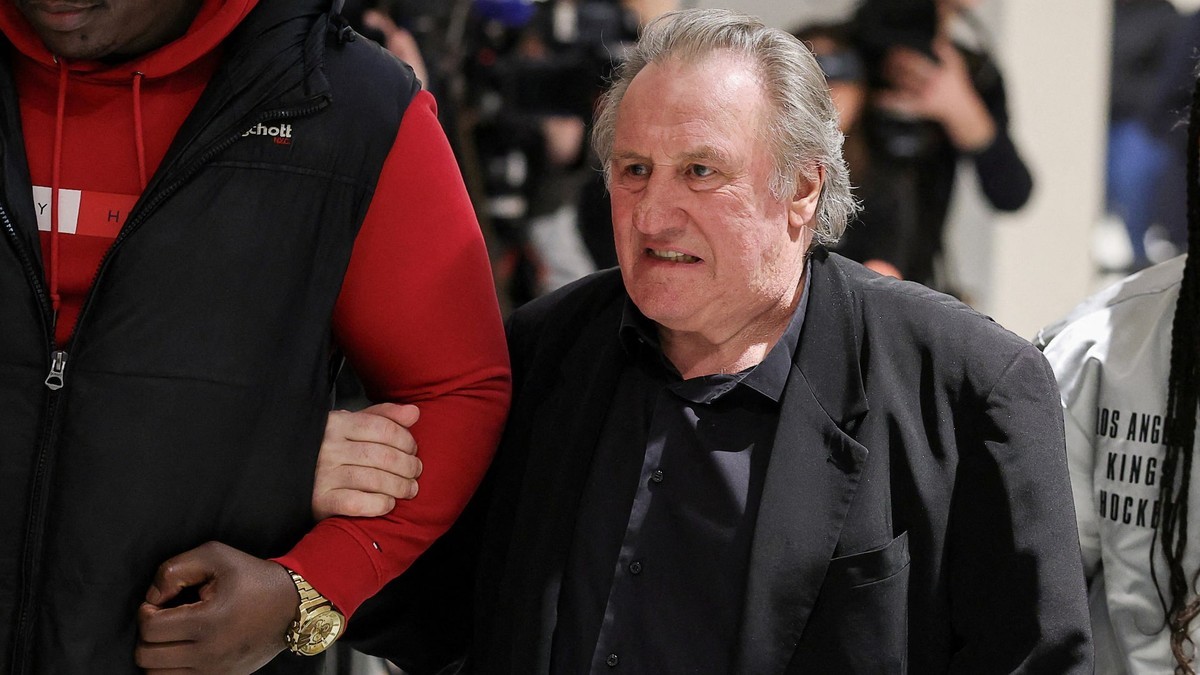
A Paris appeals court ruled on Thursday that Gérard Depardieu must stand trial for the alleged rape and sexual assault of actress Charlotte Arnould at his Paris home on 7 August 2018. The decision by the investigating chamber of the Paris Court of Appeal sends the 77-year-old actor before the departmental criminal court of Paris. He denies the allegations, and a trial will decide the charge. The ruling matters because it keeps a case that began with a complaint in 2018 on course for a criminal trial.
The decision was split: the court upheld the referral on the 7 August allegation but issued a non-lieu, a dismissal, over a second alleged incident on 13 August 2018. The immediate legal question is whether the defense will challenge the ruling before the Cour de Cassation, France's highest court for civil and criminal cases.
France Orders Depardieu to Stand Trial for Rape, and Lets One Charge Go
Paris, France — The ruling came from the investigating chamber after a closed-door hearing on 17 September, and it confirms a referral first ordered on 28 August 2025. The ruling lands less than two weeks after he dropped his appeal against a separate sexual-assault conviction and apologized for it. No trial date has been set.
What the Court Decided
The investigating chamber did more than confirm that a trial will go ahead. The chamber upheld that order, and what the order concluded is the substance of the case. According to the order, Arnould was assaulted while in a "state of shock" and under mental constraint; Depardieu "committed the acts in full knowledge of the non-consent of Charlotte Arnould"; and "at no moment" did he seek "the voluntary and explicit agreement" of Arnould to his sexual advances, instead "abusing [her] vulnerability." The magistrate set Arnould's "clear and precise statements", unchanged since she first complained in 2018 and through the seven years that followed, against the actor's "shifting accounts". The magistrate also cited his "very personal view ... of the relationships he may have with women in situations of inferiority." Prosecutors had argued, citing a longstanding Cour de Cassation ruling, that "coercion must be assessed in concrete terms based on the victim's capacity to resist." The court retained one of the two dates before it and dismissed the other.
The Morning of August 7, 2018
Arnould was 22 at the time, an actress and dancer, the daughter of longstanding friends of the actor, according to Mediapart. She went to his Left Bank townhouse on the morning of 7 August 2018 to discuss theatre and ask his advice about sitting the entrance exam to the Conservatoire national supérieur d'art dramatique; she said she then considered him "a spiritual father." CCTV from cameras in the principal salon showed Depardieu beginning to touch her while she was immobile, holding her hands fast behind her back; he then took her to a first-floor bedroom where she says he forcibly penetrated her. Under French law rape is defined as non-consensual penetration of the vagina, anus or mouth with "a penis, fingers, another part of the body or an object." In this case he is accused of non-consensual penetration with his fingers. Arnould has said she was "petrified" and "shocked," left like "a dead puppet." In a statement to police, Depardieu described the events as a "full-on flirt", "totally consensual", during which "she put up no resistance." He denies the charge.
Why the Second Allegation Was Dismissed
The appeal court issued a non-lieu over the alleged incident of 13 August 2018, when Arnould returned at Depardieu's invitation, asked to bring a copy of Molière's play "Les Femmes savantes," and said she intended to "give him a talking to"; she alleges he again forcibly penetrated her. The dismissal is not a finding that nothing happened. Lilia Mhissen, lawyer for the Collectif féministe contre le viol, a civil party to the case, said the ruling consists of considering that there could be, in part, acts of rape, and in part a dismissal, "which is a big disappointment." Mhissen said: "I'll find out the reasoning of the court but for me, this decision makes no sense. As of the moment that the first acts of rape were sufficiently established to allow charges to be brought, the second should have been also." Arnould said on France Inter that if he is found guilty of the 7 August acts, in her view he is also guilty of the 13th.
The Conviction He Chose Not to Fight
On 13 May 2025, Depardieu was convicted of sexually assaulting two women — a set decorator and an assistant — during the 2021 filming of "Les Volets Verts" ("The Green Shutters"). He was given an 18-month suspended prison sentence. The sentence included an additional penalty for "secondary victimisation" over the aggressive manner in which his defense lawyers questioned witnesses, according to RFI. The court ordered his name entered in France's national sex-offender database, FIJAIS, AP reported. He appealed; the appeal trial was due to run 16-20 November 2026. On 16 November 2026, at the Paris Court of Appeal's criminal chamber, his lawyers said he had withdrawn the appeal. The conviction became final. He issued a written statement accepting it: "Justice has spoken. I have been found guilty. I hear that and accept this conviction." He had denied wrongdoing in that case until the withdrawal.
His Accuser Calls the Apology Public Relations
In the same statement of 16 November, Depardieu said: "On film sets, I have long hidden behind provocation and crude humor. I believed my words and some of my actions had no consequences. But they did, particularly coming from someone who held as much power as I once did." He added: "I therefore offer my deep and sincere apologies to those who may have suffered." Arnould, in her first public reaction on France Inter on Friday 27 November, dismissed the apology: "C'est de la communication" — it is public relations. She said: "These apologies were not written by him, that's obvious, and I find he doesn't admit much in the end." Her lawyer Carine Durrieu Diebolt said the apology was communication aimed only at the trial concerning Charlotte Arnould. Arnould also said she was surprised by the ruling but called it "a real victory" because she wanted a trial and a referral to the criminal court.
Two Lawyers, Two Ways to Read One Ruling
Delphine Meillet, Depardieu's lawyer, described the ruling as "satisfying" because the actor is now "at the halfway point," Mediapart reported. David-Olivier Kaminski, his other lawyer, said: "The courts have only half proved him right." Kaminski said that because the court found that a part of the case didn't stand up, it had recognized the justness of half of Depardieu's defense. "Judicial victories are often victories punctuated by several stages. This is a judicial stage which establishes an innocence of Gérard Depardieu in half of the case. The other half of the judicial path remains to be travelled," he said, according to Mediapart. Kaminski told BFMTV that as soon as the ruling is received, the defense will examine the possibility of an appeal to the Court of Cassation. He told AFP the decision marked an "initial victory for Gerard Depardieu." Durrieu Diebolt said of a possible cassation appeal: "nous sommes gagnantes des deux côtés", meaning her client wins either way.
Eight Years From Complaint to Trial Order
On 27 August 2018, Arnould filed a complaint at the gendarmerie in Lambesc, Bouches-du-Rhône, southern France; the case passed to Paris prosecutors. On 4 June 2019, Paris prosecutors closed the investigation without charges, saying the investigative work had not established every element required to constitute the alleged offenses; surveillance footage had been read as potentially indicating consensual encounters. Closing the case was not an acquittal. In 2020, Arnould filed a further complaint as a civil party, a procedure that forces a judicial investigation; an investigating judge was appointed. On 16 December 2020, Depardieu was placed under formal investigation for rape and sexual assault; the decision became public in February 2021. In March 2022, the Paris Court of Appeal upheld the formal investigation after he sought to annul it. Two years later, the Paris prosecutor's office asked that he be tried on both counts. On 28 August 2025, an investigating judge ordered him sent to trial on both counts; his defense appealed. On 17 September 2026, the appeal was heard behind closed doors; no ruling issued that day.
The Career That Made Him Untouchable
Born 27 December 1948 into a working-class family in Châteauroux, central France, one of six children, Depardieu left school at 13, barely literate, and became involved in petty crime, RFI reported. In his 2014 autobiography "Ça s'est fait comme ça" he wrote that he worked as a prostitute, stole from graves and sold black-market cigarettes and alcohol near a US air base. He moved to Paris in the early 1960s to pursue acting; his screen debut came in 1967. He worked with Jean-Luc Godard, François Truffaut, Alain Resnais, Claude Chabrol, Ridley Scott and Bernardo Bertolucci. His career spanned more than 200 films and television series, with international acclaim for "Green Card" in 1990, which brought a Golden Globe for best actor, "Hamlet" in 1996, "The Man in the Iron Mask" in 1998, "La Vie en Rose" in 2007 and "Life of Pi" in 2012. He accepted a Russian passport from President Vladimir Putin in 2013 amid a dispute over French taxes.
What France Did With Him in 2023
Mediapart reported that since 2018 at least 24 women have accused Depardieu of sexual assault, in the media or through the judicial system. In December 2023, after a France 2 "Complément d'enquête" documentary, his wax statue was removed from the Musée Grévin; he was stripped of the National Order of Quebec and lost the title of honorary citizen of a Belgian commune, Le Figaro reported. Culture Minister Rima Abdul Malak announced a Legion of Honour disciplinary procedure that could have stripped his decoration. President Emmanuel Macron defended him on France 5's "C à vous," denounced a "chasse à l'homme" and said the Legion of Honour was not "a moral order." He added: "Il a fait connaître la France, nos grands auteurs, nos grands personnages dans le monde entier ... il rend fière la France" — he has made France proud. Former president François Hollande responded on France Inter: "Non, nous ne sommes pas fiers de Gérard Depardieu" — "no, we are not proud of him." Dozens of French actors signed an open letter denouncing what they called the "lynching" of Depardieu.
What Happens Next
The referral sends the 7 August 2018 allegation to the departmental criminal court of Paris. No trial date has been set. RFI reported on 16 November that if the order were upheld, Depardieu "could stand trial over Arnould's accusations in 2027". Whether the defense will pursue that route is not yet known. Arnould said on France Inter: "Je suis confiante et je pense que je suis prête, vraiment" — she is confident and believes she is ready. Her lawyer Durrieu Diebolt said: "Charlotte Arnould awaits this trial with impatience." Durrieu Diebolt called the ruling "a 'first' in France". She added: "The time taken has already been too long, eight years of procedures, it's her life that has been placed on hold." Earlier, after he was first sent for trial, Arnould told RTL: "I will be ready, I have truth on my side, I am not afraid."
By Jessica Ali, Staff Writer
This article was produced with AI-assisted research and editorial support. Sources: The Associated Press; Reuters; Mediapart; Le Monde; RFI; France Inter; Euronews; Le Figaro; AFP via France24. Photographs: Gonzalo Fuentes/Reuters (lead photograph, file); Cyril Pecquenard/SIPA.
What's Your Reaction?
 Like
0
 Dislike
0
 Love
0
 Funny
0
 Wow
0
 Sad
0
 Angry
0

Editor-in-Chief at Global1.News. Atlanta-based journalist who cuts through the BS and tells it like it is. Lead anchor, host, and the voice you hear when the spin stops and the truth starts.













Comments (0)