
Laundry: Apartheid-Era Family Drama Heads to French Cinemas
When a young South African man chose music over the family laundry, he never imagined his story would echo across three continents. Zamo Mkhwanazi's debut feature "Laundry" — a film born from her own family's history under apartheid — has spent a year winning over festival audiences from Toronto to Geneva to Amman.
When a young South African man chose music over the family laundry, he never imagined his story would echo across three continents. Zamo Mkhwanazi's debut feature "Laundry" — a film born from her own family's history under apartheid — has spent a year winning over festival audiences from Toronto to Geneva to Amman. Now, as it prepares to open in French cinemas on September 2, this intimate portrait of resistance arrives at a moment when the conversations it provokes feel more urgent than ever.
Laundry: Apartheid-Era Family Drama Heads to French Cinemas
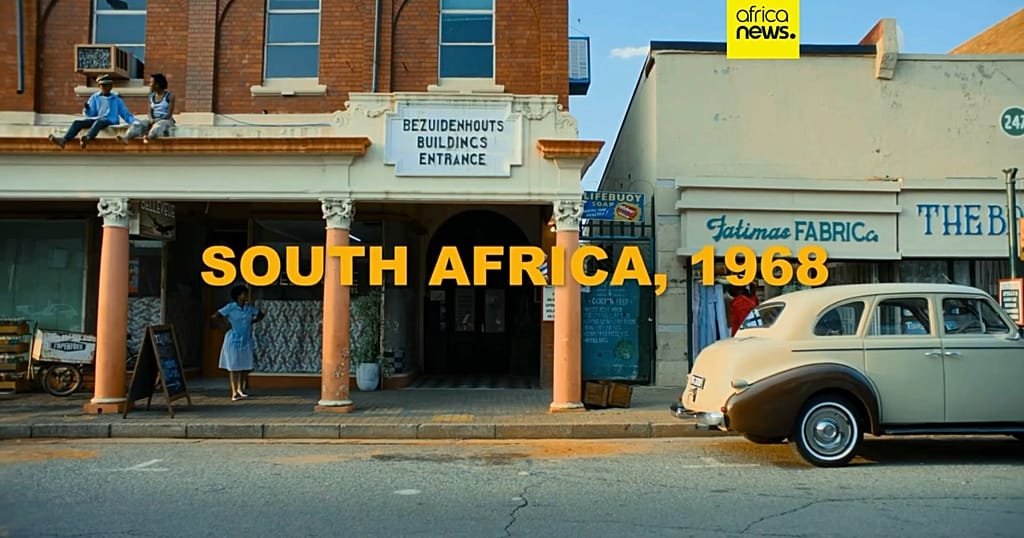
Johannesburg, South Africa — Set in 1968 in a whites-only neighborhood of Johannesburg, "Laundry" tells the story of the Khutala family, who run a small laundry business while the apartheid regime systematically targets Black-owned enterprises. The film follows a young man torn between his dreams of becoming a musician and his duty to save his father's business — and his family — under a violent and oppressive system. Its journey from a personal family memory to the global festival circuit is a story in itself, and this week it takes another step forward as the film reaches European audiences.
A Family Story Written in History
Zamo Mkhwanazi does not hide from the personal weight of her subject matter. "Laundry" is the debut feature of the South African writer-director, and she has been candid about its origins. "This is based on a story that happened to my mother's family," she told festival audiences during the film's year-long circuit. The real events took place in the late 1950s, a period when the apartheid state was consolidating its grip on every aspect of Black life in South Africa.
But Mkhwanazi made a deliberate choice to shift the story forward in time. The film is set in the late 1960s, a moment she describes as the beginning of the resuscitation of the struggle after leaders had been imprisoned. It was a period when, in her words, any resistance had been destroyed and "there was really no one fighting for Black people." This historical repositioning allows the film to explore not just the brutality of the system, but the quiet, unglamorous work of survival that ordinary families undertook in the shadows of state violence.
For Mkhwanazi, this is not abstract history. It is the texture of her own family's memory, passed down through generations. The choice to set the film in the late 1960s rather than the 1950s was not merely aesthetic — it was political. The late 1960s represented a vacuum of organized opposition, a time when the anti-apartheid movement had been decapitated and families like the Khutalas had to find their own ways to endure. This is the soil from which the film grows.
Mkhwanazi arrives at this debut feature with a foundation of acclaimed short films. Her earlier work includes "Philia" (2011) and "The Call" (2015), the latter of which premiered at the prestigious Clermont-Ferrand Short Film Festival and was selected for the Toronto International Film Festival. These credentials signaled a filmmaker with a distinctive voice, one attuned to the complexities of human relationships set against larger political backdrops.
As a South African woman filmmaker, Mkhwanazi is telling a history that has often been narrated by men. Her approach is collaborative — she has described herself as a collaborative director who is interested in ideas from performers. This is not a top-down vision but a shared excavation of memory. She has spoken warmly of her lead actor, noting that he "worked very hard and asked many questions before we even got on set." That preparation shows in the film's performances, which carry the weight of a history that is both personal and collective.
1968 Johannesburg: A Regime Against Black Enterprise
The world of "Laundry" is one where the everyday act of washing clothes becomes a political statement. The Khutala family runs a small laundry business in a whites-only neighborhood of Johannesburg, a precarious existence under a regime that viewed Black economic independence as a threat. The apartheid state's targeting of Black-owned enterprises was systematic, enforced through pass laws, the Group Areas Act, and the constant threat of state repression.
At the center of the film is a young man whose aspirations as a musician clash with the duty to preserve his family's laundry business. This is not a simple generational conflict — it is a question of survival. The business is not just a source of income; it is a foothold in a city that was actively trying to push Black families out. The protagonist's musical dreams represent a different kind of freedom, one that the apartheid system was designed to crush.
The film's Zulu title, Uhlanjululo, speaks to this tension. The word carries connotations of cleansing and purification, echoing the literal work of the laundry but also pointing to something deeper — the possibility of washing away the stains of oppression. Mkhwanazi uses the everyday act of washing clothes as a metaphor for dignity and survival, finding poetry in the most mundane of labors.
The specific textures of 1968 South Africa are rendered with care. The pass laws that restricted Black movement, the Group Areas Act that dictated where families could live, the ever-present threat of police violence — these are not background details but the very fabric of the Khutalas' existence. The film shows how ordinary people found small acts of resistance within this suffocating system, whether through music, through community, or simply through the determination to keep their business alive.
What makes "Laundry" distinctive is its refusal to reduce its characters to victims. The Khutalas are not passive recipients of history; they are agents navigating a brutal system with whatever tools they have. The laundry business becomes a site of resistance precisely because it represents Black economic self-determination in a society that denied Black people any claim to the city. This is the quiet heroism that Mkhwanazi captures on screen.
From Toronto to Geneva: A Festival Journey
"Laundry" has spent the past year building momentum across the global festival circuit. The film had its world premiere at the Toronto International Film Festival (TIFF) in 2025, where it was introduced to international audiences as a young man's struggle to find his own path and save his father and family business under a violent and oppressive apartheid regime. TIFF's description captured the film's dual focus — the personal and the political intertwined.
From Toronto, the film traveled home. It was selected as the opening film of the Joburg Film Festival 2026, a homecoming that carried symbolic weight. For a South African film about South African history to open the country's premier festival was a statement of arrival. The audience in Johannesburg received the film with the recognition that comes from shared memory.
In March 2026, "Laundry" competed at the Geneva International Film Festival and Forum on Human Rights (FIFDH), which ran until 15 March 2026 under the theme "Between Resistance and Revolt: The Power of Images." The festival, which presents fiction and documentary films examining authoritarian and international abuses, proved a natural home for Mkhwanazi's work. The film won the Youth Jury Prize in the Fiction section at FIFDH Geneva, a recognition from younger viewers who connected with its themes of resistance and family duty.
The festival run continued with the Amman International Film Festival 2026, where "Laundry" won the Black Iris and audience awards. This double recognition — from the jury and from the public — underscored the film's broad appeal. It also marked a significant moment for African cinema in the Middle East, a region with its own complex relationship to questions of resistance and state power.
The film was also selected at FESCAAAL, the Festival of African, Asian and Latin American Cinema in Milan, further cementing its place in the global conversation about cinema from the Global South. Reviews have called the film an intimate portrait of family, resistance, and art under apartheid, praising Mkhwanazi's ability to find the universal in the specific. The festival journey has been a testament to the film's power to travel across borders while remaining rooted in its South African soil.
'The Power of Images': Why This Story Resonates Now
Mkhwanazi is clear about why this story matters in the present moment. She believes that South Africans must see activists, thinkers, and filmmakers continue to speak the truth about their history and its ongoing consequences. The film arrives at a time when the promises of the post-apartheid era have not been fully realized, and the questions it raises about economic justice and historical accountability remain unresolved.
"The conversation on reparations, restitution, and redistribution of wealth in South Africa has come to a complete stop," Mkhwanazi has said. This is a direct challenge to the political class and to a society that has grown comfortable with the status quo. Her warning is stark: "we've been stolen from. Not having that conversation is about entrenching injustice and allowing room for more injustice." These words carry particular weight in a country where the economic inequalities of apartheid persist in stark form.
The FIFDH's mission of examining authoritarian abuses through fiction and documentary provides a framework for understanding the film's resonance. Cinema becomes a tool for human rights conversations across the continent, a way of making visible the histories that official narratives would prefer to bury. "Laundry" is part of a broader tradition of African filmmaking that uses the medium to reckon with difficult histories.
From Senegal to Nigeria, African filmmakers have long used cinema to confront the traumas of the past. The great Ousmane Sembène, the father of African cinema, built his career on films that refused to look away from the violence of colonialism and its aftermath. Mkhwanazi's work stands in this tradition, using the intimacy of family drama to illuminate the larger structures of oppression that shaped — and continue to shape — African lives.
The film's resonance extends beyond South Africa. In a moment of global authoritarian resurgence, the story of a family fighting to maintain its dignity under an oppressive regime speaks to audiences far beyond the continent. The power of images, as the FIFDH theme suggested, lies in their ability to make us feel the human cost of political systems. "Laundry" does this with remarkable restraint and emotional precision.
Laundry and the Rise of African Cinema
"Laundry" arrives at a moment of remarkable vitality for African cinema. The past few years have seen a wave of debut features from African women directors making global debuts, telling stories that challenge both Western stereotypes and domestic orthodoxies. This is not a marginal phenomenon but a genuine renaissance, with African films finding audiences at TIFF, Venice, Cannes, and human-rights festivals around the world.
The commercial trajectory of "Laundry" reflects this growing appetite for African stories. The film's MENA distribution deal was handled by Rome-based Summerside Media, a sign of the international infrastructure now supporting African cinema. The film had a commercial theatrical release in the United Arab Emirates in June 2026, and now it prepares for its French release. These are not just festival screenings — they are real commercial ventures, with real audiences paying to see African stories on the big screen.
The expansion of streaming and theatrical windows for African stories has been a game-changer. African filmmakers no longer have to choose between local relevance and international visibility; they can have both. The success of films like "Laundry" signals to young African filmmakers that personal family history can become universal cinema, that the stories their grandmothers told them can resonate with audiences in Geneva and Amman and Paris.
What is particularly striking about "Laundry" is its refusal to exoticize its subject matter. The film treats the Khutala family with the same seriousness that European and American cinema reserves for its own domestic dramas. This is a political act in itself — a declaration that African lives are worthy of the full range of cinematic attention, from the intimate to the epic.
The rise of African cinema is not just about individual films but about the ecosystem supporting them. Festivals like FESPACO in Ouagadougou, the Joburg Film Festival, and the various human-rights festivals that have embraced "Laundry" are building the infrastructure for a sustainable African film industry. The success of Mkhwanazi's debut is a sign that this ecosystem is working, that talent can be nurtured, and that audiences around the world are ready for these stories.
What to Watch For
The French theatrical release of "Laundry" begins on September 2, 2026, bringing the film to one of Europe's most important cinema markets. French audiences have a long history of embracing African cinema, and the film's release there is a significant moment. The distribution deal represents a vote of confidence in the film's commercial and artistic appeal.
For European audiences, the screening offers an opportunity to engage with a chapter of South African history that is often reduced to headlines. The film provides a human entry point into the complexities of apartheid — not as a distant historical event but as a lived reality with ongoing consequences. The intimacy of the family drama makes the political personal in ways that news reports cannot.
The wider conversation about reparations and restitution in South Africa that the film reignites is one that will continue long after the credits roll. Mkhwanazi's direct words — "we've been stolen from" — have a political resonance that extends beyond the cinema. The film is not just a work of art; it is an intervention in a national debate that has been too long deferred.
African audiences can follow the film's journey through its continuing international festival and distribution run. The film's success demonstrates the growing momentum for African storytelling on the world stage in 2026, and it offers a model for other filmmakers seeking to bring their stories to global audiences. Supporting African cinema means showing up for films like "Laundry" — in theaters, at festivals, and in conversations.
As "Laundry" prepares to open in France, it carries with it the weight of a family history, the hopes of a new generation of African filmmakers, and the urgent questions of a continent still reckoning with its past. Zamo Mkhwanazi has made a film that is both deeply personal and profoundly universal — a story about a young man and his family that speaks to the struggles of millions. That is the power of cinema, and it is on full display in this remarkable debut.
By Amara Diop, Staff Writer
This article was produced with AI-assisted research and editorial support. Reporting is based on sources cited in the article.
What's Your Reaction?
 Like
0
Like
0
 Dislike
0
Dislike
0
 Love
0
Love
0
 Funny
0
Funny
0
 Wow
0
Wow
0
 Sad
0
Sad
0
 Angry
0
Angry
0

West Africa/Sahel Correspondent at Global1.News. Dakar-based journalist covering politics, security, climate, and development across Francophone and Anglophone West Africa. Tells the stories of a region undergoing profound transformation.










Comments (0)