
La Guaira Two Months After the Quakes: Businesses Reopen Amid Fragile Recovery
Two months after the ground convulsed twice in 39 seconds, La Guaira is a study in contrasts. The rubble has been partially cleared from La Atlantida Avenue, and the sound of metal shutters rolling up has replaced the constant wail of sirens. But the silence of missing customers is deafening. The June 24 seismic doublet—a magnitude 7.2 and 7.5 pair that struck 39 seconds apart—left more than 6,000 dead and roughly 80% of the state’s buildings collapsed or severely damaged.
La Guaira's Fragile Resurrection: Two Months After the Doublet
La Guaira, Venezuela – August 24, 2026 — Two months after the June 24 doublet, the commercial spine of Venezuela's hardest-hit state is stirring back to life even as the human and economic aftershocks persist — a recovery Al Jazeera English's Noris Soto documented from the ground in La Guaira.

A City Reopens Storefront by Storefront
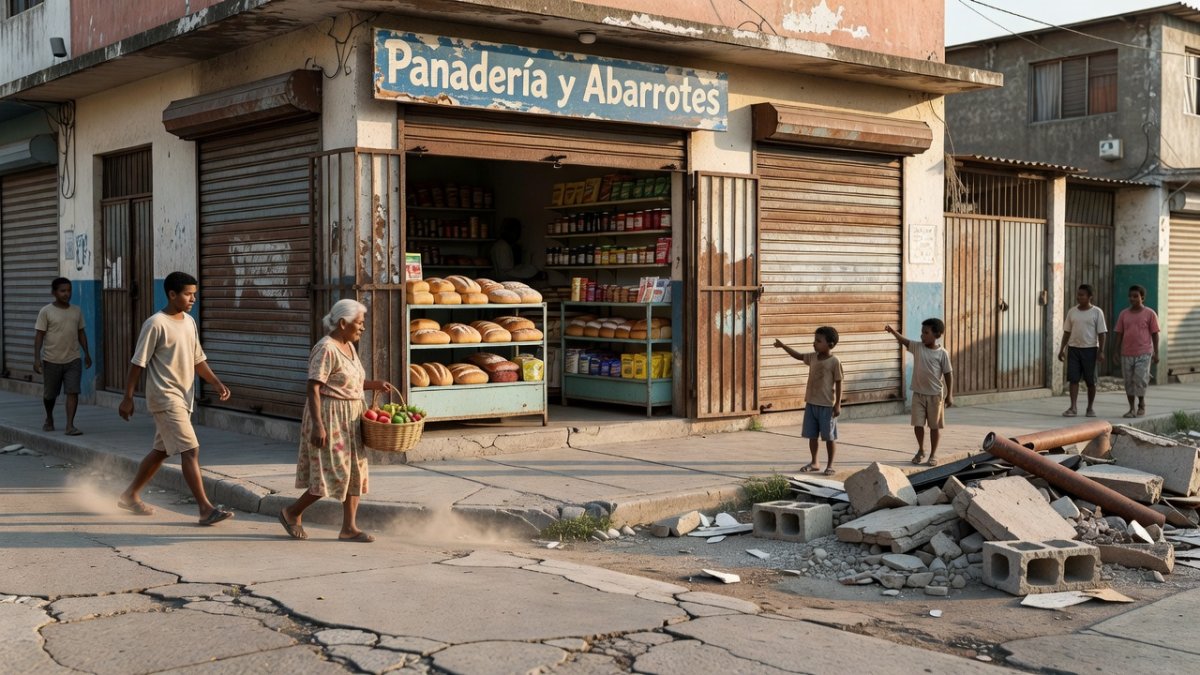
The images from Catia La Mar’s La Atlantida Avenue tell a story of stubborn resilience. Two months after the quakes, the commercial spine of this coastal city is stirring back to life. Bakeries are firing their ovens again, banks have reopened their reinforced doors, and small general stores are restocking shelves with basic goods. Among the first to resume operations, as captured in July footage, was a modest kiosk selling food and sweets—a tiny beacon of normalcy in a landscape of cracked concrete and twisted rebar. The owners, like many in La Guaira, lost inventory and equipment in the initial tremors and the subsequent 1,463 aftershocks that have rattled the region since June 24. Yet, the reopening is not synonymous with recovery. Shop owners along La Atlantida Avenue tell a uniform story: the customers have not returned in the numbers needed to survive. The population itself has been displaced, scattered into makeshift camps or relocated to inland states like Miranda and Aragua. Those who remain are prioritizing basic survival—food, water, shelter—over discretionary purchases. A bakery may have fresh bread, but the foot traffic is a fraction of what it was before the disaster. The kiosk that reopened so quickly is surviving on thin margins, serving a neighborhood that is still largely depopulated. The visual of open storefronts is powerful, but it masks a deeper economic paralysis. The reactivation is real, but it is running on fumes, hope, and the meager savings of merchants who refuse to abandon their life’s work.The Human Ledger: More Than 6,000 Gone
The official death toll has climbed with grim consistency. On June 26, just two days after the quakes, the count stood at 920. By July 16, it had risen to 4,490. The one-month mark saw the figure reach 5,546, and by August 4, the official registry recorded 6,125 dead. Mid-August estimates now place the toll at approximately 6,300. These numbers, however, are contested. Independent registries and civil defense observers suggest the number of missing may be considerably higher than official figures, particularly in the hardest-hit coastal communities of Caraballeda, Maiquetía, and Naiguatá, where entire city blocks were leveled. The USGS modeling in the days following the doublet projected a 44 percent probability that total casualties would exceed 10,000, a sobering statistical shadow that still hangs over the recovery effort. Beyond the numbers lies the trauma. The Federation of Psychologists of Venezuela has deployed teams to the displacement camps in La Guaira, offering psychological first aid to survivors grappling with survivor’s guilt, acute grief, and the anxiety triggered by every minor tremor. The aftershocks—more than 1,463 recorded since June 24—have disrupted electricity, water, and transport, but their psychological toll is less quantifiable. Children who survived the collapse of their schools now flinch at the sound of heavy trucks. Elderly residents, many of whom lived through the 1967 Caracas earthquake, are reliving old nightmares. The human ledger is not just a count of the dead; it is a measure of the living who must now rebuild their minds as much as their homes.An Economy Still Shaking
The economic damage is staggering and quantifiable. The World Bank’s late-July assessment placed direct physical damage at approximately $19.6 billion, with residential property accounting for the largest share of the losses. This figure, however, only covers direct damage; the bank noted that reconstruction costs could be substantially higher when factoring in supply chain disruptions, inflation, and the need for seismic retrofitting. The Venezuelan central bank has reported that inflation reached 19.9% in July alone, up sharply from 13.8% in June. Reuters calculations put the annualized inflation rate at around 576%, a figure that would be catastrophic in any context but is particularly devastating in a region already struggling with the collapse of the bolívar. Officials attribute the July inflation spike directly to earthquake-related disruptions in the distribution of goods. The port of La Guaira, the nation’s primary entry point for imports, was offline for weeks. Roads connecting the coast to Caracas were severed by landslides and collapsed bridges. The result was a supply shock that rippled through the entire national economy. Even as the port resumes operations, the distribution networks remain fragile. Truckers face detours through damaged mountain passes, and fuel shortages—exacerbated by refinery damage—have increased transportation costs. The $19.6 billion figure is a snapshot of physical destruction, but the ongoing economic bleeding is measured in every price increase at every market stall from La Guaira to Caracas.The Reactivation Plan and the State's Response
On August 6, Acting President Delcy Rodriguez launched the Integral Economic Reactivation Plan in La Guaira, a state-led initiative designed to jumpstart the local economy. The centerpiece of the plan was the delivery of 1,766 loans to merchants, entrepreneurs, and families affected by the quakes. These microcredits are intended to help small business owners restock inventory, repair storefronts, and cover basic operational costs. Rodriguez returned to La Guaira on August 19 to address affected residents directly, signaling the government’s political investment in the state’s recovery. The state is also planning to draw $200 million from Venezuela’s $4.5 billion IMF Special Drawing Rights reserves to fund reconstruction efforts. However, the plan’s limitations are evident on the ground. The loans, while welcome, are insufficient to cover the scale of the losses. A merchant who lost a lifetime of inventory and a physical storefront cannot rebuild with a single microcredit. Banks, wary of the ongoing seismic risk and the broader economic collapse, remain cautious about extending larger lines of credit. The reactivation plan addresses the symptoms of economic paralysis but not the underlying causes: hyperinflation, political isolation, and the absence of a robust insurance market. The state’s response is a necessary lifeline, but it is a thin one, stretched across a population that needs far more than 1,766 loans to recover from a disaster that destroyed 80% of their built environment.Ports, Refineries and the Oil Lifeline
The strategic importance of La Guaira extends far beyond its local shops. The state is home to Simón Bolívar International Airport and the port of La Guaira, Venezuela’s main maritime gateway for trade. The port’s resumption of operations on July 21, with Maersk implementing a phased vessel schedule, was a critical milestone. The return of container shipping is essential not just for local recovery but for the national economy, which relies on imports for everything from food to industrial inputs. The airport, too, has resumed limited operations, though the damage to runways and terminal buildings has reduced capacity. The oil sector, Venezuela’s economic lifeline, is also showing signs of recovery. Crude exports averaged approximately 1.16 million barrels per day in July, with shipments to US refiners reaching around 786,000 barrels per day—the highest level since early 2019. The El Palito refinery, which sustained earthquake damage, restarted operations in mid-July, providing much-needed domestic fuel supply. However, the International Energy Agency and independent analysts note that fully restoring Venezuela’s refining capacity could require at least $20 billion in investment. The port and the oil industry are intertwined: the port moves the equipment and supplies needed for refinery repairs, while oil revenues provide the hard currency needed to fund reconstruction. This is a fragile symbiosis, dependent on global oil prices and the easing of US sanctions.Rebuilding for the Next Tremor: Latin America's Lesson
The June 24 doublet was not an anomaly; it was a predictable event on a known fault line. La Guaira sits on the boundary between the Caribbean and South American tectonic plates, along the Boconó fault system. This is the same seismic corridor that devastated Caracas in 1812, a historical echo that should inform every reconstruction decision. The challenge is that building-code enforcement in Venezuela has been inconsistent for decades, particularly in informal settlements that cling to the hillsides above the coast. The 80% collapse rate in La Guaira is not just a measure of the quake’s intensity; it is a measure of construction quality. Latin America has learned this lesson before, often at a terrible cost. Haiti’s 2010 earthquake killed over 200,000 people in large part due to substandard construction. Chile, by contrast, suffered a far more powerful quake in 2010 but saw significantly lower casualties due to strict building codes. Mexico City’s 1985 and 2017 earthquakes prompted repeated revisions to seismic regulations. The reconstruction of La Guaira must be an opportunity to build back safer, not just faster. This means enforcing seismic codes, retrofitting surviving structures, and planning urban development that avoids the most vulnerable slopes. The Boconó fault will not rest forever; the next tremor is a matter of when, not if. The only question is whether La Guaira will be ready.The Bottom Line: Recovery in an Unforgiving Year
The recovery of La Guaira will take years, not months. The $19.6 billion in direct damage is a starting point, but the final reconstruction bill will likely be far higher, particularly as inflation erodes the value of every bolívar allocated to the effort. The port and the oil industry will be the engines of this recovery, generating the hard currency needed to import materials and pay workers. But the human cost is not so easily quantified. The 6,300 dead, the thousands of missing, and the tens of thousands displaced represent a social fabric that cannot be stitched back together with loans and infrastructure projects alone. For Latin American readers, the story of La Guaira is a cautionary tale and a call to solidarity. The region is seismically active, and many of our cities share the same vulnerabilities: weak building codes, poverty, and inadequate emergency response systems. The international community, including the World Bank and the IMF, must support Venezuela’s reconstruction, not just with loans but with technical expertise in seismic resilience. The $200 million draw from the SDR reserves is a start, but it is a fraction of what is needed. As the storefronts of La Atlantida Avenue reopen to empty streets, the world should watch closely. The recovery of La Guaira is not just a Venezuelan story; it is a test of whether Latin America can rebuild smarter, stronger, and more humanely in the face of nature’s fury.By Elena Vasquez, Staff Writer
This article was produced with AI-assisted research and editorial support. Reporting is based on sources cited in the article.
What's Your Reaction?
 Like
0
Like
0
 Dislike
0
Dislike
0
 Love
0
Love
0
 Funny
0
Funny
0
 Wow
0
Wow
0
 Sad
0
Sad
0
 Angry
0
Angry
0

Latin America Correspondent at Global1.News. Based in Mexico City, covering politics, economics, energy, and culture across the region. Brings an on-the-ground perspective to stories spanning from the Rio Grande to Patagonia.













Comments (0)