
Kyiv Weapons Depot Strike Kills 37 as Negligence Inquiry Opens
In a recent BBC News report, Ukraine correspondent Dan Johnson reported from Kyiv after one of the deadliest attacks of the war this year — a Russian drone strike on a weapons depot near the capital that killed at least 37 people.
In a recent BBC News report, Ukraine correspondent Dan Johnson reported from Kyiv after one of the deadliest attacks of the war this year — a Russian drone strike on a weapons depot near the capital that killed at least 37 people. The report showed rescue workers sifting through the smouldering ruins of a care home in the village of Myla, Bucha district, where the secondary detonation of stored munitions levelled buildings and shattered windows across a wide radius. It is a scene that has become tragically familiar to Ukrainians in the fifth year of the full-scale invasion, yet the circumstances of this particular strike have ignited a furious domestic debate about negligence, accountability and the safety of civilians living next to military infrastructure.
Kyiv Weapons Depot Strike Kills 37 as Negligence Inquiry Opens
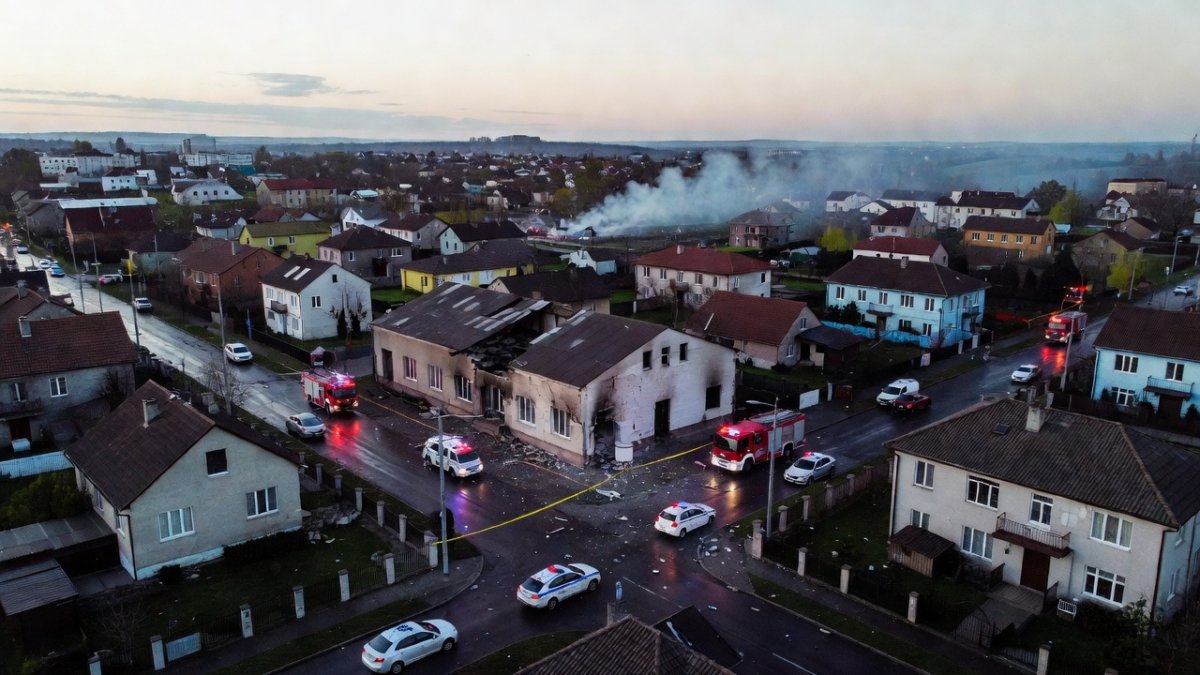
Kyiv, Ukraine – 29 August 2026 — Rescue operations continued into Saturday evening in the village of Myla, Bucha district, as emergency crews combed through the debris of a weapons depot struck by a Russian drone on Friday night. The acrid smell of burnt propellant hung over the settlement, and columns of grey smoke still rose from the site where shells, mines and drones had detonated in a catastrophic chain reaction. Families gathered at cordons, waiting for news of missing relatives, while regional authorities confirmed that Sunday, August 30, would be a day of mourning across the Kyiv region.
The Strike: A Deadly Detonation on Kyiv's Edge
The attack unfolded shortly after nightfall on Friday, when a Russian drone struck a weapons depot in Myla, a village in the Bucha district just northwest of the capital. The initial impact ignited a stockpile of ammunition, triggering a massive secondary detonation that sent shockwaves rippling through the surrounding area. Shells, mines and drones exploded in a relentless barrage that lasted for hours, forcing authorities to close the Zhytomyr highway between the 15th and 32nd kilometre markers as debris rained down on the roadway. Nearly 400 people were evacuated from the immediate vicinity, many of them elderly residents and families with young children who fled into the night with whatever they could carry.
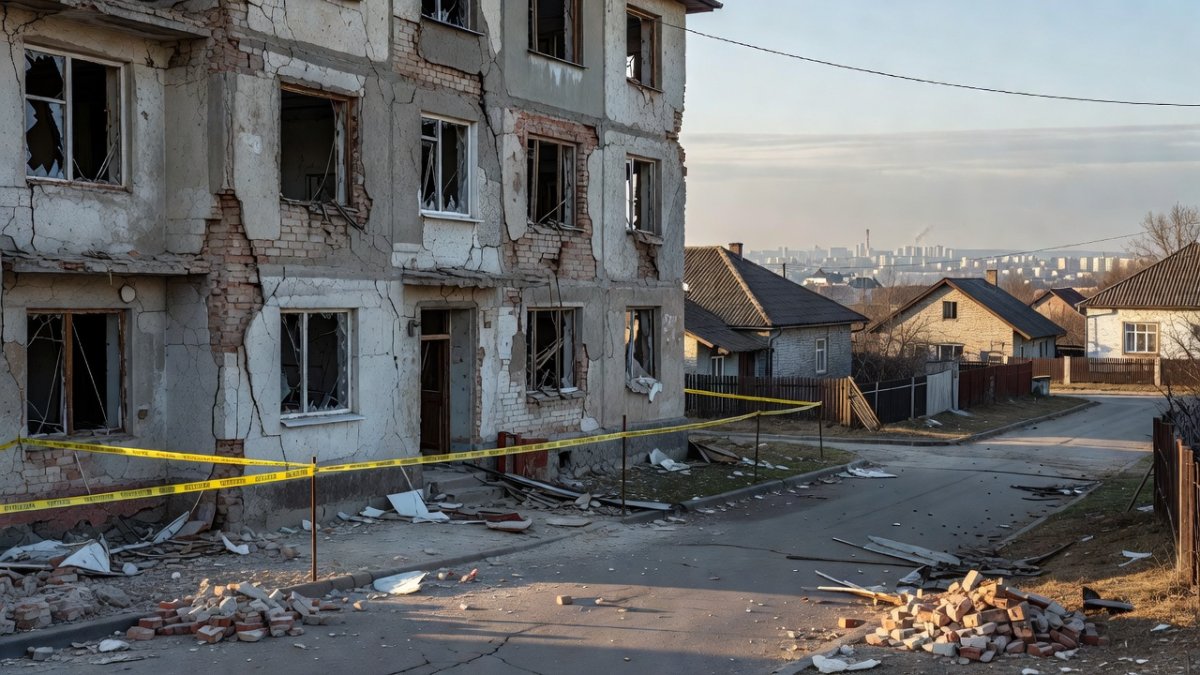
By Saturday morning, the casualty count stood at 27, but as rescue workers dug through the rubble, the figure climbed relentlessly. Regional governor Tymur Tkachenko confirmed that at least 37 people had been killed, with 42 injured, including four children. Ukrainian officials described it as the deadliest attack of the war this year, a grim milestone in a conflict that has already claimed tens of thousands of lives. The scale of the destruction was staggering: about 50 residential buildings were damaged in the blast, and around 130 homes in the village were hit, according to local authorities and international media reports. Residents who had been evacuated began returning on Saturday to inspect what was left of their homes, many finding their windows blown out, their roofs collapsed and their walls cracked by the force of the explosion.
The blast wave did not discriminate. It tore through the village with a violence that left even hardened emergency workers visibly shaken, and the full extent of the damage was still being assessed as night fell on Saturday.
Care Home Devastation and the Human Toll
The heaviest damage was inflicted on a care home for elderly and disabled residents located near the depot, a facility that should have been a sanctuary for some of the most vulnerable members of the community. According to local social media pages, at least 20 people died there, their bodies recovered from the wreckage of a building that was never designed to withstand the force of a munitions explosion. President Volodymyr Zelensky confirmed that the care home had been damaged, and rescue workers spent hours carefully removing debris in the hope of finding survivors. The tragedy has drawn comparisons to the early days of the invasion, when Russian forces occupied the Bucha district and committed atrocities that shocked the world.
The human stories emerging from Myla are devastating. Among the dead was Taras Didych, the head of the Dmytrivka community, who died while rescuing others. Didych was a familiar figure in the area, a local official who had remained in his post throughout the occupation and the war, helping his neighbours navigate the chaos of the invasion. His death has become a symbol of the sacrifice demanded of local leaders in this conflict. Liubov Pavlenko, a 45-year-old resident whose home stands about 200 metres from the depot, told the BBC she was still in shock as she inspected the damage. "Everything is completely damaged. There are cracks all around the entire perimeter, and cracks around the windows. Basically, the structural integrity has been compromised. I'm still kind of numb," she said, her voice flat with exhaustion.
Borys Daniyluk, a 61-year-old resident, voiced the anger that many in the village are feeling. "Why were ammunition and weapons stored there, next to a populated village? There are no words, just emotions," he said, gesturing toward the smouldering remains of the depot. His question echoes across the community, where residents who survived the 2022 occupation now find themselves victims of a disaster that many believe was preventable.
Zelensky's Condemnation and the Negligence Inquiry
President Zelensky did not mince words in his response to the strike. In a statement on Saturday, he said the depot "definitely shouldn't have been there" and announced that an investigation had been launched into "terrible negligence on the part of those who stored explosive right next to people." He emphasised that regulations exist precisely to prevent such catastrophes. "There are regulations in place - ammunition cannot be stored near homes or other residential areas," he said, signalling that those responsible would be held to account. The President's unusually direct language reflected the gravity of the situation and the political sensitivity of a disaster that occurred on Ukrainian-controlled territory, not as a result of a direct Russian hit on a civilian target, but as a consequence of where military assets were placed.
Ukraine's Prosecutor General's office has opened a criminal investigation into the legality of the "storage of explosive objects and materials" near residential buildings in Myla. The inquiry will examine who made the decision to site the depot in such close proximity to a populated village, whether proper procedures were followed, and why the risks were apparently ignored. Investigators are expected to interview military officials, defence ministry personnel and local administrators as they piece together the chain of command that led to this disaster. The charges of official negligence carry significant penalties under Ukrainian law, and the investigation is being watched closely by a public that has grown increasingly frustrated with what it sees as a pattern of avoidable failures.
Prime Minister Serhii Koretskyi delivered an even more scathing condemnation, declaring: "In the fifth year of the full-scale invasion, making the same mistakes over and over is criminal negligence. Everyone responsible, without exception, must face severe punishment so that such situations never happen again." His words reflect a growing political accountability dimension inside Ukraine, where questions are being asked about whether the military and the defence establishment have done enough to protect civilians from the consequences of their own logistical decisions. The strike has opened a new front in Ukraine's internal political debate, one that pits the imperative of military readiness against the fundamental obligation to keep civilians safe.
The Vyshneve Precedent: A Pattern of Failings
This is not the first time such a disaster has occurred near Kyiv. In July, a Russian strike on an ammunition warehouse in Vyshneve, a town just southwest of the capital, caused a secondary detonation that killed nine people, injured dozens and damaged more than 280 homes. An investigation into that incident found failings by a state-owned company over the storage of explosives near residential buildings, yet the lessons of Vyshneve were apparently not applied to Myla. Prime Minister Koretskyi explicitly referenced this precedent, noting that the same mistakes had been repeated despite the clear warning signs. The Vyshneve detonation, which was captured on video and shared widely on social media, showed a massive fireball rising over the town, and the subsequent investigation recommended sweeping changes to how munitions are stored.
The fact that such a disaster could happen again, in the same region and within weeks of the first incident, has fuelled public anger and raised serious questions about the effectiveness of oversight mechanisms. Independent Russian-language media outlet Meduza reported that the Vyshneve detonation damaged around 300 residential buildings, a figure that underscores the scale of the problem. The pattern is clear: military storage sites are being placed too close to civilian areas, and the consequences are being borne by ordinary Ukrainians. In a war where Russian drones strike with near-daily frequency, the decision to keep large quantities of munitions in populated areas is a risk that many analysts believe is no longer acceptable. The question now is whether the Ukrainian government will take the tough decisions needed to prevent a third such tragedy.
Moscow's Account and the Escalating Drone War
Russia's Ministry of Defence offered its own account of the strike, stating that its forces had targeted "an ammunition depot" in Myla holding "components and launch boosters for FP-1/FP-2 long-range unmanned aerial vehicles." The ministry claimed that the warehouse belonged to Ukrainian defense company Fire Point and asserted that the strike was a legitimate military operation against a valid target. Moscow has consistently maintained that its strikes are aimed at military infrastructure, not civilian areas, and this attack was framed in those terms. However, the devastating civilian toll, particularly the deaths at the care home, has drawn international condemnation and renewed calls for accountability in the conduct of the war.
The strike on Myla came after days of nonstop Russian drone attacks on Kyiv, part of a sustained campaign that has tested the resilience of the capital's air defences. Ukraine's air force said it shot down 233 Russian drones overnight, a staggering number that reflects the intensity of the assault. President Zelensky reported overnight strikes in Odesa, Dnipropetrovsk, Sumy and Zaporizhzhia, indicating that the campaign is nationwide in scope. The human cost has been severe: a two-year-old child died after a drone crashed in Kyiv's Obolonskyi district, and a 14-year-old was killed in a separate attack in the Boryspil district. Russia, too, has suffered losses, with officials reporting two people killed and 25 injured in strikes on the Belgorod and Rostov regions, and Russian retailer Ozon confirming that one of its logistics centres was hit in an overnight Ukrainian drone strike.
Ukraine has for weeks struck Russian economic targets, including Wildberries and Ozon sites, which Kyiv says supply the Russian military. Moscow denies this, insisting that its logistics infrastructure is purely civilian. The mutual escalation has created a cycle of retaliation that shows no signs of abating, with each side seeking to inflict maximum damage on the other's war effort and economy. In the fifth year of the full-scale invasion, the drone war has become a defining feature of the conflict, a constant, grinding attrition that spares no one.
Analysis and Implications
The strike on Myla is the deadliest single attack of the year, and its political fallout inside Ukraine may prove as significant as the military damage. The negligence inquiry places the armed forces and the Ministry of Defence under scrutiny, raising uncomfortable questions about whether the military's logistical practices are adequate for a war in which drones can strike anywhere at any time. The fact that a weapons depot was located so close to a care home for elderly and disabled residents is a failure that no amount of Russian aggression can excuse, and the Ukrainian public is demanding answers. The investigation will be closely watched, and its findings could have significant implications for military leadership and procurement decisions.
Analysts suggest this could sharpen Ukraine's debate over military storage discipline and air defence coverage, forcing a re-evaluation of how and where munitions are kept. The psychological impact on Kyiv's exhausted population, already enduring weeks of nightly drone attacks, cannot be overstated. The day of mourning declared for Sunday is a recognition of the collective grief that has settled over the region, a grief compounded by the knowledge that this tragedy was compounded by human error. The resilience of the Ukrainian people has been tested throughout this war, but each new disaster chips away at the sense of security that remains essential for morale.
Looking ahead, expectations are that Russia will press its advantage, exploiting the disruption caused by the strike and continuing its campaign of attrition. Ukraine, for its part, will need to harden its munitions storage and disperse its logistics to reduce the risk of such catastrophic secondary explosions. The diplomatic dimension remains critical, as Kyiv continues to press its allies for more interceptors and advanced air defence systems to counter the relentless drone threat. But the deeper lesson of Myla is that even the best air defences cannot protect against the consequences of poor planning. The village that lived through the 2022 occupation and survived to rebuild now faces a new kind of devastation, one that was entirely avoidable. As the smoke clears and the bodies are counted, the question that lingers is not just who is responsible, but whether Ukraine can learn from this tragedy before the next one strikes.
By Irina Volkov, Staff Writer
This article was produced with AI-assisted research and editorial support. Reporting is based on sources cited in the article.
What's Your Reaction?
 Like
0
Like
0
 Dislike
0
Dislike
0
 Love
0
Love
0
 Funny
0
Funny
0
 Wow
0
Wow
0
 Sad
0
Sad
0
 Angry
0
Angry
0

Russia/Eastern Europe Correspondent at Global1.News. Covering Russian politics, energy, security, and the shifting dynamics of the post-Soviet space. Provides clear-eyed analysis on one of the world's most opaque regions.












Comments (0)