
Judge Tosses Case Against Two Ex-FBI Officials and Calls It Weaponization
A federal magistrate judge dismissed the criminal complaint against two former senior FBI officials accused of lying to Congress about Hunter Biden, finding no probable cause and calling the prosecution a weaponization of the Justice Department.
Washington did something Monday that does not happen often in a federal courtroom: a magistrate judge threw out the government's case and told the court exactly why. The complaint against two former senior FBI officials, accused of lying to Congress about the bureau's Hunter Biden work, was dismissed for lack of probable cause. The judge said the prosecution amounted to weaponization of the Justice Department. The case is not finished, but the government's record is now on the public docket.
Judge Tosses Case Against Two Ex-FBI Officials and Calls It Weaponization
WASHINGTON — The ruling came from U.S. Magistrate Judge Zia Faruqui, delivered orally from the bench in the District of Columbia. The defendants are Nikki Cole Floris and Bradley Benavides, both former supervisors in the FBI's Foreign Influence Task Force. The judge's conclusion was blunt: probable cause was missing, and he said the calendar mattered.
A Judge Reads the Calendar Out Loud
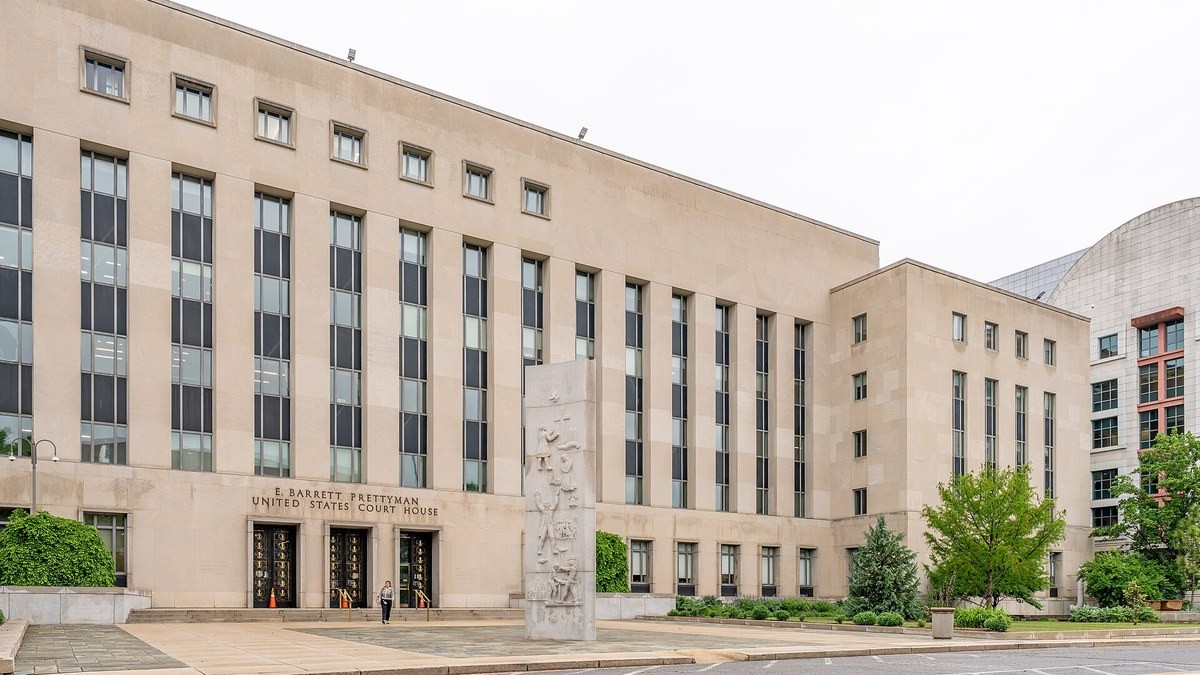
The dismissal came Monday, 2 November 2026, in the U.S. District Court for the District of Columbia, and it came out loud. Magistrate Judge Zia Faruqui spoke from the bench for roughly an hour before he threw out the criminal complaint against two former senior FBI officials. The testimony at the center of the case was given in 2023. The Justice Department could have charged at any time, the judge said, but it filed on 23 October, in the run-up to Tuesday's midterm voting. Then he said the line that will follow this case. "I will not bury my head in the sand and pretend that I cannot read a calendar," Faruqui said. Folks, the conduct was old, the charge was new, and the calendar was the point. The man saying it spent twelve years as an assistant U.S. attorney in this district, working national security and cybercrime cases. He has been a magistrate judge here since September 2020.
Two Careers Built Inside the Task Force
Nikki Cole Floris, 46, of Alexandria, Virginia, and Bradley Benavides, 56, of Aiken, South Carolina, are the two former officials at the center of the case. Both held supervisory positions in the FBI's Foreign Influence Task Force. Floris led the task force as a Deputy Assistant Director from mid-2019 through mid-2022. Benavides was its Section Chief from mid-2019 through the 2020 election. The task force was established in the first Trump administration and led the FBI's effort to secure the 2020 election from foreign malign influence. It was disbanded in February 2025 by then-Attorney General Pam Bondi. Each defendant was charged with one count of making false statements in a matter within the jurisdiction of the legislative branch, in violation of 18 U.S.C. 1001(a)(2). The case number is 26-mj-185. Both surrendered on arrest warrants and made a first appearance in federal court in Washington. No finding of guilt has been made against either of them.
What They Told the Judiciary Committee
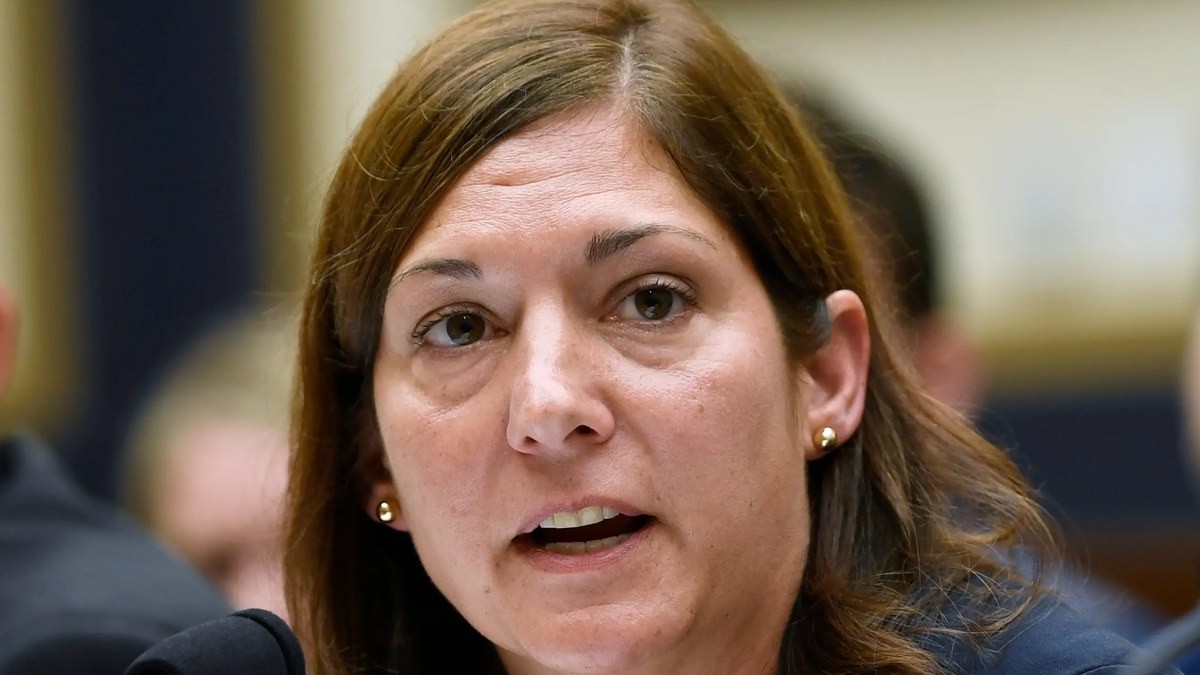
The House Judiciary Committee interviewed both officials in 2023, and both were warned that lying to Congress is a crime. Floris testified on 19 July 2023. Benavides testified on 28 September 2023. The government alleged that Floris told the committee she was involved in no discussions about Hunter Biden while she was at the task force, and that Benavides said he only learned the FBI had Hunter Biden's laptop from a Wikipedia article in 2023. An affidavit filed in support of the complaint said documentary evidence, contemporaneous communications and witness accounts contradict that testimony. The government said the evidence shows Floris discussed the FBI's investigations into Hunter Biden routinely for more than a year, within the task force and with others in the bureau, and that Benavides regularly discussed the laptop with FBI officials in the lead-up to the 2020 election. Prosecutors also noted the pair gave lawmakers a "defensive briefing" in 2020 that two Republican senators later said was used to undermine their investigation.
A Charge Filed After Midnight
On 27 October, the Justice Department filed a superseding criminal complaint after midnight on the public court docket. It was unsworn and unsigned, not signed by any law enforcement officer or judge. It sought to add a felony obstruction charge alleging that Floris and Benavides obstructed a congressional proceeding, and to soften some of the original allegations. No judge had reviewed it for probable cause. The docket was later updated to say the filings were entered "in error." Faruqui struck the superseding complaint and left the original in place, saying prosecutors had created "their own category of charging." He also said: "We have never had complaints filed that are unsigned. It is inappropriate. It harms the defendants." U.S. Attorney Jeanine Pirro, asked about the new complaint before it was struck, said: "It's up to Judge Faruqui as to whether or not he wants to sign that." She added that the office had "a prior complaint that was signed by another magistrate" and "the ability today to add a charge."
The Agent Who Said It Looked Political
The courtroom heard from an FBI agent who worked the investigation. Special Agent Bryan Witt testified that the probe began after FBI Director Kash Patel sent a letter directing the Kansas City, Missouri, office to look into certain people, including Floris. Witt said he felt the assignment was a "huge distraction" from a large public-corruption case he was working at the time. "I had concerns that this would be viewed as political," he testified. He said the investigation was "prioritized" and that agents were "told to work it aggressively." Asked who was pushing, Witt cited check-ins from high-level officials, including Patel and an FBI deputy director. Asked whether Patel personally pressed him, Witt said he did not. His account came during an unusual three-day hearing last week — the preliminary hearing on whether the original charge met the probable-cause standard, which is the record Faruqui ruled on Monday.
No Probable Cause, and Critical Mistakes
Faruqui found the complaint lacked probable cause, and he did not soften the language. "There is no denying this investigation was rushed," he said. "The rush to charge here led to critical mistakes." He called the department's work a "slapdash job" and said he was "deeply troubled by what has happened here." He said there was no evidence that Floris and Benavides knowingly said anything false to the committee, and he noted the transcript showed many of the supposedly false statements were not false. Officials, he said, did not do the work to show the pair knew at the time that some statements might be false, a necessary element of the crime. "What has transpired here cannot be described as anything other than weaponization," Faruqui said. He apologized to the government's lawyers, calling it "incredibly unfair" that they had been assigned to defend the case.
The Witness the Judge Would Not Credit
If you want to understand why the case collapsed, start with the witness the judge named. The government's central witness on the alleged lies was Steve Castor, the House Judiciary Committee's majority general counsel. Faruqui would not credit him. He called Castor's statements about the alleged lies "inadequate, incorrect and not credible." The judge said Castor talked about the impact of the supposed lies in the pair's testimony without having attended the Benavides interview. That is a specific finding, and it matters. The government's theory was that two veteran officials misled lawmakers in ways that shaped a committee's work. The judge measured the account of that harm against the record and found it did not hold. He did not have to decide whether Floris and Benavides were truthful. He had to decide whether the government had shown probable cause that they were not. On this witness and this record, he concluded it had not.
What the Government Says
None of this erases what the Justice Department said when it announced the charges. U.S. Attorney Jeanine Ferris Pirro: "Lying to Congress by anyone strikes at the heart of our democratic system but when senior FBI agents lie to Congress believing they are above the law, it's time to bring the hammer of justice down on them." She added that when senior officials "choose deception over duty," they undermine the institutions they swore to uphold. Attorney General Todd Blanche said public servants "cannot lie to Congress and get away with it." FBI Director Kash Patel said the two were taken into custody and charged with "allegedly lying to Congress in 2023," and that one of them was on record privately claiming to be "running a shadow government" during the 2020 election. The department's release carried the standard caveat: the charges are allegations, and every defendant is presumed innocent unless and until proven guilty beyond a reasonable doubt.
The Grand Jury Door Is Still Open
The case is not over. A criminal complaint requires only a judge's signature; an indictment requires a grand jury. Complaints are more typically used when investigators have a pressing need to take a defendant into custody. Prosecutors can still seek an indictment. The Justice Department has given no indication of how it will proceed, and CNBC reported that the department did not immediately respond to a request for comment on Monday's ruling. Floris's lawyer, Mary Dohrmann, said the case should never have been brought: "The government had no case, as the judge just laid out." She called the prosecution a "spaghetti-at-the-wall, Hunter-Biden-conspiracy fever dream." Outside the courtroom afterward, Floris and Benavides embraced and cried. Former Acting FBI Director Brian Driscoll was with them. A lawyer for Benavides said the defense hopes the department will not try to keep the case alive before a grand jury "where they get to be behind closed doors and get to shape the narrative, and we are unable to present our side." The ruling is a setback for a department that has had difficulty persuading grand juries in the nation's capital to return indictments in politically charged prosecutions, the Associated Press reported.
Why This Ruling Lands Where It Does
Faruqui was elected to an eight-year term by the district's judges. He said he has signed off on some 400 criminal complaints in the last five years and had never held such a hearing or ruled against the government during one. He said the case "erodes public confidence in the Department of Justice," and that he was concerned "this system is being misused by people of higher levels." He said the investigation was opened following a primetime speech in which President Donald Trump rehashed grievances over his 2020 election loss, and that it was mandated and closely tracked by FBI Director Kash Patel. "This does not feel like an investigation," Faruqui said. "It feels like a broken one-wish willow obsession." NBC reported that Pirro has failed to secure convictions against many of President Donald Trump's perceived foes. The ruling is about two officials. The judge's language was about the machinery around them.
By Jessica Ali, Staff Writer
This article was produced with AI-assisted research and editorial support. Sources: Associated Press, CBS News, NBC News, Roll Call, The Hill, CNBC, the U.S. Attorney's Office for the District of Columbia, and court filings in United States v. Floris and Benavides, No. 26-mj-185 (D.D.C.). Photographs: Susan Walsh/AP (Floris, 2019, file); ajay_suresh, CC BY 4.0, via Wikimedia Commons (courthouse). Cover: Global 1 News editorial image.
What's Your Reaction?
 Like
0
 Dislike
0
 Love
0
 Funny
0
 Wow
0
 Sad
0
 Angry
0

Editor-in-Chief at Global1.News. Atlanta-based journalist who cuts through the BS and tells it like it is. Lead anchor, host, and the voice you hear when the spin stops and the truth starts.













Comments (0)