
Judge Rules DHS Broke the Law Trying to Halve FEMA — and the Deleted Signal Messages Are Gone
A federal judge ruled late Friday, 11 September 2026, that the Department of Homeland Security broke federal law by seizing control of FEMA's staffing decisions and moving to cut the disaster agency's workforce in half. The same order from Judge Susan Illston found that FEMA and DHS officials discussed staffing over Signal on personal cell phones and then deleted the messages with auto-delete timers. The 50% cut was never carried out.
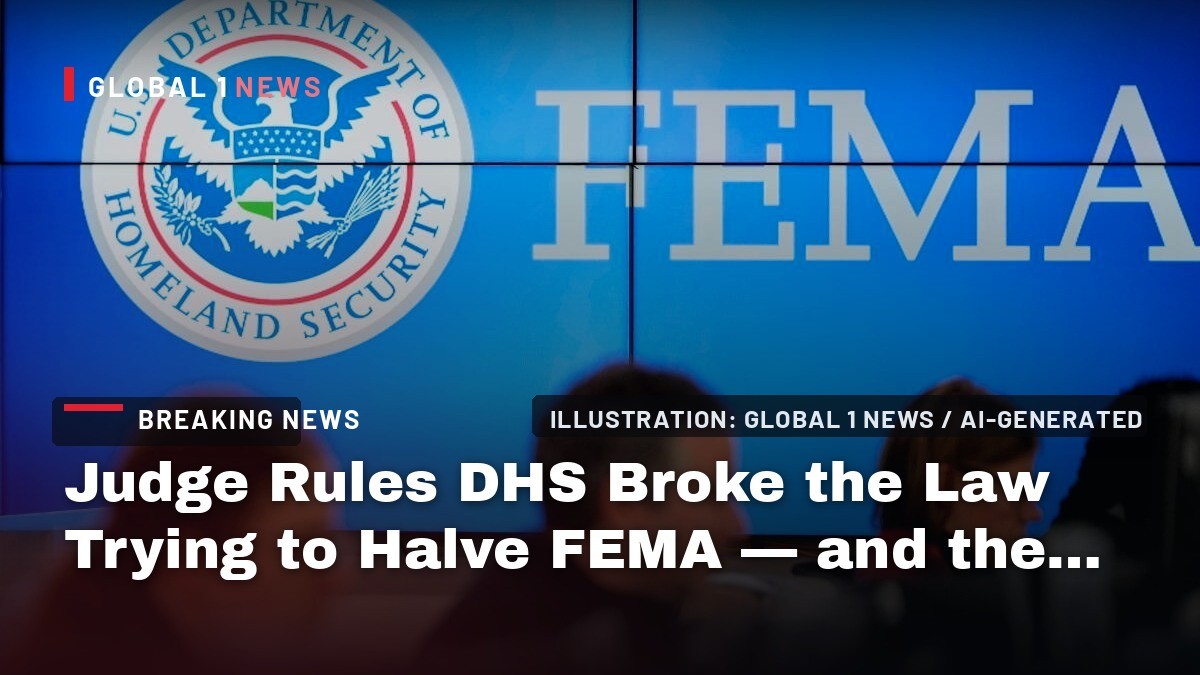
A federal judge in San Francisco ruled late Friday that the Department of Homeland Security unlawfully seized control of FEMA's personnel decisions and ordered staffing cuts that FEMA's own supervisors had not recommended, according to the order. Judge Susan Illston, an appointee of President Bill Clinton, found DHS "unlawfully usurped the authority" of FEMA to make its own personnel decisions through reductions in force throughout 2025, according to the 32-page order issued 11 September 2026 in the U.S. District Court for the Northern District of California. The ruling granted partial summary judgment to a coalition of unions on their Administrative Procedure Act claims and denied the government's cross-motion. No remedies or penalties were included; Illston wrote those would be addressed in a separate ruling next month.
In the same order, Illston found that FEMA and DHS officials discussed agency staffing on the Signal messaging app using personal cell phones, then deleted the messages using auto-delete timers they set themselves — often within one to four weeks. The court found the deleted messages were relevant to the litigation, that plaintiffs were prejudiced by their irrecoverable loss, and that defendants "acted with the intent to deprive plaintiffs of the use of the Signal chat messages in this litigation," according to the order. Moving forward, Illston said she would presume "that the lost Signal messages would have been unfavorable to Defendants because they would have been further evidence" of unlawful conduct.
JUDGE RULES DHS BROKE THE LAW TRYING TO HALVE FEMA — AND THE DELETED SIGNAL MESSAGES ARE GONE
Washington, D.C. — The Department of Homeland Security broke federal law when it seized control of FEMA's staffing decisions and moved to cut the disaster agency's workforce in half, a federal judge ruled on Friday, 11 September 2026, in an order that also finds that senior officials intentionally deleted Signal messages relevant to the case, according to the Associated Press, Reuters and the Los Angeles Times.
What Judge Illston Actually Ruled
Illston's 32-page order on cross motions for summary judgment found that DHS violated two statutes: the Post-Katrina Emergency Management Reform Act, passed in 2005 after Hurricane Katrina, and the Administrative Procedure Act. She granted partial summary judgment to the unions on their APA claims and denied the government's cross-motion, according to the order.
The order's central holding is that DHS crossed a line Congress drew. Illston found the department "unlawfully usurped the authority" of FEMA "to make its own personnel decisions" through reductions in force carried out across 2025, according to the order. She ruled that DHS acted unlawfully by interfering with FEMA's staffing decisions — and that FEMA officials acted unlawfully by acquiescing to DHS's authority rather than defending the independence the law gives them.
A Number 'Pulled From Thin Air'
The disputed plan would have reduced FEMA's workforce from roughly 23,000 employees to 11,500 by the end of fiscal year 2026. FEMA projected its staffing levels for the upcoming fiscal year at 11,383 employees — approximately half of prior levels — "without any basis for choosing that number," Illston wrote.
The 50 percent cut recommendation was included in a December 2025 draft reviewed by the Associated Press. DHS ultimately backed away from the proposed reduction after the plan became public. Although FEMA has experienced terminations, the 50 percent staffing cuts ultimately were not carried out.
Illston wrote: "Frankly, the FEMA staffing plan number appears as if pulled from thin air." She also asked: "If FEMA supervisors and the FEMA CHCO did not recommend a 50% staffing cut, where did that number come from?"
The Signal Messages the Court Will Never See
Illston faulted FEMA and DHS officials for using the Signal messaging app on their personal cell phones to communicate about FEMA and CORE staffing, and then deleting the messages. Officials used auto-delete timers that they themselves set, often deleting messages within one to four weeks, the court found.
Those deleted messages covered "the time period most relevant to the DHS/FEMA claims" and cannot be recovered, according to the order. The court found the deleted messages were relevant to the litigation, that the plaintiffs were prejudiced by their irrecoverable loss, and that the defendants "acted with the intent to deprive plaintiffs of the use of the Signal chat messages in this litigation."
Moving forward, Illston said she would presume "that the lost Signal messages would have been unfavorable to Defendants because they would have been further evidence" of unlawful conduct. She wrote: "The factual findings at this stage must be viewed against the backdrop that plaintiffs have been hamstrung in their ability to prove their claims, and the Court in its ability to evaluate the claims, by defendants' intentional deletion of relevant Signal messages."
On 6 May 2026, Illston ordered FEMA and DHS officials to preserve Signal messages tied to FEMA operations, citing concerns officials used disappearing-message settings while discussing matters relevant to the case.
The Post-Katrina Law at the Center of the Case
The Post-Katrina Emergency Management Reform Act was passed in 2005 after Hurricane Katrina. It established FEMA as a distinct entity within DHS and put staffing decisions squarely in FEMA's hands, not DHS's. The law says DHS "may not substantially or significantly reduce (FEMA's) authorities, responsibilities, or functions."
Illston found that DHS violated this statute when it moved last year to stop FEMA from renewing the temporary contracts of thousands of on-call reservists who respond to disasters. She wrote: "There is no evidence in the record reflecting reasoned decision-making for this about-face or for the subsequent conditions DHS placed on FEMA's renewal authority."
The court said FEMA later resumed CORE renewals, though many workers were offered shorter terms than they had historically received.
What the Watchdog Found First
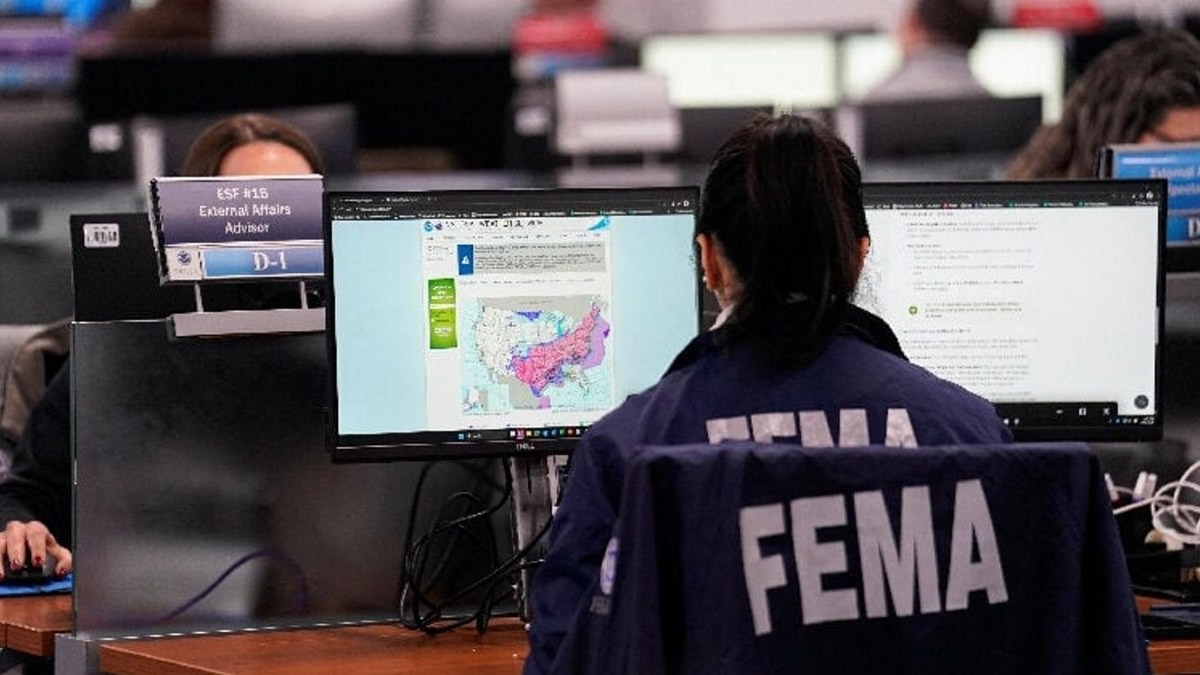
A Government Accountability Office report published 4 August 2026 — GAO-26-108427 — found that 4,321 employees separated from FEMA in fiscal year 2025, a 55 percent increase in separations over fiscal year 2024. FEMA employed an average of 25,134 people in fiscal year 2025 and made 2,907 new hires that year.
From 1 October 2025 through 16 May 2026, FEMA employed 21,742 people, made 134 new hires, and recorded 2,545 separations, according to the GAO report. The separations "resulted in a loss of institutional knowledge and experienced personnel" and "exacerbated longstanding workforce challenges," according to FEMA officials cited in the report.
FEMA rescinded its strategic plan in 2025. GAO found FEMA took these actions without assessing whether it had the necessary staffing capacity to meet its mission, including its statutory requirements. GAO added strengthening FEMA's disaster workforce and capacity to its High Risk List in February 2025.
As of 4 July 2025, when the deadly Texas floods began, FEMA reported 15 percent of its incident management workforce was available. FEMA has reported a staffing gap of approximately 35 percent across cadres. Between January 2025 and January 2026, 58 senior executive service employees — roughly half the agency's SES staff — left the agency.
GAO recommended Congress "consider requiring" FEMA to base "significant workforce decisions" on a more strategic planning process. Without it, GAO found, "FEMA cannot be assured that the agency is positioned to effectively meet its mission needs." GAO's Fast Facts stated: "FEMA may not have a workforce capable of effectively responding to disasters now or in the future."
An Agency Managing More Than 1,000 Open Disasters
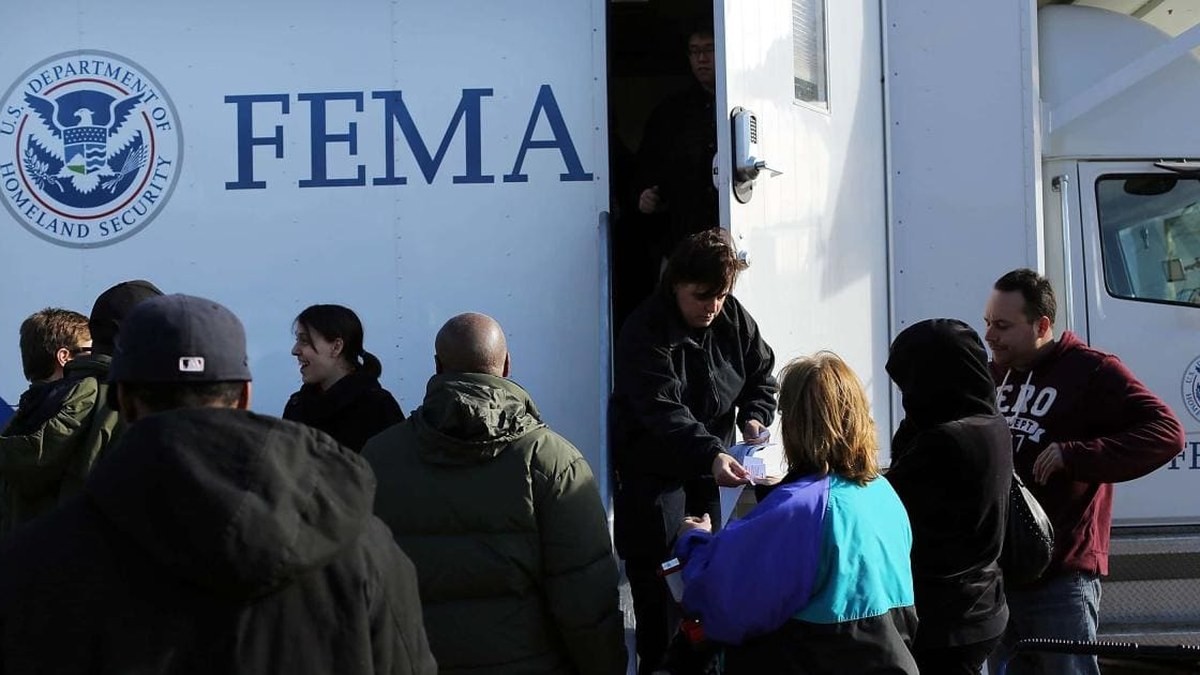
CORE stands for Cadre of On-Call Response and Recovery: full-time disaster response and recovery workers hired for terms lasting between two and four years, and among the staff whose contract renewals DHS moved to block. In recent months, after top leadership changes at FEMA and DHS, the agency has rehired some staffers who were let go.
The Senate confirmed Cameron Hamilton as FEMA administrator on 7 August 2026, part of a group of 74 nominees. He was sworn in on 10 August 2026, becoming the first permanent FEMA administrator during Trump's second term. Hamilton had previously served as acting administrator but was fired in May 2025 after saying he had become convinced the agency should not be eliminated.
Hamilton, once a FEMA critic, said at his June 2026 confirmation hearing that FEMA is burdened by bureaucracy and cannot respond to every disaster, advocating for a "new balance" focused on cost savings. He was confirmed as the agency manages more than 1,000 open disaster declarations.
"I deeply believe in the FEMA mission, which is rooted in servant leadership — a principle I've remained committed to throughout my own career," Hamilton said. His background includes service as a Navy SEAL in SEAL Team 8, specializing in crisis response plans for chemical, biological and radiological terrorism, and later as an Emergency Management Specialist at the State Department.
What the Unions and the White House Say
The FEMA staffing claim is part of a much larger lawsuit filed in April 2025 by the American Federation of Government Employees and a broad coalition, challenging the administration's reorganization and downsizing of the federal government without congressional authority. A supplemental complaint was filed on 27 January 2026, specifically challenging DHS's December 2025 decision to severely reduce FEMA's staffing levels beginning 1 January 2026.
Plaintiffs include AFGE, the American Federation of State, County and Municipal Employees, the Service Employees International Union, the City and County of San Francisco, Santa Clara County, the City of Chicago, the City of Baltimore, Harris County (Texas), and King County (Washington). The coalition is represented by Altshuler Berzon LLP, Democracy Forward, Democracy Defenders Fund, Protect Democracy, and the Public Rights Project.
On 26 June 2026, the court issued a split ruling — denying the unions' motion for a preliminary injunction while also denying the government's motion to dismiss the case. Illston found the unions had not shown that CORE workers faced the threat of immediate firings, and said "the facts have changed since the unions first sought the block on firings at the start of the year."
AFGE's own litigation update states the FEMA litigation resulted in the government reinstating most of the FEMA employees who had been terminated. A hearing on the unions' request for partial summary judgment was scheduled for 1 September 2026.
"Secretary Noem's attempts to dismantle FEMA are among the most egregious actions taken by this administration," AFGE National President Everett Kelley said in the coalition's January 2026 filing, made while Noem was still serving as Homeland Security secretary. "Congress created FEMA to operate with independence, given its mission to prepare and respond quickly when disasters arise," said Skye Perryman, president and CEO of Democracy Forward. "When disasters strike, FEMA provides essential support and works to rebuild communities. It is outrageous that this administration is trying to dismantle that capacity on purpose. We're going to court because slashing FEMA staffing means slower response, more confusion, and more families left to fend for themselves," said Amb. Norm Eisen (ret.), executive chair of Democracy Defenders Fund.
No Remedy Yet — and What Comes Next
No remedies or penalties were included in the Friday ruling. Illston wrote those would be addressed in a separate ruling next month, and said the parties may submit briefings on the scope of relief she should provide to the unions.
DHS and FEMA did not immediately respond to requests for comment as of Saturday, 12 September 2026. Both agencies are under new leadership since the directive at the center of the case — Markwayne Mullin replaced Noem at Homeland Security, and Cameron Hamilton now leads FEMA — but the order addresses decisions made under the previous team.
Why It Matters Heading Into Hurricane Season
President Donald Trump has suggested FEMA should be abolished and that states should be responsible for their own emergency preparedness. He suggested early in his second term that FEMA might "go away" entirely. Trump created a council to review the agency's operations.
In May 2026, a Trump-appointed FEMA Review Council submitted a final report recommending sweeping changes to how the agency supports states, tribes and territories in disaster. The final version backed away from the recommendation to cut the FEMA workforce by 50 percent — which was in the December 2025 draft reviewed by AP. The council instead recommended the agency conduct a "strategic review" to determine "appropriate staffing levels."
Kristi Noem served as Trump's Homeland Security secretary until she was fired in March 2026. She pledged at one point to "eliminate" FEMA and slashed the agency's spending and staffing during her tenure. Trump replaced her with Markwayne Mullin; Mullin's Senate confirmation hearing was March 18, 2026.
A Politico analysis from March 2026 found Republican-led states saw 89 percent of their disaster declaration requests approved, while Democratic-led states saw only 23 percent. In July 2026, Trump overruled the recommendations of his own agencies when he rejected federal aid for four Democratic-led states, Politico reported.
"The foundation (at FEMA) seems stronger than it did six months ago, but this is an unreliable administration when it comes to the fair and equitable distribution of disaster funds," said Juliette Kayyem, faculty chair of the Homeland Security Project at Harvard University's Kennedy School of Government and a former Obama administration official. "The bad news is you have a very unreliable administration and a very political president. When it comes to states' expectations, we can't know what this White House will do," Kayyem said.
"(Hamilton) he has the right attitude as far as supporting his employees and supporting the states. I have a positive feel for that," said Lynn Budd, director of the Wyoming Office of Homeland Security and president of the National Emergency Management Association.
By Jessica Ali, Staff Writer
This article was produced with AI-assisted research and editorial support. Sources: The Associated Press, Reuters, the Los Angeles Times, the Spokane Spokesman-Review, The Washington Post, the U.S. Government Accountability Office (GAO-26-108427), the American Federation of Government Employees, Democracy Forward, the U.S. Department of Homeland Security, FEMA and Stateline.
What's Your Reaction?
 Like
0
Like
0
 Dislike
0
Dislike
0
 Love
0
Love
0
 Funny
0
Funny
0
 Wow
0
Wow
0
 Sad
0
Sad
0
 Angry
0
Angry
0

Editor-in-Chief at Global1.News. Atlanta-based journalist who cuts through the BS and tells it like it is. Lead anchor, host, and the voice you hear when the spin stops and the truth starts.














Comments (0)